
As someone deeply involved in the automotive industry, I have witnessed firsthand the devastating consequences of counterfeit and substandard auto parts. The movement to eradicate these dangerous components has become a personal mission, driven by stories of avoidable tragedies and systemic failures. In this article, I will share insights from our collective efforts to promote quality and safety, while delving into the critical technical aspects of gear lubrication, with a particular focus on hyperbolic gears. The science behind hyperbolic gears is not just an engineering detail; it is a cornerstone of vehicle reliability and performance. Through initiatives, educational campaigns, and scientific analysis, we aim to foster an environment where only genuine, high-quality parts are used, ensuring the safety of every driver and passenger on the road.
The campaign against counterfeit auto parts began with a unified declaration from major industry players. We organized a series of events to raise awareness and enforce standards. A key moment was the issuance of a joint initiative by several leading companies, pledging to reject the sale and use of fake components. This initiative outlined clear principles that have since guided our actions. To summarize these commitments, I present the following table, which encapsulates the core points of our pledge:
| Principle Number | Commitment | Rationale |
|---|---|---|
| 1 | Do not sell or use counterfeit or substandard auto parts. | Prevents safety hazards and maintains industry integrity. |
| 2 | Do not sell or use “three-no” domestic parts (no production license, no quality inspection certificate, no factory qualification). | Ensures traceability and compliance with basic standards. |
| 3 | Do not sell or use non-nationally approved domestic parts without local technical supervision inspection. | Upholds regulatory oversight and quality assurance. |
| 4 | For imported parts, strictly inspect packaging and serial numbers, indicate origin for non-original products, and price accordingly. | Combats fraud and ensures transparency in the supply chain. |
| 5 | Guarantee refunds or replacements for quality issues, and compensate for losses as per authorities’ rulings. | Builds consumer trust and accountability. |
| 6 | Refrain from accepting kickbacks or bundling personal items in sales or repairs. | Eliminates conflicts of interest and corrupt practices. |
| 7 | Voluntarily accept supervision, inspection, and guidance from government departments. | Fosters collaboration with regulators for continuous improvement. |
Following the initiative, we launched educational programs, such as a procurement常识讲座, which became a pivotal event in spreading knowledge. The response was overwhelming, with many procurement officers expressing a newfound vigilance. To further empower the community, we established a dedicated hotline for reporting counterfeit incidents. This allowed us to track down sources and expose fraudulent operators, creating a ripple effect of accountability. One notable case involved a steering mechanism that caused abnormal noises, highlighting the pervasive nature of劣质 parts. These experiences underscore the urgency of our mission, and they reinforce the need for technical literacy among all stakeholders, especially when it comes to complex components like hyperbolic gears.
Transitioning to the technical realm, a common misconception in automotive maintenance is the misuse of lubricants, specifically the application of hyperbolic gear oil in non-hyperbolic gear systems. Hyperbolic gears, known for their unique tooth geometry, operate under extreme pressure and temperature conditions, necessitating specialized oils. In contrast, involute gears, commonly used in rear axle differentials, function under milder stresses. To understand why hyperbolic gear oil is unsuitable for involute gears, we must examine the chemical and physical properties involved. The following table compares the two gear types and their lubrication requirements:
| Gear Type | Typical Application | Operating Conditions | Recommended Lubricant |
|---|---|---|---|
| Involute Gears | Rear axle differentials in standard vehicles | Moderate pressure (e.g., 20,000–30,000 psi), temperature below 80°C | 普通车辆齿轮油 (Standard Vehicle Gear Oil) |
| Hyperbolic Gears | High-performance or specialized drivetrains | High pressure (e.g., over 100,000 psi), elevated temperatures above 120°C | 双曲线齿轮油 (Hyperbolic Gear Oil) |
Hyperbolic gears are engineered to handle severe sliding friction, which generates intense heat and pressure. The lubricant for hyperbolic gears must contain extreme pressure (EP) additives to form protective films under these conditions. However, when used in involute gears, these additives can lead to corrosive wear. To illustrate the chemical interactions, consider the composition of hyperbolic gear oil. It often includes additives with elements like chlorine, sulfur, phosphorus, and zinc. These compounds react with metal surfaces under high stress to create protective layers. For hyperbolic gears, this reaction is beneficial and necessary. The process can be represented by chemical equations that describe the formation of protective films. For example, the reaction of sulfur-based additives with iron under high temperature and pressure can be modeled as:
$$ \text{Fe} + \text{S-Additive} \xrightarrow{\text{High Temp/Pressure}} \text{FeS} + \text{Other Products} $$
This iron sulfide layer acts as a boundary lubricant, preventing direct metal-to-metal contact in hyperbolic gears. Similarly, chlorine additives may form iron chloride films:
$$ \text{Fe} + \text{Cl-Additive} \rightarrow \text{FeCl}_2 + \text{Byproducts} $$
However, in involute gears, where operating temperatures are lower, these additives do not fully activate. Instead, they can undergo hydrolysis or side reactions that produce corrosive agents. For instance, chlorine compounds might hydrolyze to form hydrochloric acid, leading to accelerated wear. The corrosion rate can be approximated using an Arrhenius-type equation, where the rate constant \( k \) depends on temperature \( T \):
$$ k = A e^{-E_a / (RT)} $$
Here, \( A \) is the pre-exponential factor, \( E_a \) is the activation energy for corrosion, \( R \) is the gas constant, and \( T \) is the absolute temperature. For involute gears, \( T \) is relatively low, so the EP additives may not reach the threshold for protective film formation, but they can still facilitate corrosion. This mismatch underscores the importance of using the correct lubricant. Hyperbolic gears demand oils with precisely balanced additive packages; misapplying these oils elsewhere wastes resources and risks damage. In economic terms, the cost implications are significant. Hyperbolic gear oil is typically more expensive due to its advanced formulation. Using it unnecessarily incurs higher costs without benefits, as shown in this simple cost analysis formula:
$$ \text{Total Cost} = C_{\text{oil}} \times V + C_{\text{damage}} \times R_{\text{failure}} $$
Where \( C_{\text{oil}} \) is the cost per volume of oil, \( V \) is the volume used, \( C_{\text{damage}} \) is the cost of gear damage, and \( R_{\text{failure}} \) is the probability of failure due to lubricant mismatch. For involute gears, \( R_{\text{failure}} \) increases with hyperbolic gear oil, elevating overall expenses.
To deepen the understanding of hyperbolic gears, it is essential to explore their geometric and operational characteristics. Hyperbolic gears feature a tooth profile that deviates from the standard involute curve, allowing for smoother engagement under high loads. The mathematical representation of a hyperbolic gear tooth surface can be complex, often involving parametric equations. For instance, the surface might be described using coordinates derived from hyperboloidal geometry. In simplified terms, the profile can be related to the pressure angle and module, but the exact formulation requires advanced calculus. The efficiency of hyperbolic gears in transmitting power is superior in high-stress scenarios, which is why they are favored in demanding applications. The contact stress between hyperbolic gear teeth can be calculated using Hertzian contact theory, expressed as:
$$ \sigma_c = \sqrt{\frac{F}{\pi b} \cdot \frac{1}{\frac{1-\nu_1^2}{E_1} + \frac{1-\nu_2^2}{E_2}} \cdot \frac{1}{R}} $$
Where \( \sigma_c \) is the contact stress, \( F \) is the normal force, \( b \) is the face width, \( \nu \) is Poisson’s ratio, \( E \) is Young’s modulus, and \( R \) is the effective radius of curvature. For hyperbolic gears, \( R \) is optimized to distribute stress evenly, reducing the risk of pitting or fatigue. This design necessitates the use of specialized lubricants that can withstand such stresses. When discussing hyperbolic gears, it is impossible to overstate their reliance on proper lubrication. The oil must maintain viscosity under shear and thermal degradation, which is quantified by the viscosity-temperature relationship, often modeled with the Vogel-Fulcher-Tammann equation:
$$ \eta = A \exp\left(\frac{B}{T – T_0}\right) $$
Here, \( \eta \) is the dynamic viscosity, \( T \) is temperature, and \( A \), \( B \), and \( T_0 \) are constants specific to the oil. Hyperbolic gear oils are formulated to have stable viscosity across a wide temperature range, ensuring adequate film thickness in hyperbolic gears. In contrast, standard gear oils may thin out too much under high heat, leading to metal contact. The film thickness in lubricated gears can be estimated using the Dowson-Higginson equation:
$$ h_{\min} = 2.65 \frac{G^{0.54} U^{0.7}}{W^{0.13}} R’ $$
Where \( h_{\min} \) is the minimum film thickness, \( G \) is the material parameter, \( U \) is the speed parameter, \( W \) is the load parameter, and \( R’ \) is the effective radius. For hyperbolic gears, maintaining \( h_{\min} \) above a critical threshold is vital to prevent wear, and only hyperbolic gear oil can achieve this under extreme conditions.
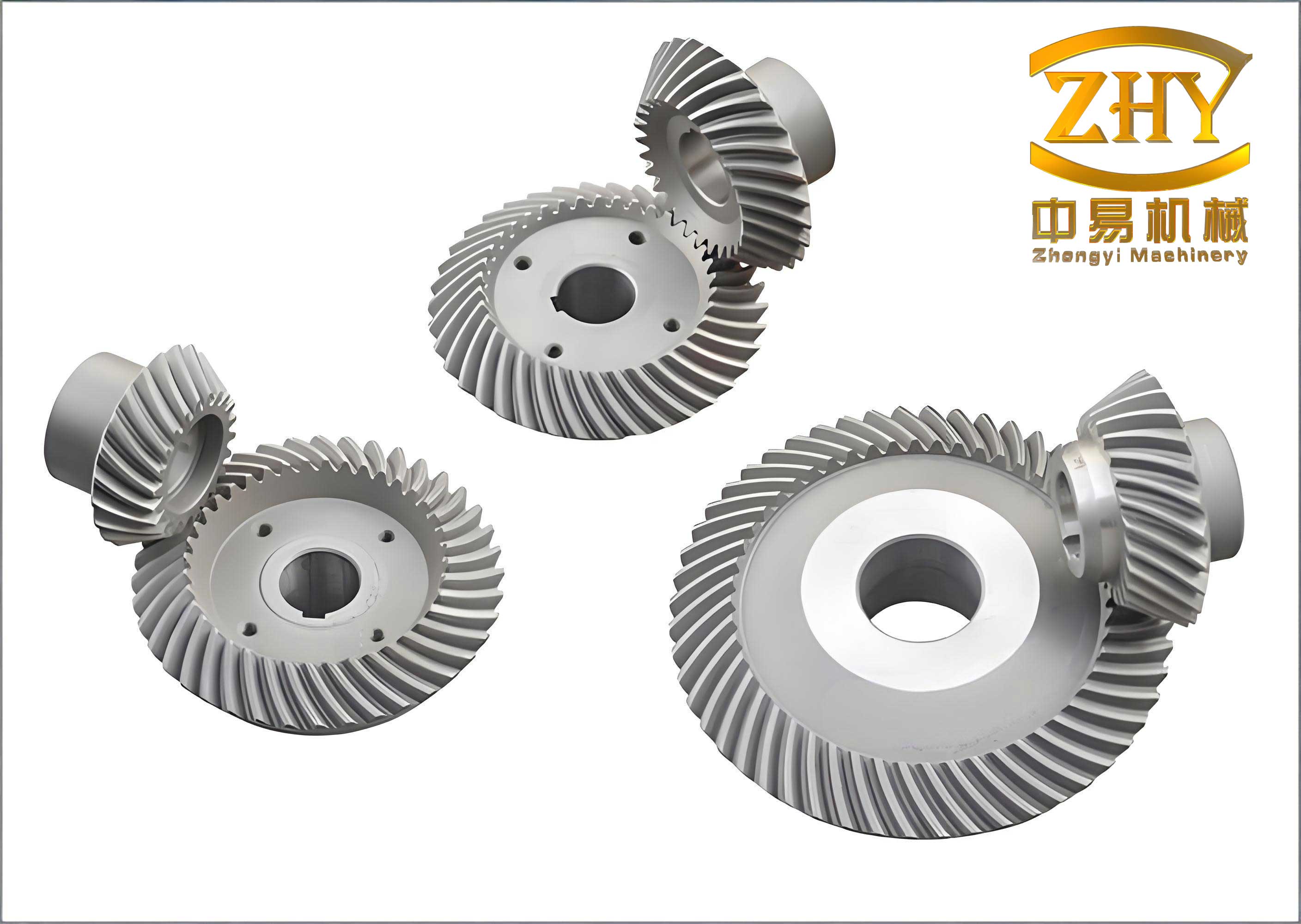
The image above provides a visual reference for hyperbolic gears, highlighting their intricate design. This complexity is why counterfeit parts pose such a grave risk: imitation hyperbolic gears may look similar but lack the precise engineering and material integrity needed for safe operation. In our campaign, we have encountered cases where伪造 hyperbolic gears were sold, leading to catastrophic failures. The economic and reputational damage from such incidents is immense, as evidenced by a manufacturer who lost significant market share due to widespread counterfeiting of their hyperbolic gear sets. To combat this, we advocate for rigorous testing and certification processes. One approach is to use non-destructive evaluation methods, such as ultrasonic testing, to verify the quality of hyperbolic gears. The attenuation of ultrasonic waves through a gear can indicate material flaws, modeled by:
$$ I = I_0 e^{-\alpha x} $$
Where \( I \) is the transmitted intensity, \( I_0 \) is the initial intensity, \( \alpha \) is the attenuation coefficient, and \( x \) is the distance traveled. For genuine hyperbolic gears, \( \alpha \) should fall within a specified range, ensuring no internal defects.
Returning to the lubrication topic, the misuse of hyperbolic gear oil in involute systems is not just a technical error; it reflects a broader issue of knowledge gaps in the industry. Our educational initiatives aim to close these gaps by providing clear guidelines. For example, we emphasize that involute gears, like those in many common vehicles, perform optimally with standard gear oils rated for moderate conditions. The additive package in these oils is milder, focusing on anti-wear and oxidation stability rather than extreme pressure protection. The following table summarizes key properties of lubricants for different gear types, reinforcing why hyperbolic gear oil is inappropriate for involute gears:
| Property | Standard Gear Oil (for Involute Gears) | Hyperbolic Gear Oil (for Hyperbolic Gears) |
|---|---|---|
| EP Additive Content | Low to moderate | High |
| Typical Operating Temperature Range | 0°C to 80°C | 50°C to 150°C |
| Primary Function | Reduce friction and wear under normal loads | Prevent scoring and pitting under high sliding friction |
| Corrosiveness to Non-Ferrous Metals | Minimal | Potentially high due to active additives |
| Cost per Liter | $ | $$$ |
From a practical standpoint, ensuring the correct lubricant application involves training procurement and maintenance staff. We have developed checklists and decision trees to guide these choices. For instance, if a vehicle uses involute gears in its differential, the lubricant should be selected based on viscosity grade and API classification, not on marketing claims. The viscosity grade is determined by standards like SAE J306, which specifies ranges at different temperatures. The required viscosity for involute gears can be calculated based on operating conditions, using the Stribeck curve to identify the lubrication regime:
$$ \Lambda = \frac{h_{\min}}{\sqrt{R_q^2}} $$
Where \( \Lambda \) is the lubricant film parameter, \( h_{\min} \) is the minimum film thickness as defined earlier, and \( R_q \) is the root-mean-square surface roughness. For involute gears, \( \Lambda \) should typically be above 3 to ensure full fluid film lubrication, achievable with standard oils. Hyperbolic gears, due to their higher roughness and loads, may operate in the boundary regime where \( \Lambda < 1 \), necessitating EP additives.
In conclusion, the fight against counterfeit auto parts and the proper use of hyperbolic gears are intertwined challenges that demand both ethical commitment and technical expertise. Through our initiatives, we have made strides in raising awareness and enforcing standards. However, the journey is ongoing. The science of hyperbolic gears teaches us that precision and appropriateness are paramount—whether in selecting a lubricant or choosing a component. Hyperbolic gears represent the pinnacle of gear technology, but they must be supported by genuine parts and correct maintenance practices. I urge all industry participants to embrace this holistic approach: reject counterfeit parts, educate continuously, and apply scientific principles to every decision. By doing so, we can build a safer, more reliable automotive ecosystem for everyone.
To further elaborate on hyperbolic gears, let’s consider their role in modern automotive advancements. With the rise of electric and hybrid vehicles, the demands on gear systems are evolving. Hyperbolic gears may find new applications in high-torque electric drivetrains, where efficiency and durability are critical. The lubrication requirements for these future hyperbolic gears will likely become even more specialized, potentially involving synthetic base oils and novel additive chemistries. Research in this area is active, with studies exploring nano-additives to enhance the performance of hyperbolic gear oils. The dispersion of nanoparticles in oil can improve thermal conductivity and load-bearing capacity, modeled by equations like the Maxwell-Garnett effective medium theory:
$$ \epsilon_{\text{eff}} = \epsilon_m \frac{1 + 2\phi f}{1 – \phi f} $$
Where \( \epsilon_{\text{eff}} \) is the effective permittivity (analogous to properties in lubrication), \( \epsilon_m \) is the permittivity of the base oil, \( \phi \) is the volume fraction of nanoparticles, and \( f \) is a factor dependent on particle shape and interaction. Such innovations could redefine how we maintain hyperbolic gears in the coming decades.
In parallel, our anti-counterfeit efforts must adapt to technological changes. Digital tracing methods, such as blockchain or RFID tags, offer promising ways to authenticate hyperbolic gears and other critical parts. These systems rely on cryptographic algorithms to ensure data integrity, exemplified by hash functions in blockchain:
$$ H(x) = \text{SHA-256}(x) $$
Where \( H(x) \) is the hash output for input \( x \), providing a unique identifier for each genuine hyperbolic gear. Implementing such solutions requires collaboration across the supply chain, but the payoff in trust and safety is invaluable.
Ultimately, the story of hyperbolic gears is a microcosm of the larger automotive industry: it blends engineering brilliance with practical challenges. By championing quality and knowledge, we honor the ingenuity behind hyperbolic gears and protect the lives that depend on them. Let this article serve as a call to action—for stricter standards, deeper learning, and unwavering integrity in all we do.