
In my experience as a design engineer specializing in precision mechanical systems for high-energy physics applications, I have often encountered the challenge of developing compact and reliable tuning mechanisms for microwave power sources. One of the most critical components in electron linear accelerators is the magnetron, which serves as the microwave power source. The oscillation frequency of a magnetron is determined by the equivalent capacitance and inductance of its cavity resonator. To adjust this frequency, mechanical tuning methods are widely employed due to their broad frequency range and robustness. In this article, I will delve into the design of an external tuning and limiting mechanism based on worm gears, specifically for a 3/6 MeV electron linear accelerator. This mechanism addresses the need for precise control, limited space, and reliable operation in demanding environments.
The core of this tuning mechanism revolves around the use of worm gears, a type of mechanical transmission that offers high reduction ratios, compactness, and smooth motion. Worm gears are particularly suited for applications where space constraints are severe, such as within the housing of an electron linear accelerator. The mechanism I designed incorporates a worm gear drive to rotate the tuning shaft of a mechanically tuned magnetron, allowing for frequency adjustment while ensuring that the shaft does not exceed its safe rotational limits. Additionally, the system includes limit switches and an angle sensor to monitor the tuning position in real-time, providing both safety and feedback for control systems.
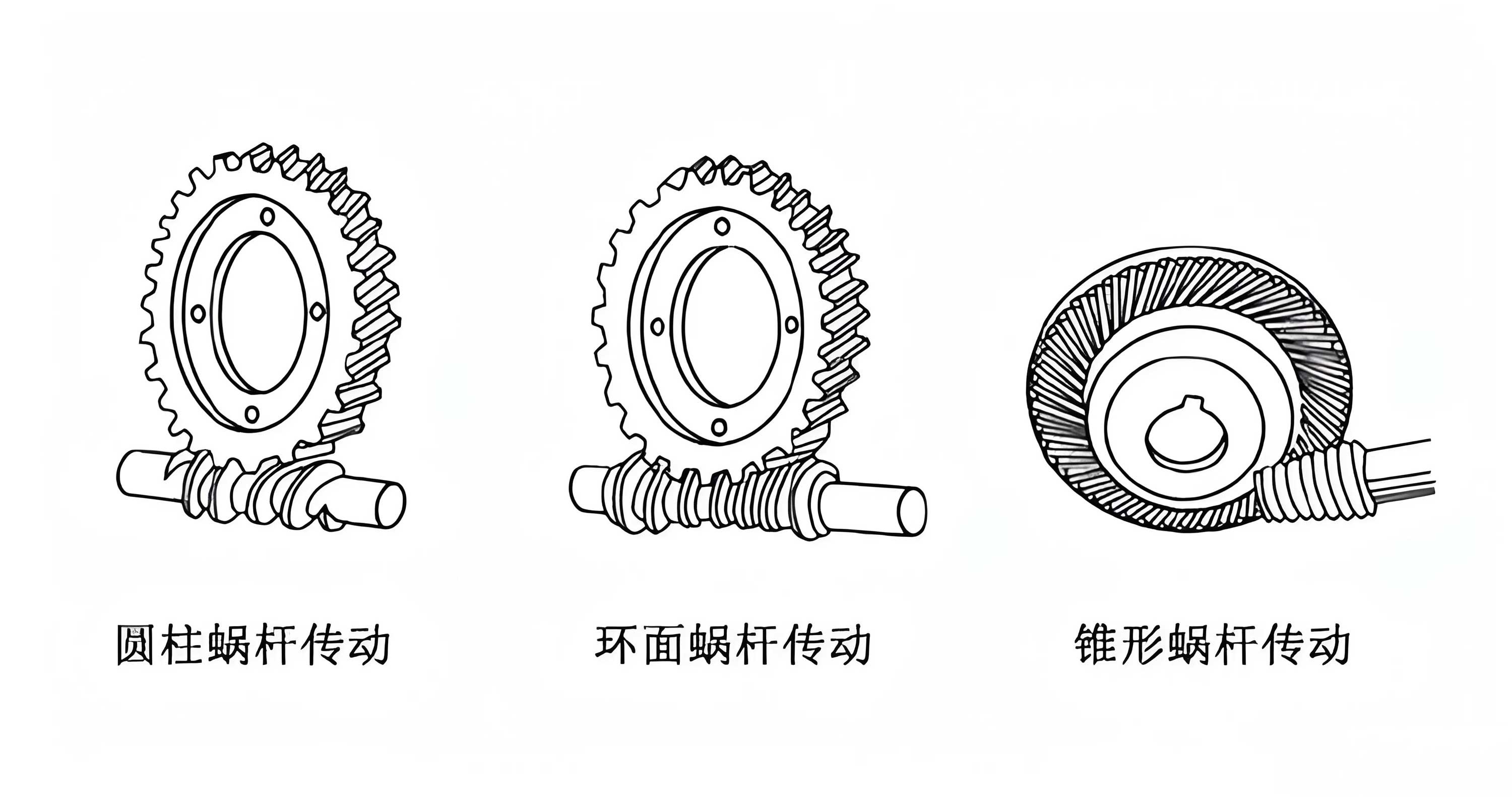
Worm gears operate on the principle of a screw-like worm engaging with a toothed wheel, known as the worm wheel. This configuration allows for significant speed reduction and torque amplification in a single stage, making it ideal for fine-tuning applications. The self-locking characteristic of worm gears, when the lead angle is small, prevents back-driving, which is crucial for maintaining the tuning position without external braking. In the context of the electron linear accelerator, the magnetron tuning shaft is permitted to rotate 4.5 turns to avoid damage to internal components, and the worm gear drive ensures that this rotation is controlled and limited accurately.
The design requirements for the worm gear transmission in this tuning mechanism are summarized in the table below. These parameters were derived from the operational needs of the accelerator, including power transmission, speed, and longevity.
| Parameter | Value | Description |
|---|---|---|
| Transmission Ratio (i) | 5 | The ratio of input to output speed. |
| Output Power (P₂) | 0.02 W | Power transmitted to the tuning shaft. |
| Maximum Worm Speed (n₁) | 1000 rpm | Highest rotational speed of the worm. |
| Design Life (Lₕ) | 40000 hours | Expected operational lifetime. |
To meet these requirements, I selected the transmission type and materials carefully. For the worm, I chose 45 steel due to its good machinability and strength, while for the worm wheel, I opted for cast tin bronze ZCuSn10P1, which offers excellent wear resistance and low friction, essential for long-term reliability. The worm gear set is of the open-type involute worm (ZI) configuration, which provides efficient power transmission and ease of manufacturing.
The design calculations for worm gears primarily focus on ensuring that the worm wheel teeth do not fail under operational stresses. The two main failure modes considered are contact fatigue and bending fatigue. I followed a design approach where the worm gear dimensions are determined based on contact fatigue strength, and then verified for bending fatigue strength. The contact fatigue strength formula for worm gears is given by:
$$ m \sqrt[3]{q} \geq \sqrt[3]{\frac{15150}{z_2 \sigma_{Hp}}^2 K T_2} $$
Here, \( m \) is the module in mm, \( q \) is the diameter factor, \( z_2 \) is the number of teeth on the worm wheel, \( \sigma_{Hp} \) is the allowable contact stress in N/mm², \( K \) is the load factor (taken as 1.4), and \( T_2 \) is the torque transmitted by the worm wheel in N·m. The allowable contact stress for cast tin bronze ZCuSn10P1 is calculated as:
$$ \sigma_{Hp} = \sigma_{Hbp} Z_s Z_N $$
Where \( \sigma_{Hbp} = 200 \) N/mm² for \( N = 10^7 \) cycles, \( Z_s = 1 \) (sliding speed influence coefficient), and \( Z_N = 1 \) (life coefficient). Thus, \( \sigma_{Hp} = 200 \) N/mm². The torque \( T_2 \) is computed from the output power and speed:
$$ T_2 = 9550 \frac{P_2 i}{n_1} = 9550 \times \frac{0.02 \times 5}{1000} = 0.955 \text{ N·m} $$
After iterative calculations, I selected the following parameters for the worm gear set to satisfy the inequality:
| Parameter | Value |
|---|---|
| Transmission Ratio (i) | 4.83 |
| Module (m) | 2 mm |
| Diameter Factor (q) | 11.20 |
| Worm Wheel Teeth (z₂) | 29 |
| Center Distance (a) | 40 mm |
With these values, the left-hand side of the contact fatigue formula becomes:
$$ m \sqrt[3]{q} = 2 \times \sqrt[3]{11.20} \approx 4.47 $$
And the right-hand side is:
$$ \sqrt[3]{\frac{15150}{29 \times 200}^2 \times 1.4 \times 0.955} \approx 2.06 $$
Since \( 4.47 > 2.06 \), the design meets the contact fatigue strength requirement. This confirms that the worm gears will withstand the operational contact stresses over their design life.
Next, I performed a bending fatigue strength check to ensure the worm wheel teeth are not prone to fracture. The bending stress formula is:
$$ \sigma_F = \frac{2000 T_2 K}{d_2′ d_1′ m} Y_2 \cos \gamma \leq \sigma_{Fp} $$
Where \( \sigma_F \) is the bending stress in N/mm², \( d_1′ \) is the pitch diameter of the worm in mm, \( d_2′ \) is the pitch diameter of the worm wheel in mm, \( Y_2 \) is the tooth form factor (taken as 0.42), \( \gamma \) is the lead angle, and \( \sigma_{Fp} \) is the allowable bending stress. The pitch diameters are calculated as \( d_1′ = m(q + 2x_2) \) and \( d_2′ = m z_2 \), with \( x_2 = -0.100 \) being the modification coefficient. The lead angle is derived from:
$$ \gamma = \arctan\left(\frac{z_1}{q}\right) $$
For \( z_1 = 6 \) (number of worm threads), \( \gamma \approx 28^\circ 10′ 43” \). Substituting the values:
$$ \sigma_F = \frac{2000 \times 0.955 \times 1.4}{58 \times (11.20 – 2 \times 0.100) \times 2^2} \times 0.42 \times \cos(28^\circ 10′ 43”) \approx 2.73 \text{ N/mm²} $$
The allowable bending stress for cast tin bronze ZCuSn10P1 is:
$$ \sigma_{Fp} = \sigma_{Fbp} Y_N $$
With \( \sigma_{Fbp} = 30 \) N/mm² for \( N = 10^6 \) cycles and \( Y_N = 1 \), so \( \sigma_{Fp} = 30 \) N/mm². Since \( \sigma_F < \sigma_{Fp} \), the bending fatigue strength is also satisfied. These calculations demonstrate that the worm gears are robustly designed for the tuning mechanism.
The complete set of parameters for the worm gear transmission is summarized in the table below, which includes all geometric and operational details essential for manufacturing and assembly.
| Parameter | Value | Parameter | Value |
|---|---|---|---|
| Transmission Ratio (i) | 4.83 | Worm Addendum (hₐ₁) | 2 mm |
| Center Distance (a) | 40 mm | Worm Width (b₁) | 32 mm |
| Pressure Angle (αₙ) | 20° | Clearance (c) | 0.4 mm |
| Module (m) | 2 mm | Worm Wheel Teeth (z₂) | 29 |
| Diameter Factor (q) | 11.20 | Wheel Pitch Diameter (d₂) | 58 mm |
| Lead Angle (γ) | 28°10’43” | Wheel Dedendum (hƒ₂) | 1.8 mm |
| Worm Threads (z₁) | 6 | Wheel Width (b₂) | 18 mm |
| Worm Pitch Diameter (d₁) | 22.4 mm | Modification Coefficient (x₂) | -0.100 |
Beyond the worm gear design, the tuning mechanism incorporates several auxiliary components to enhance functionality. Limit switches are positioned at the extreme ends of the tuning shaft rotation, corresponding to 4.5 turns, to prevent over-travel that could damage the magnetron’s internal tuning elements. These switches trigger emergency stops in the control system, ensuring operational safety. Additionally, an angle sensor, such as a rotary encoder, is integrated to provide real-time feedback on the tuning position. This allows for precise frequency adjustment and monitoring, which is critical for maintaining the optimal performance of the electron linear accelerator.
The advantages of using worm gears in this application are multifaceted. Firstly, the compact nature of worm gear sets allows them to fit within the confined spaces of accelerator housings without compromising on performance. Secondly, the smooth and quiet operation of worm gears minimizes vibrations that could affect the stability of the microwave frequency. Thirdly, the high reduction ratio enables fine control over the tuning shaft rotation, facilitating accurate frequency adjustments. Moreover, the self-locking feature ensures that the tuning position remains stable even in the presence of external disturbances, which is vital for consistent accelerator operation.
In terms of material science, the choice of cast tin bronze for the worm wheel is pivotal. This material exhibits excellent anti-frictional properties and resistance to wear, which prolongs the life of the worm gears under continuous use. The lubrication of worm gears is another critical aspect; I recommend using high-viscosity oils or greases that can withstand the high sliding speeds and pressures at the worm-wheel interface. Proper lubrication not only reduces wear but also enhances efficiency by minimizing frictional losses.
The design process for worm gears also involves considering thermal effects. During operation, worm gears can generate heat due to friction, which may lead to thermal expansion and affect the meshing accuracy. To mitigate this, the housing of the tuning mechanism should include cooling fins or forced air circulation to dissipate heat. Additionally, the materials selected have coefficients of thermal expansion that are compatible to avoid seizure or increased backlash over temperature variations.
From a broader perspective, worm gears find applications in various fields beyond accelerators, such as robotics, aerospace, and industrial machinery. Their ability to provide high torque in compact packages makes them indispensable in precision motion control systems. In the context of electron linear accelerators, the reliability of worm gears directly impacts the uptime and performance of the entire system, as any failure in the tuning mechanism could lead to frequency drift and reduced beam quality.
To further illustrate the design considerations, let’s explore the dynamic behavior of worm gears under load. The efficiency of worm gear transmissions can be estimated using the formula:
$$ \eta = \frac{\tan \gamma}{\tan(\gamma + \phi)} $$
Where \( \phi \) is the friction angle, dependent on the materials and lubrication. For the selected materials and parameters, assuming a friction coefficient of 0.05, the efficiency is approximately 85%, which is acceptable for the low-power application here. However, in high-power systems, efficiency optimization becomes crucial to reduce energy losses.
The stiffness of the worm gear set also plays a role in the tuning mechanism’s responsiveness. Torsional stiffness can be calculated based on the geometry and material properties. For instance, the torsional stiffness \( k_t \) of the worm shaft is given by:
$$ k_t = \frac{G J}{L} $$
Where \( G \) is the shear modulus of the material, \( J \) is the polar moment of inertia, and \( L \) is the length of the shaft. Ensuring sufficient stiffness minimizes backlash and improves the precision of frequency tuning.
In practice, the assembly of worm gears requires careful alignment to avoid premature wear. Misalignment can lead to uneven load distribution and noise. I recommend using precision bearings and housing bores machined to tight tolerances. Additionally, the backlash between the worm and worm wheel should be minimized but not eliminated entirely to allow for thermal expansion and lubrication film.
The integration of the worm gear mechanism with the magnetron tuning shaft involves a coupling that accommodates minor misalignments. Flexible couplings, such as bellows or jaw couplings, can be used to transmit torque while compensating for angular and parallel offsets. This ensures that the worm gears are not subjected to excessive bending moments.
From a control system perspective, the angle sensor feedback is used in a closed-loop configuration to achieve precise tuning. The control algorithm can employ PID (Proportional-Integral-Derivative) techniques to adjust the worm motor speed based on the error between the desired and actual tuning positions. This allows for automated frequency sweeping and locking, which is essential for applications like medical imaging or materials testing where beam energy stability is paramount.
The durability of worm gears under cyclic loading is another aspect I considered. Using the Palmgren-Miner rule for cumulative fatigue damage, the design life of 40,000 hours was verified against variable load spectra typical of accelerator operation. The safety factors for both contact and bending fatigue were kept above 1.5 to account for uncertainties in load estimation and material properties.
In conclusion, the design of a tuning and limiting mechanism based on worm gears for a 3/6 MeV electron linear accelerator demonstrates the effectiveness of worm gears in precision mechanical systems. The compact structure, smooth transmission, and integration of limit switches and angle sensors address the challenges of limited space, reliable tuning, and real-time monitoring. The detailed design calculations and material selections ensure that the worm gears meet all operational requirements for contact fatigue strength, bending fatigue strength, and longevity. This mechanism not only enhances the performance of the accelerator but also showcases the versatility of worm gears in high-tech applications. As accelerators continue to evolve towards higher energies and compact designs, worm gears will remain a key component in enabling precise and reliable tuning mechanisms.
Looking ahead, advancements in materials, such as composite polymers or surface coatings, could further improve the efficiency and wear resistance of worm gears. Additionally, the integration of smart sensors and IoT (Internet of Things) capabilities could enable predictive maintenance, where wear patterns are monitored to schedule replacements before failures occur. The principles outlined here for worm gears can be extended to other types of accelerators or precision machinery, underscoring the importance of robust mechanical design in scientific and industrial advancements.
Throughout this design process, I have emphasized the critical role of worm gears in achieving the desired performance metrics. By leveraging their unique properties, such as high reduction ratios and self-locking, we can create mechanisms that are both efficient and reliable. The success of this tuning mechanism serves as a testament to the enduring relevance of worm gears in modern engineering, and I anticipate their continued use in future innovations across various fields.