
In the realm of precision motion control, from aerospace robotics to delicate medical instruments, the demand for actuators combining high reduction ratios, compactness, and positional accuracy is paramount. The strain wave gear, also known as a harmonic drive, stands out as a key technology meeting these demands. Its unique operating principle, relying on the elastic deformation of a flexible spline, enables remarkable advantages such as high torque capacity, zero-backlash operation (when preloaded), and exceptional positional repeatability. However, this very reliance on elastic components and frictional interactions within the gear mesh introduces intrinsic nonlinear behaviors that complicate high-fidelity modeling and control. Among these, the nonlinear hysteresis stiffness characteristic is a fundamental property that significantly influences the dynamic performance and steady-state precision of servo systems employing strain wave gear reducers.
Traditional dynamic modeling of strain wave gear drives often simplifies the transmission stiffness to a constant value or a piecewise constant function. While this simplification facilitates initial analysis, it inherently limits the model’s accuracy, leading to discrepancies between simulated and actual system behavior, particularly under varying load conditions and during direction reversals. The true relationship between transmitted torque and the resulting torsional deflection is not linear and exhibits a distinct hysteresis loop. This loop signifies that the instantaneous stiffness is path-dependent; the torque-deflection relationship during loading differs from that during unloading, and the system ‘remembers’ its prior state to some degree. Accurately capturing this hysteresis stiffness is therefore critical for developing predictive models that can inform advanced control strategies, ultimately enhancing the performance of robotic joints, telescope positioners, and other precision mechanisms.
The core challenge lies in formulating a mathematical model that encapsulates both the nonlinear elasticity and the memory-dependent hysteresis of the strain wave gear. The hysteresis arises from a complex interplay of factors: the distributed compliance of the flexspline, micro-slip friction at the multiple tooth contacts between the flexspline and circular spline, and possibly material damping within the elastic components. A physically accurate model must account for the fact that the transmission stiffness at any moment is not merely a function of the instantaneous torsional angle but is also influenced by the history of deformation the system has undergone—a property we refer to as its “genetic characteristic.”
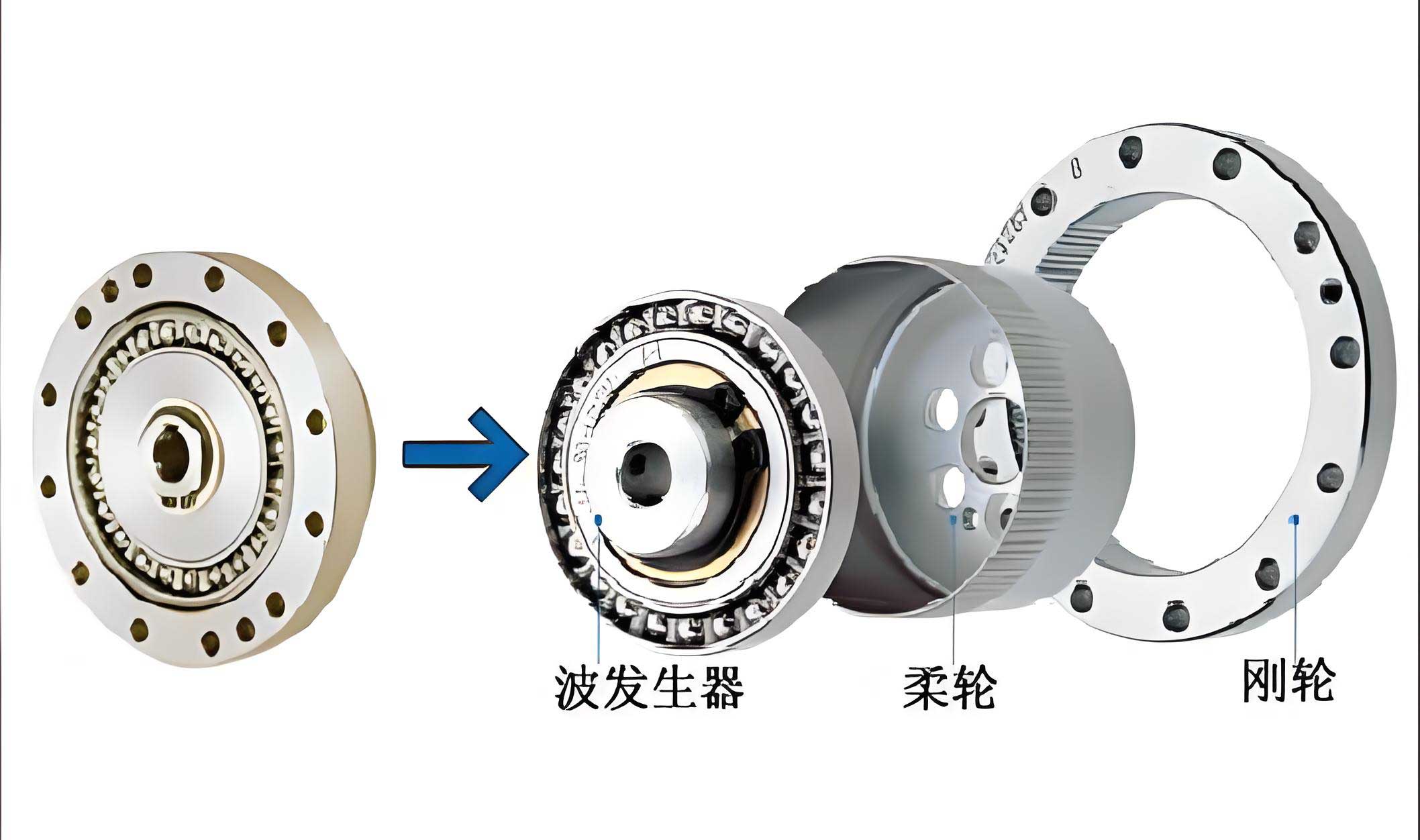
This article presents a dedicated study on a novel hysteresis stiffness model for strain wave gear transmission, founded on this concept of genetic characteristics. The proposed model explicitly separates the overall torque-deflection relationship into a nonlinear elastic component and a hysteresis correction term that carries the system’s operational history. We will detail the model’s formulation, describe the experimental platform and methodology used to gather the necessary load-deflection data from a commercial strain wave gear reducer, and outline the parameter identification process using a Particle Swarm Optimization (PSO) algorithm. Finally, the model’s performance will be validated against experimental data, demonstrating a significant improvement in accuracy over traditional modeling approaches.
Mathematical Formulation of the Genetic Hysteresis Stiffness Model
The transmission stiffness (K) of a strain wave gear, or any torsional system, is fundamentally defined as the derivative of transmitted torque (T) with respect to the torsional deflection angle (θ).
$$K = \frac{dT}{d\theta}$$
For a strain wave gear system, the torsional deflection angle (θ) is the difference between the input angular displacement (adjusted by the gear ratio) and the output angular displacement.
$$\theta = \frac{\theta_{in}}{N} – \theta_{out}$$
where $N$ is the reduction ratio of the strain wave gear. The hysteresis phenomenon manifests as a non-congruent, loop-shaped curve when plotting $T$ against $θ$ over a loading-unloading cycle. To model this, we propose a composite function where the total torque $T(θ)$ is the sum of a nonlinear stiffness function $f(θ)$ and a hysteresis correction function $z(θ)$.
$$T(\theta) = f(\theta) + z(\theta)$$
The term $f(θ)$ represents the underlying nonlinear elastic response. A polynomial function is effective for capturing this smooth nonlinearity. A fifth-order polynomial provides sufficient flexibility without excessive complexity.
$$f(\theta) = c_1 \theta + c_2 \theta^3 + c_3 \theta^5$$
Here, $c_1$, $c_2$, and $c_3$ are parameters to be identified. The essence of the genetic characteristic lies within the hysteresis correction term, $z(θ)$. This term must fulfill two primary conditions: it must be direction-dependent, and it must incorporate the system’s memory of past states. Consequently, $z(θ)$ is defined as a piecewise function.
$$z(\theta) =
\begin{cases}
z^+(\theta), & \text{for forward unloading / reverse loading} \\
z^-(\theta), & \text{for reverse unloading / forward loading}
\end{cases}$$
To incorporate memory, we introduce a memory factor, $ψ(u)$, which quantifies the lingering influence of a past system state. This influence should decay over time. An exponential decay function is a natural and mathematically convenient choice for this purpose.
$$\psi(u) = \alpha e^{-\beta u}$$
In this equation, $u$ is the duration for which the state’s influence has persisted (i.e., the time elapsed since that state occurred), and $α$ and $β$ are parameters governing the initial strength and decay rate of the memory. The genetic influence of a specific state occurring at time $s$ on the present time $t$ (where $u = t-s$) is thus $\psi(t-s)\theta(s)$. The cumulative genetic effect of the entire operational history from the start (time 0) to the present is the integral of all these past influences.
$$\int_0^t \psi(t-s) \dot{\theta}(s) ds = \int_0^t \alpha e^{-\beta (t-s)} \dot{\theta}(s) ds$$
For a controlled experimental characterization, the torsional excitation is often applied as a sinusoidal function of time, ensuring the hysteresis loop converges to a stable, closed cycle.
$$\theta(t) = A \sin(\omega t)$$
where $A$ is the amplitude and $ω$ is the angular frequency. To ensure continuity and proper shaping of the hysteresis loop under this sinusoidal input, the hysteresis correction term is modulated by the absolute value of the cosine of the phase.
$$z(t) = |\cos(\omega t)| \int_0^t \alpha e^{-\beta (t-s)} \dot{\theta}(s) ds$$
Solving this integral for the given $\theta(t)$ yields an explicit time-domain expression for the hysteresis term.
$$z(t) = A\alpha \frac{\omega e^{-\beta t} + \beta \sin(\omega t) – \omega \cos(\omega t)}{\beta^2 + \omega^2} |\cos(\omega t)|$$
The final step is to express $z$ as a function of $θ$, not time. This is achieved by finding the inverse function $t^{\pm}(\theta)$ from the sinusoidal input relation for the two directional cases and substituting into $z(t)$. The complete Genetic Hysteresis Stiffness Model for a strain wave gear is therefore given by:
$$T(\theta) = c_1 \theta + c_2 \theta^3 + c_3 \theta^5 + A\alpha \frac{\omega e^{-\beta t^{\pm}(\theta)} + \beta \sin(\omega t^{\pm}(\theta)) – \omega \cos(\omega t^{\pm}(\theta))}{\beta^2 + \omega^2} |\cos(\omega t^{\pm}(\theta))|$$
This model contains six key parameters ($c_1$, $c_2$, $c_3$, $α$, $β$, $ω$) that must be identified from experimental data.
Experimental Characterization of Strain Wave Gear Hysteresis
To identify the parameters of the proposed model and validate its accuracy, a dedicated test platform for strain wave gear reducers was employed. The core of the platform is a high-precision strain wave gear (model LHT-20-50-D1X). The system is modular, comprising a servo motor drive unit, the strain wave gear unit under test, a high-resolution dual-range torque sensor (resolution ±0.2 N·m) for measuring input/output torque, precision optical encoder systems (resolution ±1 arcsecond) for measuring input and output angular positions, and a magnetorheological or magnetic powder brake to apply a controlled, variable load to the output side.
The testing protocol focused on capturing the quasi-static hysteresis loop. First, any initial backlash in the system was carefully taken up. With the input side of the strain wave gear securely fixed, a slow, controlled torque was applied to the output side using the brake. The torque was increased from zero to the rated torque in one direction (forward loading), then gradually decreased back to zero (forward unloading). Immediately following this, torque was applied in the opposite direction to the rated negative torque (reverse loading) and then unloaded back to zero (reverse unloading). Throughout this slow cycle, simultaneous readings of output torque and the corresponding torsional deflection angle (calculated from input and output encoder data) were recorded at numerous points. This process was repeated multiple times to ensure data consistency. A subset of the recorded experimental data is presented in the table below.
| Forward Loading Torque (N·m) | Torsional Angle (10⁻³ rad) | Forward Unloading Torque (N·m) | Torsional Angle (10⁻³ rad) |
|---|---|---|---|
| 0 | 0.143 | 30 | 1.168 |
| 2 | 0.264 | 28 | 1.147 |
| 4 | 0.383 | 26 | 1.105 |
| 6 | 0.482 | 24 | 1.059 |
| 8 | 0.575 | 22 | 1.013 |
| 10 | 0.662 | 20 | 0.955 |
| 12 | 0.742 | 18 | 0.897 |
| 14 | 0.822 | 16 | 0.831 |
| 16 | 0.897 | 14 | 0.771 |
| … | … | … | … |
The complete dataset forms a clear, S-shaped hysteresis loop when plotted, vividly illustrating the path-dependent stiffness of the strain wave gear. The loading and unloading paths are distinct, and a noticeable residual deflection (the ‘hysteresis gap’) is present when the torque returns to zero, confirming the presence of the genetic, memory-like property in the system’s stiffness.
Parameter Identification via Particle Swarm Optimization
The Genetic Hysteresis Stiffness Model is nonlinear in its parameters and has a complex structure, making traditional linear least-squares fitting techniques inapplicable. Furthermore, the parameters have wide, potentially unbounded search spaces and can differ by several orders of magnitude. To tackle this challenging parameter identification problem, the Particle Swarm Optimization (PSO) algorithm was employed. PSO is a population-based stochastic optimization technique inspired by the social behavior of bird flocking or fish schooling. It is particularly effective for global optimization problems with nonlinear, multi-parameter objective functions.
The core of the identification process is defining an objective function that measures the discrepancy between the model prediction and the experimental data. Adopting a least-squares criterion, the fitness function (F) for the PSO is defined as the sum of squared residuals across all $n$ experimental data points $(θ_i, T_i)$.
$$F(c_1, c_2, c_3, \alpha, \beta, \omega) = \sum_{i=1}^{n} \left[ T_i – T(\theta_i; c_1, c_2, c_3, \alpha, \beta, \omega) \right]^2$$
The PSO algorithm works by initializing a swarm of particles, each representing a candidate set of parameters $(c_1, c_2, c_3, α, β, ω)$. Each particle moves through the 6-dimensional parameter space with a velocity that is dynamically adjusted based on its own best-known position (personal best) and the best-known position of the entire swarm (global best). Over successive iterations, the swarm converges towards the region of the parameter space that minimizes the fitness function $F$.
The algorithm was run with a sufficiently large swarm size and number of iterations to ensure convergence. The optimal parameter set identified by the PSO for the tested strain wave gear is summarized in the following table.
| Parameter | Identified Optimal Value |
|---|---|
| $c_1$ | 2.4737 × 10⁴ |
| $c_2$ | 1.0000 × 10⁹ |
| $c_3$ | -1.1774 × 10¹⁴ |
| $\alpha$ | 2.6532 × 10⁶ |
| $\beta$ | -4.2268 × 10² |
| $\omega$ | -2.2631 × 10² |
Plotting the model $T(θ)$ with these identified parameters against the experimental data points reveals an excellent fit. The model curve accurately traces the S-shaped hysteresis loop, closely following both the loading and unloading data paths. It successfully captures the nonlinear stiffening behavior as torque increases and the genetic hysteresis gap at zero torque. The decomposition of the model also provides insight: the polynomial term $f(θ)$ represents the underlying smooth, symmetric nonlinear stiffness, while the $z(θ)$ term introduces the directional asymmetry and memory effect, shaping the definitive hysteresis loop.
To quantitatively assess the improvement over traditional methods, the model’s accuracy is compared to a conventional piecewise linear stiffness model. The metric used is the Residual Sum of Squares (RSS). For the proposed Genetic Hysteresis Model applied to the experimental strain wave gear data, the RSS was calculated to be 17.9 N²·m². In stark contrast, a standard piecewise linear model fitted to the same data yielded an RSS of 4521.5 N²·m². This represents an improvement in accuracy by a factor of over 250, conclusively demonstrating the superior descriptive power of the genetic characteristic-based model for the nonlinear hysteresis stiffness inherent in strain wave gear transmission.
Conclusion and Perspectives
This study has presented a comprehensive framework for modeling the nonlinear hysteresis stiffness of strain wave gear drives. The proposed Genetic Hysteresis Stiffness Model successfully addresses the limitations of traditional constant or piecewise-constant stiffness assumptions by explicitly incorporating the system’s path-dependent memory, or genetic characteristic. The model elegantly separates the torsional response into a nonlinear elastic component and a history-dependent hysteresis correction term, the latter being governed by an exponentially decaying memory factor.
The experimental characterization of a commercial strain wave gear reducer provided the essential data to validate the model’s form. The subsequent parameter identification, performed effectively using a Particle Swarm Optimization algorithm, confirmed the model’s capability to achieve a remarkably high-fidelity fit to the observed hysteresis loop. The quantitative comparison against a basic piecewise linear model underscored a dramatic improvement in accuracy, exceeding two orders of magnitude. This level of precision is crucial for developing high-performance dynamic models of robotic joints and other servo systems that rely on strain wave gear reducers, enabling more accurate simulation of transient responses, refinement of mechanical designs, and synthesis of advanced model-based control algorithms to compensate for nonlinear effects.
While the model demonstrates excellent performance for the quasi-static, sinusoidal loading conditions under which it was identified, its behavior under more complex, arbitrary dynamic loading sequences warrants further investigation. The current formulation assumes a stable, cyclic hysteresis loop. Future work could explore the model’s generalization to non-periodic inputs and its ability to capture minor, nested hysteresis loops within major cycles. Furthermore, integrating this stiffness model with dynamic friction and backlash models would lead to a complete, high-fidelity dynamic representation of the strain wave gear transmission. Such a holistic model would be an invaluable tool for pushing the boundaries of precision in mechatronic systems across advanced manufacturing, scientific instrumentation, and beyond.