
In the field of mechanical engineering, helical gears are widely recognized for their superior performance in power transmission systems, owing to their high load-carrying capacity, smooth operation, and efficient power transfer. However, during manufacturing, assembly, and operation, helical gears are subjected to various forces and thermal effects, leading to deviations between actual and theoretical meshing points. These deviations result in偏载振动 (eccentric vibrations), which can adversely affect system performance, reduce lifespan, and increase noise levels. To address this issue, gear modification techniques have been developed. Modification involves strategically removing material from gear teeth to align the actual meshing points with the theoretical ones, thereby mitigating振动 and noise. This study focuses on helical gears, employing a genetic algorithm-based modification approach to optimize dynamic characteristics. The goal is to minimize transmission error and vibration amplitude, thereby enhancing the reliability and efficiency of helical gear transmission systems.
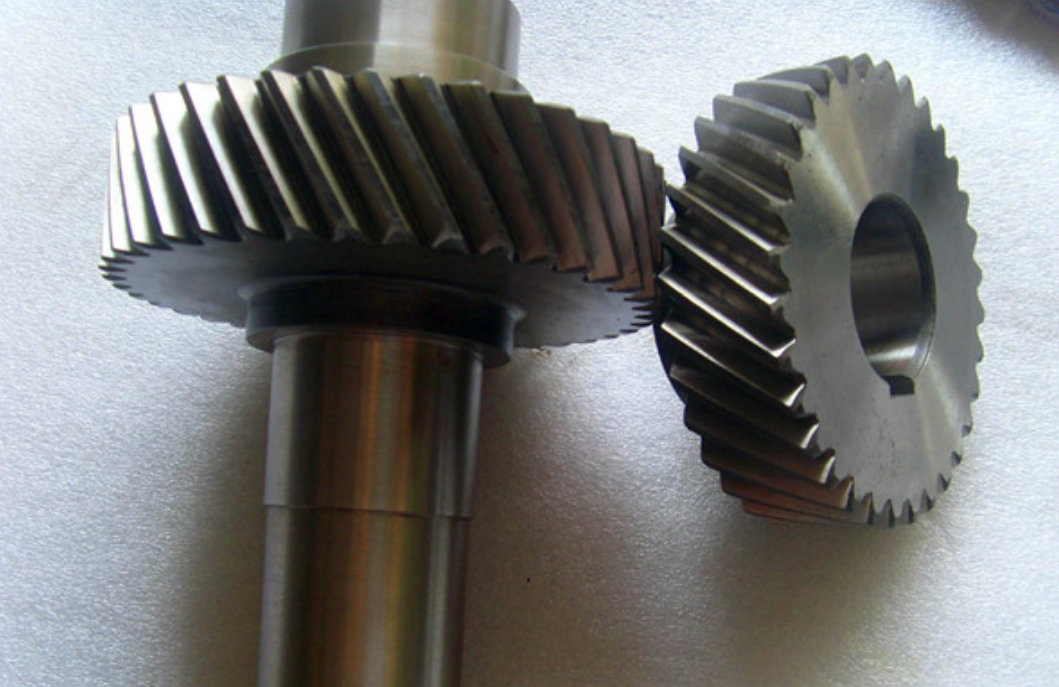
Helical gears are integral components in many industrial applications, from automotive transmissions to aerospace engines. Their helical tooth design allows for gradual engagement, reducing impact loads and noise compared to spur gears. However, the complexity of helical gear dynamics necessitates advanced analysis methods. Traditional modification schemes, such as those based on ISO standards, often rely on empirical formulas and iterative testing, which can be time-consuming and suboptimal. In contrast, modern optimization techniques like genetic algorithms offer a robust and efficient way to find optimal modification parameters. This article delves into the theoretical foundations of helical gear modification, establishes a comprehensive dynamic model for helical gear transmission systems, and applies a genetic algorithm to achieve superior modification results. Through detailed analysis of transmission error, vibration amplitude, and velocity, we demonstrate the advantages of the genetic algorithm approach over conventional methods.
Theoretical Foundations of Helical Gear Modification
Modification of helical gears typically involves two primary types: profile modification and lead modification. Profile modification alters the tooth profile along the involute curve, while lead modification adjusts the tooth surface along the axial direction. Both aim to compensate for deformations and misalignments that occur under load. The effectiveness of modification depends on three key elements: the maximum modification amount, the modification length, and the modification curve.
The maximum modification amount is the depth of material removed at the most critical point. It can be calculated using various standards and formulas. For helical gears, common approaches include the ISO 6336 standard, AGMA guidelines, and empirical formulas. The following table summarizes some widely used formulas for determining the maximum modification amount:
| Standard/Formula | Calculation for Maximum Modification Amount |
|---|---|
| Ideal Tip Relief Formula | $$C_a = \delta + \delta_{\theta} + \delta_{m}$$ |
| ISO Recommended Formula | $$C_a = \frac{k_A F_t / b}{\epsilon_{\alpha} C}$$ |
| H. Sigg Formula (Driver Gear) | $$C_{a1} = 4 + \frac{i F_t / b}{\pm 4}$$ |
| H. Sigg Formula (Driven Gear) | $$C_{a2} = j + \frac{i F_t / b}{\pm 3.5}$$ |
| Rolls-Royce Formula | $$C_a = 18 + \frac{0.036 F_t}{(Y_{br} / b)_{\text{min}} b \cos^3 \beta}$$ |
In these formulas, $C_a$ represents the maximum modification amount, $F_t$ is the tangential force, $b$ is the face width, $\epsilon_{\alpha}$ is the transverse contact ratio, $k_A$ is the application factor, $C$ is the theoretical stiffness, $i$ is the transmission ratio, $j$ is a constant, $Y_{br}$ is the form factor, and $\beta$ is the helix angle of the helical gears.
The modification length defines the extent over which modification is applied. It can be classified as short or long modification. Long modification typically spans from the initial contact point to the critical point of single-double tooth contact alternation, while short modification is half of that length. For helical gears, the long modification length $L_{a1}$ is often calculated as:
$$L_{a1} = (\epsilon_{\alpha} – 1) P_b$$
where $P_b$ is the base pitch. The choice between short and long modification depends on factors such as load conditions and contact ratio. Helical gears with high重合度 (contact ratio) under heavy loads may benefit from long modification.
The modification curve describes the transition of modification amount from zero to the maximum value. Common curves include linear, parabolic, and higher-order polynomial curves. For helical gears,曲线型 (curve-type) modifications like quadratic or Walker curves are often preferred to ensure smooth meshing. The Walker curve, for instance, uses an exponent to control the shape, expressed as:
$$\Delta(x) = \Delta_{\text{max}} \left( \frac{x}{L} \right)^n$$
where $\Delta(x)$ is the modification amount at position $x$, $\Delta_{\text{max}}$ is the maximum modification amount, $L$ is the modification length, and $n$ is the exponent (e.g., 1.2 for Walker curve). Proper selection of the modification curve is crucial for minimizing stress concentrations and improving the dynamic behavior of helical gears.
Dynamic Modeling of Helical Gear Transmission Systems
To analyze the impact of modification on helical gear dynamics, a comprehensive dynamic model must be established. Helical gear transmission systems exhibit complex behaviors due to factors such as time-varying mesh stiffness, damping, and transmission errors. A lumped-parameter method is commonly used to develop a弯-扭-轴耦合 (bending-torsion-axial coupling) dynamic model. For a pair of helical gears, an 8-degree-of-freedom (DOF) model can be constructed, encompassing rotational and translational motions.
The model includes two rotational DOFs (angular displacements $\theta_1$ and $\theta_2$ for the driver and driven helical gears, respectively) and six translational DOFs (linear displacements $X_1$, $Y_1$, $Z_1$, $X_2$, $Y_2$, $Z_2$ along the coordinate axes). The coordinate system is defined such that the Z-axis aligns with the gear轴线 (axis), the X-axis is in the radial direction, and the Y-axis is in the tangential direction. The equations of motion are derived using Newton’s second law, considering mesh forces, bearing supports, and external torques.
The mesh force $F_n$ along the line of action for helical gears can be expressed as:
$$F_n = k_n(t) X_n + c_n \dot{X}_n$$
where $k_n(t)$ is the time-varying mesh stiffness, $c_n$ is the mesh damping, and $X_n$ is the relative displacement along the line of action. The time-varying mesh stiffness for helical gears is periodic and can be approximated by a Fourier series:
$$k_n(t) = k_m + \sum_{i=1}^{N} A_i \cos(i \omega_n t + \phi_i)$$
Here, $k_m$ is the average mesh stiffness, $A_i$ is the amplitude of the i-th harmonic, $\omega_n$ is the mesh frequency, and $\phi_i$ is the phase angle. The mesh frequency is related to the rotational speed and number of teeth of the helical gears.
The relative displacement $X_n$ accounts for vibrations and errors:
$$X_n = -\sin(\alpha)(X_1 – X_2) – \cos(\alpha)\sin(\beta)(Y_1 – Y_2) – \cos(\alpha)\cos(\beta)(Z_1 – Z_2) + \cos(\alpha)\cos(\beta)(R_1 \theta_1 – R_2 \theta_2) – E_s(t)$$
where $\alpha$ is the pressure angle, $\beta$ is the helix angle, $R_1$ and $R_2$ are the base radii, and $E_s(t)$ is the static transmission error. The static transmission error for helical gears can be modeled as:
$$E_s(t) = e_0 + A_e \cos(\omega_n t + \varphi_r)$$
with $e_0$ as the mean value and $A_e$ as the fluctuation amplitude.
The equations of motion for the helical gear system are given by:
$$
\begin{aligned}
& m_1 \ddot{X}_1 + c_{1X} \dot{X}_1 + k_{1X} X_1 = F_{1X} \\
& m_1 \ddot{Y}_1 + c_{1Y} \dot{Y}_1 + k_{1Y} Y_1 = F_{1Y} \\
& m_1 \ddot{Z}_1 + c_{1Z} \dot{Z}_1 + k_{1Z} Z_1 = F_{1Z} \\
& I_1 \ddot{\theta}_1 + F_{1Z} R_1 = T_1 \\
& m_2 \ddot{X}_2 + c_{2X} \dot{X}_2 + k_{2X} X_2 = -F_{1X} \\
& m_2 \ddot{Y}_2 + c_{2Y} \dot{Y}_2 + k_{2Y} Y_2 = -F_{1Y} \\
& m_2 \ddot{Z}_2 + c_{2Z} \dot{Z}_2 + k_{2Z} Z_2 = -F_{1Z} \\
& I_2 \ddot{\theta}_2 + F_{1Z} R_2 = -T_2
\end{aligned}
$$
where $m_i$ and $I_i$ are the mass and moment of inertia of gear $i$, $c_{ij}$ and $k_{ij}$ are damping and stiffness coefficients in each direction, $T_i$ are external torques, and $F_{1X}$, $F_{1Y}$, $F_{1Z}$ are components of the mesh force derived from $F_n$:
$$
\begin{aligned}
& F_{1X} = \sin(\alpha) F_n \\
& F_{1Y} = \cos(\alpha) \sin(\beta) F_n \\
& F_{1Z} = \cos(\alpha) \cos(\beta) F_n
\end{aligned}
$$
To facilitate numerical solution, dimensionless parameters are introduced: $x_i = X_i / b_c$, $y_i = Y_i / b_c$, $z_i = Z_i / b_c$, $\tau = \omega_n t$, where $b_c$ is a characteristic length and $\omega_n$ is the natural frequency. The dimensionless equations become:
$$
\begin{aligned}
& \ddot{x}_1 + 2\xi_{1x} \dot{x}_1 + \kappa_{1x} g(x_1) – 2a l_1 \dot{x}_n – a \kappa_1 f(x_n) = 0 \\
& \ddot{y}_1 + 2\xi_{1y} \dot{y}_1 + \kappa_{1y} g(y_1) – 2b l_1 \dot{x}_n – b \kappa_1 f(x_n) = 0 \\
& \ddot{z}_1 + 2\xi_{1z} \dot{z}_1 + \kappa_{1z} g(z_1) – 2c l_1 \dot{x}_n – c \kappa_1 f(x_n) = 0 \\
& \ddot{x}_2 + 2\xi_{2x} \dot{x}_2 + \kappa_{2x} g(x_2) – 2a l_2 \dot{x}_n – a \kappa_2 f(x_n) = 0 \\
& \ddot{y}_2 + 2\xi_{2y} \dot{y}_2 + \kappa_{2y} g(y_2) – 2b l_2 \dot{x}_n – b \kappa_2 f(x_n) = 0 \\
& \ddot{z}_2 + 2\xi_{2z} \dot{z}_2 + \kappa_{2z} g(z_2) – 2c l_2 \dot{x}_n – c \kappa_2 f(x_n) = 0 \\
& \ddot{x}_n + a(\ddot{x}_1 – \ddot{x}_2) + b(\ddot{y}_1 – \ddot{y}_2) + c(\ddot{z}_1 – \ddot{z}_2) + 2c^2 l_{12} \dot{x}_n + c^2 \kappa_{12} f(x_n) = c p – E_s(\tau)
\end{aligned}
$$
where $a = \sin(\alpha)$, $b = \cos(\alpha)\sin(\beta)$, $c = \cos(\alpha)\cos(\beta)$, $\xi_{ij}$ are dimensionless damping ratios, $\kappa_{ij}$ are dimensionless stiffnesses, $l_i$ and $l_{12}$ are dimensionless damping coefficients, $\kappa_i$ and $\kappa_{12}$ are dimensionless mesh stiffnesses, $p$ is a dimensionless torque parameter, and $g(\cdot)$ and $f(\cdot)$ are functions representing support clearance and mesh nonlinearity, respectively. This model captures the essential dynamics of helical gear transmission systems and serves as the basis for analyzing modification effects.
Genetic Algorithm-Based Modification for Helical Gears
Traditional modification methods for helical gears often rely on ISO standards or empirical guidelines, which may not yield optimal results due to the complex interplay of design parameters. Genetic algorithms (GAs) offer a powerful optimization approach inspired by natural selection. By evolving a population of candidate solutions over generations, GAs can efficiently search for optimal modification parameters that minimize objectives like transmission error or vibration amplitude.
In this study, a GA is applied to optimize the modification of helical gears. The algorithm starts with an initial population of modification schemes, each defined by parameters such as maximum profile modification amount, modification length, and modification curve exponent. The fitness of each scheme is evaluated based on the dynamic response of the helical gear system, particularly the transmission error and vibration amplitude. The GA operators—selection, crossover, and mutation—are then applied to generate new populations over multiple generations.
The optimization problem can be formulated as follows:
$$\min_{\mathbf{p}} J(\mathbf{p}) = w_1 \cdot TE(\mathbf{p}) + w_2 \cdot VA(\mathbf{p})$$
where $\mathbf{p}$ is the vector of modification parameters, $J(\mathbf{p})$ is the objective function, $TE(\mathbf{p})$ is the transmission error, $VA(\mathbf{p})$ is the vibration amplitude, and $w_1$, $w_2$ are weighting factors. The GA searches for $\mathbf{p}$ that minimizes $J(\mathbf{p})$.
Key parameters for the GA include population size, crossover rate, mutation rate, and number of generations. For helical gears, typical ranges for modification parameters are derived from traditional methods to constrain the search space. For example, based on ISO recommendations, the maximum profile modification amount for helical gears might range from 5 to 15 μm, the modification length from 25 to 35 degrees of roll angle, and the lead crowning amount from 3 to 7 μm. The GA explores these ranges to find the best combination.
The fitness evaluation involves simulating the dynamic model of the helical gear system for each candidate modification scheme. The transmission error is computed as the difference between the theoretical and actual angular positions of the driven gear, while the vibration amplitude is obtained from the time-domain response along the line of action. To accelerate the process, surrogate models or response surface methods can be employed, but for accuracy, direct simulation is often preferred.
After running the GA for a specified number of generations, the best-performing modification scheme is identified. This scheme is then applied to the helical gears, and its effects are compared against unmodified gears and those modified using traditional ISO methods. The results demonstrate the superiority of the GA-based approach in reducing dynamic disturbances.
Dynamic Characteristic Analysis of Modified Helical Gears
To assess the effectiveness of modification, we analyze the dynamic characteristics of helical gear transmission systems under three conditions: unmodified, modified with traditional ISO scheme, and modified with GA-based scheme. The analysis focuses on transmission error, vibration amplitude in the normal direction of the meshing point, and vibration velocity.
First, transmission error is a critical indicator of meshing quality. For helical gears, transmission error arises due to manufacturing inaccuracies, elastic deformations, and modifications. It is defined as the deviation of the output gear’s position from its theoretical position. Using finite element analysis or analytical methods, transmission error can be computed as a function of gear roll angle. The following table presents sample data for transmission error (in μm) under the three conditions for a pair of helical gears with parameters as described earlier:
| Roll Angle (degrees) | Unmodified Helical Gears | Traditional ISO Modification | GA-Based Modification |
|---|---|---|---|
| 36.128 | 8.44 | 13.64 | 13.68 |
| 37.452 | 8.56 | 13.63 | 13.67 |
| 38.770 | 8.74 | 13.61 | 13.65 |
| 40.099 | 8.93 | 13.58 | 13.62 |
| 41.422 | 9.00 | 13.53 | 13.58 |
| 42.746 | 8.75 | 13.46 | 13.57 |
| 44.069 | 8.52 | 13.42 | 13.60 |
| 45.393 | 8.31 | 13.42 | 13.65 |
| 46.716 | 8.30 | 13.47 | 13.69 |
| 48.040 | 8.31 | 13.51 | 13.70 |
| 49.363 | 8.33 | 13.55 | 13.69 |
| 50.687 | 8.34 | 13.59 | 13.69 |
| 52.011 | 8.36 | 13.62 | 13.68 |
| 53.334 | 8.38 | 13.63 | 13.68 |
| 54.658 | 8.40 | 13.64 | 13.68 |
| 55.981 | 8.42 | 13.64 | 13.68 |
| 57.305 | 8.44 | 13.64 | 13.68 |
| 58.628 | 8.56 | 13.63 | 13.67 |
| 59.952 | 8.74 | 13.61 | 13.65 |
From the table, the transmission error range for unmodified helical gears is 0.7 μm (from 8.3 μm to 9.0 μm). For traditional ISO modification, it reduces to 0.22 μm (from 13.42 μm to 13.64 μm), and for GA-based modification, it further reduces to 0.13 μm (from 13.57 μm to 13.70 μm). This represents a reduction of 68.5% with traditional modification and 81.4% with GA-based modification compared to the unmodified case, highlighting the effectiveness of modification, especially with GA optimization.
The transmission error data can be fitted using Fourier series to obtain mathematical expressions. For GA-based modified helical gears, a 5th-order Fourier fit yields:
$$f(x) = a_0 + \sum_{i=1}^{5} [a_i \cos(i \omega x) + b_i \sin(i \omega x)]$$
with coefficients: $a_0 = 13.66$, $a_1 = 0.006441$, $a_2 = 0.01077$, $a_3 = -0.02239$, $a_4 = 0.008132$, $a_5 = -0.001232$, $b_1 = -0.02497$, $b_2 = 0.03218$, $b_3 = 0.003614$, $b_4 = 0.001107$, $b_5 = 0.007836$, and $\omega = 0.1993$. The fit has a root mean square error (RMSE) of $2.553 \times 10^{-3}$ and sum of squared errors (SSE) of $4.5624 \times 10^{-5}$, indicating high accuracy.
Next, vibration amplitude is analyzed by solving the dynamic equations using numerical methods like the fourth-order Runge-Kutta method. The time-domain responses for the three conditions are simulated. For unmodified helical gears, the vibration amplitude is chaotic and non-periodic, with values consistently above 1.97 in dimensionless units. With traditional ISO modification, the amplitude becomes more periodic and reduces to values not exceeding 1.332. With GA-based modification, the amplitude further decreases to a maximum of 1.145, and the波动 (fluctuations) are minimized to below 0.06. This corresponds to a reduction in vibration amplitude of 34.38% for traditional modification and 43.6% for GA-based modification.
Vibration velocity, analyzed in the frequency domain, also shows improvements. For unmodified helical gears, the velocity spectrum is dispersed without dominant peaks. For traditional modification, a peak emerges at around 0.8 with an amplitude of 0.218. For GA-based modification, the peak is sharper at 0.89 with a lower amplitude of 0.054, indicating reduced vibration energy and smoother operation of the helical gears.
To summarize the dynamic performance, the following table compares key metrics:
| Performance Metric | Unmodified Helical Gears | Traditional ISO Modification | GA-Based Modification |
|---|---|---|---|
| Transmission Error Range (μm) | 0.70 | 0.22 | 0.13 |
| Reduction in Transmission Error | 0% | 68.5% | 81.4% |
| Vibration Amplitude (Max, dimensionless) | >1.97 | 1.332 | 1.145 |
| Reduction in Vibration Amplitude | 0% | 34.38% | 43.6% |
| Vibration Velocity Peak Amplitude | Dispersed | 0.218 | 0.054 |
These results clearly demonstrate that modification significantly enhances the dynamic behavior of helical gears, and the GA-based approach outperforms traditional methods. The reduction in transmission error and vibration amplitude leads to lower noise, reduced wear, and improved reliability of helical gear transmission systems.
Discussion on Helical Gear Modification Strategies
The analysis underscores the importance of selecting appropriate modification strategies for helical gears. Traditional methods, while useful, often rely on standardized formulas that may not account for system-specific dynamics. In contrast, optimization-based approaches like genetic algorithms enable tailored solutions that maximize performance. For helical gears, factors such as helix angle, pressure angle, and mesh stiffness variations play crucial roles in determining optimal modification parameters.
One key insight is that modification not only reduces transmission error but also transforms the vibration characteristics of helical gears from chaotic to periodic. This periodicity is desirable as it simplifies predictive maintenance and reduces the risk of resonant failures. The GA-based modification achieves this more effectively by fine-tuning parameters like modification curve exponent and crowning amount.
Furthermore, the dynamic model used in this study can be extended to include additional effects such as thermal deformations, lubrication, and multi-stage gear systems. For helical gears in high-speed applications, these factors become increasingly important. Future work could integrate multi-objective genetic algorithms to simultaneously optimize for transmission error, vibration, stress, and efficiency.
Another consideration is the computational cost of GA optimization. While it is more efficient than exhaustive search methods, it still requires multiple simulations of the helical gear dynamic model. Techniques like parallel computing or machine learning surrogates can be employed to speed up the process, making it feasible for industrial design cycles.
Conclusion
In conclusion, this study presents a comprehensive analysis of helical gear modification and its impact on dynamic characteristics. By establishing an 8-DOF弯-扭-轴耦合 dynamic model for helical gear transmission systems and applying a genetic algorithm for optimization, we demonstrate significant improvements over traditional ISO-based modification. The GA-based approach reduces transmission error by 81.4% and vibration amplitude by 43.6%, compared to 68.5% and 34.38% with traditional modification. These enhancements lead to smoother operation, lower noise, and increased durability of helical gears.
The findings highlight the value of using advanced optimization techniques in the design and modification of helical gears. The genetic algorithm efficiently searches the parameter space, avoiding the limitations of empirical methods and reducing the need for iterative testing. This not only saves time and resources but also ensures optimal performance tailored to specific operational conditions.
For engineers and designers working with helical gear transmission systems, adopting GA-based modification can provide a competitive edge in achieving high-performance standards. Future research should explore real-world validation through experimental testing and extend the methodology to other gear types and complex transmission systems. Ultimately, the integration of dynamic modeling and genetic algorithms paves the way for smarter, more reliable helical gear designs in modern machinery.