
In the rapidly evolving landscape of industrial automation, the demand for precision and efficiency has driven the widespread adoption of industrial robots. At the heart of these robotic systems lies a critical component: the reducer, which ensures accurate motion transmission and torque amplification. Among various types, the RV reducer stands out due to its compact design, high transmission ratio, and exceptional stability. As a student deeply engaged in mechanical engineering projects, I embarked on a hands-on journey to understand, model, and assemble an RV reducer using Solidworks, relying solely on physical measurements without standard reference data. This experience not only demystified the intricate workings of the RV reducer but also honed my skills in reverse engineering and 3D modeling, offering a practical pathway for exploring complex mechanical systems. In this article, I will share my comprehensive approach, emphasizing the use of tables and formulas to encapsulate key insights, while repeatedly highlighting the significance of the RV reducer in modern robotics.
The RV reducer, short for Rotary Vector reducer, is a hybrid transmission device that combines planetary gear mechanisms with cycloidal pin-wheel systems. Its origins trace back to innovations by companies like Nabtesco in Japan, but its principles have since been globally studied and adapted. For my project, I began with a physical RV reducer unit, carefully disassembling it to examine each component. The absence of standardized parameters posed a challenge, but it also provided an opportunity to develop a methodology for accurate measurement and reconstruction. Through meticulous data collection and iterative modeling in Solidworks, I created a digital twin of the RV reducer, which was then virtually assembled to validate its functionality. This process underscored the importance of precise geometry and fitment, especially for components like cycloidal gears, which are central to the RV reducer’s performance. By documenting this journey, I aim to offer a resource for others seeking to delve into mechanical design and simulation, with a focus on practical applications.
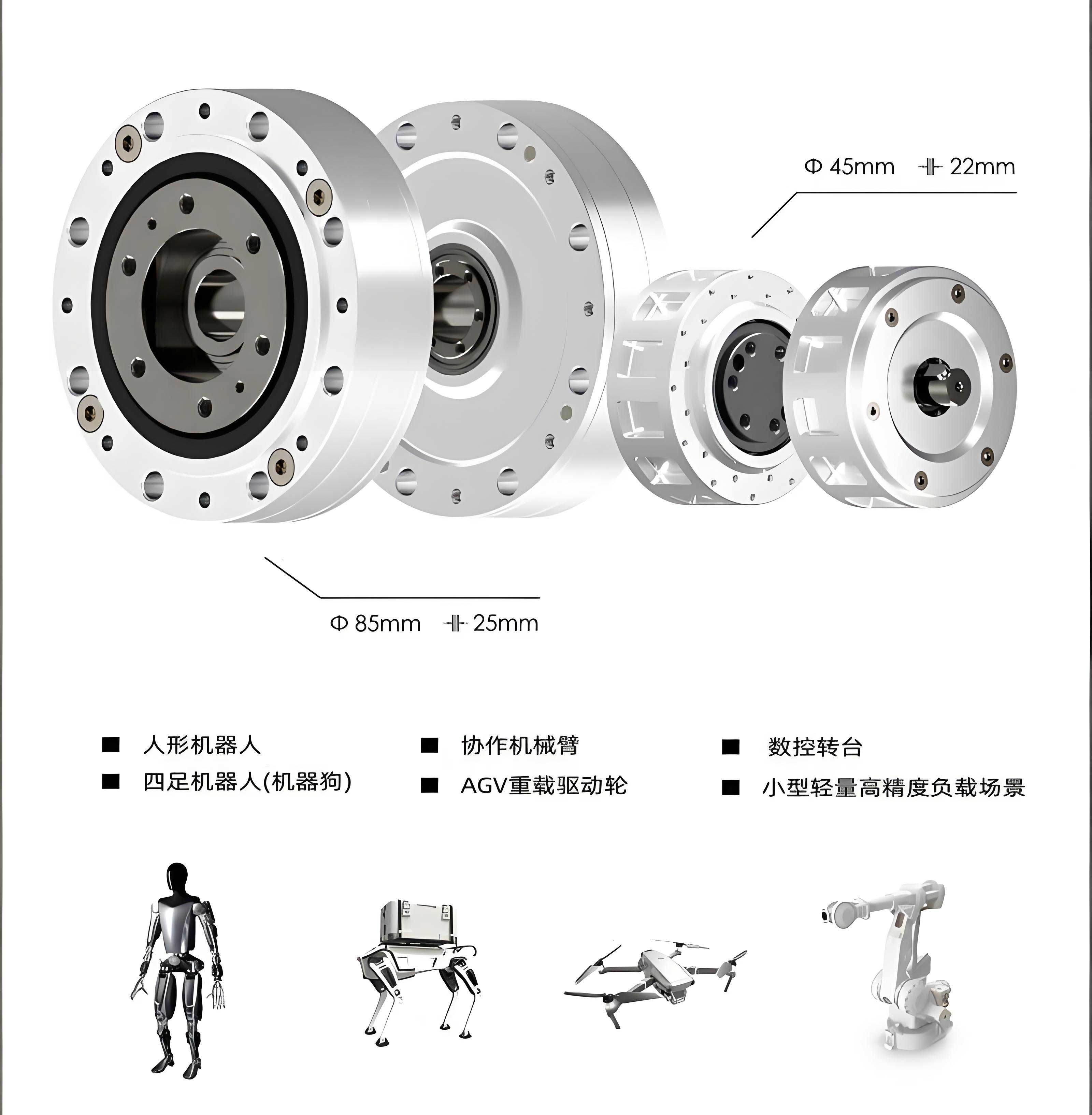
To appreciate the modeling and assembly of the RV reducer, one must first understand its structural and operational principles. The RV reducer is essentially a two-stage reduction system. The first stage employs a planetary gear train, where an input gear (sun gear) drives multiple planetary gears, resulting in an initial speed reduction. The second stage utilizes a cycloidal pin-wheel mechanism, where the motion from the planetary gears is transferred to eccentric shafts, which in turn drive cycloidal gears against a stationary pin ring. This dual-stage design allows the RV reducer to achieve high reduction ratios—often exceeding 100:1—while maintaining compact dimensions and low backlash. The key components include the input shaft, planetary gears, cycloidal gears, pin ring, eccentric shafts, and output flange, all housed within a rigid casing. The interaction between these parts ensures smooth torque transmission, making the RV reducer indispensable in robotic joints where precision and reliability are paramount.
The transmission principle of the RV reducer can be mathematically described to clarify its motion dynamics. Let the input angular velocity be denoted as ω_input, and the output angular velocity as ω_output. The overall reduction ratio i_total is a product of the planetary stage ratio i_planetary and the cycloidal stage ratio i_cycloidal. For a typical RV reducer, the planetary stage involves a sun gear with N_s teeth and planetary gears with N_p teeth, mounted on a carrier. The reduction ratio for this stage is given by:
$$ i_{\text{planetary}} = 1 + \frac{N_s}{N_p} $$
In the cycloidal stage, the cycloidal gear has z_c teeth, while the pin ring has z_p pins. The eccentricity a and the pin circle radius r_p play crucial roles. The reduction ratio for this stage is expressed as:
$$ i_{\text{cycloidal}} = \frac{z_p}{z_p – z_c} $$
Thus, the total reduction ratio for the RV reducer is:
$$ i_{\text{total}} = i_{\text{planetary}} \times i_{\text{cycloidal}} = \left(1 + \frac{N_s}{N_p}\right) \times \left(\frac{z_p}{z_p – z_c}\right) $$
This formula highlights how the RV reducer achieves high reduction ratios through synergistic stage coupling. For instance, in my project, the measured parameters yielded values that aligned with these equations, confirming the theoretical framework. Understanding these ratios is essential for modeling, as they influence gear dimensions and mesh conditions. Additionally, the kinematics of the cycloidal gear involve complex curves, which I will elaborate on in the modeling section. The RV reducer’s ability to minimize vibration and noise stems from its balanced design, where multiple components share loads symmetrically. This structural elegance makes the RV reducer a favorite in high-precision applications, from automotive assembly lines to semiconductor manufacturing.
Moving to the measurement phase, I employed various tools such as calipers, micrometers, and gear tooth gauges to collect data from the disassembled RV reducer. Given the lack of standard references, each measurement was cross-verified multiple times to ensure accuracy. The key parameters included gear tooth counts, pitch diameters, eccentric distances, and bearing dimensions. I organized these into a comprehensive table to facilitate modeling. Below is a summary of the critical measurements for the RV reducer components:
| Component | Parameter | Symbol | Measured Value |
|---|---|---|---|
| Cycloidal Gear | Number of Teeth | z_c | 39 |
| Pin Ring | Pin Circle Radius (mm) | r_p | 64 |
| Pin Ring | Number of Pins | z_p | 40 |
| Pin Ring | Pin Radius (mm) | r_{rp} | 3 |
| Cycloidal Gear | Shortening Coefficient | K_1 = \frac{a z_p}{r_p} | 0.8125 |
| Eccentric Shaft | Eccentricity (mm) | a | 1.30 |
| Planetary Gear | Number of Teeth | N_p | 11 |
| Sun Gear | Number of Teeth | N_s | 22 |
| Bearing | Inner Diameter (mm) | d_i | 15 |
| Bearing | Outer Diameter (mm) | d_o | 35 |
This table served as the foundation for all subsequent modeling steps. It is worth noting that parameters like the shortening coefficient K_1 are derived from measurements and are critical for defining the cycloidal profile. The RV reducer’s performance hinges on these values, as even minor deviations can lead to misalignment or increased wear. During measurement, I also noted the material properties and surface finishes, which, while not directly used in Solidworks modeling, informed decisions about tolerances and fits. The process reinforced the importance of meticulous data collection in reverse engineering, especially for a component as intricate as the RV reducer.
With measurements in hand, I proceeded to 3D modeling in Solidworks, adopting a bottom-up approach where each part was created individually before assembly. The most challenging aspect was modeling the cycloidal gear, due to its complex tooth profile. The cycloidal gear tooth shape is defined by a parametric equation derived from the envelope of pin positions. For accurate modeling, I used the simplified parametric equations in Cartesian coordinates, with parameter t representing the angular variable. The equations are:
$$ x(t) = r_p \left[ \sin\left(\frac{t}{z_c}\right) – K_1 \sin\left(\frac{z_p}{z_c} t\right) \right] $$
$$ y(t) = r_p \left[ \cos\left(\frac{t}{z_c}\right) – K_1 \cos\left(\frac{z_p}{z_c} t\right) \right] $$
Here, t ranges from π to 3π to capture the complete tooth flank. In Solidworks, I utilized the “Equation-Driven Curve” tool within the sketch environment to input these equations. For example, substituting the values from the table:
$$ x(t) = 64 \left[ \sin\left(\frac{t}{39}\right) – 0.8125 \sin\left(\frac{40}{39} t\right) \right] $$
$$ y(t) = 64 \left[ \cos\left(\frac{t}{39}\right) – 0.8125 \cos\left(\frac{40}{39} t\right) \right] $$
This generated one tooth profile, which I then offset by the pin radius r_{rp} = 3 mm to account for clearance, and finally circularly patterned to create the full cycloidal gear with 39 teeth. The resulting sketch was extruded to form a solid, with additional features like mounting holes added based on measurements. This method ensured that the cycloidal gear would mesh perfectly with the pin ring in the virtual assembly, a crucial aspect for the RV reducer’s functionality.
For other components, such as gears in the planetary stage, I leveraged Solidworks’ design library, specifically the “Toolbox” for standard gear generation. By inputting parameters like module, pressure angle, and tooth count, I quickly created spur gears for the sun and planetary gears. However, I modified these base models to match measured dimensions, such as hub diameters and keyway sizes. The eccentric shafts were modeled using revolve and extrusion features, with careful attention to eccentric journal dimensions. Bearings, including ball bearings and roller bearings, were simplified for simulation purposes, focusing on inner and outer diameters and width. Each part was saved as a separate SLDPRT file, with filenames reflecting their role in the RV reducer assembly. Below is a table summarizing the modeling techniques for key RV reducer parts:
| Part Name | Modeling Method in Solidworks | Key Parameters |
|---|---|---|
| Cycloidal Gear | Equation-Driven Curve for tooth profile, then extrude and pattern. | z_c = 39, r_p = 64 mm, K_1 = 0.8125, a = 1.30 mm |
| Pin Ring | Sketch based on cycloidal profile, with pin holes arrayed. | z_p = 40, r_{rp} = 3 mm, r_p = 64 mm |
| Planetary Gears | Toolbox spur gear, modified with measured dimensions. | N_p = 11, module = 1.5 mm, pressure angle = 20° |
| Sun Gear | Toolbox spur gear, integrated with input shaft. | N_s = 22, module = 1.5 mm, pressure angle = 20° |
| Eccentric Shafts | Revolve for main body, extrude for eccentric journals. | Eccentricity a = 1.30 mm, journal diameter = 12 mm |
| Bearings | Simplified cylindrical models with accurate IDs and ODs. | Ball bearing: d_i = 15 mm, d_o = 35 mm, width = 11 mm |
This structured approach accelerated the modeling process while ensuring accuracy. For the RV reducer housing and covers, I used basic extrusion and shell commands, referencing measurements from the physical unit. Throughout, I maintained a focus on design for assembly, adding chamfers and radii to ease virtual fitting. The complete set of parts formed the basis for the next phase: hierarchical assembly.
Assembly in Solidworks was conducted hierarchically to manage complexity. I created sub-assemblies for logical component groups, which were then combined into a master assembly. This mirrored the physical assembly process of the RV reducer and facilitated error checking. The steps are outlined below:
| Sub-Assembly | Components Included | Key Constraints Applied |
|---|---|---|
| Pin Ring Assembly (A) | Pin ring body, pins | Coincident mates for pin alignment, distance mates for pin depth. |
| Bearing Sets (B1, B2, B3) | Ball bearings, roller bearings, retainers | Concentric and coincident mates for inner/outer rings. |
| Eccentric Shaft Assembly (C) | Eccentric shaft, bearings B2 and B3 | Concentric mates for journals, coincident for shoulders. |
| Output Flange Assembly (D) | Output flange, seals, bearings | Coincident and concentric mates for flange and bearing seats. |
| Planetary Carrier Assembly (E) | Planetary carrier, planetary gears, bearings | Gear mates for meshing, concentric for gear shafts. |
Starting with the pin ring assembly as the fixed component, I imported sub-assemblies and parts sequentially. For the RV reducer core, I placed two cycloidal gears onto the eccentric shafts, using concentric mates for the bearing seats and coincident mates for axial positioning. The phase difference of 180° between cycloidal gears was ensured by rotating one gear relative to the other. Next, the planetary carrier assembly was mated to the input shaft, with gear mates simulating the engagement between sun and planetary gears. The output flange was then aligned with the cycloidal gears’ output pins, using concentric and coincident constraints. Finally, housing parts and fasteners were added, with screw mates for bolts. At each step, I used Solidworks’ interference detection tool to identify conflicts, which were resolved by adjusting mate offsets or modifying part geometries. This iterative process underscored the importance of virtual prototyping for the RV reducer, as it revealed fit issues that would be costly in physical assembly.
A critical aspect of assembly was verifying the kinematic behavior of the RV reducer. I applied a rotary motor to the input shaft and used Motion Analysis to simulate operation. The output motion was observed to ensure smooth rotation with the expected reduction ratio. The simulation confirmed that the cycloidal gears rolled without slip against the pins, a hallmark of the RV reducer design. The contact forces were also analyzed to validate load distribution, though simplified bearing models limited accuracy. This virtual testing phase provided confidence in the model’s fidelity, demonstrating that the RV reducer could function as intended based solely on measured data.
However, due to measurement inaccuracies, some parts required localized modifications to achieve proper fits. For instance, the pin holes in the ring initially interfered with the cycloidal gear teeth. By referencing the physical assembly, I adjusted the pin positions by 0.05 mm radially, which eliminated interference without compromising the cycloidal profile. Similarly, bearing seats on the eccentric shafts were slightly resized to match the measured inner diameters of bearings. This corrective process involved recalculating parameters using engineering formulas. For example, the fit between a shaft and bearing is often defined by tolerance classes. Using the basic hole system, I applied the following tolerance equation for a clearance fit:
$$ \text{Clearance} = D_{\text{hole}} – d_{\text{shaft}} $$
Where D_hole is the bearing inner diameter (15 mm) and d_shaft is the shaft journal diameter. From measurements, d_shaft was 14.95 mm, yielding a clearance of 0.05 mm, which aligned with standard fits for the RV reducer. Such adjustments were documented in a modification log to track changes. The table below summarizes common fit issues and corrections for the RV reducer assembly:
| Component Pair | Issue Detected | Correction Applied | Resulting Fit |
|---|---|---|---|
| Cycloidal Gear vs. Pins | Interference at tooth tips | Adjusted pin circle radius by +0.05 mm | Clearance of 0.1 mm |
| Eccentric Shaft vs. Bearing | Too tight assembly | Increased shaft diameter by 0.02 mm | Sliding fit with 0.03 mm clearance |
| Planetary Gears vs. Carrier | Axial play excessive | Added shim thickness of 0.5 mm in model | Zero axial play |
| Output Flange vs. Housing | Misalignment of bolt holes | Rotated flange by 2° in assembly | All bolts aligned |
These modifications highlighted the iterative nature of engineering design, where virtual models must be refined to mirror real-world conditions. For the RV reducer, such tweaks ensured that the digital assembly could be a reliable reference for potential manufacturing or educational purposes.
Beyond modeling and assembly, this project offered insights into the broader applications of RV reducers. In robotics, the RV reducer is prized for its high torque capacity and precision, often used in articulated robot arms and rotary joints. Its compactness allows for dense integration in automated systems, reducing overall footprint. The modeling exercise also shed light on manufacturing considerations; for example, cycloidal gears typically require specialized grinding machines for production, while pin rings are machined with high-positional accuracy. In Solidworks, I simulated manufacturing processes like milling and turning to estimate production time, though these were preliminary. Furthermore, the RV reducer’s efficiency can be analyzed using power loss formulas, such as those for gear mesh efficiency η_gear and bearing friction η_bearing. The overall efficiency η_total of the RV reducer is approximately:
$$ \eta_{\text{total}} = \eta_{\text{planetary}} \times \eta_{\text{cycloidal}} \times \eta_{\text{bearings}} $$
Where η_planetary and η_cycloidal are often above 95% each, contributing to the RV reducer’s high overall efficiency of around 90%. This makes the RV reducer energy-efficient, a key factor in sustainable automation. My project also touched on failure modes, such as pitting on cycloidal teeth or bearing fatigue, which can be studied via Finite Element Analysis (FEA) in Solidworks. While I did not perform detailed FEA, the model is prepared for such analyses, showcasing the versatility of digital tools for the RV reducer development.
In conclusion, the journey of measuring, modeling, and assembling an RV reducer in Solidworks without standard data was both challenging and enlightening. It reinforced the value of hands-on experimentation in engineering education, bridging theory and practice. The RV reducer emerged as a masterpiece of mechanical design, combining simplicity with sophistication to meet the demands of modern industry. Through this project, I developed a methodology for reverse engineering that can be applied to other complex mechanisms, from gearboxes to actuators. The use of tables and formulas, as demonstrated throughout this article, provides a structured way to capture and communicate technical details. As robotics continues to advance, the RV reducer will remain a cornerstone, and skills in digital modeling will be indispensable for innovation. I encourage fellow enthusiasts to undertake similar projects, using tools like Solidworks to explore the inner workings of machines, always keeping the RV reducer as a benchmark for precision and reliability.