
In high-speed aero applications, spur gears operate under extreme conditions where effective lubrication is critical to ensure reliability and longevity. Traditional spray lubrication methods often rely on empirical designs, such as positioning nozzles along the common tangent of pitch circles, but these approaches may not optimize lubricant delivery to the meshing zone. This study investigates the impact of spray orientation parameters—spray angle, spray point position, and spray distance—on the lubrication process of spur gears using computational fluid dynamics (CFD). By analyzing the oil-air multiphase flow, we aim to define optimal parameters that enhance lubricant entry into the meshing region, thereby improving the performance of spur gear systems in aviation.
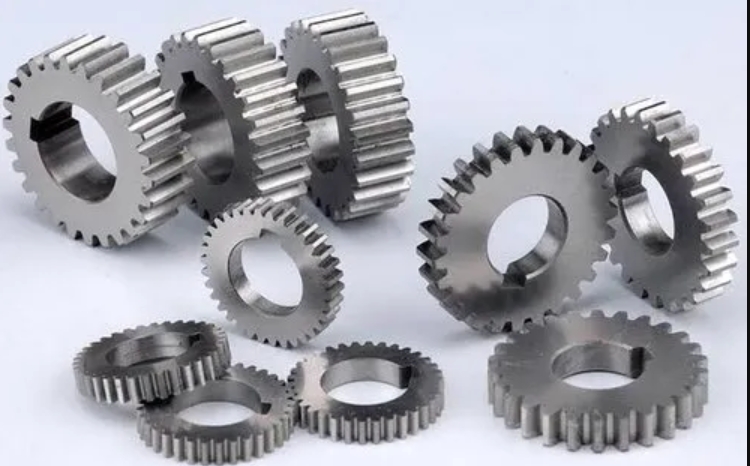
Spur gears are widely used in aerospace power transmission due to their simplicity and efficiency, but high rotational speeds can lead to inadequate lubrication in the meshing zone. The spray lubrication process involves injecting oil into the gear engagement area, where the dynamic interaction between the lubricant jet and rotating gear teeth creates complex multiphase flow phenomena. Key parameters governing this process include the spray angle, defined as the angle between the nozzle axis and the common tangent at the pitch point; the spray point position, referring to the intersection point on that tangent; and the spray distance, the length from the nozzle exit to the spray point. Understanding these parameters is essential for designing effective lubrication systems for spur gears.
The meshing process of spur gears consists of three stages: double-tooth, single-tooth, and double-tooth engagement. During spray lubrication, the first two stages allow direct lubricant entry through gaps above the meshing point, but as the gears rotate, these gaps diminish, reducing oil flow. In the third stage, the next tooth pair blocks direct jet entry, relying on adhered oil or mist. Therefore, optimizing spray orientation parameters is crucial for the initial stages to maximize lubricant delivery. This paper systematically defines these parameters and employs CFD simulations to evaluate their effects on oil-air ratio and total pressure at the meshing point entrance, providing insights for spur gear lubrication design.
Definition of Spray Orientation Parameters for Spur Gears
Spray orientation parameters directly influence the initial lubrication conditions at the meshing point of spur gears. Based on an analysis of the spray lubrication process, we define three key parameters as follows:
- Spray Angle: This is the angle between the nozzle axis and the common tangent line at the pitch point of the two spur gears. Positive angles indicate deviation toward the driven gear, while negative angles indicate deviation toward the driving gear. For example, angles of -5°, -2.5°, 0°, 2.5°, and 5° represent different orientations, where 0° corresponds to the traditional design along the tangent.
- Spray Point Position: This refers to the location along the common tangent line where the nozzle axis intersects. It is measured relative to the pitch point, with positions such as 5 mm, 2.5 mm, 0 mm, -2.5 mm, and -5 mm, where negative values indicate offset toward the engaging-in side and positive values toward the engaging-out side.
- Spray Distance: This is the linear distance from the nozzle exit to the spray point on the tangent line. Typical values range from 30 mm to 40 mm, affecting the jet velocity and dispersion due to air resistance.
These parameters are summarized in Table 1 for clarity.
| Parameter | Description | Typical Values |
|---|---|---|
| Spray Angle | Angle between nozzle axis and common tangent at pitch point | -5°, -2.5°, 0°, 2.5°, 5° |
| Spray Point Position | Intersection point on tangent line relative to pitch point | -5 mm, -2.5 mm, 0 mm, 2.5 mm, 5 mm |
| Spray Distance | Distance from nozzle exit to spray point | 30 mm, 35 mm, 40 mm |
The geometric relationship for these parameters can be expressed mathematically. Let the pitch point be at coordinates (0,0) in a 2D plane, with the common tangent along the x-axis. The nozzle axis is defined by a line equation, and the spray angle θ is given by:
$$ \theta = \arctan\left(\frac{dy}{dx}\right) $$
where dy/dx is the slope relative to the tangent. The spray point position \( P_s \) is calculated as:
$$ P_s = x_0 + d \cdot \cos(\theta) $$
Here, \( x_0 \) is the x-coordinate of the nozzle exit, and d is the spray distance. These equations help in setting up CFD models for spur gear systems.
CFD Modeling of Spray Lubrication for Spur Gears
To analyze the spray lubrication process, we developed a three-dimensional CFD model using an Eulerian multiphase approach. The model assumes a homogeneous mixture of oil and air, neglecting gravity, heat transfer, and chemical reactions. The spur gears have standard parameters: module m = 4 mm, pressure angle α_p = 20°, pitch radius R = 100 mm, and tooth thickness l = 2 mm. The fluid domain is created by boolean operations for different meshing instants, capturing the dynamic gap changes during engagement.
The governing equations for the multiphase flow are as follows. The volume fraction normalization ensures that the sum of phase volumes equals one:
$$ \sum_{\alpha=1}^{N} r_\alpha = 1 $$
where \( r_\alpha \) is the volume fraction of phase α (oil or air), and N = 2. The continuity equation for the mixture is:
$$ \frac{\partial \rho}{\partial t} + \nabla \cdot (\rho \mathbf{U}) = 0 $$
Here, ρ is the mixture density, calculated as \( \rho = \sum_{\alpha=1}^{N} r_\alpha \rho_\alpha \), with \( \rho_\alpha \) being the density of phase α, and U is the fluid velocity vector. The momentum conservation equation (Navier-Stokes) is:
$$ \frac{\partial (\rho \mathbf{U})}{\partial t} + \nabla \cdot (\rho \mathbf{U} \mathbf{U}) = -\nabla p + \nabla \cdot \boldsymbol{\tau} + \mathbf{S}_m $$
where p is pressure, \( \mathbf{S}_m \) is external body force (zero in this case), and τ is the stress tensor, defined as:
$$ \boldsymbol{\tau} = \mu \left( \nabla \mathbf{U} + (\nabla \mathbf{U})^T – \frac{2}{3} \delta \nabla \cdot \mathbf{U} \right) $$
with μ being the dynamic viscosity of the mixture. For turbulence modeling, the standard k-ε model is employed due to its robustness and accuracy. The turbulent viscosity is given by:
$$ \mu_t = C_\mu \rho \frac{k^2}{\varepsilon} $$
where \( C_\mu = 0.09 \), k is turbulent kinetic energy, and ε is its dissipation rate. The transport equations for k and ε are:
$$ \frac{\partial (\rho k)}{\partial t} + \nabla \cdot (\rho \mathbf{U} k) = \nabla \cdot \left[ \left( \mu + \frac{\mu_t}{\sigma_k} \right) \nabla k \right] + P_k – \rho \varepsilon $$
$$ \frac{\partial (\rho \varepsilon)}{\partial t} + \nabla \cdot (\rho \mathbf{U} \varepsilon) = \nabla \cdot \left[ \left( \mu + \frac{\mu_t}{\sigma_\varepsilon} \right) \nabla \varepsilon \right] + C_{1\varepsilon} \frac{\varepsilon}{k} P_k – C_{2\varepsilon} \rho \frac{\varepsilon^2}{k} $$
Here, \( P_k \) is the production term, and constants are \( \sigma_k = 1.0 \), \( \sigma_\varepsilon = 1.3 \), \( C_{1\varepsilon} = 1.44 \), \( C_{2\varepsilon} = 1.92 \). The CFD mesh consists of unstructured tetrahedral cells, with refinement near the meshing point and nozzle, totaling approximately 2 million elements. Boundary conditions include a nozzle inlet velocity of 50 m/s, gear rotational speed of 50 r/s (314.16 rad/s), and open boundaries for air environment. Simulations are performed for multiple meshing instants, treating each as a quasi-steady state to capture spray evolution over time.
Analysis of Spray Angle Effects on Spur Gear Lubrication
The spray angle significantly impacts the oil-air flow entering the meshing zone of spur gears. We simulated five angles: -5°, -2.5°, 0°, 2.5°, and 5°, for ten instants during a full meshing cycle. The lubricant properties are oil viscosity of 0.01 Pa·s and density of 959 kg/m³, with air at ambient conditions. Results are evaluated by extracting the oil-air ratio and total pressure on a plane parallel to the meshing line at Y = -0.1 mm from the contact point.
The oil-air ratio, denoted as \( \phi \), represents the volume fraction of oil in the mixture, while total pressure \( P_{total} \) includes both static and dynamic components. For spur gears, higher values at the meshing point entrance indicate better lubrication conditions. The variations over meshing time are plotted and summarized in Table 2.
| Spray Angle | Average Oil-Air Ratio (%) | Average Total Pressure (Pa) |
|---|---|---|
| -5° | 7.8912 | 1250.342 |
| -2.5° | 8.7123 | 1310.742 |
| 0° | 8.5431 | 1298.456 |
| 2.5° | 7.2345 | 1187.654 |
| 5° | 6.1234 | 1056.789 |
As observed, the spray angle of -2.5° yields the highest average oil-air ratio and total pressure, suggesting optimal lubricant delivery. The angle of 5° performs poorly, with minimal oil reaching the meshing zone. This can be explained by the geometric alignment: negative angles (toward the driving gear) allow the jet to better penetrate the gap during early meshing stages. The dynamic behavior is modeled using the jet trajectory equation:
$$ \mathbf{x}(t) = \mathbf{x}_0 + \mathbf{v}_0 t + \frac{1}{2} \mathbf{a} t^2 $$
where \( \mathbf{v}_0 \) is the initial jet velocity (50 m/s), and \( \mathbf{a} \) accounts for drag forces. For spur gears, the relative velocity between the jet and tooth surfaces affects impingement. The impact efficiency \( \eta \) can be estimated as:
$$ \eta = \frac{\phi_{\text{entrance}}}{\phi_{\text{nozzle}}} = \exp\left(-\frac{\Delta \theta^2}{2\sigma^2}\right) $$
Here, \( \Delta \theta \) is the deviation from an optimal angle, and σ is a dispersion parameter. Our simulations show that for spur gears, the optimal spray angle is around -2.5°, deviating from the traditional 0° design. This highlights the importance of angle selection in spray lubrication systems for spur gears.
Analysis of Spray Point Position Effects on Spur Gear Lubrication
The spray point position determines where the lubricant jet intersects the common tangent, influencing how oil is directed toward the meshing zone of spur gears. We tested five positions: -5 mm, -2.5 mm, 0 mm, 2.5 mm, and 5 mm, with a fixed spray angle of -2.5° and spray distance of 35 mm. Simulations cover the same meshing cycle, and results for oil-air ratio and total pressure are analyzed on a logarithmic scale due to wide variations.
Data indicates that positions offset toward the engaging-in side (negative values) generally provide better lubrication. This is because the jet enters the gap before it is obstructed by the next tooth pair. The oil-air ratio \( \phi \) and total pressure \( P_{total} \) as functions of position \( x_s \) can be fitted with exponential decay models:
$$ \phi(x_s) = \phi_0 \cdot e^{-k_\phi |x_s – x_{\text{opt}}|} $$
$$ P_{total}(x_s) = P_0 \cdot e^{-k_p |x_s – x_{\text{opt}}|} $$
where \( \phi_0 \) and \( P_0 \) are reference values, \( k_\phi \) and \( k_p \) are decay constants, and \( x_{\text{opt}} \) is the optimal position. Based on CFD results, \( x_{\text{opt}} \approx -2.5 \) mm for spur gears under these conditions. Table 3 summarizes the average values over the meshing process.
| Spray Point Position (mm) | Average Oil-Air Ratio (%) | Average Total Pressure (Pa) |
|---|---|---|
| -5 | 8.4567 | 1302.345 |
| -2.5 | 8.9123 | 1325.678 |
| 0 | 8.1234 | 1287.890 |
| 2.5 | 7.5678 | 1201.234 |
| 5 | 6.7890 | 1156.789 |
The position of -2.5 mm shows the highest averages, confirming that offset toward the engaging-in side enhances lubricant entry. For spur gears, this aligns with the meshing dynamics: as teeth engage, the gap narrows, and an earlier spray point allows more oil to flow in. The jet dispersion angle β also plays a role, calculated as:
$$ \beta = 2 \arctan\left( \frac{d_{\text{jet}}}{2L} \right) $$
where \( d_{\text{jet}} \) is the jet diameter and L is the distance to the gap. With negative offsets, β aligns better with the gap geometry. Thus, in spray lubrication design for spur gears, the spray point should be shifted toward the engaging-in side for improved performance.
Analysis of Spray Distance Effects on Spur Gear Lubrication
Spray distance affects jet velocity and dispersion due to air resistance, influencing lubricant delivery to spur gear meshing zones. We compared distances of 30 mm, 35 mm, and 40 mm, with a spray angle of -2.5° and spray point at 0 mm. Simulations reveal that shorter distances result in higher jet velocities but less dispersion, while longer distances reduce velocity but increase spread, impacting oil-air ratio and total pressure differently across meshing stages.
For spur gears, the meshing process is divided into early and late stages. In early stages, shorter distances (e.g., 30 mm) yield higher oil-air ratios because the faster jet penetrates gaps more effectively. In late stages, longer distances (e.g., 40 mm) perform better due to reduced jet blocking from tooth surfaces. The jet velocity \( v \) as a function of distance d can be modeled with drag:
$$ v(d) = v_0 e^{-c_d d} $$
where \( v_0 \) is the nozzle exit velocity (50 m/s), and \( c_d \) is a drag coefficient. The oil-air ratio at the entrance \( \phi_{\text{entrance}} \) is proportional to the momentum flux:
$$ \phi_{\text{entrance}} \propto \frac{\rho v^2 A_{\text{jet}}}{A_{\text{gap}}} $$
Here, \( A_{\text{jet}} \) is the jet cross-sectional area, and \( A_{\text{gap}} \) is the gap area between spur gear teeth. Table 4 presents average values over the full meshing cycle.
| Spray Distance (mm) | Average Oil-Air Ratio (%) | Average Total Pressure (Pa) |
|---|---|---|
| 30 | 8.2345 | 1289.123 |
| 35 | 8.5678 | 1301.456 |
| 40 | 8.3456 | 1295.678 |
The spray distance of 35 mm shows the best overall performance, balancing velocity and dispersion. However, for spur gears operating under high-speed conditions, the optimal distance may vary with rotational speed. A dimensionless parameter, the Stokes number St, can be used to relate inertial to drag forces:
$$ St = \frac{\rho_{\text{oil}} d_p^2 v}{18 \mu_{\text{air}} L} $$
where \( d_p \) is oil droplet diameter. For effective lubrication in spur gears, St should be near unity to ensure droplet followability. Our analysis suggests that spray distance should be optimized based on specific gear geometry and operating conditions, rather than simply minimizing it. This insight is crucial for designing robust spray systems for spur gears in aerospace applications.
Discussion on Integrated Parameter Optimization for Spur Gears
The interaction between spray orientation parameters—angle, position, and distance—creates a complex optimization problem for spur gear lubrication. Using the CFD results, we can derive a combined model to predict the oil-air ratio \( \phi \) at the meshing point entrance. A multiple regression approach yields:
$$ \phi = \beta_0 + \beta_1 \theta + \beta_2 x_s + \beta_3 d + \beta_{12} \theta x_s + \beta_{13} \theta d + \beta_{23} x_s d + \epsilon $$
where \( \beta_i \) are coefficients, θ is spray angle in radians, \( x_s \) is spray point position in mm, d is spray distance in mm, and ε is error. Based on simulation data, the optimal set for spur gears under the studied conditions is approximately: θ = -2.5°, \( x_s = -2.5 \) mm, and d = 35 mm. This configuration maximizes lubricant delivery while minimizing jet blockage.
Furthermore, the transient nature of spur gear meshing requires dynamic parameter adjustment. For instance, during double-tooth engagement, a larger spray angle might be beneficial, while single-tooth stages favor smaller angles. Advanced control systems could adapt spray parameters in real-time based on gear position, but this is beyond current scope. The key takeaway is that traditional empirical designs often fall short, and CFD-driven optimization can significantly enhance spur gear lubrication efficiency.
Conclusion
This study investigates the influence of spray orientation parameters on the lubrication process of spur gears using computational fluid dynamics. We define three key parameters—spray angle, spray point position, and spray distance—and analyze their effects on oil-air ratio and total pressure at the meshing point entrance. Results indicate that for spur gears, optimal lubrication is achieved with a spray angle deviated slightly toward the driving gear (e.g., -2.5°), a spray point position offset toward the engaging-in side (e.g., -2.5 mm), and a spray distance that balances jet velocity and dispersion (e.g., 35 mm). These findings challenge traditional design norms and provide a basis for improving spray lubrication systems in high-speed aero spur gear applications. Future work could explore parameter interactions under varying operational conditions or incorporate real-time adaptive control for dynamic optimization.