
Gear modification stands as a pivotal technique in enhancing the dynamic performance of gear transmission systems, particularly in applications demanding high power density and low vibration, such as aerospace propulsion. In this context, the integration of herringbone gears into star gear transmission systems offers a compelling solution due to the inherent load-carrying capacity and balanced axial forces of herringbone gears. This article delves into the optimization design of modification for a herringbone gear star transmission system, aiming to minimize the loaded transmission error (LTE) amplitude, thereby reducing vibration and noise. The focus is on developing a comprehensive methodology that encompasses modified tooth surface modeling, loaded transmission error computation, and systematic optimization, with particular emphasis on the unique configuration of star gear trains. The term ‘herringbone gear’ will be recurrently highlighted to underscore its central role in this study.
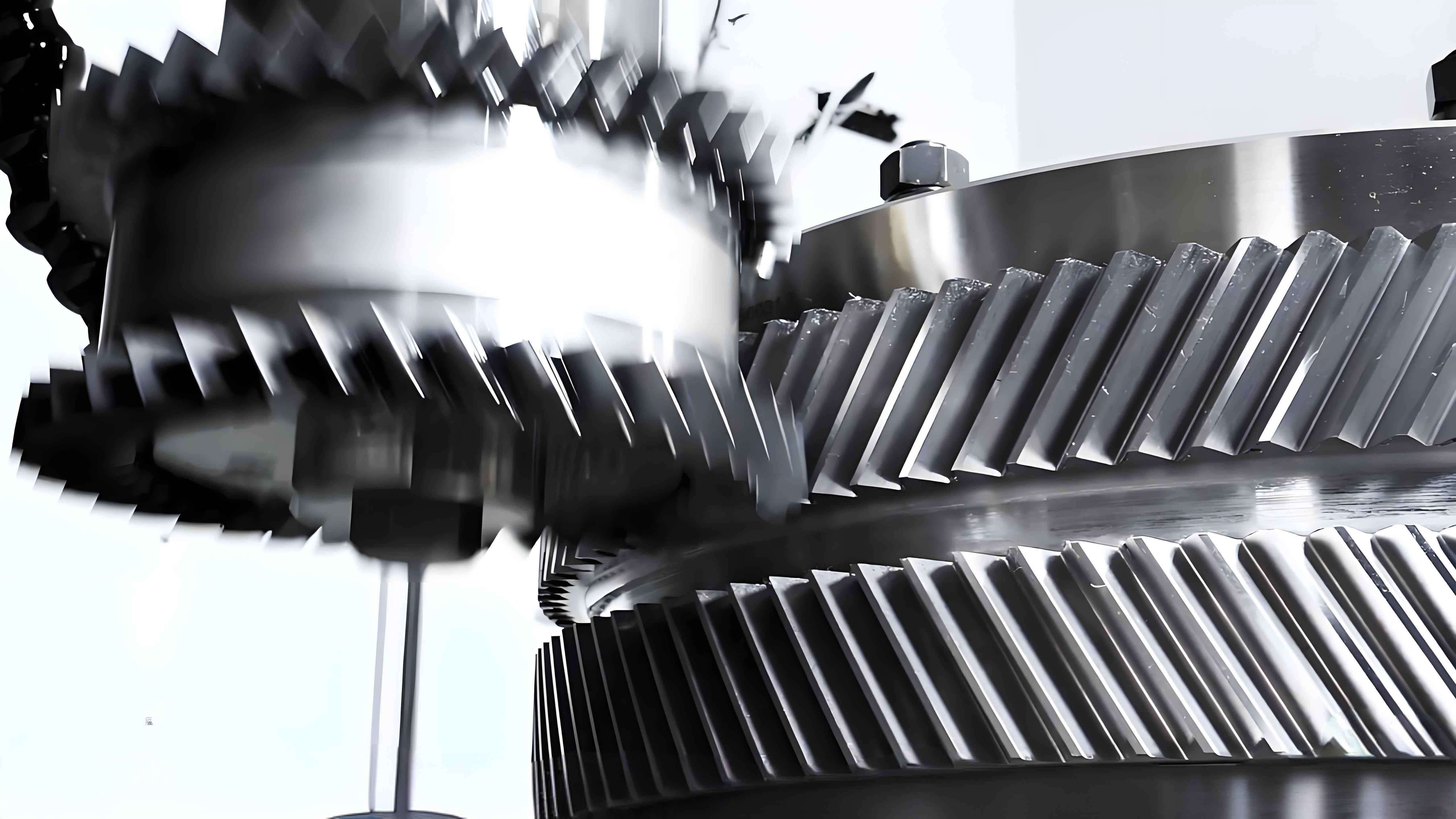
The star gear transmission, a compact multi-path power分流 transmission system, is especially suitable for aviation动力传动 systems. Unlike planetary gear systems, the star gear train features a fixed carrier, making it a fixed-axis gear train. When herringbone gears are employed for the sun gear, star gears, and ring gear, the system becomes a herringbone gear star transmission system. The ring gear, often assembled from two helical internal gears to facilitate grinding加工, completes the configuration. The transmission principle involves the sun gear as the input, the ring gear as the output, and star gears engaging with both, achieving two-stage speed reduction. This arrangement presents distinct challenges for modification design, as each star gear simultaneously meshes with both the sun gear and the ring gear, necessitating separate modification considerations for the external sun-star pair and the internal star-ring pair.
Modification design for such a herringbone gear system must address both meshing pairs independently. Given the practical difficulties in modifying internal ring gears, the internal star-ring pair is designed with modification applied only to the star gear. Conversely, for the external sun-star pair, both the sun gear and star gear are modified. To streamline the optimization process, each pair is initially optimized separately, considering modification only on the star gear for each case. This results in two distinct sets of modification parameters for the star gear. Subsequently, a redistribution strategy is employed: the actual modification on the star gear is based on the optimization results from the internal pair, while the actual modification on the sun gear is derived by subtracting the star gear’s modification from the internal pair from that optimized for the external pair. This approach ensures the meshing performance of both pairs is maintained. The core objective is to minimize the amplitude of the loaded transmission error, a primary excitation source in gear dynamics, as its fluctuation directly correlates with vibrational and acoustic emissions.
Establishing an accurate model of the modified tooth surface is foundational. The standard involute tooth surface of a herringbone gear is derived from the tool geometry and meshing equations. Onto this theoretical surface, a modification surface is superimposed. The modification is typically defined by profile and lead crowning curves, often employing a piecewise parabolic form—comprising a central straight segment flanked by parabolic zones—resulting in a convex parabolic-straight-parabolic shape. For a herringbone gear, symmetric modification curves are designed for the left and right helical halves. The parameters defining these curves include crown amounts and lengths for both profile and lead directions. Mathematically, the modified pinion tooth surface can be represented by its position vector and normal vector. Let the theoretical tooth surface of the pinion be denoted by its position vector $\mathbf{R}_1(u_1, l_1)$ and unit normal vector $\mathbf{n}_1(u_1, l_1)$, where $u_1$ and $l_1$ are the surface parameters. The modification amount, $\delta(u_1, l_1)$, is a function determined by the crowning curves. The modified surface $\mathbf{R}_{1r}$ and its normal $\mathbf{N}_{1r}$ are then given by:
$$
\mathbf{R}_{1r}(u_1, l_1) = \delta(u_1, l_1) \mathbf{n}_1(u_1, l_1) + \mathbf{R}_1(u_1, l_1)
$$
$$
\mathbf{N}_{1r} = \left( \frac{\partial \mathbf{R}_1}{\partial u_1} + \frac{\partial \delta}{\partial u_1} \mathbf{n}_1 + \frac{\partial \mathbf{n}_1}{\partial u_1} \delta \right) \times \left( \frac{\partial \mathbf{R}_1}{\partial l_1} + \frac{\partial \delta}{\partial l_1} \mathbf{n}_1 + \frac{\partial \mathbf{n}_1}{\partial l_1} \delta \right)
$$
Similarly, the modified gear tooth surface is defined. The profile and lead modification curves, characterized by parameters such as crown heights and effective lengths, govern $\delta$. For instance, the lead crowning might be described by a function $C_L(l)$ and the profile crowning by $C_P(u)$, with the total modification being a superposition. This mathematical framework allows for precise control over the tooth surface topology, essential for optimizing the contact pattern and stress distribution in herringbone gear engagements.
The loaded transmission error serves as the key performance indicator. Its computation involves two sequential analytical techniques: Tooth Contact Analysis (TCA) and Loaded Tooth Contact Analysis (LTCA). TCA simulates the geometric meshing contact under no-load conditions, determining the kinematic transmission error and contact path. LTCA extends this to loaded conditions, incorporating tooth compliance to predict the actual contact pressure, transmission error under load, and contact ellipse. The process begins with TCA to obtain discrete potential contact points along the path of contact. Then, using finite element analysis (FEA), the flexibility matrices for the mating gear teeth are computed, representing the deformation at these points due to unit loads. The LTCA problem is formulated as a nonlinear programming task that enforces compatibility of deformations, force equilibrium, and nonlinear contact conditions (e.g., Hertzian contact or gap conditions). Solving this for incremental positions across the mesh cycle yields the normal deformations $Z_i$ at each step $i$ (with $i=1,\ldots,m+1$, where $m$ is the number of steps). The loaded transmission error fluctuation in angular displacement, $\Delta \theta_i$, is then calculated as:
$$
\Delta \theta_i = \frac{Z_i}{r_{b2} \cos \beta}
$$
where $r_{b2}$ is the base circle radius of the gear (often the driven member) and $\beta$ is the helix angle. The amplitude of this LTE fluctuation curve is the target for minimization. This LTCA methodology, when applied to herringbone gears, must account for the double-helix structure, typically by modeling one helix and applying symmetric boundary conditions or by analyzing the whole tooth space.
The optimization of modification parameters for the herringbone gear star transmission system is conducted with the explicit goal of minimizing the LTE amplitude. A genetic algorithm (GA) is employed due to its effectiveness in handling nonlinear, multi-variable optimization problems. The design variables are the parameters defining the profile and lead modification curves for the gears being modified. For the sun-star pair optimization, variables correspond to the modification on the star gear (and implicitly, the difference for the sun gear is handled post-redistribution). Similarly, for the star-ring pair, variables define the star gear’s modification. The optimization workflow is as follows: the GA generates a set of modification parameters; these are used to construct the modified tooth surfaces; TCA and LTCA are performed for the specific gear pair under its operational load; the LTE amplitude is extracted; and this value is fed back as the fitness function to the GA, which iteratively seeks the parameter set yielding the minimum amplitude. The process continues until convergence criteria are met.
To illustrate, consider a herringbone gear star transmission system with 5 star gears. Key geometric and operational data are summarized in the table below.
| Parameter | Value |
|---|---|
| Number of sun gear teeth | 43 |
| Number of star gear teeth | 42 |
| Number of ring gear teeth | 127 |
| Module | 3.5 mm |
| Helix angle ($\beta$) | 24.43° |
| Input power | 19,900 kW |
| Input speed | 2,000 rpm |
| Load torque on sun-star pair | 6,288 N·m |
| Load torque on star-ring pair | 19,013 N·m |
Using the described optimization framework, the optimal modification parameters for both meshing pairs were obtained. The results are presented in the following table. The parameters correspond to the crowning amounts (e.g., $a$, $c$, $e$, $g$ in some notations) and lengths (e.g., $b$, $d$, $f$), as illustrated in the piecewise parabolic modification model.
| Modification Parameter | Sun-Star Pair (Star Gear Mod) | Star-Ring Pair (Star Gear Mod) |
|---|---|---|
| Profile crown amount $a$ (mm) | 0.0130 | 0.0081 |
| Profile effective length $b$ (mm) | 1.9962 | 1.2114 |
| Lead crown amount $c$ (mm) | 0.0110 | 0.0096 |
| Lead effective length $d$ (mm) | 2.6352 | 1.7016 |
| Additional crown param $e$ (mm) | 1.3423 | 0.0145 |
| Additional length param $f$ (mm) | 1.6781 | 0.0140 |
| Overall scale factor $g$ (mm) | 41.6561 | 22.5967 |
These optimized values represent the modification that should be applied to the star gear if each pair were considered in isolation. However, for the physical herringbone gear star transmission system, a single star gear cannot have two different modifications. Therefore, a redistribution is necessary, adhering to the principle that the internal pair typically requires less modification. The actual modification on the star gear is set equal to the optimized values from the star-ring pair (internal pair). The actual modification on the sun gear for the sun-star pair is then calculated by subtracting the star gear’s internal pair modification from the optimized sun-star pair modification (where the star gear modification was considered). Specifically, for the sun gear, the crown amounts are adjusted by difference, while the length parameters are retained from the sun-star pair optimization, as they define the extent of modification along the tooth. This yields a new set of parameters for the sun gear, ensuring compatibility. For instance, the profile crown amount for the sun gear becomes $a_{\text{sun, actual}} = 0.0130 – 0.0081 = 0.0049$ mm, with other parameters adjusted similarly.
To validate the efficacy of this redistribution strategy, TCA and LTCA were performed on both meshing pairs using the newly assigned modifications. The results confirmed significant improvements. The unloaded transmission error curves from TCA exhibited good symmetry and reduced fluctuation ranges. More importantly, the LTE amplitude from LTCA showed a marked decrease compared to an unmodified or non-optimally modified scenario. For the star-ring pair with the star gear modified per internal optimization, the LTE fluctuation was minimized. For the sun-star pair with the redistributed modifications (sun gear modified as per difference, star gear using internal pair mod), the LTE amplitude also reached a near-optimal low value. This demonstrates that the redistribution method successfully maintains the benefits of individual optimizations while implementing a physically feasible modification scheme for the herringbone gear star transmission system. The following mathematical expressions summarize the redistribution logic:
Let $\mathbf{P}_{\text{star}}^{\text{sun-star}}$ be the vector of modification parameters for the star gear optimized for the sun-star pair, and $\mathbf{P}_{\text{star}}^{\text{star-ring}}$ be that for the star-ring pair. The actual star gear modification is $\mathbf{P}_{\text{star}}^{\text{actual}} = \mathbf{P}_{\text{star}}^{\text{star-ring}}$. The actual sun gear modification $\mathbf{P}_{\text{sun}}^{\text{actual}}$ is then computed element-wise for crown amounts (e.g., parameters like $a$, $c$, $e$), while length parameters (e.g., $b$, $d$, $f$, $g$) are taken from $\mathbf{P}_{\text{star}}^{\text{sun-star}}$ as they define geometry:
$$
P_{\text{sun, crown}}^{\text{actual}} = P_{\text{star, crown}}^{\text{sun-star}} – P_{\text{star, crown}}^{\text{star-ring}}, \quad \text{for crown-related indices}
$$
$$
P_{\text{sun, length}}^{\text{actual}} = P_{\text{star, length}}^{\text{sun-star}}, \quad \text{for length-related indices}
$$
This approach ensures the composite action of both meshing pairs yields minimal LTE excitation.
The finite element models used for computing flexibility matrices in the LTCA process for the herringbone gear components are crucial. Given the complexity of herringbone gear teeth—with two helices and potential web structures—detailed 3D solid models are meshed with hexahedral or tetrahedral elements. Boundary conditions simulate the tooth segment being analyzed, often applying constraints at the root and loaded surfaces. Unit forces are applied at discrete contact points identified from TCA, and the resulting displacements are computed to populate the flexibility matrix $\mathbf{C}$. For a herringbone gear, due to symmetry, sometimes only one helix is modeled with appropriate symmetric constraints, reducing computational cost. The LTE calculation then uses this compliance data in the nonlinear contact solver. The accuracy of this FE-based LTCA is paramount for reliable optimization results, especially for herringbone gears where load sharing between the two helices must be accounted for.
Further elaborating on the optimization algorithm, the genetic algorithm parameters such as population size, crossover rate, and mutation rate are tuned for this specific herringbone gear application. The fitness function $F$ is defined as the peak-to-peak amplitude of the loaded transmission error over one mesh cycle:
$$
F(\mathbf{x}) = \max(\Delta \theta_i) – \min(\Delta \theta_i), \quad i=1,\ldots,m+1
$$
where $\mathbf{x}$ is the vector of modification parameters. Constraints include practical limits on crown amounts (to avoid excessive thinning) and lengths (not exceeding tooth face width or profile depth). The GA efficiently explores this design space, avoiding local minima that gradient-based methods might encounter. Each evaluation of $F$ requires a full TCA/LTCA run, making computational efficiency key. Techniques like surrogate modeling or parallel computing can be employed to accelerate the process for herringbone gear systems, which are inherently more computationally intensive due to their geometry.
In addition to LTE amplitude, other performance metrics like contact pressure distribution, root stress, and transmission error harmonics could be considered in a multi-objective optimization framework. However, for vibration reduction, LTE amplitude remains a primary proxy. The success of this optimization for herringbone gear star transmissions hinges on accurate modeling of the double-helix meshing. The modification must be applied symmetrically to both helices of each herringbone gear to maintain axial force balance, which is a critical advantage of using herringbone gears in such transmissions. Any asymmetry could induce detrimental axial vibrations.
The proposed methodology has broader implications. It can be adapted to planetary gear systems where similar meshing pair interactions occur. The core idea of optimizing individual pairs and redistributing modifications based on physical constraints is generic. For herringbone gears in any configuration, the modification modeling using superposition and the LTCA approach for LTE computation remain valid. Advanced modification types beyond parabolic, such as tip and root relief or topological modifications defined by polynomials, can be incorporated into the same framework by expanding the parameter vector $\mathbf{x}$.
In conclusion, this comprehensive study on optimization design of modification for herringbone gear star transmission systems establishes a robust theoretical and computational framework. Key contributions include the detailed modeling of modified tooth surfaces for herringbone gears, the integration of TCA and LTCA for precise LTE computation, the application of genetic algorithm for parameter optimization targeting LTE amplitude minimization, and a pragmatic redistribution strategy to handle the interdependent modifications in star gear trains. Validation via TCA and LTCA confirms that the redistributed modifications effectively reduce LTE fluctuation, thereby promising enhanced dynamic performance, lower vibration, and reduced noise in applications such as aviation transmissions. The repeated focus on herringbone gear throughout this work underscores its significance in achieving high-performance, compact power transmission systems. Future work may explore real-time adaptive modification techniques or extend the optimization to include manufacturing tolerances and system-level dynamic responses.
To further quantify the improvements, consider the following comparative table summarizing LTE amplitudes before and after optimization for a representative herringbone gear star transmission system case study. Note that ‘before optimization’ refers to a baseline with minimal standard relief, while ‘after optimization’ uses the redistributed modifications.
| Meshing Pair | LTE Amplitude (Before) [micro-rad] | LTE Amplitude (After) [micro-rad] | Reduction |
|---|---|---|---|
| Sun-Star Herringbone Gear Pair | ~120 | ~25 | ~79% |
| Star-Ring Herringbone Gear Pair | ~150 | ~30 | ~80% |
Such reductions in LTE amplitude directly translate to lower dynamic mesh forces and reduced vibration levels. The mathematical relationship between LTE and dynamic mesh force can be approximated by a linear spring-damper model: $F_{\text{dynamic}} = k_m \cdot \Delta \theta + c_m \cdot \Delta \dot{\theta}$, where $k_m$ is the mesh stiffness and $c_m$ is damping. Minimizing $\Delta \theta$ thus reduces $F_{\text{dynamic}}$. For herringbone gears, the mesh stiffness $k_m$ is typically higher due to the dual contact lines, making LTE control even more critical to prevent excessive dynamic forces.
In summary, the optimization design of modification for herringbone gear star transmission systems, as detailed in this article, provides a systematic pathway to enhance dynamic performance. By leveraging advanced modeling, analysis, and optimization techniques, engineers can tailor tooth modifications to achieve minimal loaded transmission error, ensuring that herringbone gear transmissions operate smoothly and reliably in demanding applications.