
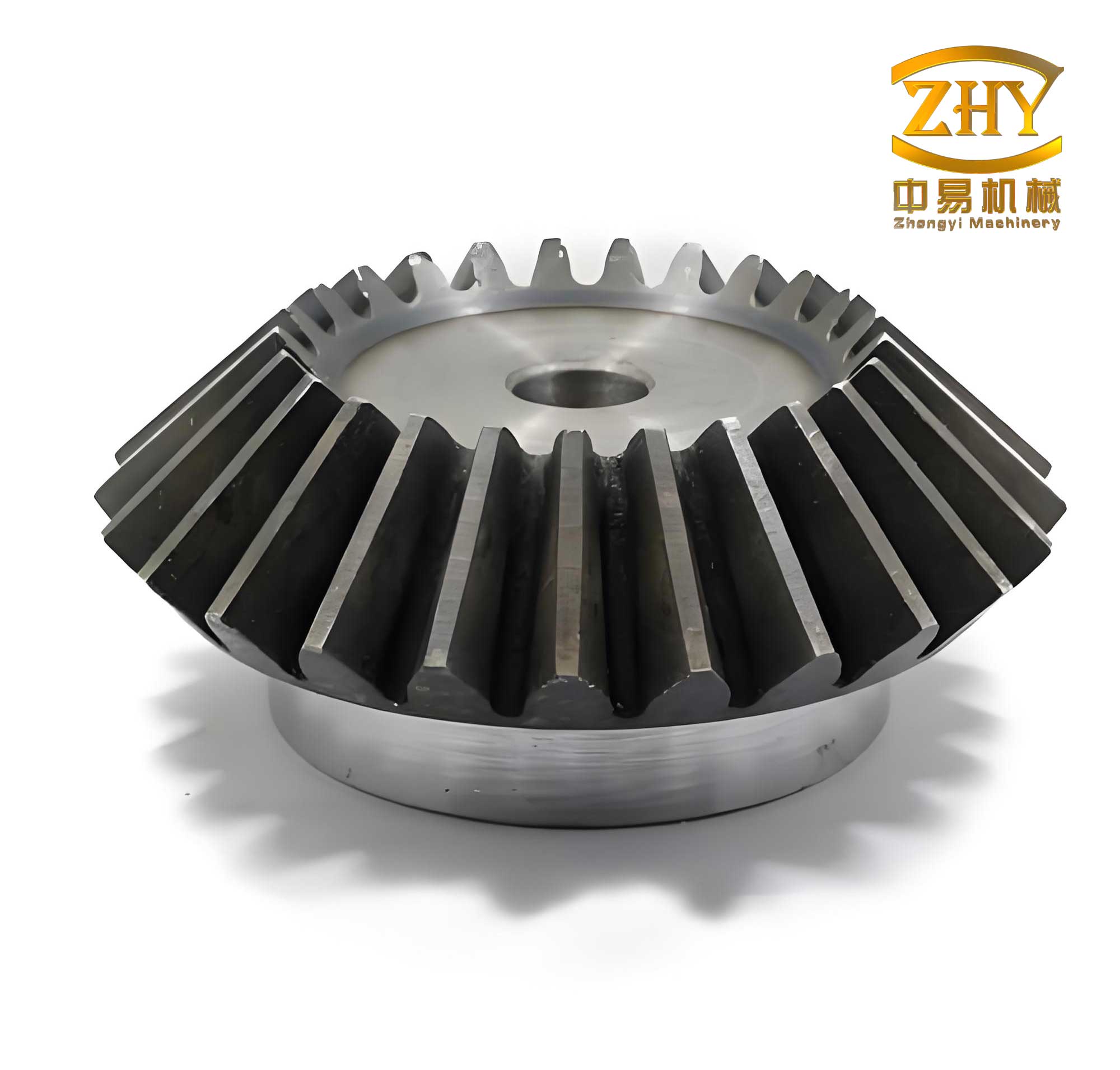
In modern multi-floor manufacturing and assembly lines, the seamless transfer of workpieces and products between different levels is crucial for operational continuity and efficiency. A key technology enabling this vertical integration is the bevel gear elevator. This system typically utilizes a bevel gear drive mechanism to convert horizontal rotational motion into vertical lifting force. The critical component responsible for translating this rotational force into precise linear motion is the ball screw. The reliable and quiet operation of the entire bevel gear elevator system is therefore intrinsically linked to the dynamic behavior of its ball screw assembly.
During operation, ball screws are susceptible to generating vibration and noise. This is often due to factors such as manufacturing imperfections, varying load conditions, and the high-speed reversal of ball bearings within the recirculation path. The most severe dynamic condition occurs when the excitation frequency from the driving bevel gears and motor coincides with one of the ball screw’s natural frequencies, leading to resonance. Resonance can manifest as excessive deflection, amplified noise levels, accelerated wear, and in extreme cases, catastrophic structural failure of the screw or the supporting elevator frame. Consequently, predicting the natural frequencies and mode shapes of the ball screw at the design stage is paramount. This knowledge allows engineers to tailor the operational parameters of the bevel gear drive system—such as rotational speed—to ensure the excitation frequencies remain sufficiently distant from the screw’s resonant frequencies, thereby guaranteeing stable and long-lasting operation.
This study focuses on the modal analysis of the ball screw within a bevel gear elevator context. A three-dimensional model of a specific ball screw is created using SolidWorks CAD software. This model is then imported into ANSYS Workbench, a powerful finite element analysis (FEA) platform, to perform a detailed modal simulation. The primary objective is to extract the first six natural frequencies and their corresponding modal shapes. Furthermore, a parametric investigation is conducted to understand the influence of two key geometric design parameters—the nominal diameter and the thread pitch—on the fundamental dynamic characteristics of the ball screw. The findings provide essential theoretical guidance for the design and optimization of bevel gear elevator systems, enabling the proactive avoidance of resonant conditions.
Theoretical Foundation of Modal Analysis
Modal analysis is a fundamental engineering technique used to determine the inherent vibration characteristics (natural frequencies and mode shapes) of a structure. These characteristics are functions of the structure’s mass distribution, stiffness distribution, and boundary conditions. For the purpose of this analysis, several standard assumptions are made to simplify the complex real-world dynamics:
- The stiffness matrix [K] and mass matrix [M] of the structure are constant and linear (no nonlinear effects from large deformations are considered).
- Damping effects are neglected, as they have a relatively small impact on the determination of natural frequencies and mode shapes.
- The analysis considers free vibration; there are no external time-varying forces or loads applied during the modal extraction.
Under these assumptions, the equation of motion for an undamped multi-degree-of-freedom system is given by:
$$ [M]\{\ddot{u}\} + [K]\{u\} = \{0\} $$
Where:
$[M]$ is the global mass matrix,
$[K]$ is the global stiffness matrix,
$\{\ddot{u}\}$ is the nodal acceleration vector, and
$\{u\}$ is the nodal displacement vector.
For linear systems undergoing free vibration, the solution is assumed to be harmonic. The displacement vector can be expressed as:
$$ \{u\} = \{\phi_i\} \cos(\omega_i t) $$
Where:
$\{\phi_i\}$ is the eigenvector or mode shape vector for the i-th mode,
$\omega_i$ is the circular natural frequency (rad/s) for the i-th mode, and
$t$ is time.
Substituting this harmonic solution into the equation of motion yields:
$$ (-\omega_i^2 [M] + [K]) \{\phi_i\} = \{0\} $$
This represents a classical eigenvalue problem. For a non-trivial solution ($\{\phi_i\} \neq \{0\}$), the determinant of the coefficient matrix must be zero:
$$ \det(-\omega_i^2 [M] + [K]) = 0 $$
Solving this characteristic equation yields a set of eigenvalues, $\lambda_i = \omega_i^2$. The square roots of these eigenvalues give the natural frequencies $f_i$ in Hertz:
$$ f_i = \frac{\omega_i}{2\pi} $$
The corresponding eigenvectors $\{\phi_i\}$ describe the deformed shape of the structure when vibrating at its i-th natural frequency, known as the mode shape. In this study, ANSYS solves this eigenvalue problem for the ball screw finite element model to extract its modal parameters.
Finite Element Modeling of the Ball Screw
The accuracy of a modal analysis is heavily dependent on the fidelity of the finite element model. The modeling process for the ball screw in this study follows a structured workflow.
Geometry and Material Properties
The ball screw is modeled as a standalone component, focusing on its core structural elements: the screw shaft and the thread profile. For computational efficiency and to avoid numerical complications from excessively small features, minor geometric details such as fillets, chamfers, and the precise ball groove profile are simplified. The thread is modeled as a helical protrusion. The key dimensions of the baseline model are summarized in Table 1.
| Parameter | Value | Unit |
|---|---|---|
| Nominal Diameter (d) | 32 | mm |
| Lead / Pitch (P) | 10 | mm |
| Effective Screw Length (L) | 2800 | mm |
| Screw Root Diameter (d_r) | 25 | mm |
The material assigned is standard structural steel, a common choice for ball screws due to its high strength and rigidity. The isotropic material properties defined in the model are:
- Young’s Modulus (E): 210 GPa
- Poisson’s Ratio (ν): 0.3
- Density (ρ): 7850 kg/m³
The high Young’s modulus is critical as it directly influences the stiffness matrix [K] and thus the calculated natural frequencies. This relationship can be conceptually understood from the simplified formula for the fundamental frequency of a simply supported beam, which is proportional to $\sqrt{EI/(mL^4)}$, where I is the area moment of inertia and m is mass.
Mesh Generation
The 3D solid geometry is discretized into finite elements using ANSYS’s automatic meshing algorithms. A relevance-centric mesh control is applied, with the element size refined to ensure sufficient detail, particularly in the threaded region. The default second-order 10-node tetrahedral (SOLID187) elements are employed. These elements are well-suited for modeling irregular meshes and provide good accuracy for bending and vibration analyses. The final mesh statistics for the baseline model are:
- Number of Nodes: 147,706
- Number of Elements: 88,048
A mesh convergence study was implicitly considered by ensuring that further refinement of the mesh did not significantly alter (e.g., change by less than 1%) the resulting natural frequencies, confirming the reliability of the chosen mesh density.
Boundary Conditions
Applying correct boundary conditions is arguably the most critical step in modal analysis, as they define the kinematic constraints and drastically affect the system’s stiffness. In the bevel gear elevator, the ball screw is typically mounted vertically. Its ends are supported by bearings housed within the elevator frame. For this analysis, the following assumptions are made regarding the end supports:
- Both ends are considered to be “Cylindrical Supports” in ANSYS terminology. This type of constraint allows free rotation about the axis of the cylinder (the screw’s longitudinal Z-axis) but restricts all translational degrees of freedom (UX, UY, UZ). It also restricts radial rotation (i.e., bending rotation).
This configuration simulates the real-world scenario where the screw is free to rotate (driven by the bevel gear system) but its ends are fixed in space by the housing/bearings, preventing lateral and axial movement. It is important to note that this is a non-rotating modal analysis. The effect of spin softening or gyroscopic moments due to the screw’s operational rotation is not considered here, as the primary goal is to find the inherent frequencies of the stationary structure. The applied boundary conditions are depicted conceptually in the analysis setup.
Modal Analysis Results and Discussion
With the finite element model fully defined—geometry, material, mesh, and constraints—the modal analysis solver is executed. The Block Lanczos eigenvalue extraction method is used due to its efficiency and reliability for large models. The solver is configured to extract the first six mode shapes and their corresponding frequencies. The results for the baseline ball screw model (d=32mm, P=10mm) are presented in Table 2.
| Mode Order | Natural Frequency (Hz) | Mode Shape Description |
|---|---|---|
| 1 | 13.864 | First Bending (Horizontal plane) |
| 2 | 13.867 | First Bending (Vertical plane, orthogonal to Mode 1) |
| 3 | 38.191 | Second Bending (Horizontal plane) |
| 4 | 38.198 | Second Bending (Vertical plane, orthogonal to Mode 3) |
| 5 | 74.800 | Third Bending (Horizontal plane) |
| 6 | 74.813 | Third Bending (Vertical plane, orthogonal to Mode 5) |
Interpretation of Results
The results reveal several important characteristics of the ball screw’s dynamic behavior:
- Frequency Spectrum: The first natural frequency is approximately 13.86 Hz. This is a critically low frequency, indicating that the long, slender screw is relatively flexible. The bevel gear drive system must be designed to avoid operating at or near speeds that would generate excitations at this frequency (e.g., a motor rotational speed of 831.6 RPM could excite this mode if a 1-per-revolution imbalance is present).
- Mode Pairing: The frequencies appear in closely spaced pairs (13.864/13.867 Hz, 38.191/38.198 Hz, 74.800/74.813 Hz). Each pair corresponds to the same bending order but in two perpendicular planes. The minimal frequency separation within each pair is due to the slight numerical asymmetry introduced by the helical thread and the finite element mesh; in a perfectly axisymmetric model with an isotropic material, these pairs would be identical (degenerate modes).
- Mode Shape Progression: The first two modes are first-order bending, where the screw deflects into a single arc. The third and fourth modes show two nodes (points of zero displacement), characteristic of second-order bending. The fifth and sixth modes display three nodes, corresponding to third-order bending. The absence of pure torsional or axial modes within the first six modes confirms that for this long, slender screw with the given boundary conditions, bending is the dominant and lowest-frequency vibrational response. The driving torque from the bevel gears primarily excites torsion, but any lateral force component can excite these bending modes.
The deformation patterns clearly show that maximum displacement occurs at the mid-span and other anti-node locations, which are potential points of high stress under resonance. This information is vital for identifying critical monitoring locations if vibration sensors are to be installed on the bevel gear elevator system.
Parametric Study: Influence of Nominal Diameter and Pitch
To provide actionable design guidance, a parametric study was conducted. The natural frequencies of a structure are functions of its stiffness and mass. For a beam-like structure such as a ball screw, the bending stiffness is proportional to the area moment of inertia, I, while the mass is proportional to the cross-sectional area, A. For a solid shaft of diameter d:
$$ I \propto d^4, \quad A \propto d^2, \quad \text{and thus} \quad f \propto \sqrt{\frac{EI}{mL^4}} \propto \sqrt{\frac{d^4}{d^2 L^4}} \propto \frac{d}{L^2} $$
This simplified scaling law suggests a linear relationship between natural frequency and diameter for a constant length. The thread pitch primarily affects the minor (root) diameter and adds distributed mass.
To investigate this systematically, the FEA model was modified to analyze different configurations. The results are synthesized below.
Effect of Nominal Diameter (d)
The nominal diameter was varied from 30 mm to 50 mm while keeping the lead constant at 10 mm and the effective length constant at 2800 mm. The root diameter was adjusted proportionally. The first (f1), third (f3), and fifth (f5) natural frequencies were tracked; the even-numbered modes follow their paired odd modes closely. The trend is summarized in Table 3 and illustrated graphically.
| Nominal Diameter, d (mm) | f1 (Hz) | f3 (Hz) | f5 (Hz) |
|---|---|---|---|
| 30 | 12.15 | 33.42 | 65.50 |
| 32 | 13.86 | 38.19 | 74.80 |
| 35 | 16.58 | 45.71 | 89.58 |
| 40 | 21.68 | 59.78 | 117.1 |
| 45 | 27.45 | 75.71 | 148.3 |
| 50 | 33.88 | 93.42 | 182.9 |
Key Observation: There is a strong, positive, and non-linear relationship between the nominal diameter and all natural frequencies. As the diameter increases, the screw’s bending stiffness ($\propto d^4$) increases at a much faster rate than its mass per unit length ($\propto d^2$), resulting in higher natural frequencies. Furthermore, the rate of increase is more pronounced for higher-order modes. For instance, increasing the diameter from 30mm to 50mm (a 66.7% increase) raises f1 by 179%, f3 by 180%, and f5 by 179%. This consistent multiplicative factor aligns with the simplified scaling law $f \propto d$. This finding is of paramount importance for the designer of the bevel gear elevator. If the operational frequency range of the system is constrained (e.g., by fixed motor and bevel gear ratios), selecting a ball screw with a sufficiently large nominal diameter is the most effective way to push its natural frequencies above the excitation range and avoid resonance.
Effect of Thread Pitch/Lead (P)
The thread pitch was varied from 5 mm to 25 mm while the nominal diameter was held constant at 32 mm and the length at 2800 mm. Varying the pitch changes the thread depth and, consequently, the root diameter. The results for the key frequencies are presented in Table 4.
| Pitch, P (mm) | Estimated Root Dia. (mm) | f1 (Hz) | f3 (Hz) | f5 (Hz) |
|---|---|---|---|---|
| 5 | ~26.5 | 14.01 | 38.62 | 75.65 |
| 10 | 25.0 | 13.86 | 38.19 | 74.80 |
| 15 | ~23.5 | 13.67 | 37.68 | 73.82 |
| 20 | ~22.0 | 13.45 | 37.08 | 72.65 |
| 25 | ~20.5 | 13.20 | 36.40 | 71.30 |
Key Observation: In contrast to the diameter, the thread pitch has a very minor influence on the natural frequencies. As the pitch increases (and the root diameter decreases slightly), there is a very small decrease in frequency. Over a five-fold increase in pitch from 5mm to 25mm, the first natural frequency decreases by only about 5.8%. This is because the change in the root diameter—and hence the bending stiffness—is relatively small compared to the change in pitch itself. The added mass from a larger thread helix is also negligible. For practical design purposes within standard pitch ranges, the effect of pitch on the dynamic characteristics of the ball screw can be considered negligible. This liberates the designer to select the pitch primarily based on other operational requirements of the bevel gear elevator, such as linear speed ($v = P \times n$) and resolution, without worrying about significantly impacting the resonant frequencies.
Design Implications for Bevel Gear Elevator Systems
The findings of this modal analysis and parametric study have direct and significant implications for the design and integration of ball screws within bevel gear elevator systems.
- Resonance Avoidance Strategy: The primary deliverable is the set of natural frequencies (e.g., ~13.9 Hz, ~38.2 Hz, ~74.8 Hz for the baseline design). The operational excitation frequencies originate from the rotary components: the electric motor and the meshing bevel gears. Excitation sources include:
- Motor shaft rotational frequency: $f_{motor} = N_{motor} / 60$ Hz.
- Gear meshing frequency: $f_{mesh} = N_{gear} \times Z / 60$ Hz, where Z is the number of teeth on the bevel gear attached to the screw.
- Harmonics of these frequencies due to imperfections.
The designer must ensure that all potential excitation frequencies, along with their significant harmonics, maintain a safe margin (often 15-20%) away from the ball screw’s natural frequencies. If a conflict exists, the system’s operational speed (N) must be altered, or the ball screw’s dynamics must be modified.
- Primary Design Lever: Nominal Diameter: The parametric study clearly identifies the nominal diameter as the most powerful design variable for tuning the ball screw’s natural frequencies. If the elevator’s operational envelope is fixed, increasing the ball screw’s diameter is the most reliable method to raise its natural frequencies above the excitation range. This comes at the cost of increased material, weight, and potentially larger supporting bearings and housing in the bevel gear assembly, necessitating a trade-off analysis.
- Secondary Design Lever: Support Stiffness: While not varied in this study, the boundary conditions have a profound effect. Stiffer bearing supports or the addition of intermediate supports (steady rests) along the screw’s length would dramatically increase all natural frequencies, especially the first bending mode. This could be a viable solution if increasing the diameter is not feasible.
- Pitch as a Free Parameter: The minimal impact of thread pitch on dynamics allows it to be selected independently to optimize the elevator’s performance metrics. A larger pitch provides higher linear speed for a given rotational input from the bevel gears, improving throughput. A smaller pitch offers finer positioning resolution and may provide greater mechanical advantage (higher thrust force for a given torque).
- System-Level Vibration Analysis: This analysis focused on the ball screw in isolation. A complete dynamic assessment of the bevel gear elevator should consider the coupled system: motor, bevel gears, couplings, screw, and the moving nut/platform. The mass of the nut and its load add to the system and can lower certain frequencies. Future work could involve transient dynamic analysis or harmonic response analysis under actual motion profiles to assess vibration levels during acceleration and deceleration phases driven by the bevel gear system.
Conclusion
This study successfully conducted a finite element-based modal analysis of a ball screw for application in a bevel gear elevator system. Using SolidWorks for geometry creation and ANSYS Workbench for simulation, the first six natural frequencies and bending mode shapes of a representative ball screw were determined. The fundamental frequency was found to be approximately 13.86 Hz, with subsequent pairs of bending modes at higher frequencies.
A critical parametric investigation revealed that the nominal diameter of the ball screw has a strong, positive influence on its natural frequencies, effectively following a linear scaling relationship. This provides a clear design pathway to avoid resonance by selecting a screw diameter that positions its natural frequency spectrum safely above the excitation frequencies generated by the bevel gear drive train. Conversely, the thread pitch was shown to have a negligible effect on dynamic characteristics, freeing engineers to specify pitch based on kinematic and load-capacity requirements.
The methodology and results presented serve as a practical and essential reference for the design and optimization of bevel gear elevator systems. By incorporating this modal analysis into the design process, engineers can proactively ensure dynamic stability, prevent resonant failures, reduce noise, and enhance the overall reliability and longevity of automated vertical material handling systems.