
The transmission of power between intersecting shafts is a fundamental requirement in numerous mechanical systems, from automotive differentials to the critical drivetrains of aerospace vehicles. Among the various solutions, bevel gears, and particularly high-performance spiral bevel gears, stand out due to their ability to handle high speeds and heavy loads efficiently and smoothly. Accurate prediction of the stress state within these gears is paramount for achieving designs that are both reliable and lightweight, especially in demanding applications like helicopter transmissions where failure is not an option.
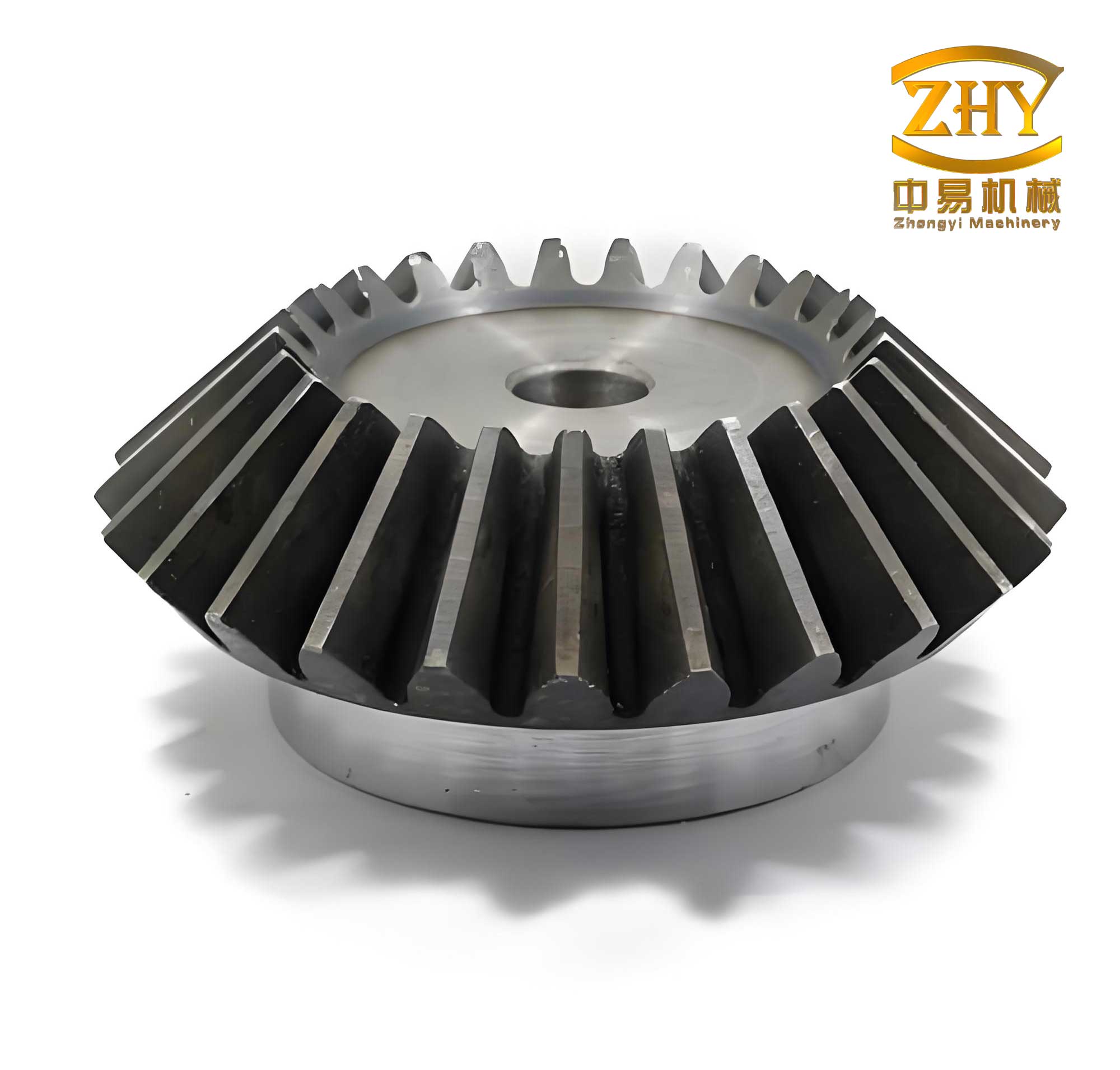
However, obtaining a precise stress-time history for bevel gears is a formidable challenge. The meshing process of spiral bevel gears is inherently complex, characterized by localized point contact that shifts across the tooth surfaces. This contact condition and the transmitted load vary continuously with the angular position. Furthermore, this inherent complexity is exacerbated by operational factors such as dynamic vibrations and impacts from tooth meshing, as well as deformations in the supporting structure including shafts and bearings. These factors are not independent; they interact and couple, creating a multi-physics problem that is difficult to model accurately. Traditional analysis methods often simplify these couplings, potentially leading to significant inaccuracies in fatigue life prediction and reliability assessment. This article delves into a methodology for the precise acquisition of gear tooth stress by systematically accounting for the coupling effects of dynamic behavior and structural compliance.
The Core Challenge: From System Input to Local Tooth Stress
The foundational step in any stress analysis is defining the loading conditions. For bevel gears operating in a real system like an aircraft transmission, the input is not a constant torque but a spectrum of operating conditions defined by power, torque, and duration. A precise load transformation method is required to translate this system-level input power spectrum into the detailed time-varying loads acting on the bevel gear pair itself. Consider a representative operational profile for a helicopter spiral bevel gear, which consists of multiple distinct operating points or “missions”.
| Mission ID | Power (kW) | Input Torque (N·m) | Time Percentage | Input Speed (rpm) |
|---|---|---|---|---|
| 1 | 84 | 173 | 3.50% | 4628.5 |
| 2 | 213 | 440 | 9.25% | 4628.5 |
| 3 | 221 | 456 | 8.20% | 4628.5 |
| 4 | 241 | 497 | 0.25% | 4628.5 |
| 5 | 260 | 536 | 1.25% | 4628.5 |
| 6 | 280 | 578 | 0.40% | 4628.5 |
| 7 | 299 | 617 | 1.00% | 4628.5 |
| 8 | 324 | 669 | 1.00% | 4628.5 |
| 9 | 362 | 747 | 7.00% | 4628.5 |
| 10 | 378 | 780 | 33.15% | 4628.5 |
| 11 | 392 | 809 | 4.25% | 4628.5 |
| 12 | 425 | 877 | 0.10% | 4628.5 |
| 13 | 450 | 928 | 27.50% | 4628.5 |
| 14 | 478 | 986 | 2.60% | 4628.5 |
This table defines 14 unique loading conditions for the bevel gears. A comprehensive stress analysis must consider each of these missions, as the stress response is highly nonlinear with respect to load. The goal is to transform each of these static torque values into a dynamic stress-time history for the gear teeth, incorporating the effects of vibration and system deformation.
Coupled Factor 1: Dynamic Load Factor from Gear Dynamics
The static torque from the power spectrum must be multiplied by a Dynamic Load Factor (Kv) to account for internal vibrations caused by time-varying mesh stiffness, transmission errors, and backlash. To determine this factor, a dynamic model of the spiral bevel gear system is essential. A lumped-parameter model with multiple degrees of freedom (DOF) can be constructed.
In this model, the pinion and gear along with their respective shafts are treated as rigid bodies with concentrated masses and moments of inertia. The elastic deformations are represented by spring-damper systems: the bearings by support stiffnesses and damping, and the gear mesh by a time-varying mesh stiffness and damping along the line of action. A typical model may consider three translational and one rotational degree of freedom for each gear body, leading to a system with 7 or 8 DOF after constraint reduction.
The equations of motion for such a system can be derived. For the pinion (body 1) and gear (body 2), the translational equations in the x, y, z directions (defined at the intersection point of the gear axes) are:
$$m_1 \ddot{X}_1 + c_{x1} \dot{X}_1 + k_{x1} X_1 = F_x$$
$$m_1 \ddot{Y}_1 + c_{y1} \dot{Y}_1 + k_{y1} Y_1 = F_y$$
$$m_1 \ddot{Z}_1 + c_{z1} \dot{Z}_1 + k_{z1} Z_1 = F_z$$
$$m_2 \ddot{X}_2 + c_{x2} \dot{X}_2 + k_{x2} X_2 = -F_x$$
$$m_2 \ddot{Y}_2 + c_{y2} \dot{Y}_2 + k_{y2} Y_2 = -F_y$$
$$m_2 \ddot{Z}_2 + c_{z2} \dot{Z}_2 + k_{z2} Z_2 = -F_z$$
The rotational equations are:
$$J_1 \ddot{\theta}_{1x} = T_1 – F_z r_1$$
$$J_2 \ddot{\theta}_{2y} = -T_2 + F_z r_2$$
Where:
– $m_i$, $J_i$ are the mass and mass moment of inertia.
– $c_{ij}$, $k_{ij}$ are damping and stiffness coefficients in the three directions.
– $T_i$ are the input/output torques.
– $F_x$, $F_y$, $F_z$ are the mesh force components.
– $r_i$ are the base circle radii.
The key internal excitation is the time-varying mesh stiffness $k_m(t)$, which is periodic with the gear mesh frequency. It can be represented as a Fourier series:
$$k_m(t) = k_{m0} + \sum_{l=1}^{n} A_{kl} \cos(l\omega_m t + \phi_{kl})$$
where $k_{m0}$ is the mean mesh stiffness, $\omega_m$ is the mesh frequency, and $A_{kl}$, $\phi_{kl}$ are the amplitude and phase of the l-th harmonic.
By numerically solving this system of differential equations for each torque level in the mission profile, the dynamic mesh force $F_{dyn}(t)$ is obtained. The Dynamic Load Factor $K_v$ is then the ratio of the maximum dynamic force to the nominal static force:
$$K_v(t) = \frac{F_{dyn}(t)}{F_{static}} = \frac{F_{dyn}(t)}{T_1 / r_1}$$
The value of $K_v$ is not constant; it varies within a mesh cycle and changes with the nominal load. Analysis often reveals a non-monotonic relationship where $K_v$ may initially decrease with increasing torque as the system becomes more damped by the load, then increase again as inertial effects dominate at very high loads or speeds. This coupling between static load and dynamic response is critical for accurate stress calculation in bevel gears.
Coupled Factor 2: Support Stiffness Deformation and Mesh Misalignment
While dynamics affect the magnitude of the load, the supporting structure’s deformation affects *where* and *how* the load is applied on the tooth. Under load, shafts bend, and bearings deflect. This causes the pinion and gear to displace from their theoretical aligned positions, resulting in misalignment. This misalignment changes the contact pattern, potentially leading to edge loading, shifted load distribution across the face width, and altered load sharing between simultaneous contact pairs.
This effect can be modeled as a displacement error of the pinion relative to the gear. The misalignment is characterized by three linear offset errors ($\Delta X$, $\Delta Y$, $\Delta Z$) and three angular errors (misalignment angles). For many analyses, the linear offsets have a more direct and pronounced effect on contact stress than angular errors. These offsets are a function of the applied load and the system’s static compliance matrix.
The supporting stiffness values ($k_{x1}, k_{y1}, …$) used in the dynamic model are also used to calculate these quasi-static deflections under the *dynamic* load $F_{dyn}(t)$. Therefore, the displacement error itself becomes time-varying, coupled to the dynamic load factor:
$$\Delta X(t) = \frac{F_x(t)}{k_{x}} \approx f(K_v(t), T_{static}, geometry)$$
Similar relations hold for $\Delta Y$ and $\Delta Z$. For a given static torque level, a corresponding dynamic offset can be calculated. A representative set of these offset values for the 14 missions, calculated considering the coupled dynamic load, might be:
| Mission ID | ΔX (mm) | ΔY (mm) | ΔZ (mm) |
|---|---|---|---|
| 1 | 0.0343 | -0.0689 | 0.0388 |
| 2 | 0.0872 | -0.1755 | 0.0988 |
| … | … | … | … |
| 13 | 0.1840 | -0.3701 | 0.2084 |
| 14 | 0.1890 | -0.3820 | 0.2150 |
Integrated Stress Analysis: Coupling Dynamics and Deformation in FEA
The final step is to perform a stress analysis that incorporates both coupled factors. Finite Element Analysis (FEA) is the most suitable tool for this task. The process involves:
- Model Generation: Creating a detailed 3D FE model of the spiral bevel gear pair, often from precisely calculated tooth geometry based on machine-tool settings.
- Boundary Condition Application (The Coupling): This is where the two factors are integrated.
- Dynamic Load: The nominal static torque for a mission is multiplied by the time-varying $K_v(t)$ curve. This dynamic load history is applied as a rotational velocity or torque boundary condition on the pinion/gear shaft. In FEA software like ABAQUS, this time history is defined using an amplitude curve (e.g., `AMPLITUDE` option).
- Support Deformation: The calculated displacement offsets ($\Delta X, \Delta Y, \Delta Z$) for that mission are applied to the reference points of the gear and pinion bodies, simulating the misalignment caused by system compliance under that specific dynamic load.
- Solution: A non-linear static or quasi-static analysis is run for multiple time increments representing different positions in the mesh cycle. At each increment, the applied load and the enforced misalignment correspond to the coupled state of the system.
The output is the full-field stress history, from which key metrics like maximum contact stress (Hertzian stress) and maximum tooth root bending stress are extracted for each mission. The analysis reveals that:
– Contact stress is significantly more sensitive to support stiffness deformation than bending stress. Misalignment can cause high edge stresses.
– The bending stress at the tooth root is more directly amplified by the global dynamic load factor $K_v$.
– Ignoring support deformation leads to an underestimation of peak contact stress and a miscalculation of its location. Ignoring dynamics leads to an underestimation of the load magnitude.
Comparing results for different missions (e.g., 440 N·m, 747 N·m, and 986 N·m) shows that the stress profile changes nonlinearly. The “double-peak” pattern of bending stress during a mesh cycle (from single and double tooth contact regions) is altered in both amplitude and phase when deformation is considered, as the load sharing and contact entry/exit points shift.
Validation Through Similarity-Based Experimentation
To validate the coupled numerical methodology, physical testing is essential. However, testing full-scale aerospace bevel gears is prohibitively expensive. The principle of similarity provides a solution. A scaled-down physical model of the gear pair can be designed and tested, and the results can be extrapolated to the prototype using similarity laws.
The primary parameters governing tooth root bending stress ($\sigma_F$) are the transmitted tangential load ($F_{mt}$), the face width ($b$), and the module ($m$). Their dimensions are:
- $\sigma_F$: [Force][Length]$^{-2}$ or $F L^{-2}$
- $F_{mt}$: [Force] or $F$
- $b$, $m$: [Length] or $L$
Using the Buckingham π theorem, two dimensionless π-groups can be derived:
$$\pi_1 = \frac{\sigma_F m^2}{F_{mt}}, \quad \pi_2 = \frac{m}{b}$$
For the model and prototype to be dynamically similar in terms of bending stress, both π-groups must be equal. By carefully choosing the scale factors for module and face width, a physically testable model gear can be manufactured.
A test rig is constructed with the model bevel gears, equipped with strain gauges mounted at the critical tooth root fillet. The gears are run under scaled-load conditions corresponding to the target missions. The measured strain $\epsilon$ is converted to stress in the model: $\sigma’ = \epsilon E$. The stress in the prototype is then calculated using the similarity relation from $\pi_1$:
$$\sigma_{F, prototype} = \sigma’_{F, model} \cdot \left( \frac{F_{mt, proto}}{F_{mt, model}} \right) \cdot \left( \frac{m_{model}}{m_{proto}} \right)^2$$
For example, if testing validates a model under a condition scaled from Mission 5, the prototype stress calculated from the test data can be compared to the FEA-predicted stress for that mission. A typical deviation of around 20-25% between the similarity-derived stress and the coupled FEA result is considered a good validation, given the complexities of manufacturing, measurement, and scaling. This confirms the overall correctness of the multi-factor coupling approach for analyzing bevel gears.
Conclusion
The precise acquisition of stress in bevel gears, particularly for high-reliability applications, demands a holistic approach that accounts for coupled influencing factors. A methodical process that transforms a system input power spectrum into a gear-level load history, incorporating both a dynamically-derived load factor and a compliance-induced mesh misalignment, provides a far more accurate representation of real-world operating conditions than static or decoupled analyses. The dynamic behavior of bevel gears shows a complex relationship with load, affecting the amplitude of force. Simultaneously, the structural deformation of supports alters the load distribution on the tooth flanks, an effect to which contact stress is especially sensitive. Integrating these two factors as boundary conditions in a finite element analysis yields a realistic stress-time history crucial for fatigue life prediction. Finally, validation through similarity-based experimentation provides essential confidence in the numerical models. This integrated methodology for analyzing bevel gears under multi-factor coupling forms a robust foundation for the design and reliability assessment of advanced power transmission systems, ensuring that critical components like spiral bevel gears meet their stringent performance and life requirements.