
In the field of mechanical engineering, particularly in the design of lifting equipment such as cranes, the use of screw gear drives—often referred to as worm gear systems—presents a fascinating intersection of physics, material science, and safety considerations. I have spent considerable time studying the principles that allow these drives to function without traditional braking mechanisms, relying instead on their inherent self-locking properties. This article delves into the detailed conditions under which screw gear drives can safely operate without external brakes, exploring the theoretical foundations, practical requirements, and potential risks. The discussion is rooted in design standards that permit omission of brakes in specific scenarios, provided stringent criteria are met. Throughout, I will emphasize the key term “screw gear” to underscore its centrality, and incorporate formulas and tables to clarify complex concepts. The goal is to provide a comprehensive resource that spans over 8000 tokens, ensuring depth and clarity for engineers and designers.
The fundamental idea behind a screw gear drive’s ability to hold loads without a brake lies in the concept of mechanical self-locking. This phenomenon occurs when the drive mechanism, due to its geometry and friction characteristics, prevents reverse motion under load, effectively acting as a brake itself. In my analysis, I start with the basics of friction and the friction angle, which are critical to understanding self-locking. When a body rests on a surface, the maximum static friction force $F_{\text{max}}$ is given by $F_{\text{max}} = \mu_s N$, where $\mu_s$ is the coefficient of static friction and $N$ is the normal force. The friction angle $\phi$ is defined as the angle between the total reaction force and the normal to the surface when friction is at its maximum, satisfying $\tan \phi = \mu_s$. This leads to the self-locking condition: if the resultant of applied forces lies within the friction cone (defined by angle $\phi$), the body remains stationary regardless of the force magnitude; otherwise, motion occurs. For screw gear drives, this translates to the screw’s lead angle being less than the friction angle.
To illustrate, consider a simple screw jack, which is analogous to a screw gear system. The screw’s lead angle $\lambda$ is related to its pitch and diameter. Self-locking requires $\lambda \leq \phi$. In screw gear drives, the worm (screw) engages with the worm wheel (gear), and the same principle applies. The condition for self-locking in a screw gear drive is mathematically expressed as:
$$\lambda \leq \phi = \arctan(\mu_s)$$
where $\lambda$ is the lead angle of the worm, and $\mu_s$ is the static friction coefficient between the worm and worm wheel materials. This inequality ensures that any attempt to reverse the drive under load is resisted by friction, preventing unintended motion. However, achieving this in practice depends on multiple factors, which I will explore in detail.
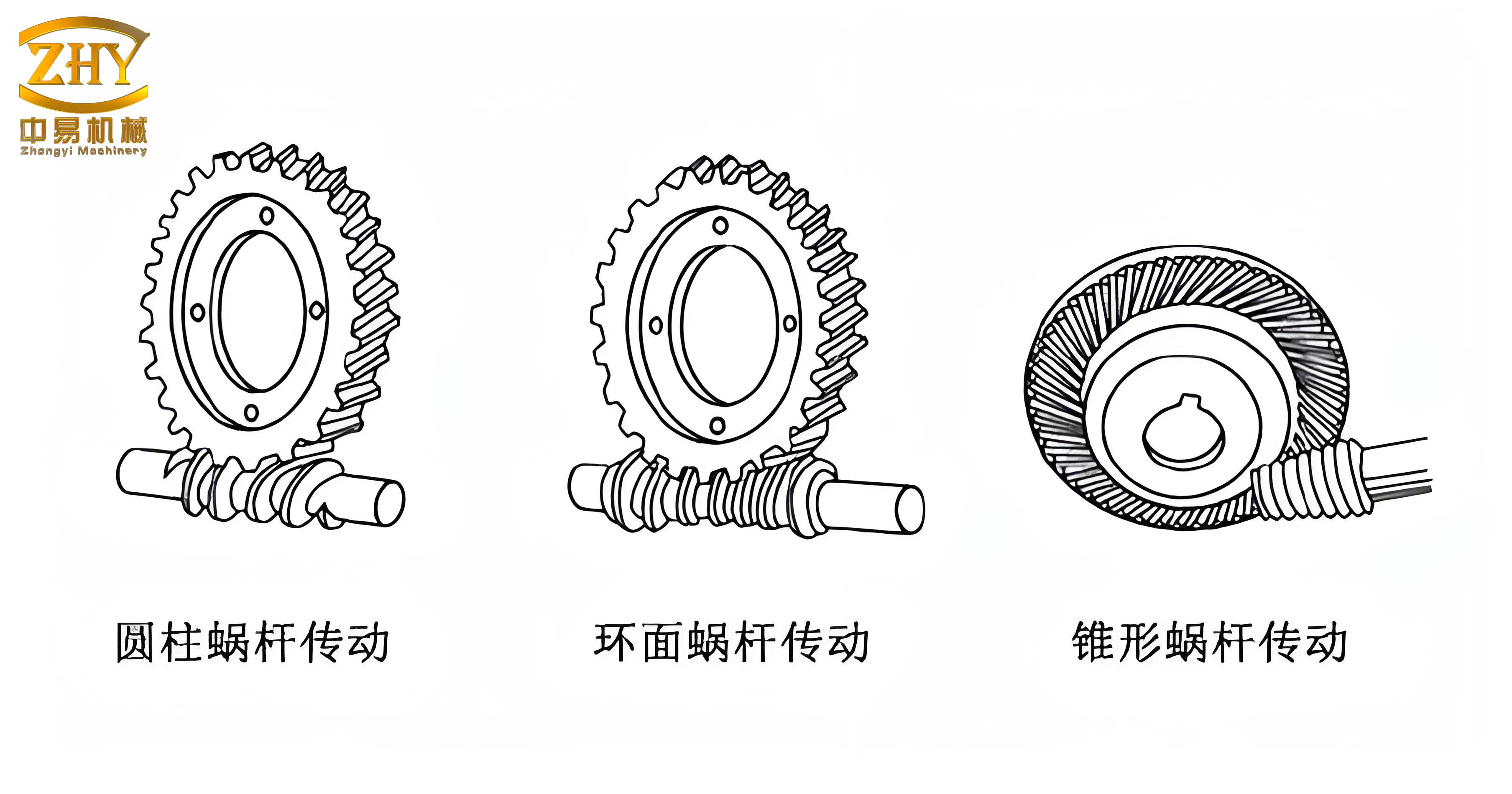
The self-locking capability of a screw gear drive is not merely a theoretical ideal; it must be rigorously validated through design, material selection, and operational controls. In my experience, the first step is to ensure the lead angle is sufficiently small. For typical screw gear pairs, the lead angle $\lambda$ is calculated from the worm’s geometry: $\lambda = \arctan\left(\frac{L}{\pi d}\right)$, where $L$ is the lead (axial distance per revolution) and $d$ is the worm’s pitch diameter. To satisfy $\lambda \leq \phi$, the friction coefficient $\mu_s$ must be relatively high. This brings us to material choices. The worm is often made of hardened steel to enhance durability, while the worm wheel uses bronze or similar alloys for good wear resistance and low friction. The static friction coefficient between steel and bronze typically ranges from 0.05 to 0.15 under lubricated conditions, but it can vary with surface finish, lubrication, and operating temperature. Using $\mu_s = 0.1$ as a conservative estimate, the friction angle $\phi \approx \arctan(0.1) \approx 5.71^\circ$. Thus, for self-locking, the worm’s lead angle $\lambda$ should be less than about $5.7^\circ$. This is a critical design constraint for screw gear drives intended to operate without brakes.
Beyond the lead angle, the screw gear drive must withstand the rated loads without failure. This involves stress analysis to ensure that neither the worm shaft nor the worm wheel teeth exceed allowable limits. I often use the following formulas for preliminary checks. For the worm wheel, the bending stress $\sigma_b$ at the tooth root can be approximated using Lewis equation modified for screw gears:
$$\sigma_b = \frac{F_t}{b m_n Y}$$
where $F_t$ is the tangential force, $b$ is the face width, $m_n$ is the normal module, and $Y$ is the Lewis form factor. The contact stress $\sigma_c$ on the tooth surface, crucial for pitting resistance, is given by:
$$\sigma_c = C_p \sqrt{\frac{F_t}{d_w b} \cdot \frac{E_1 E_2}{E_1 + E_2}}$$
where $C_p$ is a material constant, $d_w$ is the worm wheel pitch diameter, and $E_1$, $E_2$ are Young’s moduli for the worm and wheel. For the worm shaft, torsional stress $\tau$ must be checked: $\tau = \frac{T r}{J}$, with $T$ as torque, $r$ as radius, and $J$ as polar moment of inertia. These stresses should remain below the material’s yield strength with a safety factor. To summarize key parameters, I provide a table below:
| Parameter | Symbol | Typical Range for Screw Gear Drives | Importance for Self-Locking |
|---|---|---|---|
| Worm Lead Angle | $\lambda$ | $1^\circ$ to $5^\circ$ | Must be ≤ friction angle $\phi$ |
| Static Friction Coefficient | $\mu_s$ | 0.05–0.15 (steel-bronze) | Determines $\phi = \arctan(\mu_s)$ |
| Worm Material | — | Hardened steel (e.g., AISI 4140) | High hardness for wear resistance |
| Worm Wheel Material | — | Bronze (e.g., phosphor bronze) | Good friction properties and durability |
| Allowable Bending Stress | $\sigma_{b,\text{allow}}$ | 50–100 MPa (for bronze) | Prevents tooth breakage under load |
| Allowable Contact Stress | $\sigma_{c,\text{allow}}$ | 200–400 MPa (for steel-bronze pair) | Prevents surface fatigue and pitting |
In addition to stress limits, the screw gear drive must not exhibit unintended motion due to factors like wear or deformation. Over time, friction surfaces can wear, increasing clearances and potentially altering the effective lead angle or friction coefficient. This can compromise self-locking. I recommend regular inspection and maintenance to monitor wear. Furthermore, the worm shaft’s stiffness is vital; excessive deflection under load can misalign the mesh, leading to stress concentrations and loss of self-locking. The shaft deflection $\delta$ can be estimated using beam theory: $\delta = \frac{F L^3}{3 E I}$, where $F$ is the load, $L$ is the shaft length, $E$ is Young’s modulus, and $I$ is the moment of inertia. Keeping $\delta$ within tight tolerances ensures proper engagement.
Another aspect I consider is the dynamic behavior of screw gear drives. While self-locking is primarily a static condition, vibrations or shock loads can momentarily reduce friction, causing slip. This is why design standards often require a margin of safety. For instance, the lead angle might be designed at $4^\circ$ when the friction angle is $6^\circ$, providing a buffer. The safety factor $S$ for self-locking can be defined as $S = \frac{\phi}{\lambda}$, with $S > 1$ desired. In practice, $S$ values of 1.2 to 1.5 are common for critical applications. To quantify this, I use the following formula for the critical lead angle $\lambda_{\text{crit}}$:
$$\lambda_{\text{crit}} = \phi – \Delta \phi$$
where $\Delta \phi$ accounts for uncertainties in friction coefficient due to lubrication or contamination. A table of safety factors for different operating conditions can guide designers:
| Application Environment | Recommended Safety Factor $S$ | Notes on Screw Gear Drive Usage |
|---|---|---|
| Clean, dry, and well-maintained | 1.2–1.3 | Lower risk of friction changes |
| Moderate lubrication, occasional dirt | 1.3–1.4 | Requires periodic friction checks |
| Harsh conditions (e.g., outdoor, humid) | 1.4–1.5 or higher | Higher risk; consider backup braking |
The discussion so far highlights that screw gear drives can indeed replace brakes, but only when multiple conditions are met. I now delve into specific design and manufacturing requirements. First, precision in manufacturing is paramount. The worm and wheel must be machined to tight tolerances to ensure consistent contact and friction. Surface roughness $R_a$ should be controlled—typically below 1.6 µm for the worm and 3.2 µm for the wheel—to achieve predictable friction coefficients. Lubrication also plays a dual role: it reduces wear but can lower friction. Selecting a lubricant with appropriate additives (e.g., EP additives) can help maintain $\mu_s$ within desired ranges. I often refer to the Stribeck curve to balance lubrication and friction; for screw gear drives, boundary lubrication is preferred to retain self-locking.
From a usage perspective, operators must be trained to avoid overloads that could exceed the rated stress. The design load should include a dynamic factor for lifting applications, often 1.2 to 1.5 times the static load. The screw gear drive’s self-locking capability must be validated through testing, such as holding a test load (e.g., 125% of rated load) for a specified duration without slippage. Additionally, environmental factors like temperature changes can affect material properties and friction. For example, a rise in temperature might reduce $\mu_s$, so thermal analysis is advised. The coefficient of thermal expansion $\alpha$ for materials should be considered in design to maintain clearances.
Despite these precautions, risks remain. In my opinion, the primary risk is the degradation of self-locking over time due to wear. As the screw gear drive operates, surfaces wear down, potentially increasing the lead angle or reducing friction. This can be modeled using wear rate equations, such as Archard’s wear law: $V = k \frac{F_n s}{H}$, where $V$ is wear volume, $k$ is wear coefficient, $F_n$ is normal load, $s$ is sliding distance, and $H$ is hardness. Regular monitoring through non-destructive testing (e.g., vibration analysis) can detect early signs of wear. Another risk is backlash—the clearance between teeth—which can allow slight reverse movement under varying loads. Minimizing backlash through preloading or anti-backlash designs is essential for screw gear drives used without brakes.
To encapsulate the key parameters and conditions, I present a comprehensive formula set for screw gear drive self-locking analysis. Let me define variables systematically:
- $\lambda$: Lead angle of worm (degrees or radians)
- $\mu_s$: Static friction coefficient (dimensionless)
- $\phi$: Friction angle, $\phi = \arctan(\mu_s)$
- $L$: Lead of worm (mm/rev)
- $d$: Pitch diameter of worm (mm)
- $F_{\text{load}}$: Applied load (N)
- $T_{\text{input}}$: Input torque (Nm)
The self-locking condition is $\lambda \leq \phi$. The lead angle is computed as $\lambda = \arctan\left(\frac{L}{\pi d}\right)$. The torque required to hold the load is $T_{\text{hold}} = F_{\text{load}} \cdot r \cdot \tan(\lambda)$, where $r$ is the effective radius. For self-locking, no external torque should be needed to prevent reverse motion, which is true if $\tan(\lambda) \leq \mu_s$. Rearranging, we get the critical condition:
$$\mu_s \geq \tan(\lambda)$$
This inequality is the cornerstone of screw gear drive design for brake-free operation. To account for safety, we introduce a factor $k_s$ such that $\mu_s \geq k_s \tan(\lambda)$, with $k_s > 1$. In practice, $k_s$ might be 1.2 as mentioned earlier.
Furthermore, the efficiency $\eta$ of a screw gear drive is related to self-locking. For a self-locking screw gear, efficiency is typically low, often below 50%, because high friction aids self-locking but reduces energy transfer. The efficiency formula is:
$$\eta = \frac{\tan \lambda}{\tan(\lambda + \phi’)}$$
where $\phi’$ is the effective friction angle accounting for dynamic effects. This trade-off between efficiency and self-locking is a key design consideration for screw gear drives.
In terms of material pairing, I have compiled data from various sources on friction coefficients for different screw gear combinations. The table below summarizes this:
| Worm Material | Wheel Material | Static Friction Coefficient $\mu_s$ (dry) | Static Friction Coefficient $\mu_s$ (lubricated) | Suitability for Self-Locking Screw Gear Drives |
|---|---|---|---|---|
| Hardened Steel | Bronze | 0.15–0.25 | 0.05–0.10 | Excellent with proper lubrication control |
| Stainless Steel | Aluminum Bronze | 0.20–0.30 | 0.08–0.12 | Good, but higher wear risk |
| Cast Iron | Cast Iron | 0.25–0.35 | 0.10–0.15 | Moderate; used in non-precision screw gears |
| Plastic-coated Steel | Polymer Composite | 0.10–0.20 | 0.04–0.08 | Limited due to low friction and temperature sensitivity |
This table underscores that steel-bronze pairs are most common for self-locking screw gear drives due to their balanced friction and wear properties. However, lubricated $\mu_s$ values are lower, necessitating careful lead angle selection.
Moving to operational aspects, I emphasize that screw gear drives without brakes require rigorous inspection protocols. Key checkpoints include measuring backlash, checking for surface pitting, and verifying no abnormal noise during operation. A maintenance schedule should include lubrication replenishment and torque testing. For instance, the holding torque can be measured periodically to ensure it remains above a threshold derived from the self-locking condition. If $T_{\text{hold, min}} = F_{\text{load}} \cdot r \cdot \mu_s$ is the minimum torque to prevent slipping, then operational torque should exceed this by a margin.
In the context of lifting equipment, design standards often specify additional factors. For example, dynamic loads during starting and stopping can induce inertia forces that challenge self-locking. The equation of motion for a screw gear drive under dynamic conditions involves mass moment of inertia $I_m$ and angular acceleration $\alpha$: $T_{\text{inertia}} = I_m \alpha$. This torque must be considered in stress calculations. Moreover, shock loads from sudden loading or external impacts can momentarily exceed the friction capacity, so screw gear drives in such environments might still need auxiliary brakes or overload protectors.
To further explore the theoretical limits, I derive the condition for self-locking from energy principles. The work done by the load in attempting to reverse the screw gear drive is $W_{\text{load}} = F_{\text{load}} \cdot \Delta x$, where $\Delta x$ is a virtual displacement. The work dissipated by friction is $W_{\text{friction}} = F_f \cdot \Delta x$, with $F_f = \mu_s N$. For self-locking, $W_{\text{friction}} \geq W_{\text{load}}$ for any $\Delta x$, leading to $\mu_s \geq \tan(\lambda)$ as before. This energy balance approach reaffirms the inequality.
In conclusion, the use of screw gear drives without brakes is a viable option when self-locking conditions are meticulously satisfied. From my perspective, this involves a multi-faceted approach: designing with a lead angle below the friction angle, selecting appropriate materials, ensuring strength and stiffness, and implementing strict maintenance. The screw gear drive’s inherent ability to lock under load stems from fundamental physics, but its reliability depends on engineering diligence. While modern designs may favor additional brakes for critical applications, understanding these principles allows for informed decisions in special scenarios. I hope this extensive discussion, enriched with formulas and tables, provides a thorough resource for anyone working with screw gear drives in brake-free configurations.
Finally, I reflect on the evolution of screw gear technology. Advances in materials science, such as nanocomposite coatings, could enhance friction stability and wear resistance, making self-locking screw gear drives more robust. Similarly, digital monitoring using IoT sensors could track parameters like temperature and vibration in real-time, alerting to potential self-locking failures. The future of screw gear drives without brakes may thus blend traditional mechanics with modern innovation, always grounded in the core condition: $\lambda \leq \phi$. As I continue to study this field, I remain convinced that the screw gear drive, when properly engineered, is a testament to the elegance of self-locking mechanisms in mechanical design.