
In the realm of industrial power transmission, the screw gear reducer, commonly manifested as a worm gear set, holds a critical position for applications requiring high reduction ratios and compact design. My extensive experience with these units, particularly in demanding environments like chemical and pharmaceutical processing, has highlighted a persistent challenge: output shaft sealing. The conventional sealing methods often fall short, leading to lubricant leakage, environmental contamination, frequent maintenance, and operational downtime. This article delves deep into the evolution of sealing solutions for screw gear reducers, moving from traditional packing seals to mechanical seals, and culminating in a highly effective, tailored solution using custom-designed lip seals. I will employ detailed analysis, formulas, and comparative tables to elucidate the failure modes, design principles, and selection criteria, with a focus on non-standard shaft configurations that are often encountered in specialized screw gear applications.
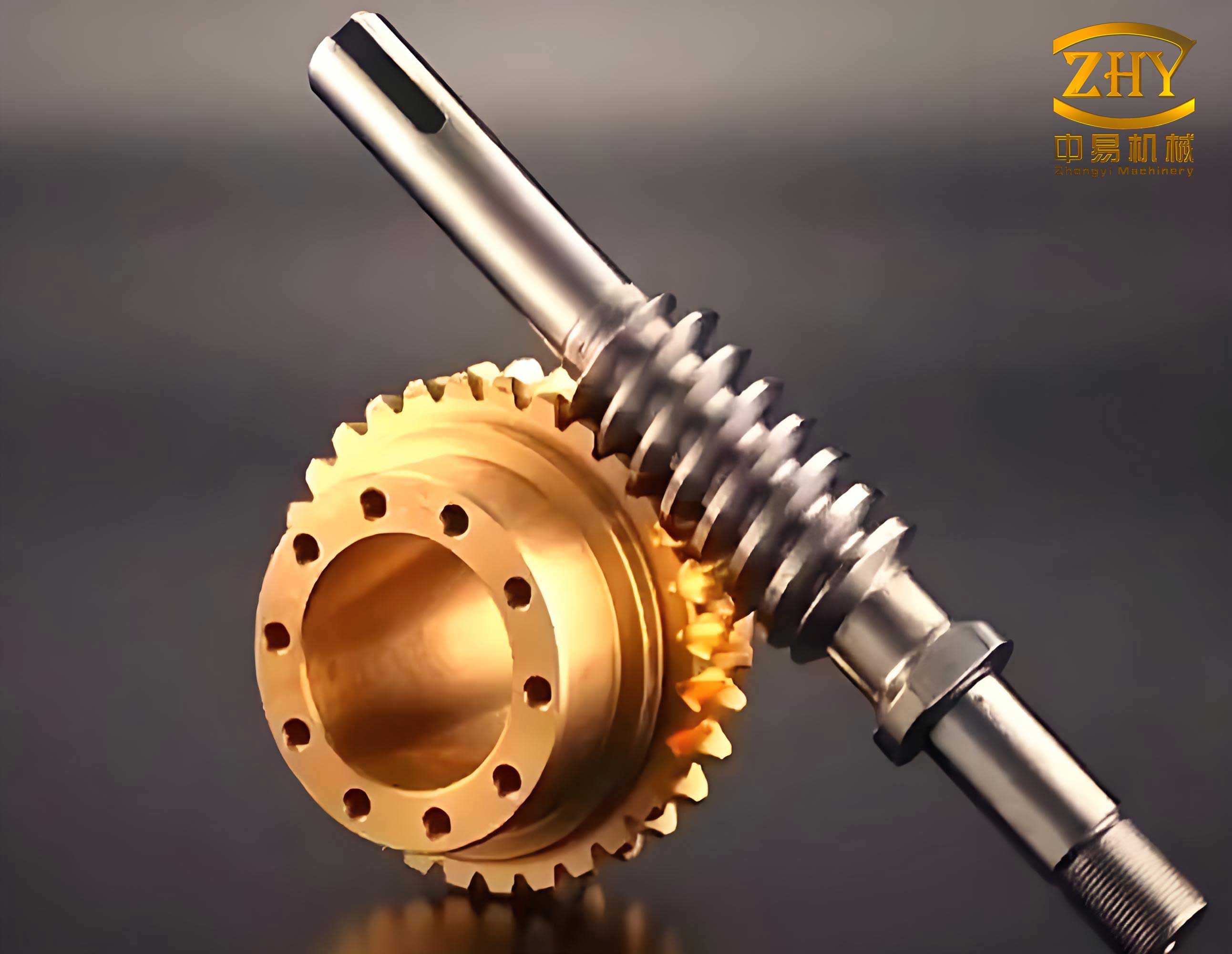
The screw gear reducer’s principle of operation involves a high-speed worm (the screw) meshing with a low-speed worm wheel. The kinematic relationship and efficiency are fundamental to understanding the sealing environment. The reduction ratio i for a single-start worm is given by:
$$ i = \frac{N_w}{N_g} = \frac{Z_g}{Z_w} $$
where \( N_w \) is the worm speed (rpm), \( N_g \) is the gear speed (rpm), \( Z_g \) is the number of teeth on the worm wheel, and \( Z_w \) is the number of threads (starts) on the worm. For a single-start worm, \( Z_w = 1 \), leading to a high reduction ratio equal to \( Z_g \). The output torque \( T_{out} \) is significantly amplified:
$$ T_{out} = T_{in} \cdot i \cdot \eta $$
where \( T_{in} \) is the input torque and \( \eta \) is the mechanical efficiency, which is often relatively low (e.g., 50-90%) due to substantial sliding friction in the screw gear mesh. This sliding action generates considerable heat, elevating the temperature of the lubricating oil sump within the reducer housing. The output shaft, transmitting this high torque at very low rotational speeds (often between 1 to 30 rpm), presents a unique sealing challenge distinct from high-speed rotating equipment.
I. The Inadequacy of Traditional Packing Seals in Screw Gear Applications
Historically, many custom or small-batch screw gear reducers were fitted with simple stuffing boxes (packing seals). This arrangement consists of a cavity around the shaft filled with rings of deformable packing material (e.g., graphite-impregnated yarn, PTFE), compressed by a gland follower to create radial pressure against the shaft.
Failure Mechanism Analysis:
The primary failure mode is rapid hardening and loss of elasticity of the packing material. The causes are multifaceted:
- Heat and Lubricant Incompatibility: The heat generated by the screw gear mesh, combined with potential chemical interaction between the packing fibers and the lubricant, accelerates the degradation process. The packing loses its ability to conform to minor shaft imperfections.
- Inadequate Lubrication of the Packing-Shaft Interface: While some leakage is intended to lubricate the packing, the ultra-low speed of the screw gear output shaft prevents the formation of a stable lubricant film. This leads to boundary or dry friction, increasing wear and heat at the interface.
- High Torque and Shaft Deflection: The high output torque, especially when driving mixers or agitators with variable loads, can cause momentary shaft deflection or “whip.” A rigid, hardened packing cannot follow this dynamic movement, creating a gap for leakage.
The frictional torque \( T_f \) introduced by a packing seal can be estimated by:
$$ T_f = \int_A \mu \cdot p(r) \cdot r \, dA \approx \mu \cdot F_{gland} \cdot r_{shaft} $$
where \( \mu \) is the coefficient of friction, \( p(r) \) is the radial pressure distribution, \( F_{gland} \) is the axial gland compression force, and \( r_{shaft} \) is the shaft radius. For a large-diameter, slow-speed screw gear shaft, even a modest \( F_{gland} \) results in significant frictional energy loss and heat generation due to the large radius.
| Failure Cause | Effect on Packing | Consequence for Screw Gear Reducer |
|---|---|---|
| Heat from gear mesh & friction | Thermal degradation, hardening | Increased leakage, requires frequent re-tightening |
| Low shaft speed (< 0.5 m/s) | No hydrodynamic film; boundary lubrication | High wear rate, grooving of shaft surface |
| Shaft deflection under load | Packing cannot follow movement | Intermittent, severe leakage paths open up |
| Limited maintenance access | Incorrect gland adjustment | Over-tightening (causes burnout) or under-tightening (causes leakage) |
The practical maintenance burden was immense. Re-packing a large-diameter shaft in a confined space, often requiring partial disassembly of connected equipment, led to excessive downtime. This situation demanded a more reliable, maintenance-free sealing solution for the screw gear unit.
II. The Misapplication of Standard Mechanical Seals
The logical progression was to consider mechanical seals, renowned for their excellent sealing performance in pumps and agitators. A custom single-spring mechanical seal was designed and manufactured for the non-standard 155 mm output shaft diameter of the screw gear reducer. The seal comprised a rotating face attached to the shaft and a stationary face held in a housing, with a spring providing closing force.
Analysis of Seal Failure:
Despite precise manufacturing, the mechanical seal performed poorly, allowing lubricant to leak. The root causes are intrinsically linked to the operating parameters of a screw gear:
- Inability to Form a Lubricating Film: Mechanical seals rely on a thin fluid film between the faces for lubrication and heat dissipation. The formation of this film is governed by hydrodynamic and hydrostatic effects. For a parallel face seal, the pressure generation is minimal at very low surface speeds. The average face velocity \( v \) is given by:
$$ v = \pi \cdot d_m \cdot N $$
where \( d_m \) is the mean face diameter and \( N \) is the rotational speed (rps). For a 155 mm shaft seal at 6 rpm (0.1 rps), \( v \) is approximately 0.05 m/s. This speed is far too low to generate sufficient hydrodynamic pressure to separate the faces, leading to contact and rapid wear.
- Sensitivity to Shaft Runout and Deflection: Mechanical seals require high alignment accuracy. The significant shaft deflection inherent in the high-torque, low-speed operation of a screw gear drive creates angular misalignment. This misalignment prevents uniform face contact, leading to localized wear and leakage paths. The allowable angular misalignment for a mechanical seal is typically a few tenths of a milliradian, a tolerance often exceeded in these applications.
- Complex Installation and High Cost: Installing a large-diameter mechanical seal requires specialized tools and precise measurement of face runout and squareness, which is impractical in many field settings for a screw gear reducer. Furthermore, the cost of a custom mechanical seal is substantially higher than alternative solutions.
The Reynolds equation for thin film flow, simplified for a seal face, highlights the velocity dependency:
$$ \frac{\partial}{\partial r}\left(h^3 r \frac{\partial p}{\partial r}\right) + \frac{1}{r}\frac{\partial}{\partial \theta}\left(h^3 \frac{\partial p}{\partial \theta}\right) = 6 \mu \omega r \frac{\partial h}{\partial \theta} $$
Where \( h \) is film thickness, \( p \) is pressure, \( \mu \) is viscosity, and \( \omega \) is angular velocity. The right-hand side, the “wedge” term responsible for hydrodynamic pressure generation, is directly proportional to the speed \( \omega \). For a screw gear output shaft, \( \omega \) is negligible, making hydrodynamic support minimal.
| Seal Requirement | Screw Gear Operating Condition | Result |
|---|---|---|
| Stable fluid film (hydrodynamic) | Very low speed (< 0.1 m/s face velocity) | Film collapse, boundary contact, high wear |
| Precise shaft alignment & stiffness | High torque, potential shaft deflection | Face misalignment, uneven wear, leakage |
| Moderate cost & easy installation | Non-standard shaft size, field maintenance | High cost, complex installation procedure required |
This experience underscored that an advanced seal like a mechanical seal is not universally superior; its effectiveness is highly dependent on the specific operating envelope, which in the case of a low-speed screw gear, is far from ideal.
III. The Optimal Solution: Custom Radial Lip Seals for Screw Gears
The breakthrough came from re-evaluating the fundamentals of the problem. The core needs for sealing a screw gear output shaft are: tolerance to low speed, accommodation of shaft deflection, simplicity, and reliability. A radial lip seal, specifically a spring-loaded metal-encased (skeleton) type, perfectly meets these criteria. Since a standard 155 mm ID seal was unavailable, a custom lip seal was designed and implemented.
Working Principle and Advantages:
The sealing action is achieved by a flexible rubber lip that maintains intimate contact with the shaft, aided by a garter spring that provides a consistent radial load. This design offers several critical advantages for screw gear applications:
- Excellent Followability and Compensation: The elastomeric lip can flex to accommodate shaft eccentricity, runout, and minor deflections—common in heavily loaded screw gear systems. It maintains continuous contact despite these dynamic movements.
- Effective Sealing at Low/Zero Speed: Unlike mechanical seals, lip seals do not require a dynamic fluid film to function. They operate effectively in boundary lubrication regimes, making them ideal for the near-stationary conditions of a screw gear output shaft. The sealing mechanism is primarily elastohydrodynamic at the lip contact zone, which functions effectively even at very low speeds.
- Minimal Wear and Long Life: The low surface speed (e.g., \( v \approx 0.05 \, m/s \)) results in minimal frictional heat and wear at the lip-shaft interface. With proper material selection (e.g., Nitrile, Polyacrylate, or Fluorocarbon rubber compatible with the lubricant), service life can extend for several years.
- Ease of Installation and Low Cost: Installation is straightforward—pressing the seal into a machined housing—requiring no complex alignment procedures. The cost of a custom-molded lip seal is a fraction of that for a custom mechanical seal.
The contact pressure \( p_c \) at the sealing lip, crucial for performance, is a sum of the spring pressure and the lip’s interference fit pressure. It can be modeled as:
$$ p_c(r) = p_{spring}(r) + p_{interference}(r) $$
The radial force \( F_r \) exerted by the seal on the shaft is the integral of this pressure over the contact area:
$$ F_r = \int_{0}^{L} \int_{0}^{2\pi} p_c(\theta) \cdot r_{shaft} \, d\theta \, dl $$
This controlled radial force is sufficient to prevent leakage but low enough to avoid excessive friction and wear at the low operating speeds of a screw gear.
| Parameter | Value / Specification | Design Rationale |
|---|---|---|
| Shaft Diameter | 155 mm (Non-standard) | Primary driver for custom seal design |
| Lip Material | Fluorocarbon (FKM) | Excellent resistance to synthetic gear oils and heat |
| Spring Type | Garter Spring (Stainless Steel) | Provides uniform radial loading |
| Case Material | Carbon Steel | Robustness for press-fit installation |
| Lip Design | Single Lip with Dust Exclusion Rib | Prevents grease washout and ingress of contaminants |
| Operating Speed Range | 0 – 30 rpm | Optimized for typical screw gear output speeds |
The success of this modification was immediate and sustained. Leakage was completely eliminated, maintenance intervals were drastically extended, and the overall reliability of the screw gear drive system was significantly enhanced.
IV. Comprehensive Selection Guideline for Screw Gear Seals
Based on the analysis and field experience, the following guideline can be established for selecting shaft seals for screw gear reducers. The key parameters are shaft speed, diameter, lubricant type, and presence of shaft deflection.
| Seal Type | Recommended Speed Range | Tolerance to Shaft Deflection | Relative Cost | Maintenance Requirement | Suitability for Screw Gears |
|---|---|---|---|---|---|
| Packing (Stuffing Box) | Low to Medium | Poor (if hardened) | Low | Very High (Frequent adjustment) | Not Recommended |
| Standard Mechanical Seal | Medium to High (> 0.5 m/s) | Very Poor | Very High | Low (but complex repair) | Poor (Due to low speed) |
| Cartridge Mechanical Seal | Medium to High | Poor | Highest | Low | Poor (Due to low speed & cost) |
| Radial Lip Seal (Standard) | Low to High (0 – 15 m/s) | Good | Low | Very Low | Excellent (if standard size exists) |
| Custom Radial Lip Seal | Low to High (0 – 10 m/s) | Very Good | Medium | Very Low | Optimal (For non-standard shafts) |
The economic analysis further solidifies the argument. The total cost of ownership (TCO) for a seal includes initial purchase price, installation labor, maintenance labor, downtime cost, and lubricant loss. For a critical screw gear reducer, the equation strongly favors a custom lip seal:
$$ TCO_{Lip\,Seal} = C_{purchase} + C_{install} + (C_{downtime} \cdot t_{mtce}) $$
$$ TCO_{Packing} = C_{purchase} + n \cdot (C_{install} + C_{lubricant\_loss} + C_{downtime} \cdot t_{mtce}) $$
where \( n \) is the number of repacking events over the lifecycle, and \( t_{mtce} \) is the maintenance time. Given that \( n \) is large for packing and \( C_{downtime} \) is often the dominant factor, the lip seal’s TCO is substantially lower.
V. Advanced Considerations and Future Directions
For engineers designing or maintaining screw gear systems, several advanced considerations are warranted:
1. Lip Seal Material Science: The compatibility between the elastomer and the gear lubricant is paramount. The swelling or shrinkage of the lip must be controlled. The change in lip diameter \( \Delta d \) due to fluid absorption can be estimated from the volume swell \( S \):
$$ \Delta d \approx d_0 \cdot \frac{S}{3} $$
where \( d_0 \) is the original lip diameter. A properly selected material will have minimal swell, maintaining the designed interference fit.
2. Thermomechanical Analysis: Although screw gear output speeds are low, the housing temperature can be elevated due to mesh losses. The seal’s operating temperature must be within the elastomer’s capability. Heat generation at the seal lip itself is minimal but can be approximated by the frictional power loss \( P_f \):
$$ P_f = T_f \cdot \omega = (F_r \cdot \mu_{lip}) \cdot (\pi \cdot d \cdot N / 60) $$
For typical values (\( F_r = 50 \,N \), \( \mu_{lip} = 0.3 \), \( d=0.155\,m \), \( N=6\,rpm \)), \( P_f \approx 0.07 \,W \), which is negligible, confirming the suitability for screw gears.
3. Integration with Bearing Design: The output shaft bearing arrangement directly affects shaft runout. A stiff, precision bearing setup (e.g., tapered roller bearings) will minimize the dynamic deflection the seal lip must follow, further extending seal life in a screw gear assembly.
Future trends may involve integrated sealing systems specifically for large, slow-speed drives like screw gears. These could include:
- “Smart” Lip Seals: With embedded sensors to monitor lip temperature or wear, enabling predictive maintenance for critical screw gear reducers.
- Advanced Composite Lips: Materials engineered for near-zero friction and extreme chemical resistance, pushing the boundaries of service life.
- Standardized Modular Seal Housings: For non-standard screw gear shaft sizes, allowing easier retrofit of advanced seal cartridges.
In conclusion, the journey from problematic packing seals to failed mechanical seals and finally to successful custom lip seals for a non-standard screw gear reducer provides a powerful engineering lesson. The optimal solution is not always the most technologically complex one. It is the solution that most robustly and economically addresses the fundamental operating conditions of the application. For the vast majority of low-speed, high-torque screw gear reducers—especially those with non-standard dimensions—a properly designed radial lip seal represents the pinnacle of sealing performance, reliability, and cost-effectiveness. This approach ensures the longevity and efficiency of the vital screw gear drive, a workhorse of industry, in even the most demanding service environments.