
In my experience with automotive engineering, particularly in the development of electric power steering (EPS) systems, friction noise in screw gears remains a critical challenge affecting vehicle NVH (Noise, Vibration, and Harshness) performance. Screw gears, commonly referred to as worm and worm wheel mechanisms, are integral components in column-type electric power steering (C-EPS) systems, directly relying on electric motors for assistance. However, due to the complex integrated structure of C-EPS, operational noises can severely compromise driving comfort. Among various noise issues, friction-induced noise in screw gears is particularly difficult to resolve, involving multiple influencing factors. This article, drawing from product development insights, outlines a systematic approach to addressing friction noise in screw gears, aiming to provide practical guidance for vehicle design and engineering.
Friction noise in screw gears typically manifests as sticky-slip motion, where alternating static and dynamic friction causes unstable vibrations and resistance fluctuations, leading to audible squeaks or rattles. The control of such noise hinges on optimizing gear dimensions, material selection, lubrication, and assembly processes. Throughout this discussion, I will emphasize the importance of screw gears in EPS functionality and detail methodologies to mitigate their friction-related issues. The term “screw gears” will be used repeatedly to underscore their centrality in this context.
Overview of Noise in Electric Power Steering Systems
Noise in EPS systems can be categorized based on vibration patterns. From my analysis, three primary types exist: rotational noise, bump-induced noise, and impact noise. Rotational noise occurs during continuous steering wheel rotation, often stemming from motor operation or mechanical interactions in screw gears. Bump-induced noise arises on uneven roads due to small clearances between parts, causing impact vibrations. Impact noise is generated when the steering wheel is fixed and repeatedly turned around a midpoint, leading to collisions during direction changes. Among these, friction noise in screw gears falls under rotational noise, with two common phenomena: a “clicking” sound during slow steering initiation and a “squealing” noise during directional changes, especially in low temperatures.
Mechanism of Friction Noise in Screw Gears
The underlying mechanism involves sticky-slip motion at the contact surfaces of screw gears. When static friction exceeds dynamic friction within an elastic system, sticky-slip occurs—a low-frequency phenomenon that often produces high-frequency sounds. This can be modeled using friction equations. For instance, the friction force $F_f$ can be expressed as:
$$F_f = \mu F_n$$
where $\mu$ is the friction coefficient and $F_n$ is the normal force. During sticky-slip, $\mu$ alternates between static ($\mu_s$) and dynamic ($\mu_d$) values, with $\mu_s > \mu_d$ leading to instability. The resulting vibration amplitude $A$ relates to the system stiffness $k$ and damping $c$:
$$A \propto \frac{\mu_s – \mu_d}{k \sqrt{1 + (c / (2 m \omega))^2}}$$
Here, $m$ is mass and $\omega$ is angular frequency. Controlling these parameters is essential for noise reduction in screw gears.
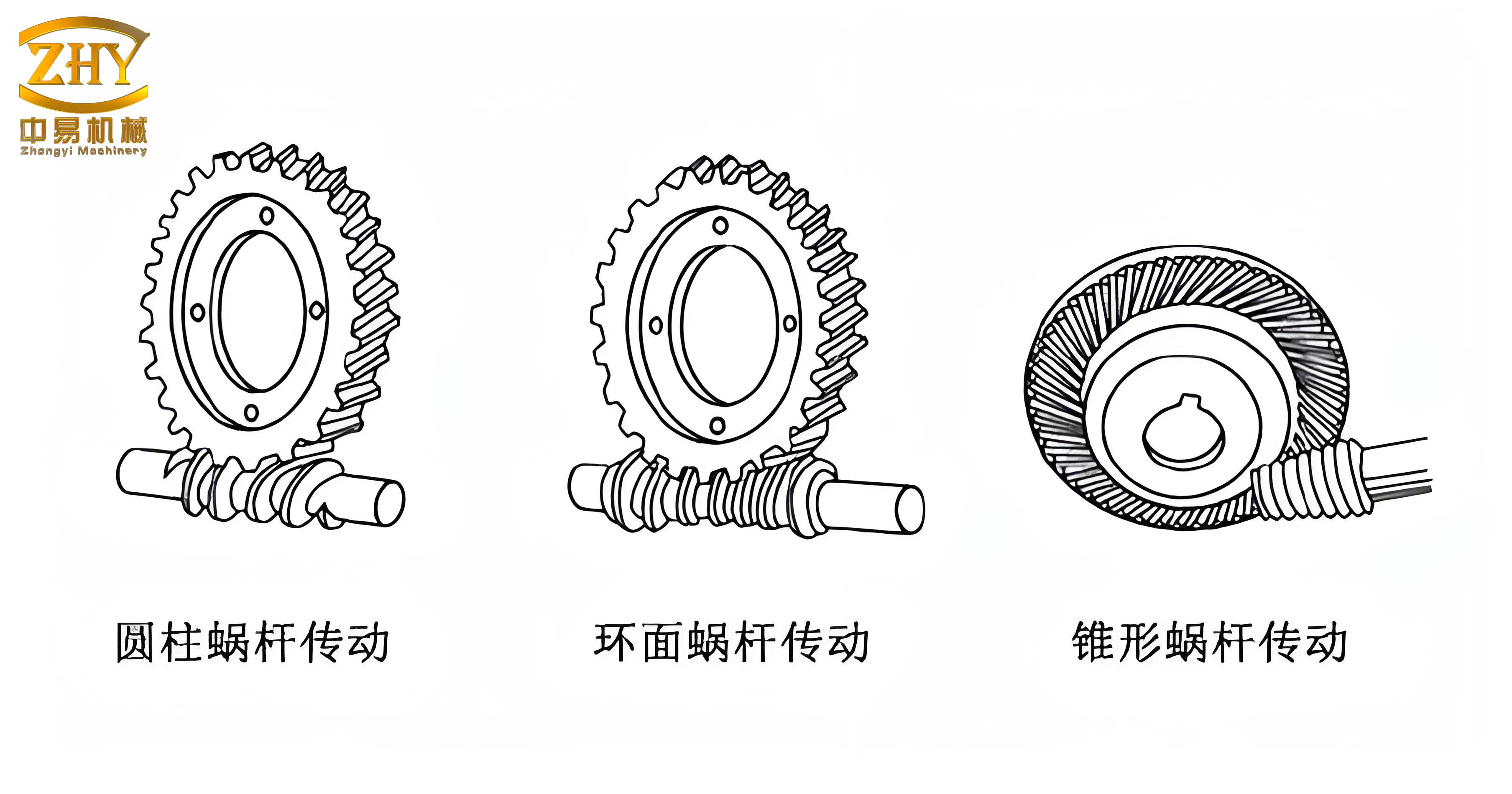
Key Strategies for Mitigating Friction Noise
To address friction noise in screw gears, a multi-faceted approach is necessary. Based on my work, I focus on four areas: dimensional control and optimization, material selection, lubricant application, and assembly工艺. Each aspect contributes to minimizing gaps, reducing friction coefficients, and ensuring smooth engagement of screw gears.
Dimensional Control and Optimization of Screw Gears
Inconsistent dimensions in screw gears can cause interference and wear, leading to noise. For example, excessive runout in the worm wheel or sharp edges on the worm can disrupt contact pressure. To illustrate, I have developed tables summarizing critical tolerances and optimization steps.
| Component | Parameter | Target Value | Acceptable Range |
|---|---|---|---|
| Worm Wheel | Runout (mm) | 0.05 | 0.03–0.07 |
| Worm Wheel | Center Distance (mm) | 25.00 | 24.95–25.05 |
| Worm | Surface Roughness (μm) | 0.8 | 0.6–1.0 |
| Worm | Tooth Tip Radius (mm) | 0.2 | 0.1–0.3 |
Optimization includes modifying injection molding processes for worm wheels—shifting from 4-point to 6-point gates to reduce runout—and adding rounding and grinding to worm teeth. These steps enhance the compatibility of screw gears, reducing friction-induced vibrations.
Material Selection for Screw Gears
The material of screw gears, particularly the worm wheel, significantly impacts noise. Ideal materials should exhibit low friction, high wear resistance, dimensional stability across temperatures, and durability. Common materials like nylon variants (e.g., PA66, PA66G) are tested for properties such as hardness,吸水率, and thermal expansion. Below is a comparison based on my evaluations.
| Material | Hardness (Shore D) | Water Absorption (%) | Friction Coefficient | Dimensional Change at -40°C (%) | Permanent Deformation at 120°C (%) |
|---|---|---|---|---|---|
| PA66 | 80 | 2.5 | 0.15 | -0.3 | 0.5 |
| PA66G | 85 | 1.8 | 0.12 | -0.2 | 0.3 |
| Other Nylon Blends | 75 | 3.0 | 0.18 | -0.5 | 1.0 |
Materials with lower friction coefficients and吸水率, like PA66G, tend to perform better in screw gears, minimizing sticky-slip and noise. Bench testing under simulated conditions further validates these choices, ensuring that screw gears operate smoothly across operational ranges.
Lubricant Application for Screw Gears
Lubricants play a crucial role in reducing friction between screw gears. Key factors include quantity, compatibility, and formulation. Insufficient grease—less than 16 grams in my tests—fails to form a consistent film, causing coefficient variations and noise. Compatibility with machining oils and environmental adaptability are also vital. I recommend high-performance greases with stable viscosity across temperatures. The effectiveness can be modeled using the Stribeck curve, where friction coefficient $\mu$ relates to the Sommerfeld number $S$:
$$\mu = f(S) \quad \text{with} \quad S = \frac{\eta v}{P}$$
Here, $\eta$ is dynamic viscosity, $v$ is sliding velocity, and $P$ is pressure. Optimizing these parameters for screw gears ensures lubrication remains in the hydrodynamic regime, reducing direct contact and noise.
Assembly Process for Screw Gears
Precision assembly is essential to control clearances in screw gears. By grouping components based on dimensional measurements, I implement a modular approach. Housings, worm wheels, and worms are 100% inspected for center distances or跨棒距, then categorized into matching groups. For instance, housings and worm wheels with similar center distances are paired with zero-offset worms. This minimizes啮合间隙, preventing friction-induced noises. The process can be summarized as:
- Measure and group housings by center distance.
- Measure and group worm wheels by center distance.
- Use worms machined to a nominal zero-offset dimension.
- Assemble matching groups to ensure optimal fit for screw gears.
This method reduces variability, enhancing the consistency of screw gears in EPS systems.
Advanced Considerations and Future Directions
Beyond basic controls, ongoing research into screw gears should explore deeper material-lubricant synergies and comprehensive testing protocols. For example, pairing different worm wheel materials with steel worms under various lubricants can reveal optimal combinations. Additionally, developing bench and vehicle tests that simulate real-world conditions—such as thermal cycling and humidity exposure—will improve early-stage validation of screw gears. Mathematical modeling of wear in screw gears can also aid prediction; the Archard wear equation is relevant:
$$V = K \frac{F_n s}{H}$$
where $V$ is wear volume, $K$ is a wear coefficient, $s$ is sliding distance, and $H$ is material hardness. By minimizing $K$ through material and lubrication choices, the longevity and quiet operation of screw gears can be enhanced.
Conclusion
In summary, addressing friction noise in screw gears within EPS systems requires a holistic strategy encompassing dimensional precision, material science, lubrication engineering, and meticulous assembly. Through my detailed exploration, I have highlighted how controlling clearances and friction coefficients in screw gears leads to smoother operation and reduced noise. Future efforts should focus on interdisciplinary studies to further refine screw gear performance, ultimately contributing to quieter and more reliable automotive steering systems. The recurring emphasis on screw gears throughout this discussion underscores their pivotal role in NVH management, and I hope these insights serve as a valuable resource for engineers and designers in the field.