
In modern automotive engineering, particularly within Electric Power Steering (EPS) systems, the transmission efficiency of screw gears is a critical performance metric. It directly impacts energy consumption, system responsiveness, and overall vehicle dynamics. My research focuses on dissecting the primary factors influencing this efficiency, with a specific lens on lightweight design objectives for automotive steering applications. Through the establishment of a dedicated experimental platform, I have quantified the effects of surface engineering, material science, and lubrication technology on the power loss characteristics of screw gear pairs. The pursuit of higher efficiency is not merely an academic exercise; it is a practical necessity for enhancing electric vehicle range, improving driver feel, and meeting stringent energy regulations.
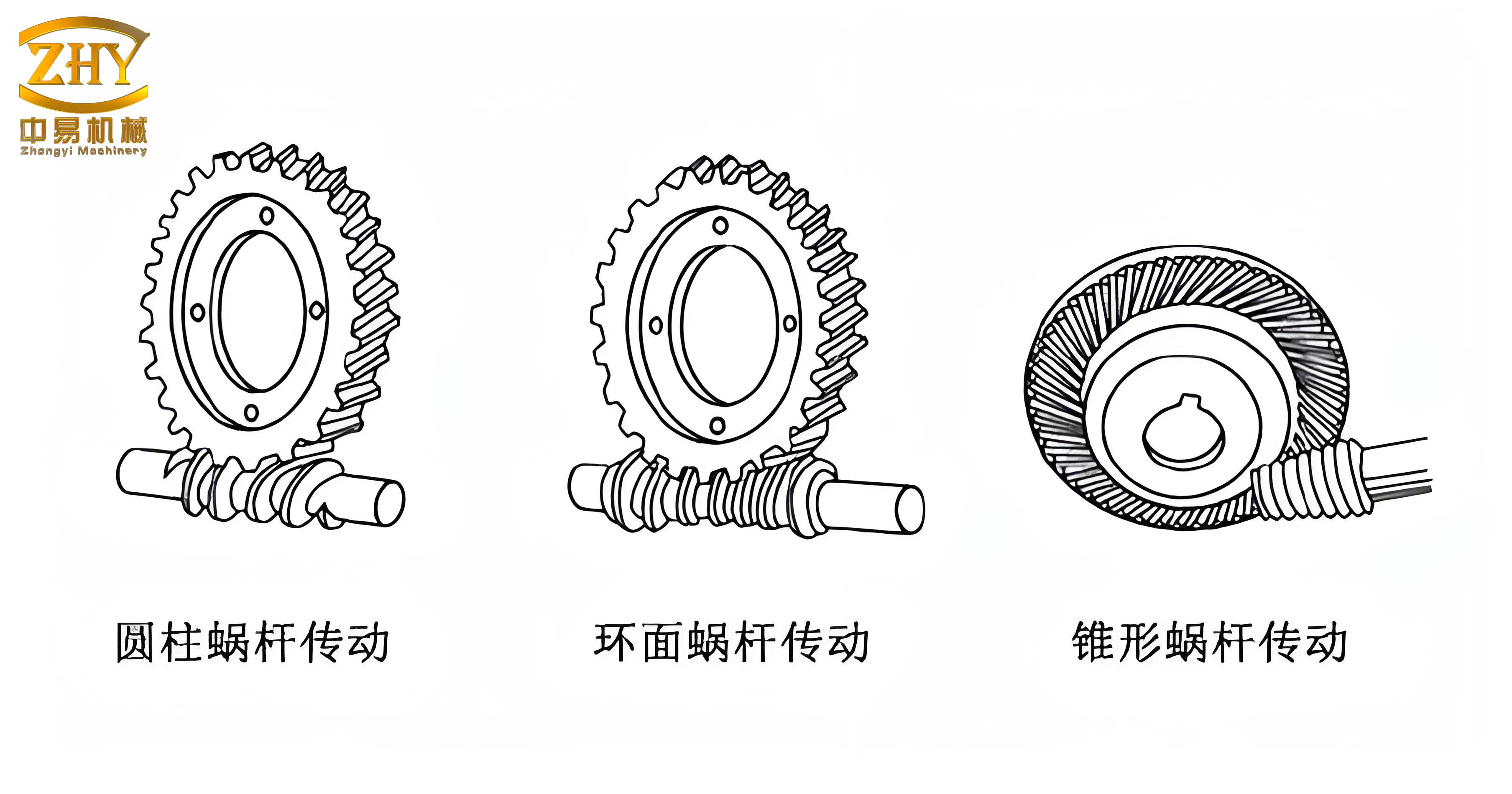
My investigation centers on a screw gear pair representative of a mainstream EPS system. The specific parameters of this screw gear set form the baseline for all subsequent analysis and optimization.
| Component | Parameter | Value / Specification |
|---|---|---|
| Worm (Screw) | Material | 20CrMnTi Alloy Steel |
| Surface Treatment | Case Carburizing & Quenching | |
| Surface Hardness | HRC 58-62 | |
| Target Surface Roughness (Ra) | ≤ 0.4 µm | |
| Worm Wheel (Gear) | Material | Polyamide 66 + 30% Glass Fiber |
| Primary Benefit | 45% Mass Reduction vs. Metal | |
| Module | 1.5 mm | |
| Gear Ratio | 18:1 | |
| Gear Pair | Center Distance | 67.5 mm |
| Contact Pattern Area | 82-87% of Theoretical Zone |
To accurately measure the transmission efficiency under controlled and realistic conditions, I designed and commissioned a bespoke test rig. This platform is engineered for precision and adaptability.
- Drive & Load Unit: A closed-loop system comprising an AC servo motor, a high-precision torque transducer (0-50 N·m range), and a magnetic powder brake.
- Motion Control: Speed is adjustable from 0 to 300 rpm with a fluctuation of less than ±0.5%.
- Monitoring Suite: Integrated laser displacement sensors and infrared thermometers synchronously track axial play and meshing zone temperature distribution.
- Advanced Lubrication Module: Features real-time oil viscosity monitoring and temperature control, simulating extreme conditions from -40°C to 120°C.
- Durability Programming: Embeds sinusoidal pulse load spectra to replicate steering impact shocks.
- Data Acquisition: All parameters are logged at a 10 kHz sampling rate via a NI CompactRIO system, providing a robust dataset for efficiency ($\eta$) calculation:
$$ \eta = \left( \frac{T_{out} \cdot \omega_{out}}{T_{in} \cdot \omega_{in}} \right) \times 100\% $$
where $T_{out}$ and $\omega_{out}$ are the output torque and speed, and $T_{in}$ and $\omega_{in}$ are the input torque and speed.
The core of my work involves a detailed examination of three dominant factors affecting screw gear efficiency: interfacial friction, material pairing, and lubricant behavior.
1. Tooth Surface Friction Coefficient
The tribological behavior at the meshing interface of screw gears is the foremost determinant of power loss. Surface engineering plays a pivotal role. My comparative tests evaluated common treatments.
| Surface Treatment | Process Detail | Key Outcome | Efficiency Impact |
|---|---|---|---|
| Copper Plating | Surface roughness Ra ~0.2 µm | Reduced boundary lubrication friction coefficient by ~18% vs. standard phosphating. | Significant benefit at low-speed, high-torque engagement. |
| Nitriding | Forms ~0.4 mm hardened layer, hardness ≥ HV 950 | Superior anti-adhesion in mixed lubrication regime. At >120 rpm, friction coefficient fluctuation reduced by 27% vs. copper plating. | Provides more stable, predictable efficiency across operational speeds. |
A critical finding is the non-monotonic relationship between coating thickness and performance. For plated surfaces, exceeding a thickness of approximately 8 µm leads to diminished interfacial bond strength, subsequently increasing frictional power loss. The optimal surface finish for general screw gear applications, balancing manufacturability and performance, was identified at:
$$ R_a \leq 0.4 \ \mu\text{m} $$
This target minimizes asperity contact while promoting the formation of a coherent elastohydrodynamic lubrication (EHL) film, modeled by the dimensionless film thickness parameter:
$$ \lambda = \frac{h_{\min}}{\sqrt{R_{q1}^2 + R_{q2}^2}} $$
where $h_{\min}$ is the minimum film thickness and $R_q$ is the root-mean-square roughness of each surface. A $\lambda > 3$ is typically targeted for effective protection.
2. Lightweight Material Combinations
The choice of materials for the screw and gear has a profound and non-linear impact on system efficiency, primarily through inertia reduction and altered contact mechanics. Replacing a traditional sintered metal worm wheel with one machined from 7075-T6 aluminum alloy achieves a 35% mass reduction. However, this introduces a compliance challenge due to the alloy’s lower elastic modulus.
| Material Property | 7075-T6 Aluminum | Standard Sintered Metal |
|---|---|---|
| Density (g/cm³) | ~2.81 | ~7.2 |
| Elastic Modulus (GPa) | ~71.7 | ~124 |
| Reduction in Stiffness | ~42% | |
Under a 200 N·m load, this stiffness deficit can induce an elastic deformation of up to 0.12 mm at the contact zone, potentially concentrating stress. To counteract this, the contact geometry must be optimized. Pairing the aluminum worm wheel with a 42CrMo steel worm and increasing the worm’s helix angle to 12.5° extended the contact line length by 15%, effectively distributing the load. The efficiency gain from this optimized lightweight pairing was measured at 3.2% at 150 rpm compared to an all-steel system.
The performance is acutely sensitive to heat treatment. The steel worm requires a tempered hardness strictly within the HRC 28-32 range. Deviation from this window accelerates wear, leading to an efficiency decay rate as high as 0.8% per hour under test conditions. The contact stress $\sigma_H$ in such a compliant system can be approximated by:
$$ \sigma_H = Z_E \cdot \sqrt{\frac{F_t}{d_1 \cdot b} \cdot \frac{u \pm 1}{u}} $$
where $Z_E$ is the elasticity factor, $F_t$ is the tangential load, $d_1$ is the worm reference diameter, $b$ is the face width, and $u$ is the gear ratio. Optimizing geometry to increase $b_{eff}$ (effective face width) is crucial for managing $\sigma_H$ with lightweight materials.
3. Lubricant Viscosity Selection
The lubricant acts as the lifeblood of the screw gear system, and its viscosity must be meticulously matched to the operating envelope to minimize churning and boundary losses.
| Test Scenario | 75W-90 Synthetic Oil | 150W Mineral Oil | Efficiency Consequence |
|---|---|---|---|
| Cold Start (-30°C) | Effective oil film established in ~30 s. | ~90 s to reach equivalent state. | Superior low-temperature efficiency & protection. |
| High Temp Operation (>40°C) | Moderate churning losses. | Efficiency drops 2.1-3.7% due to high churning. | Synthetic maintains stable film with lower drag. |
| High Shear / Temp (150°C) | With organic Mo additives, maintains film strength. | Significant viscosity breakdown likely. | Friction power loss reduced by up to 19% with fortified synthetic. |
The relationship between kinematic viscosity $\nu$ and efficiency gain $\Delta \eta$ exhibits a distinct plateau. My tests revealed that outside the optimal window of approximately 100 cSt, efficiency improvements diminish to less than 0.5%, while the risk of lubrication failure (both hydrodynamic and boundary) increases substantially. The temperature dependence of viscosity is modeled by the Walther-ASTM equation:
$$ \log \log(\nu + 0.7) = A – B \log(T) $$
where $\nu$ is in cSt, $T$ is in Kelvin, and A & B are oil-specific constants. Selecting an oil with a high viscosity index (VI) ensures minimal viscosity change across the operating range, which is critical for screw gears experiencing wide thermal swings.
4. Process Optimization for Enhanced Performance
Superior design must be realized through precision manufacturing and assembly. I investigated several key processes to lock in efficiency gains.
4.1 Worm Grinding Precision Control
Final worm quality is achieved through precision grinding. Using a 5-axis CNC grinder with diamond dressing and an oil-mist cooling system, I consistently achieved $R_a \leq 0.4 \ \mu\text{m}$ while limiting thermal distortion to under 3 µm. Controlling the waviness profile was equally critical; reducing waviness below 0.005 mm improved dynamic oil film formation by 23%. Furthermore, in-process measurement and dynamic compensation held axial play to within 0.015 mm. This comprehensive precision grinding protocol resulted in a 4.7% efficiency boost at rated conditions and limited efficiency degradation to below 1.2% after 300 hours of endurance testing. The relationship between heat input ($Q$), specific grinding energy ($u$), and material removal rate ($\dot{V}_w$) is:
$$ Q = u \cdot \dot{V}_w $$
Minimizing $u$ through optimal grinding parameters and effective cooling (oil-mist) is essential to control thermal damage and distortion.
4.2 Worm Wheel Powder Metallurgy (P/M) Process
P/M offers an excellent path for high-performance, lightweight worm wheels. My optimized process involved a 94:6 mass ratio of copper-base powder to graphite, cold isostatic pressing at 250 MPa, and vacuum sintering at 1120°C to achieve a density >7.2 g/cm³. The resultant microstructure showed porosity around 3.2% with uniform solid-solution strengthening phases. A stepped quenching heat treatment raised tooth flank hardness to HV450. This P/M wheel demonstrated a 61% reduction in wear and a 5.8% higher transmission efficiency under 150 N·m load compared to a conventional cast counterpart.
4.3 Assembly Preload Adjustment
The final, often overlooked, factor is assembly. Using a laser alignment system, I controlled the perpendicularity between the worm axis and gear reference plane to within 0.02 mm. Axial backlash was precisely set between 0.05 mm and 0.08 mm using a torque-coefficient method for preload control. This range prevents impact from excessive play while avoiding the added friction of over-constraint. For thermal compensation, a combination of retaining rings and wave springs maintained operational backlash within 0.03 mm across the -40°C to 120°C range. This optimized assembly reduced the EPS system’s no-load friction torque to below 0.8 N·m, contributing to a notable 7.3% efficiency gain in low-speed, high-torque maneuvers.
5. Vehicle Validation and Performance Data
The culmination of this research was validation through real-world and simulated vehicle testing. The optimized screw gear system was integrated into a test vehicle for evaluation.
5.1 Steering Assist Energy Consumption
| Test Metric | Baseline System | Optimized Screw Gear System | Improvement |
|---|---|---|---|
| Avg. Assist Motor Current (City Drive) | Reference | — | 12.3% Reduction |
| Peak Power Demand (60 km/h, double lane change) | 850 W | 745 W | 12.4% Reduction |
| Cold Start Assist Build-up Time (-20°C) | ~2.47 s | 1.8 s | 27% Faster |
| NEDC Cycle Energy Consumption | Reference | 1.28 kW·h/100 km | Significant portion attributed to 40% drivetrain efficiency gain. |
5.2 NVH (Noise, Vibration, Harshness) Results
Objective measurements confirmed substantial NVH refinement, crucial for driver comfort and perceived quality.
| NVH Parameter | Baseline System | Optimized System | Improvement |
|---|---|---|---|
| Sound Pressure Level (200-800 Hz, driver’s ear) | Reference | — | Overall reduction of 4.2 dB |
| SPL at 480 Hz (mesh frequency) | Peak Value | — | Reduction of 6.1 dB |
| Dynamic Mesh Force Standard Deviation | 12.7 N | 8.3 N | 34.6% Reduction |
| Steering Wheel Vibration (Rough road, 12 o’clock) | 0.32 g rms | 0.24 g rms | 25% Reduction |
| Idle Vibration Amplitude at 35 Hz | Reference Peak | — | 78% Suppression |
In conclusion, the transmission efficiency of screw gears in automotive applications is a multi-faceted property governed by interfacial tribology, material compliance, and fluid dynamics. My systematic investigation demonstrates that a holistic approach—integrating surface engineering like nitriding, strategic lightweight material pairing with geometric compensation, selection of high-VI synthetic lubricants, and meticulous control over manufacturing and assembly processes—can yield substantial gains. The validated result of elevating screw gear efficiency to approximately 92%, with concurrent 12% reductions in assist energy consumption and marked NVH improvements, proves that targeted optimization is highly effective. This pathway is essential for advancing the performance and efficiency of next-generation EPS systems and other critical applications relying on screw gear technology.