
As a widely adopted manufacturing process for producing cylindrical and helical gears, CNC gear hobbing involves numerous interrelated process parameters. The selection of these parameters directly impacts critical production metrics such as energy consumption, machining time, and final product quality. However, the inherent complexity and non-linear couplings among these variables make manual parameter tuning a challenging and often suboptimal task. Traditional approaches frequently rely on operator experience or handbook recommendations, which may not achieve a balanced trade-off between competing objectives in modern, efficiency-driven manufacturing environments. This article, drawing from extensive research and practical application, presents a comprehensive, data-driven methodology for the multi-objective optimization of CNC gear hobbing parameters. I will detail the construction of the optimization model, the innovative algorithms employed for solving it, and demonstrate its efficacy through a comparative case study.
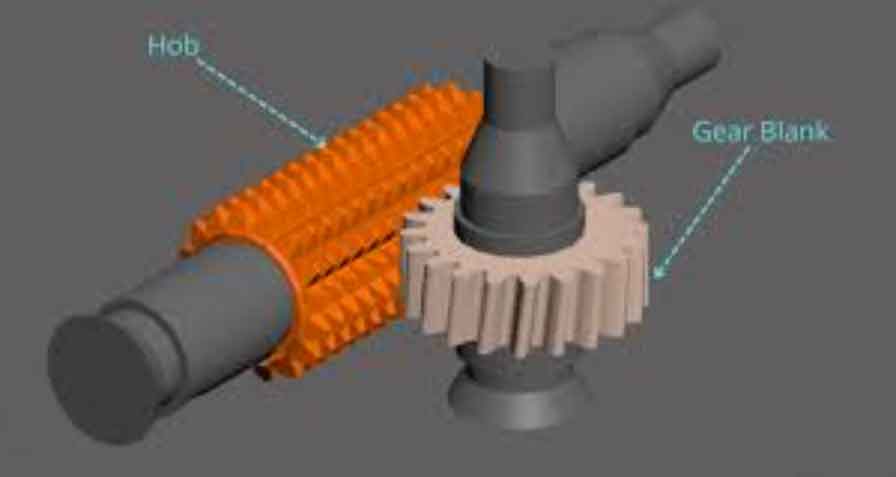
The core challenge in gear hobbing optimization lies in navigating a high-dimensional search space where improving one objective, such as reducing machining time, often leads to the deterioration of others, like increased energy consumption or reduced surface finish. Therefore, a systematic framework is essential. The proposed methodology structures the problem into three coherent phases: (1) intelligent search space definition using historical data clustering, (2) efficient Pareto-optimal solution generation using a guided multi-objective metaheuristic, and (3) practical decision support through an enhanced ranking technique. This integrated approach ensures that the optimization is not only effective in theory but also practical and implementable on the shop floor.
1. Problem Formulation for Gear Hobbing Optimization
Formally, a gear hobbing optimization problem can be defined as finding the optimal set of controllable process parameters \( \mathbf{e} \) for a given workpiece described by fixed parameters \( \mathbf{u} \). The goal is to minimize multiple conflicting objective functions simultaneously, subject to a set of physical and practical constraints.
1.1 Decision Variables and Fixed Parameters
In gear hobbing, parameters are categorized. Workpiece geometry parameters (module \( m \), number of teeth \( z_1 \), pressure angle \( \alpha \), helix angle \( \beta \), etc.) and the depth of cut \( a_p \) are typically given and treated as fixed inputs \( \mathbf{u} \). The optimization focuses on the process parameters \( \mathbf{e} \), which are the decision variables:
$$
\mathbf{e} = (z_0, d_{a0}, n_0, f)
$$
where:
- \( z_0 \): Number of hob threads (starts).
- \( d_{a0} \): Hob outer diameter (mm).
- \( n_0 \): Spindle speed (rpm).
- \( f \): Axial feed per revolution (mm/rev).
These variables were chosen because they have a direct and significant influence on the kinematics, dynamics, and outcomes of the gear hobbing process.
1.2 Constraints of the Gear Hobbing Process
Any feasible solution must satisfy several hard constraints derived from machine capabilities, tooling availability, and quality standards:
- Boundary Constraints: Each variable must lie within its operable range.
$$
z_{0,min} \le z_0 \le z_{0,max}; \quad d_{a0,min} \le d_{a0} \le d_{a0,max}; \quad n_{0,min} \le n_0 \le n_{0,max}; \quad f_{min} \le f \le f_{max}
$$ - Precision Constraints: Reflecting practical settability.
$$
z_0, n_0 \in \mathbb{N}; \quad 100d_{a0}, 100f \in \mathbb{N}
$$ - Tool Set Constraint: The selected hob (\(z_0, d_{a0}\)) must exist in the available tool library \( \mathcal{H} \).
$$
(z_0, d_{a0}) \in \mathcal{H}
$$ - Cutting Force Constraint: The generated cutting force \( F_c \) must not exceed the machine or tool limit \( F_{c,max} \).
$$
F_c \le F_{c,max}
$$ - Surface Roughness Constraint: For a required surface roughness \( [R_a] \) and given tool tip radius \( r_t \).
$$
\frac{0.0312 f^2}{r_t} \le [R_a]
$$
1.3 Multi-Objective Functions
The optimization aims to minimize three primary objectives prevalent in sustainable and efficient manufacturing:
- Total Energy Consumption \( E \) (kWh): Comprises idle \( E_s \), air-cutting \( E_a \), and actual cutting energy \( E_c \).
$$
E = (E_s + E_a + E_c) / 60,000
$$ - Total Machining Time \( t \) (seconds): Sum of idle \( t_s \), air-cutting \( t_a \), and cutting time \( t_c \).
$$
t = (t_s + t_a + t_c) \times 60
$$ - Composite Quality Error \( Q \) (mm): A weighted sum of profile error \( \delta_1 \) and lead error \( \delta_2 \), where \( \omega_1 \) and \( \omega_2 \) are weights.
$$
Q = \omega_1 \delta_1 + \omega_2 \delta_2; \quad \delta_1 = \frac{\pi^2 m z_0^2 \sin \alpha}{4 z_1 z_k^2}; \quad \delta_2 = \frac{f^2 \sin \alpha}{4 d_{a0}}
$$
Thus, the multi-objective optimization problem for gear hobbing is:
$$
\min \, \mathbf{F}(\mathbf{e}) = \left( \min E(\mathbf{e}), \, \min t(\mathbf{e}), \, \min Q(\mathbf{e}) \right) \quad \text{subject to the constraints in Section 1.2.}
$$
2. Methodology: A Three-Phase Optimization Framework
To solve this complex problem efficiently, a three-phase methodology is proposed, moving from data-informed search space reduction to intelligent optimization and finally to practical solution selection.
2.1 Phase I: Search Space Delimitation with HDBSCAN Clustering
Directly optimizing over the full theoretical range of each parameter is inefficient. Historical successful gear hobbing records \( \mathcal{C} = \{\mathbf{c}_1, \mathbf{c}_2, …\} \) contain valuable implicit knowledge. The HDBSCAN algorithm is employed to cluster these historical cases based on their fixed parameters \( \mathbf{u} \). The cluster most similar to the new workpiece’s parameters \( \mathbf{u}_p \) is identified. The upper and lower bounds (\( \mathbf{ul}, \mathbf{ll} \)) of the decision variables \( \mathbf{e} \) within this cluster are then extracted and slightly expanded (e.g., by 5%) to define a focused, realistic, and promising search interval for the optimization algorithm. This step dramatically reduces the search space and improves convergence speed and solution quality by steering the search towards regions proven feasible by past experience.
| Parameter | Lower Bound (ll) | Upper Bound (ul) |
|---|---|---|
| Hob Threads \( z_0 \) | 2 | 2 |
| Hob Diameter \( d_{a0} \) (mm) | 76.48 | 92.93 |
| Spindle Speed \( n_0 \) (rpm) | 922 | 1103 |
| Axial Feed \( f \) (mm/rev) | 0.50 | 0.80 |
2.2 Phase II: Pareto-Optimal Solution Generation with GMOMPA
With the constrained search space, the Guided Multi-Objective Marine Predators Algorithm (GMOMPA) is applied to find the Pareto-optimal frontier. GMOMPA is an advanced metaheuristic inspired by the foraging behavior of marine predators (e.g., Lévy and Brownian strategies). Its strength lies in balancing exploration and exploitation across different phases of the search, guided by an external archive of non-dominated solutions. The algorithm is customized for the gear hobbing problem by implementing the specific constraints from Section 1.2 within the solution update and repair mechanisms.
The population of candidate solutions (Prey) is evolved, while an Elite archive (Predator) maintains the best-found non-dominated solutions. The search proceeds in three velocity ratio-based phases:
- High-Velocity Ratio (Exploration): Prey moves via Brownian motion.
$$
\overrightarrow{\text{step}_i} = \overrightarrow{R_B} \otimes (\overrightarrow{\text{Elite}_i} – \overrightarrow{R_B} \otimes \overrightarrow{\text{Prey}_i}); \quad \overrightarrow{\text{Prey}_i} = \overrightarrow{\text{Elite}_i} + P \cdot \overrightarrow{R} \otimes \overrightarrow{\text{step}_i}
$$ - Unit-Velocity Ratio (Transition): Half the Prey performs Lévy motion, the other half follows Elite with Brownian motion.
$$
\overrightarrow{\text{step}_i} = \overrightarrow{R_L} \otimes (\overrightarrow{\text{Elite}_i} – \overrightarrow{R_L} \otimes \overrightarrow{\text{Prey}_i}); \quad \overrightarrow{\text{Prey}_i} = \overrightarrow{\text{Prey}_i} + P \cdot \overrightarrow{R} \otimes \overrightarrow{\text{step}_i}
$$ - Low-Velocity Ratio (Exploitation): Prey follows Elite using Lévy motion.
$$
\overrightarrow{\text{step}_i} = \overrightarrow{R_L} \otimes (\overrightarrow{R_L} \otimes \overrightarrow{\text{Elite}_i} – \overrightarrow{\text{Prey}_i}); \quad \overrightarrow{\text{Prey}_i} = \overrightarrow{\text{Elite}_i} + P \cdot CF \otimes \overrightarrow{\text{step}_i}
$$
Where \( \overrightarrow{R_B}, \overrightarrow{R_L} \) are Brownian and Lévy random vectors, \( \otimes \) is element-wise multiplication, \( P=0.5 \), \( \overrightarrow{R} \) is a uniform random vector, and \( CF \) is an adaptive parameter. The FADs effect is also applied to avoid local optima. After convergence, GMOMPA outputs a diverse set of non-dominated solutions (the Archive) representing the best possible trade-offs between energy, time, and quality in the gear hobbing process.
| Parameter | Value | Description |
|---|---|---|
| Population Size \( N \) | 100 | Number of candidate solutions |
| Max Archive Size | 100 | Maximum non-dominated solutions stored |
| Max Iterations \( i_{max} \) | 300 | Stopping criterion |
| FADs Effect Probability \( \sigma_{FADs} \) | 0.2 | Probability of long-distance jump |
2.3 Phase III: Decision Support with AHP and Improved TOPSIS
The Pareto set from GMOMPA provides multiple optimal choices. To aid the decision-maker in selecting a single implementable parameter set, a two-step ranking method is used. First, the Analytic Hierarchy Process (AHP) translates subjective preferences (e.g., “energy saving is moderately more important than time reduction”) into quantitative weights \( w_E, w_t, w_Q \) for the three objectives. Second, an improved TOPSIS technique ranks all Pareto solutions. For each solution \( i \), its relative closeness \( \delta_i \) to the ideal positive solution (composed of the best value of each objective) and distance from the negative-ideal solution is calculated using the AHP weights:
$$
\delta_i = \frac{D_i^-}{D_i^+ + D_i^-}
$$
where \( D_i^+ \) and \( D_i^- \) are the weighted Euclidean distances to the ideal and negative-ideal points, respectively. Solutions are ranked by descending \( \delta_i \) (closer to 1 is better). This provides a clear, preference-based ordering of the viable gear hobbing parameter sets.
3. Experimental Validation and Comparative Analysis
The proposed methodology was validated using a real-world case: hobbing a helical gear (material: 45 steel) on a 6-axis CNC gear hobbing machine. The workpiece parameters were: \( m=4 \)mm, \( z_1=16 \), \( \alpha=20^\circ \), \( \beta=30^\circ \), \( B=42 \)mm, \( a_p=9.22 \)mm.
3.1 Optimization Results
Following Phase I, HDBSCAN analyzed 30 historical cases and identified the relevant parameter ranges shown in Table 1. GMOMPA (Phase II) was then executed, yielding 99 non-dominated solutions. The 3D Pareto front clearly shows the conflict between objectives: solutions with lower quality error (\(Q\)) generally require higher energy (\(E\)) and longer time (\(t\)). The top 5 solutions ranked by TOPSIS (with AHP weights prioritizing energy efficiency) are highlighted in the frontier plots. One representative optimal parameter set from the top rank is: \( z_0=2 \), \( d_{a0}=76.50 \)mm, \( n_0=1092 \) rpm, \( f=0.80 \) mm/rev, resulting in \( E=0.574 \) kWh, \( t=393.69 \) s, \( Q=0.00182 \) mm.
3.2 Performance Comparison with Other Algorithms
To benchmark the proposed GMOMPA-based approach, it was compared against two established multi-objective algorithms, MOPSO and NSGA-II, applied to the same gear hobbing problem with identical search spaces and constraints. The comparative results are compelling.
| Optimal Objective | Algorithm | Best \(E\) (kWh) | Best \(t\) (s) | Best \(Q\) (mm) |
|---|---|---|---|---|
| Minimum Energy \(E\) | GMOMPA (Proposed) | 0.574 | 393.69 | 0.00182 |
| MOPSO | 0.601 | 409.15 | 0.00175 | |
| NSGA-II | 0.577 | 397.16 | 0.00181 | |
| Minimum Time \(t\) | GMOMPA (Proposed) | 0.574 | 393.69 | 0.00182 |
| MOPSO | 0.601 | 409.15 | 0.00175 | |
| NSGA-II | 0.577 | 395.19 | 0.00181 | |
| Minimum Quality Error \(Q\) | GMOMPA (Proposed) | 0.759 | 473.13 | 0.00158 |
| MOPSO | 0.703 | 462.99 | 0.00161 | |
| NSGA-II | 0.744 | 469.17 | 0.00158 |
The analysis reveals two key advantages of the proposed method for gear hobbing optimization:
- Superior Solution Quality: GMOMPA found the best overall values for each individual objective. Compared to MOPSO, it reduced energy consumption by 4.5% and machining time by 3.8%. It matched NSGA-II on quality and slightly outperformed it on energy and time.
- Better Pareto Front Distribution: Visual inspection of the Pareto fronts shows that GMOMPA generates a more uniform and widespread distribution of solutions across the trade-off surface. In contrast, MOPSO and NSGA-II solutions showed higher clustering in certain regions, indicating a tendency to converge to local optima and providing the decision-maker with fewer distinct trade-off options for the gear hobbing process.
4. Conclusion
This article has presented a robust and practical methodology for the multi-objective optimization of CNC gear hobbing process parameters. By integrating data-driven search space reduction via HDBSCAN clustering, advanced evolutionary search with the GMOMPA algorithm, and preference-based decision support using AHP-TOPSIS, the method effectively addresses the complex trade-offs between energy efficiency, productivity, and quality in gear manufacturing. The framework moves beyond theoretical optimization by incorporating practical constraints like tool library availability and surface roughness requirements. The experimental validation on a real gear hobbing case demonstrates the method’s superiority over conventional algorithms like MOPSO and NSGA-II in finding superior parameter sets and a well-distributed Pareto frontier. This intelligent optimization approach provides a powerful tool for manufacturers to enhance the sustainability, competitiveness, and consistency of their gear hobbing operations, ensuring that high-quality gears are produced with minimal resource consumption and time.