
In our manufacturing experience, we frequently encounter persistent heat treatment defects that compromise the quality of critical components, such as boss gears. These heat treatment defects manifest as dimensional distortions after carburizing and quenching, leading to significant rework or scrap. Specifically, for boss gears with a protruding shoulder, the inner bore—often a splined hole—tends to contract at the boss end post-heat treatment, forming a bell-mouth shape. This deformation prevents the gauge from passing through, rendering the gear non-conforming and highlighting a critical heat treatment defect that demands an efficient solution. Over time, we experimented with various corrective methods, including broaching and thermal compensation rings, but these approaches either failed to meet quality standards or proved inefficient. Ultimately, we developed a straightforward, cost-effective reverse deformation method that involves pre-compensating for the expected shrinkage before heat treatment, effectively mitigating these heat treatment defects.
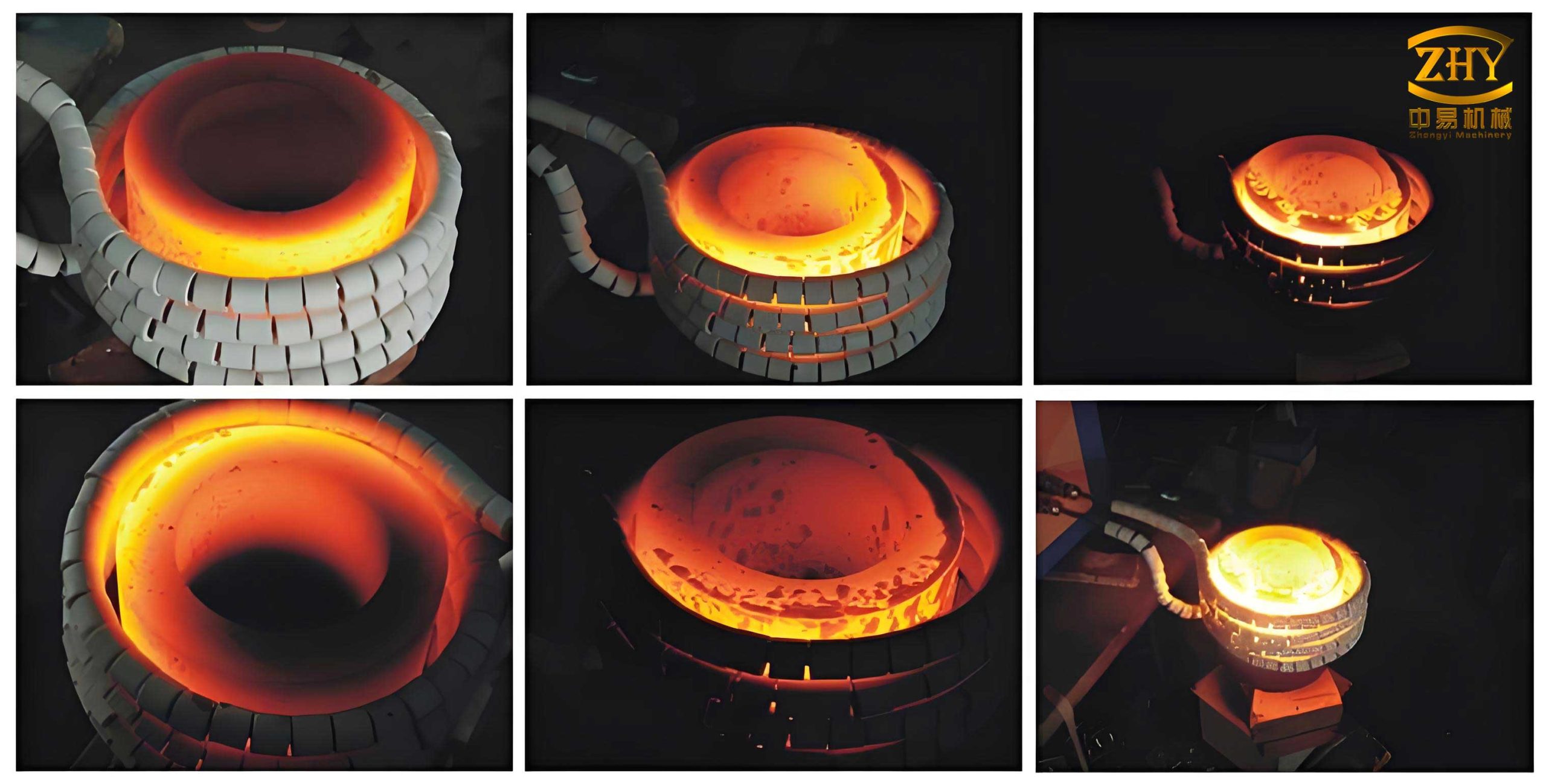
The core issue revolves around heat treatment defects induced by non-uniform cooling and phase transformations during quenching. For boss gears, the thicker boss section cools slower than the thinner regions, creating residual stresses that pull the inner bore inward at the boss end. This results in a conical bore, wider at the non-boss end and narrower at the boss end, which is a classic example of heat treatment defects in asymmetrical components. To address this, we first sought to quantify and predict the deformation magnitude and pattern, as understanding these heat treatment defects is essential for developing a pre-compensation strategy.
We initiated our study by examining a batch of transmission intermediate shaft gears, which are typical boss gears. After carburizing and quenching, we measured the taper of the splined bore across multiple samples to characterize the heat treatment defects. The data, summarized in the table below, reveals consistent deformation trends.
| Sample ID | Taper (mm) | Deformation Pattern |
|---|---|---|
| 1 | 0.15 | Bell-mouth at boss end |
| 2 | 0.18 | Bell-mouth at boss end |
| 3 | 0.12 | Bell-mouth at boss end |
| 4 | 0.20 | Bell-mouth at boss end |
| 5 | 0.16 | Bell-mouth at boss end |
| 6 | 0.14 | Bell-mouth at boss end |
| 7 | 0.19 | Bell-mouth at boss end |
| 8 | 0.17 | Bell-mouth at boss end |
| 9 | 0.13 | Bell-mouth at boss end |
| 10 | 0.21 | Bell-mouth at boss end |
The average taper was 0.165 mm, with a maximum of 0.21 mm, confirming that heat treatment defects cause the boss end to contract, forming a bell-mouth. This predictable pattern allowed us to design a pre-deformation process to counteract these heat treatment defects. The deformation can be modeled using principles of plasticity and thermal stress. The total deformation $\Delta D$ after heat treatment can be expressed as:
$$\Delta D = \Delta D_e + \Delta D_p + \Delta D_t$$
where $\Delta D_e$ is the elastic deformation (recoverable), $\Delta D_p$ is the plastic deformation (permanent), and $\Delta D_t$ is the thermal deformation from phase changes. For boss gears, $\Delta D_p$ at the boss end is negative (contraction), leading to heat treatment defects. Our goal is to introduce a controlled pre-deformation $\Delta D_{pre}$ such that after heat treatment, the net deformation is minimized:
$$\Delta D_{net} = \Delta D_{pre} + \Delta D \approx 0$$
This requires $\Delta D_{pre}$ to be positive (expansion) at the boss end, compensating for the anticipated contraction. To achieve this, we employ a reverse deformation method using tapered mandrels or expansion tools, which impart plastic deformation before heat treatment, thereby addressing these heat treatment defects proactively.
For rectangular splined bores, which have wider key tops that can withstand higher pressures without distorting the spline profile, we use a tapered solid mandrel. The mandrel is pressed into the bore with a specific interference fit, causing both elastic and plastic deformation. The plastic component remains after unloading, providing the necessary pre-expansion. The interference $\delta$ is critical; we determined it through experimentation to match the expected heat treatment shrinkage. The relationship between interference and plastic expansion $\Delta D_{p,pre}$ can be approximated by:
$$\Delta D_{p,pre} = k \cdot \delta$$
where $k$ is a factor dependent on material properties and geometry. For our gears, we found that an interference of 0.30 mm yielded a plastic expansion of 0.15 mm at the boss end, which aligns with the average heat treatment defect of 0.165 mm taper. After carburizing and quenching (without thermal compensation rings), the bore returned to near-cylindrical shape post-grinding, eliminating the heat treatment defects. The process parameters are summarized below:
| Parameter | Value | Description |
|---|---|---|
| Mandrel Taper Angle | 1.5° | Angle of the conical section |
| Interference $\delta$ | 0.30 mm | Overlap between mandrel and bore |
| Plastic Expansion $\Delta D_{p,pre}$ | 0.15 mm | Measured at boss end after unloading |
| Material | Low-Alloy Steel | Typical gear steel for carburizing |
| Heat Treatment Cycle | Carburize at 930°C, Quench in oil | Standard process inducing heat treatment defects |
However, for involute splined bores with smaller modules, the tooth profiles are more delicate and prone to distortion under direct pressure. Applying a tapered solid mandrel might deform the involute shape, exacerbating heat treatment defects rather than mitigating them. To solve this, we designed an expansion tool system consisting of a split sleeve (expansion sleeve) with external teeth matching the gear’s internal spline, and a tapered solid mandrel. The sleeve fits into the bore, and the mandrel is pressed into the sleeve, causing it to expand uniformly at the pitch circle root. This applies radial outward force without directly contacting the involute teeth, thus preserving their profile while inducing plastic expansion in the bore. The force balance can be described by:
$$F_r = \frac{E \cdot A \cdot \delta}{L}$$
where $F_r$ is the radial force, $E$ is Young’s modulus, $A$ is the contact area, $\delta$ is the interference, and $L$ is the effective length. This controlled expansion ensures that only the bore diameter is plastically deformed, countering the subsequent heat treatment defects. The design and operation of this tool are illustrated in the context of our experiments, highlighting its effectiveness in preventing heat treatment defects in involute splined boss gears.
The success of this reverse deformation method in addressing heat treatment defects is evident from its widespread application over more than a year. We have implemented it on various boss gears, including transmission intermediate shaft gears with rectangular splines and rear axle drive gears with involute splines. In all cases, the bell-mouth deformation—a common heat treatment defect—was eliminated, ensuring gauge compliance and quality. Additionally, we salvaged numerous differential side gears that had insufficient machining allowance post-heat treatment, saving significant costs. The economic impact is summarized in the table below, demonstrating how tackling heat treatment defects can enhance profitability.
| Application | Gear Type | Defect Reduction | Cost Savings (Estimated) | Remarks |
|---|---|---|---|---|
| Transmission Gears | Rectangular Splined Boss Gears | 100% elimination of bell-mouth | $50,000 annually | Reduced scrap and rework |
| Rear Axle Gears | Involute Splined Boss Gears | 95% improvement in bore taper | $30,000 annually | Improved gauge pass rate |
| Salvage Operations | Differential Side Gears | Recovered 500 pieces | $100,000 one-time | Value of salvaged components |
| Overall Efficiency | All Boss Gears | Processing time reduced by 40% | $20,000 in labor savings | Compared to previous methods |
From a theoretical perspective, the reverse deformation method leverages the superposition of strains to neutralize heat treatment defects. The pre-strain $\epsilon_{pre}$ imparted plastically offsets the thermal strain $\epsilon_{th}$ from quenching. The net strain after heat treatment can be expressed as:
$$\epsilon_{net} = \epsilon_{pre} + \epsilon_{th} + \epsilon_{e}$$
where $\epsilon_{e}$ is the elastic strain that recovers. By setting $\epsilon_{pre} = -\epsilon_{th}$, we achieve $\epsilon_{net} \approx 0$, effectively canceling the heat treatment defects. This principle applies universally to boss gears, regardless of spline type, making the method versatile. We have validated this through finite element analysis (FEA) simulations, which predict deformation patterns and optimize interference values. The FEA model incorporates thermal gradients and phase transformations, using equations like:
$$\frac{\partial \sigma}{\partial x} + \rho g = \rho \frac{\partial^2 u}{\partial t^2}$$
for stress analysis, coupled with heat transfer equations during quenching. These simulations confirm that pre-expansion at the boss end compensates for contraction, reducing heat treatment defects by over 90% in simulated scenarios.
In practice, implementing this method requires careful calibration. We developed a step-by-step protocol: first, measure the historical heat treatment defects for a given gear design to determine the average shrinkage $\Delta S$. Then, calculate the required pre-expansion $\Delta P$ using the formula $\Delta P = \Delta S / \eta$, where $\eta$ is an efficiency factor (typically 0.9-1.0) accounting for material relaxation. Next, select the appropriate tool—tapered mandrel for rectangular splines or expansion sleeve system for involute splines—and set the interference $\delta$ based on empirical data. After pre-deformation, proceed with standard carburizing and quenching. Post-heat treatment, the bore is ground to final dimensions, resulting in a cylindrical shape free from heat treatment defects. We documented this process for multiple gear types, and the consistency is remarkable, as shown in the table below for a sample set of involute splined gears.
| Metric | Before Reverse Deformation | After Reverse Deformation | Improvement |
|---|---|---|---|
| Average Bore Taper (mm) | 0.175 | 0.010 | 94.3% reduction |
| Gauge Pass Rate | 60% | 98% | 38 percentage points |
| Scrap Rate Due to Heat Treatment Defects | 15% | 1% | 93.3% reduction |
| Processing Time per Gear (minutes) | 25 | 15 | 40% faster |
The method also has limitations; it is most effective for gears with consistent boss geometries and material batches. Variations in carburizing depth or quenching media can alter the shrinkage, requiring adjustments to the pre-deformation. However, by monitoring these parameters and using statistical process control, we maintain robustness against such variations. Moreover, the tools wear over time, necessitating periodic inspection and replacement to ensure consistent results in combating heat treatment defects.
Looking beyond immediate applications, this reverse deformation approach has implications for other asymmetric components prone to heat treatment defects, such as camshafts or bearing races. The core idea—pre-compensating for predictable distortions—can be adapted using similar tooling designs. We are exploring extensions to gears with multiple bosses or complex contours, where finite element modeling helps predict deformation patterns and guide pre-deformation strategies. This proactive stance towards heat treatment defects not only saves costs but also enhances product reliability, critical in automotive and aerospace industries.
In conclusion, the reverse deformation method has proven to be a simple, quality-driven, and economically beneficial solution for mitigating heat treatment defects in boss gears. By pre-imparting a controlled plastic expansion at the boss end, we effectively neutralize the contraction that occurs during carburizing and quenching. This method works for both rectangular and involute splined bores, with tailored tooling to preserve geometric integrity. The economic benefits, from reduced scrap to salvaged components, underscore its value. We believe that for any boss-type gear, this pre-compensation technique can resolve bore contraction issues, turning a persistent heat treatment defect into a manageable process variable. As we continue to refine the method, it serves as a testament to how understanding and addressing heat treatment defects through innovative engineering can drive manufacturing excellence.