
The foundational role of machine tools in modern manufacturing is undisputed. Among the critical performance parameters governing machining accuracy, static stiffness, which reflects a machine’s ability to resist deformation under static loads, is paramount. For gear shaping machines, which perform complex generating motions to cut internal and external gears, predicting the static stiffness across the entire workspace is crucial for ensuring dimensional accuracy and surface finish. Traditional high-fidelity finite element (FE) models, while accurate, become computationally prohibitive when evaluating stiffness for numerous machine poses required for a global analysis. Conversely, simplified lumped parameter models often lack the necessary accuracy. To bridge this gap, we propose a novel semi-analytical, position-dependent modeling framework for the rapid prediction and analysis of global static stiffness in CNC gear shaping machines.
The core of our methodology involves decomposing the complete gear shaping machine into substructures and joints. Substructures represent the main machine components (e.g., bed, column, worktable, main spindle assembly), while joints represent the compliant connections between them, including guideways, bearings, and transmission systems. The overall workflow establishes parameterized stiffness models for each category and assembles them into a global model whose properties change with the machine’s position.
1. Position-Dependent Substructure Stiffness Modeling via Static Condensation and Surrogate Models
A gear shaping machine operates with varying axis positions. To efficiently capture the stiffness variation of substructures like the column or spindle head with position, we employ a two-stage approach combining static condensation and surrogate modeling.
First, a detailed FE model is created for each substructure. Boundary conditions are applied to represent real constraints (e.g., bolting to the ground). Crucially, 6-degree-of-freedom (DOF) temporary nodes are created at designated interface points where the substructure connects to others or where external loads are applied. For instance, points on guideway blocks, bearing locations, and the tool/workpiece interface are defined. The DOFs of all underlying FE nodes at a specific interface region are rigidly coupled to its corresponding temporary node via a transformation matrix. Let \( \mathbf{N}_m^{(i)} \) be the temporary node for the \( m \)-th interface on substructure \( i \), and \( \mathbf{N}_{m,k}^{(i)} \) be the \( k \)-th FE node within that interface region. The displacement relationship is:
$$ \mathbf{U}_{m,k}^{(i)} = \mathbf{T}_{m,k}^{(i)} \mathbf{U}_m^{(i)} $$
where \( \mathbf{U} \) denotes the displacement vector and \( \mathbf{T}_{m,k}^{(i)} \) is the transformation matrix. For small rotations and pure translational offset \( \mathbf{r}_{m,k}^{(i)} \), this matrix is:
$$ \mathbf{T}_{m,k}^{(i)} = \begin{bmatrix} \mathbf{I} & \mathbf{r}_{m,k}^{(i)\times} \\ \mathbf{O} & \mathbf{I} \end{bmatrix} $$
Here, \( \mathbf{I} \) is the 3×3 identity matrix, \( \mathbf{O} \) is a 3×3 zero matrix, and \( \mathbf{r}_{m,k}^{(i)\times} \) is the skew-symmetric matrix of the vector from the FE node to the temporary node.
Static condensation (Guyan reduction) is then performed to reduce the substructure’s full FE stiffness matrix to the DOFs of only these temporary interface nodes. This yields a condensed stiffness matrix \( \mathbf{\tilde{K}}^{(i)} \) for substructure \( i \), which is a function of its geometry and material but, importantly, also of its position within the machine’s travel range for moving components.
To efficiently parameterize this position-dependency, we treat the machine’s axis coordinates as design variables. For a gear shaping machine, the relevant positions are often the Y-axis offset between the spindle and worktable centerlines (\(Y_s\)) and the Z-axis position of the spindle ram (\(Z_s\)). Using Design of Experiments (e.g., uniform sampling) within the machine’s workspace, we generate multiple configurations of the substructure’s FE model. The condensed stiffness matrix \( \mathbf{\tilde{K}}^{(i)} \) is computed for each sample point. A Kriging surrogate model is then constructed for each independent element of the condensed stiffness matrix, with the position parameters (\(Y_s, Z_s\)) as inputs. This results in a rapid evaluation model:
$$ \mathbf{K}^{(i)}(\mathbf{p}) \mathbf{U}^{(i)} = \mathbf{F}^{(i)} $$
where \( \mathbf{K}^{(i)}(\mathbf{p}) \) is the position-dependent condensed stiffness matrix for substructure \( i \), \( \mathbf{p} = (Y_s, Z_s) \) is the position vector, \( \mathbf{U}^{(i)} \) are the displacements at its interface nodes, and \( \mathbf{F}^{(i)} \) are the corresponding forces.
2. Joint Stiffness Modeling: Lumped Parameter Approach and Static Condensation
Joints are the primary sources of compliance in a machine tool. We model them using a lumped parameter approach, representing the combined stiffness of elements like bearings, guideways, and screw drives as 6-DOF spring-damper elements (considering only stiffness for static analysis). The stiffness parameters are derived from catalog data, empirical formulas, or dedicated tests.
For complex joints comprising multiple physical elements (e.g., a set of linear guideways), the individual stiffnesses are combined into an equivalent 6-DOF spring at a chosen interface point. Consider a joint group \( n \) connecting substructures \( i \) and \( j \). It contains \( s \) individual connection points (e.g., each guideway block), each modeled by a stiffness matrix \( \mathbf{K}_{n,b}^{(i,j)} \) at location \( b \). These are combined into a single equivalent stiffness matrix \( \mathbf{K}_{n}^{(i,j)} \) at the group’s center via static condensation of the joint’s internal DOFs. The relationship between force and displacement for the two interface nodes \( \mathbf{N}_n^{(i)} \) and \( \mathbf{N}_n^{(j)} \) is:
$$ \begin{Bmatrix} \mathbf{F}_n^{(i)} \\ \mathbf{F}_n^{(j)} \end{Bmatrix} = \begin{bmatrix} \mathbf{K}_n^{(i,j)} & -\mathbf{K}_n^{(i,j)} \\ -\mathbf{K}_n^{(i,j)} & \mathbf{K}_n^{(i,j)} \end{bmatrix} \begin{Bmatrix} \mathbf{U}_n^{(i)} \\ \mathbf{U}_n^{(j)} \end{Bmatrix} $$
where the combined stiffness is calculated by transforming individual stiffnesses to the common reference point and summing them:
$$ \mathbf{K}_n^{(i,j)} = \sum_{b=1}^{s} \mathbf{T}_{n,b}^{(i,j)T} \mathbf{K}_{n,b}^{(i,j)} \mathbf{T}_{n,b}^{(i,j)} $$
Here, \( \mathbf{T}_{n,b}^{(i,j)} \) is the transformation matrix from the individual connection point \( b \) to the group center.
For critical transmission systems (e.g., the main drive or the generating motion system in a gear shaping machine), a dedicated lumped parameter model based on Lagrangian mechanics can be developed. The system’s potential energy \( E \) is expressed in terms of generalized coordinates \( q_g \). The effective stiffness matrix related to the boundary coordinates is then obtained from the Hessian of the potential energy:
$$ \mathbf{K}_{\text{trans}} = \frac{\partial^2 E}{\partial \mathbf{q}_g^2} $$
This transmission stiffness matrix is subsequently condensed to its interface DOFs to be integrated into the overall joint model.
3. Assembly of the Global Machine Stiffness Model
The global, position-dependent stiffness matrix of the complete gear shaping machine, \( \mathbf{K}_{\text{ov}}(\mathbf{p}) \), is assembled by combining the condensed stiffness matrices of all \( N \) substructures and all \( M \) joints according to the machine’s topological connection diagram. The assembly follows the standard finite element procedure, ensuring compatibility of displacements at shared interface nodes. The governing static equation for the entire machine is:
$$ \mathbf{K}_{\text{ov}}(\mathbf{p}) \mathbf{U}_{\text{ov}} = \mathbf{F}_{\text{ov}} $$
where \( \mathbf{U}_{\text{ov}} \) is the vector of all interface node displacements and \( \mathbf{F}_{\text{ov}} \) is the vector of externally applied forces at these nodes.
Forces and displacements at the tool tip (spindle end) and workpiece (worktable) must be correctly transferred to the respective interface nodes. If \( \mathbf{F}_b \) is the cutting force at the actual contact point and \( \mathbf{F}_a \) is the equivalent force at the machine’s interface node, the transformation is:
$$ \mathbf{F}_a = \mathbf{T}_{ab}^f \mathbf{F}_b, \quad \text{with} \quad \mathbf{T}_{ab}^f = \begin{bmatrix} \mathbf{I} & \mathbf{r}_{ab}^{\times} \\ \mathbf{O} & \mathbf{I} \end{bmatrix}^T $$
where \( \mathbf{r}_{ab} \) is the vector from the interface node to the contact point. Similarly, the displacement \( \mathbf{U}_a \) at the interface node is related to the displacement \( \mathbf{U}_b \) at the contact point by \( \mathbf{U}_a = \mathbf{T}_{ab}^u \mathbf{U}_b \), where \( \mathbf{T}_{ab}^u = (\mathbf{T}_{ab}^f)^T \). The relative displacement between the tool and workpiece at the cutting point is the final metric for stiffness evaluation.
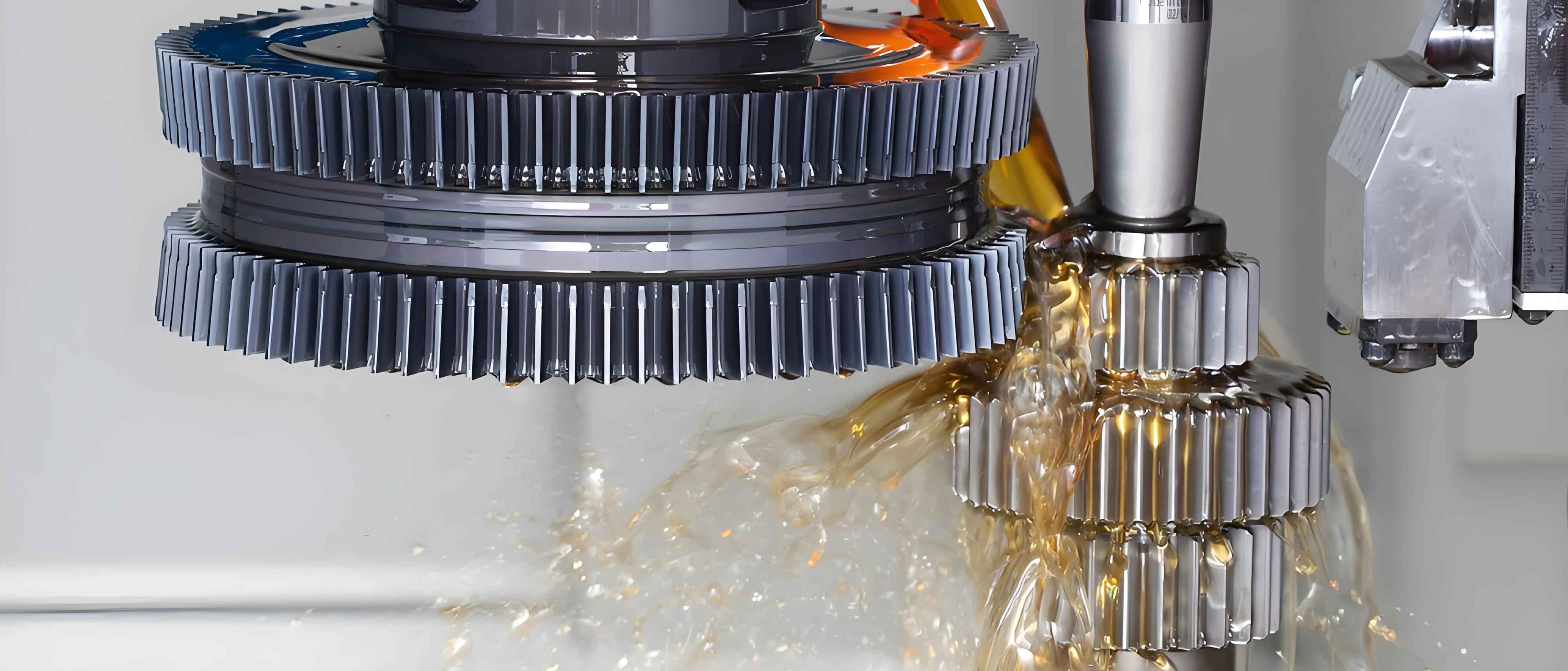
The gear shaping process involves complex kinematics where the cutter reciprocates while synchronously rotating with the workpiece to generate the gear tooth form. This motion, combined with significant intermittent cutting forces, makes the global static stiffness analysis of the gear shaping machine particularly critical. Deflections under load directly translate into profile errors on the manufactured gear.
4. Model Validation and Computational Efficiency
To validate the proposed semi-analytical model, its predictions were compared against a full, detailed FE model of the complete gear shaping machine at multiple pose configurations within the workspace. A representative cutting force vector was applied, derived from typical gear shaping process parameters. The calculated relative displacement between the spindle (tool) and worktable (workpiece) was the comparison metric.
| Pose (Ys, Zs in mm) | Displacement Component | Full FE Model Result | Semi-Analytical Model Result | Absolute Error (%) |
|---|---|---|---|---|
| (80, 55) | Spindle X-Disp. (mm) | 2.7646 × 10⁻³ | 2.7645 × 10⁻³ | 0.0015 |
| Worktable Y-Disp. (mm) | -1.7307 × 10⁻³ | -1.7307 × 10⁻³ | 0.0001 | |
| … (results for other poses and DOFs omitted for brevity) … | ||||
| Maximum Absolute Error Across All Tested Poses | 0.0686% | |||
The agreement was excellent, with a maximum error below 0.07%, confirming the model’s accuracy. More strikingly, the computational efficiency was improved by a factor of nearly 400. The full FE analysis for a single pose took over 20 minutes, while the evaluation of the assembled semi-analytical model required only a few seconds. This dramatic speed-up is what enables the feasible global stiffness analysis of the gear shaping machine across its entire workspace.
5. Analysis of Relative Displacement Distribution in the Workspace
Utilizing the validated model, the relative displacement between the tool and workpiece was calculated across a dense grid of positions spanning the machine’s working range. This reveals how stiffness, and hence potential machining error, varies with the gear shaping machine’s configuration.
The distribution patterns are complex and axis-dependent. For example, the X-direction relative displacement (\(R_X\)) is significantly influenced by the Y-axis position (\(Y_s\)), often showing a parabolic trend. This is attributed to the changing moment arm about the Z-axis as the worktable moves, affecting torsional deflections. The Z-direction displacement (\(R_Z\)) is primarily governed by the spindle ram position (\(Z_s\)), generally increasing as the ram extends due to reduced bending rigidity of the extended assembly, but may exhibit non-monotonic behavior due to shifting load paths in the crank-link mechanism unique to the gear shaping process. Mapping these distributions is invaluable for process planning, allowing operators to select machine poses that inherently offer higher stiffness for critical gear shaping operations.
6. Sensitivity Analysis and Identification of Stiffness Weak Links
A key advantage of the parameterized model is its utility for design improvement. We performed a global sensitivity analysis using the Sobol method to quantify the contribution of each major joint’s stiffness to the overall compliance of the gear shaping machine. Latin Hypercube Sampling was used to generate 10,000 input samples within plausible stiffness variation ranges for each joint (e.g., bearing preload variation, guideway grade). The analysis focused on poses corresponding to worst-case (maximum relative displacement) scenarios for both external and internal gear shaping work envelopes.
The total-effect Sobol indices for critical joint stiffness parameters (\(K_1\) to \(K_{10}\)) at a worst-case pose are summarized below:
| Joint Stiffness Parameter | Description | Total-Effect Index (X-Disp) | Total-Effect Index (Y-Disp) |
|---|---|---|---|
| K₁ | Worktable Drive Transmission Stiffness | 0.412 | 0.288 |
| K₂ | Linear Guideway Stiffness (Y-axis) | 0.305 | 0.351 |
| K₃ | Lead Screw Drive Stiffness (Z-axis) | 0.187 | 0.102 |
| K₈ | Spindle Generating Transmission Stiffness | 0.521 | 0.085 |
| K₉ | Lower Spindle Hydrostatic Bearing Stiffness | 0.089 | 0.463 |
| Other Stiffnesses (K₄, K₅, K₆, K₇, K₁₀) | Various Bearings & Connections | < 0.05 each | < 0.05 each |
The analysis clearly identifies the weak links: the worktable drive (K₁), the Y-axis guideways (K₂), the Z-axis screw drive (K₃), the spindle generating transmission (K₈), and the lower spindle bearing (K₉). Their high total-effect indices indicate that variations in these parameters dominantly influence the overall gear shaping machine deflection.
7. Stiffness Enhancement and Optimization Results
Guided by the sensitivity analysis, the stiffness parameters of the five identified weak joints were increased to the upper limits of their feasible ranges (simulating design improvements like higher preload, better bearing selection, or reinforced transmission elements). The global model was then re-evaluated at the worst-case poses.
| Worst-Case Pose | Displacement Direction | Original Relative Disp. (mm) | Optimized Relative Disp. (mm) | Reduction |
|---|---|---|---|---|
| (242.96, 100) for External Gear Shaping | X-direction | 1.210 × 10⁻² | 0.989 × 10⁻² | 18.3% |
| Y-direction | 0.869 × 10⁻² | 0.766 × 10⁻² | 11.8% | |
| (-96, 100) for Internal Gear Shaping | X-direction | 1.230 × 10⁻² | 1.003 × 10⁻² | 18.5% |
| Y-direction | 1.153 × 10⁻² | 1.046 × 10⁻² | 9.3% |
The targeted stiffness enhancement led to a significant reduction in relative displacement—between 9.3% and 18.5% depending on the direction and machining pose. This demonstrates the practical value of the methodology for guiding effective design modifications that improve the static performance of the gear shaping machine.
Conclusion
We have developed and demonstrated an efficient and accurate semi-analytical framework for the global static stiffness prediction of CNC gear shaping machines. By synergistically applying static condensation, surrogate modeling, and lumped parameter techniques, the method achieves a computational speed-up of approximately 400 times compared to full FE analysis while maintaining high fidelity (error < 0.07%). The model explicitly captures the influence of machine pose, enabling the mapping of stiffness variation across the entire workspace, which is vital for understanding the performance limits of the gear shaping process. Furthermore, the integration of global sensitivity analysis provides a systematic, data-driven approach to identifying structural weak links. As evidenced by the results, selectively strengthening the identified critical joints—namely the worktable drive, key guideways, the Z-axis screw, the spindle generating transmission, and the lower spindle bearing—can yield substantial improvements (over 18% in some cases) in the overall static rigidity of the gear shaping machine. This methodology provides a powerful tool for both the performance evaluation and the design optimization of gear shaping machines and other complex machine tools, ensuring higher accuracy and reliability in gear manufacturing.