
In the demanding environment of oilfield workover and drilling operations, the make-up and break-out of tubular connections is a critical and repetitive task. The efficiency and reliability of this process hinge on the performance of specialized tools, primarily power tongs. Among these, tubing power clamps are designed for handling a specific range of pipe diameters. A common challenge as operational speeds increase is the amplification of vibration within these tools. Excessive vibration not only compromises operator comfort but can also lead to accelerated wear, premature failure of components, and reduced overall reliability. The transmission system, often a primary source of dynamic excitation, is central to this issue. This study focuses on a detailed investigation into the dynamic characteristics of a core component within such a transmission system: the dual gear shaft. The objective is to perform a thorough modal analysis to determine its natural frequencies and mode shapes, thereby assessing its vulnerability to resonant conditions during operation and providing a foundational model for future dynamic optimization of the entire power clamp assembly.
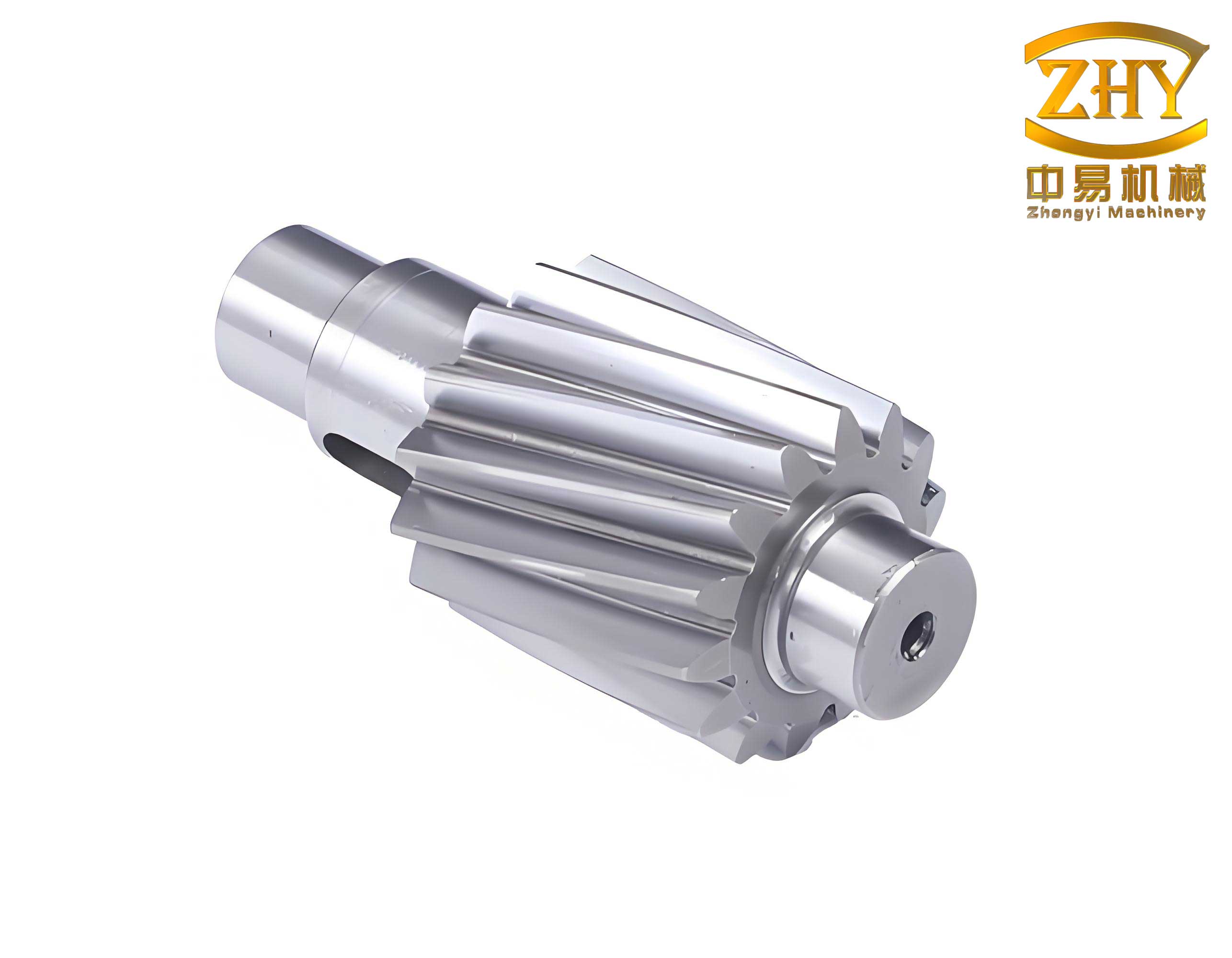
The gear shaft in question is an integral part of the main tong’s gear transmission system. It is designed as a stepped shaft accommodating two gear sets, bearings, seals, and bushings. For analytical purposes, a simplified physical model is often necessary. The complex geometry of the stepped gear shaft is first transformed into an equivalent uniform shaft using the principle of equivalent stiffness. The equivalent diameter \(d\) is calculated by considering the length and diameter of each segment:
$$ d = \frac{L}{\sqrt[4]{\sum_{i=1}^{n} \frac{l_i}{d_i^4}}} $$
where \(L\) is the total length of the gear shaft, \(l_i\) and \(d_i\) are the length and diameter of the i-th segment, respectively. This simplification facilitates theoretical hand calculations before proceeding to more complex numerical models. The physical parameter model can then be represented as a multi-degree-of-freedom system with concentrated masses and connecting stiffnesses.
Theoretical Calculation of Natural Frequencies
Solving vibration problems typically begins with theoretical analysis. The first step is to establish the equations of motion based on a physical parameter model (mass, damping, stiffness). For free vibration modal analysis, damping and external forces are neglected. The general equation of motion for an undamped multi-degree-of-freedom system is:
$$ \mathbf{M} \ddot{\mathbf{x}} + \mathbf{K} \mathbf{x} = 0 $$
where \(\mathbf{M}\) is the mass matrix, \(\mathbf{K}\) is the stiffness matrix, and \(\mathbf{x}\) is the displacement vector. For the simplified 3-DOF model of the gear shaft, this expands to:
$$
\begin{bmatrix}
m_1 & 0 & 0 \\
0 & m_2 & 0 \\
0 & 0 & m_3
\end{bmatrix}
\begin{Bmatrix}
\ddot{x}_1 \\
\ddot{x}_2 \\
\ddot{x}_3
\end{Bmatrix}
+
\begin{bmatrix}
k_{11} & k_{12} & k_{13} \\
k_{21} & k_{22} & k_{23} \\
k_{31} & k_{32} & k_{33}
\end{bmatrix}
\begin{Bmatrix}
x_1 \\
x_2 \\
x_3
\end{Bmatrix}
= 0
$$
Assuming a harmonic solution of the form \(\mathbf{x} = \mathbf{X} e^{i \omega t}\), this leads to the eigenvalue problem:
$$ (\mathbf{K} – \omega^2 \mathbf{M}) \mathbf{X} = 0 $$
Non-trivial solutions exist only if the determinant vanishes: \(|\mathbf{K} – \omega^2 \mathbf{M}| = 0\). The roots \(\omega_i^2\) of this characteristic equation are the eigenvalues (squares of the natural circular frequencies), and the corresponding vectors \(\mathbf{X}_i\) are the eigenvectors (mode shapes).
1. Rayleigh Quotient Method
The Rayleigh Quotient provides an upper-bound estimate for the fundamental (lowest) natural frequency. It is given by:
$$ \lambda = \omega^2 = R(\mathbf{w}) = \frac{\mathbf{w}^T \mathbf{K} \mathbf{w}}{\mathbf{w}^T \mathbf{M} \mathbf{w}} $$
where \(\mathbf{w}\) is an assumed trial vector representing the mode shape. The quotient \(R(\mathbf{w})\) attains its minimum value, which is the best approximation to \(\omega_1^2\), when \(\mathbf{w}\) is the true fundamental eigenvector \(\mathbf{X}_1\). For the dual gear shaft model, using a rationally assumed displacement vector based on static deflection or engineering judgment, the fundamental frequency was calculated to be approximately 3978.21 Hz. This method is powerful for quick estimations but always yields a value greater than or equal to the true fundamental frequency.
2. Flexibility Coefficient Method
To obtain more accurate results for several modes, the flexibility coefficient method is employed. This involves reformulating the eigenvalue problem in terms of the flexibility matrix \(\mathbf{F} = \mathbf{K}^{-1}\). The eigenvalue problem becomes:
$$ \left( -\frac{1}{\omega^2} \mathbf{I} + \mathbf{F} \mathbf{M} \right) \mathbf{X} = 0 $$
The elements of the flexibility matrix \(f_{ij}\) represent the displacement at point \(i\) due to a unit force at point \(j\). For a simply supported beam segment with the calculated equivalent diameter \(d\), these coefficients can be derived from standard beam deflection formulas. Solving the resulting characteristic equation \(|\mathbf{F}\mathbf{M} – (1/\omega^2)\mathbf{I}| = 0\) yields the system’s natural frequencies. The relationship between circular frequency \(\omega\) (rad/s) and frequency \(f\) (Hz) is:
$$ f = \frac{\omega}{2\pi} $$
Applying this method to the dual gear shaft model yielded the first three natural frequencies, as summarized in Table 1.
| Mode Order | Natural Frequency (Hz) |
|---|---|
| 1 | 3954.23 |
| 2 | 7267.65 |
| 3 | 11124.39 |
A critical observation from these theoretical results is that all calculated natural frequencies are significantly higher than the operating excitation frequency. For instance, if the hydraulic motor driving the system operates at 960 RPM, its rotational frequency is \(f_{motor} = 960 / 60 = 16\) Hz. The lowest natural frequency of the gear shaft (~3954 Hz) is orders of magnitude larger, indicating a very low risk of resonance from the motor’s primary rotational excitation. Comparing the two theoretical methods, the Rayleigh Quotient estimate (3978.21 Hz) is about 0.6% higher than the Flexibility Method result (3954.23 Hz) for the fundamental frequency, which is consistent with the theoretical property of the Rayleigh Quotient.
Finite Element Method (FEM) Modal Analysis
With the advancement of computational power and software, Finite Element Analysis (FEA) has become a cornerstone for detailed modal investigation of complex geometries like a stepped gear shaft. The process begins with creating a high-fidelity 3D CAD model. To improve mesh quality and solution efficiency, minor geometric features such as small fillets, chamfers, and non-structural details are often simplified. The material properties for the gear shaft, typically alloy steel, are assigned: density \(\rho = 7800\ \text{kg/m}^3\), Young’s modulus \(E = 2.0 \times 10^{11}\ \text{Pa}\), and Poisson’s ratio \(\nu = 0.3\).
A critical step is mesh generation. A fine, well-structured mesh is essential for accuracy. Tetrahedral or hexahedral elements are commonly used. For this gear shaft analysis, a global mesh size of 2 mm was specified, resulting in a model with hundreds of thousands of elements and nodes. The analysis performed was a free-free modal analysis, meaning no boundary constraints were applied. This is a standard practice for extracting the intrinsic dynamic properties of a component before it is integrated into an assembly. It helps identify rigid body modes and the component’s own flexible modes. The solver extracts eigenvalues and eigenvectors by solving the discretized version of the equation:
$$ ( [K] – \omega_i^2 [M] ) \{\phi_i\} = 0 $$
where \([K]\) and \([M]\) are the global stiffness and mass matrices of the FE model, \(\omega_i\) is the i-th natural circular frequency, and \(\{\phi_i\}\) is the i-th mode shape vector. The results for the first 13 modes (including rigid body modes) are presented in Table 2.
| Mode Order | Natural Frequency (Hz) | Description of Modal Deformation |
|---|---|---|
| 1-3 | ~0 | Rigid Body Translation (X, Y, Z) |
| 4-6 | ~0 | Rigid Body Rotation (Rx, Ry, Rz) |
| 7 | 3900.0 | First Bending Mode (Y-axis) |
| 8 | 3913.5 | First Bending Mode (X-axis) |
| 9 | 7194.2 | Second Bending Mode (Y-axis) |
| 10 | 7248.4 | Second Bending Mode (X-axis) |
| 11 | 11029.0 | Rigid-Body-like Torsion? / Complex Mix |
| 12 | 12291.0 | Third Bending / Mixed Mode |
| 13 | 12298.0 | Third Bending / Mixed Mode |
The FEA results reveal important characteristics. Modes 1-6 have frequencies near zero, representing the six rigid body modes of an unconstrained object. The first flexible mode of the gear shaft occurs at 3900 Hz. Due to the near-axisymmetric geometry of the shaft (disregarding keyways or small asymmetries), the bending modes in two orthogonal planes (e.g., X and Y) appear as closely spaced pairs (e.g., Mode 7 & 8, Mode 9 & 10). The mode shapes progress from simple first-order bending, where the maximum displacement is near the center, to higher-order bending with multiple node points. The deformation plots visually confirm that the gear shaft experiences significant flexural vibration in these modes. Crucially, the FEM fundamental frequency of 3900 Hz confirms the theoretical prediction that the gear shaft operates far from resonance, as it remains vastly higher than the 16 Hz motor excitation.
Experimental Modal Analysis (EMA)
Experimental Modal Analysis serves as the vital link between theory and reality, providing ground-truth data for validation. The process involves physically exciting the structure, measuring its response, and extracting modal parameters. For the dual gear shaft, a free-free boundary condition was simulated by suspending it with soft elastic cords, effectively isolating it from the environment. A roving hammer impact test was a suitable method. An instrumented impact hammer (part of the B&K test system) was used to apply a broadband impulsive force at various points along the gear shaft. A lightweight accelerometer was fixed at a single reference point to measure the response.
The core measurable is the Frequency Response Function (FRF), \(H(\omega)\), which relates the output response \(X(\omega)\) to the input force \(F(\omega)\) in the frequency domain: \(H(\omega) = X(\omega)/F(\omega)\). By collecting FRFs for multiple impact locations, a set of data is built. Advanced parameter estimation algorithms (e.g., Polyreference, LSCE) are then applied to this dataset to identify the system’s poles (natural frequencies and damping ratios) and residues (related to mode shapes). The accuracy of EMA depends heavily on proper test setup: sufficient frequency resolution, adequate averaging to reduce noise, and ensuring the excitation energy covers the frequency range of interest (in this case, up to several kHz).
Synthesis and Comparative Analysis
The ultimate strength of this investigation lies in the correlation of results from three independent approaches: analytical theory, numerical simulation (FEA), and physical experiment (EMA). Table 3 presents a focused comparison of the fundamental frequency obtained from each method.
| Analysis Method | Fundamental Frequency (Hz) | Deviation from Theoretical Value | Notes |
|---|---|---|---|
| Theoretical (Flexibility Method) | 3954.23 | Reference | Based on simplified 3-DOF model. |
| Finite Element Analysis (FEA) | 3900.0 | -1.37% | Based on detailed 3D geometry with fine mesh. |
| Experimental Modal Analysis (EMA) | 4068.14 | +2.88% | Physical measurement on the actual component. |
The correlation is excellent. The discrepancy between the FEA result and the theoretical calculation is a mere 1.37%. This small error validates the accuracy of the finite element model, including its geometry simplifications, material properties, and mesh density. It also confirms that the theoretical simplifications (equivalent diameter, 3-DOF model) were reasonable for estimating the fundamental frequency.
The experimental result shows a slightly larger, but still very good, deviation of +2.88% from the theoretical value. This positive bias is common and can be attributed to several factors inherent to real-world testing and modeling assumptions:
- Material Property Uncertainty: The assumed Young’s modulus (E=200 GPa) in theory and FEA might differ slightly from the actual material of the physical gear shaft.
- Boundary Condition Idealization: The “free-free” condition in the test, achieved with soft suspension, is an idealization. Minor energy dissipation through the supports and air damping can slightly shift measured frequencies.
- Model Simplifications: The theoretical and FEA models omitted small geometric features (keyways, very small fillets) and treated the mounted gears as rigid masses. In reality, these details and the local flexibility of the gear bodies can influence the stiffness.
- Measurement Noise and Processing: While minimized, background noise and limitations in curve-fitting algorithms during parameter estimation can introduce small errors.
The close agreement across all three methods provides strong mutual validation. It confirms the correctness of the finite element modal analysis procedure for this gear shaft and, simultaneously, verifies the accuracy and setup of the experimental modal analysis.
Conclusions and Engineering Implications
This comprehensive modal analysis of the dual gear shaft from a tubing power clamp has successfully achieved its objectives through a triad of methodologies.
Firstly, theoretical calculations using both the Rayleigh Quotient and the Flexibility Coefficient method provided a foundational understanding and a quick estimate of the natural frequencies. The results immediately highlighted a significant dynamic margin, as the lowest natural frequency (~3954 Hz) was found to be orders of magnitude higher than the primary excitation frequency from the hydraulic motor (16 Hz), effectively eliminating the risk of resonance under normal operating conditions.
Secondly, a detailed finite element modal analysis was performed, yielding a complete set of natural frequencies and associated mode shapes for the gear shaft. The finite element model predicted a fundamental frequency of 3900 Hz, which showed exceptional agreement (1.37% error) with the theoretical prediction. The visualization of mode shapes, from first-order to higher-order bending, provides invaluable insight into how the gear shaft would deform dynamically if excited at these high frequencies.
Thirdly, experimental modal testing on the physical component served as the definitive validation step. The measured fundamental frequency of 4068.14 Hz correlated very well with both the theoretical and FEA results, with deviations of 2.88% and 4.3% respectively. These minor differences are well within expected margins considering model assumptions and test conditions. This convergence validates the entire analytical and numerical approach.
The engineering significance of this work is twofold. Firstly, it provides certified dynamic characteristics (a “modal fingerprint”) of the critical gear shaft component. This information is essential for the virtual prototyping and system-level dynamic simulation of the entire power clamp. Engineers can now confidently integrate this validated component model into a larger assembly model to study interactions with housings, other gears, and the hydraulic drive system. Secondly, the successfully validated FEM model becomes a powerful and cost-effective tool for future design optimization. Parameters such as shaft diameter profiles, material selection, heat treatment effects on material properties (E), or the addition of balancing features can be altered in the model. Their impact on the natural frequencies and mode shapes can be rapidly assessed through subsequent FE modal analyses without the need for costly and time-consuming physical prototypes and tests for each design iteration. This paves the way for developing next-generation power clamps with even better dynamic performance, reduced weight, and enhanced reliability.
In summary, the synergistic application of theoretical, numerical, and experimental analysis has robustly characterized the modal behavior of the dual gear shaft. The confirmed high natural frequencies indicate a inherently stiff design safe from low-frequency operational resonance. The validated models now stand as a cornerstone for the ongoing dynamic refinement and innovation of tubing power clamp technology.