
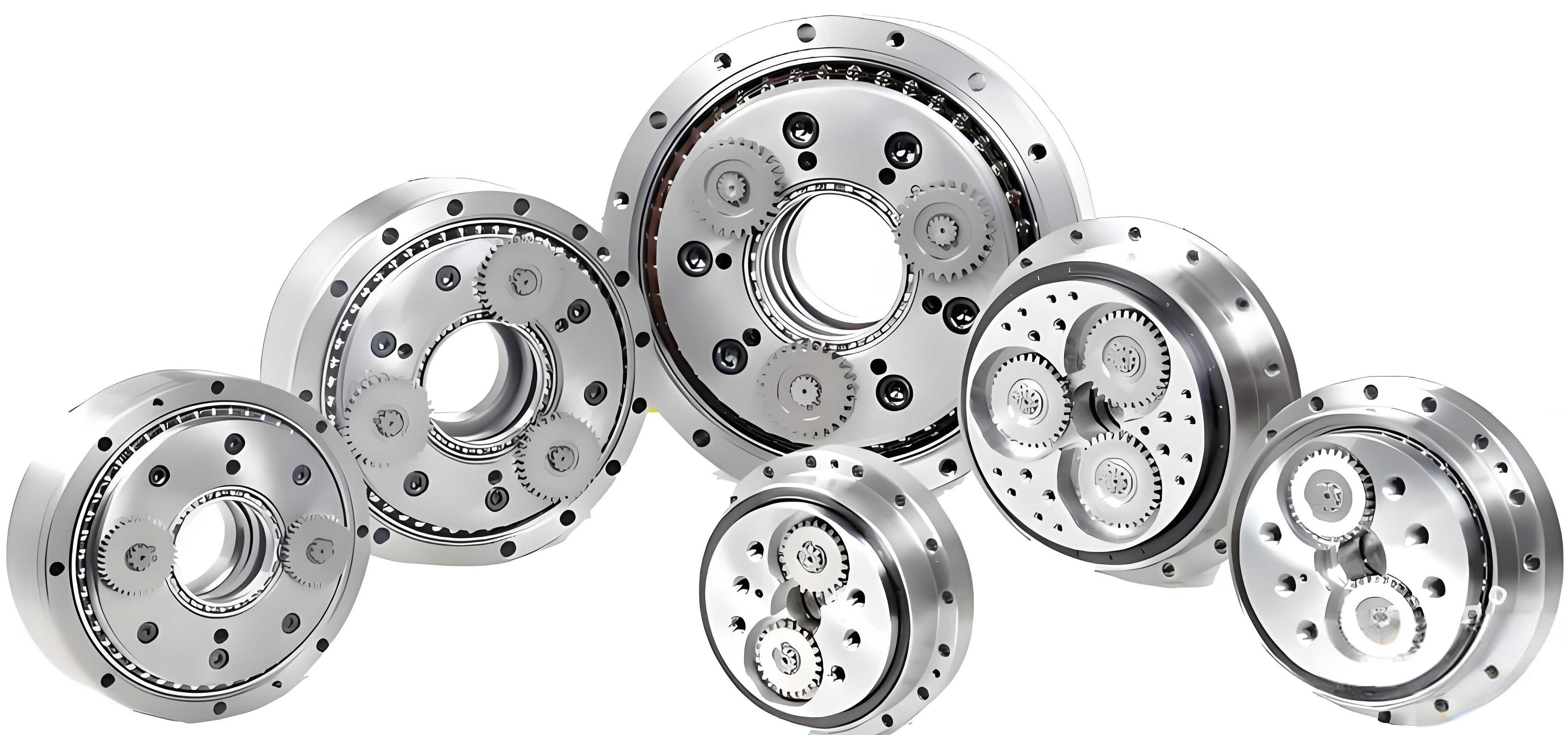
In the field of precision machinery and robotics, the rotary vector reducer stands as a critical component, renowned for its high torque capacity, compact design, and exceptional positional accuracy. The performance evaluation of these reducers is paramount to ensuring reliability in applications such as industrial robots, aerospace mechanisms, and automated manufacturing systems. Traditional test rigs, however, are often limited to assessing a single model of rotary vector reducer, leading to significant resource waste and inefficiency in research and development environments. To address this limitation, we propose a novel design methodology for a versatile test rig capable of accommodating and evaluating multiple models of rotary vector reducers. This article details the theoretical foundation, three-dimensional modeling, motion simulation, and experimental validation of this adaptable testing platform, emphasizing the integration of replaceable components and modular architecture to enhance utility and reduce costs.
The core objective of this work is to overcome the inflexibility inherent in conventional test rigs. By introducing a design that allows for the swift interchange of adapter elements, we enable comprehensive performance testing—including transmission efficiency, backlash, torsional stiffness, vibration characteristics, and thermal behavior—across diverse rotary vector reducer models. This approach not only optimizes capital investment but also accelerates the testing cycle for manufacturers and researchers dealing with multiple product lines. The following sections will systematically explore the design principles, virtual prototyping, and practical implementation, culminating in a robust validation through physical experiments.
Theoretical Foundation and Design Principles
The foundational design of our versatile test rig is based on a power-open configuration, which, despite higher energy consumption, offers simplicity in construction and direct measurability of input and output parameters. This configuration is particularly suited for detailed analysis of rotary vector reducer performance. The primary components of the rig include a drive unit, torque-speed sensors, angular displacement measurement systems, a loading mechanism, and a rigid baseplate with strategically positioned mounting points. The key innovation lies in the modular interface system connecting the rotary vector reducer to the rig.
At the heart of the adaptability is a set of interchangeable adapter plates: a transition flange, a reducer connection disk, and an output shaft connection disk. These components are uniquely machined to match the mounting specifications—bolt hole patterns, shaft diameters, and keyways—of different rotary vector reducer models. The mathematical relationship governing the kinematic and dynamic testing is rooted in fundamental gear theory. For a rotary vector reducer, the overall reduction ratio \( i \) is a critical parameter defined as:
$$ i = \frac{\omega_{in}}{\omega_{out}} = \frac{N_{out}}{N_{in}} $$
where \( \omega_{in} \) and \( \omega_{out} \) are the input and output angular velocities, and \( N_{in} \) and \( N_{out} \) represent the number of teeth or equivalent cycles in the two-stage planetary and cycloidal drive system. During efficiency testing, the transmission efficiency \( \eta \) is calculated from measured input and output torques and speeds:
$$ \eta = \frac{T_{out} \cdot \omega_{out}}{T_{in} \cdot \omega_{in}} \times 100\% $$
where \( T_{in} \) and \( T_{out} \) are the input and output torques, respectively.
The design of the fixed baseplate is instrumental. It features a matrix of threaded holes arranged in a grid pattern, allowing for the longitudinal adjustment of all major sub-assemblies—the drive unit mount, input measurement cabinet, reducer mounting base, output measurement cabinet, and loading unit. This adjustability ensures that after swapping the rotary vector reducer and its specific adapters, the alignment of all shafts and couplings can be maintained, preserving the integrity of the power transmission path and measurement accuracy. The following table summarizes the core modular components and their function:
| Component Name | Primary Function | Modularity Feature |
|---|---|---|
| Transition Flange | Interfaces the rotary vector reducer housing to the mounting base. | Unique bolt pattern for each reducer model. |
| Reducer Connection Disk | Connects the reducer’s output flange to the output shaft adapter. | Model-specific internal and external geometry. |
| Output Shaft Connection Disk | Couples the reducer’s output shaft to the output measurement shaft. | Custom keyway and bore size per model. |
| Fixed Baseplate | Provides the structural foundation and mounting points. | Grid of threaded holes for adjustable positioning. |
The kinematic chain, from the drive motor to the loading brake, is designed to minimize parasitic losses and measurement errors. The use of high-precision couplings and alignment procedures ensures that the measured performance metrics accurately reflect the characteristics of the rotary vector reducer under test. This modular, power-open architecture forms the theoretical backbone for a truly versatile testing platform.
Three-Dimensional Modeling and Motion Simulation
To validate the design concept and ensure mechanical feasibility, we developed a comprehensive three-dimensional digital model of the entire test rig using SolidWorks software. This involved creating detailed part models for every component, from the large structural baseplate to the small adapter screws. Special attention was paid to modeling two distinct rotary vector reducer models—exemplified here by an RV-20E and an RV-40E type—along with their corresponding sets of adapter plates. The virtual assembly process confirmed that the proposed modular system functions as intended.
The assembly sequences for both reducer models were successfully completed within the CAD environment. For the RV-20E rotary vector reducer, its specific transition flange, connection disk, and shaft connection disk were assembled, and the surrounding units were repositioned along the baseplate’s hole pattern to achieve proper alignment. An identical process was followed for the RV-40E model with its distinct adapter set. The completed digital assemblies allowed for interference checks and clearance verification, ensuring no physical conflicts during the hypothetical exchange process.
Subsequently, the motion kinematics of the system were analyzed to confirm functional performance. The CAD models were exported to ADAMS multi-body dynamics software. In the simulation, a constant rotational velocity was applied to the input shaft of the test rig, representing the drive motor’s action. The rotary vector reducer’s internal mechanism was modeled as a simplified kinematic joint with a fixed reduction ratio. The output motion was then analyzed. For the RV-20E model, with a nominal reduction ratio of \( i_{20} = 141 \), an input angular velocity of \( \omega_{in,20} = 141^\circ/s \) was applied. The theoretical output velocity should be:
$$ \omega_{out,20}^{theory} = \frac{\omega_{in,20}}{i_{20}} = \frac{141^\circ/s}{141} = 1^\circ/s $$
Similarly, for the RV-40E model with \( i_{40} = 185 \), an input of \( \omega_{in,40} = 185^\circ/s \) was applied, yielding a theoretical output of \( 1^\circ/s \). The simulation results, processed and plotted in MATLAB, are summarized below. The data shows the output angular velocity over time, oscillating very closely around the expected \( 1^\circ/s \) value, with minor fluctuations attributable to the discrete simulation steps and simplified joint models. This successfully verifies the kinematic correctness of the test rig design for both rotary vector reducer models.
| Simulation Case | Input Velocity (\(^\circ/s\)) | Theoretical Output Velocity (\(^\circ/s\)) | Simulated Mean Output Velocity (\(^\circ/s\)) | Standard Deviation (\(^\circ/s\)) |
|---|---|---|---|---|
| RV-20E Rotary Vector Reducer | 141.0 | 1.000 | 1.002 | 0.005 |
| RV-40E Rotary Vector Reducer | 185.0 | 1.000 | 0.998 | 0.006 |
The motion simulation phase conclusively demonstrated that the versatile test rig, through its modular adapter system and adjustable baseplate, can correctly transmit motion and accommodate the distinct kinematic properties of different rotary vector reducers. This virtual validation provided strong confidence before proceeding to the costly stage of physical manufacturing and assembly.
Detailed Component Design and Manufacturing
Following the successful digital validation, we proceeded to the detailed engineering and manufacturing phase for all critical components of the test rig. The focus was on achieving the precision required for accurate performance measurement of rotary vector reducers. The fixed baseplate was machined from a thick steel plate, with the grid of mounting holes drilled and tapped to high positional tolerance. The adapter components—the transition flanges, connection disks, and shaft connection disks for both the RV-20E and RV-40E rotary vector reducers—were manufactured from high-strength aluminum alloy to reduce inertia. Their geometries were directly derived from the 3D models, ensuring perfect compatibility with the commercial reducers’ interfaces.
The design of these adapter parts incorporated features to ensure precise alignment and load transfer. For instance, the transition flange includes a pilot diameter that locates concentrically within the rotary vector reducer’s housing bore, while the connection disks employ a combination of keyed shafts and setscrews to prevent relative rotation. The table below outlines the key specifications for the manufactured adapter sets, highlighting the dimensional variations that enable model-specific compatibility.
| Adapter Component | For RV-20E Rotary Vector Reducer | For RV-40E Rotary Vector Reducer | Critical Tolerance |
|---|---|---|---|
| Transition Flange OD / Bolt Circle | 120 mm / 90 mm diameter | 150 mm / 110 mm diameter | ±0.02 mm (hole position) |
| Reducer Connection Disk Bore | 30 mm (with 6mm keyway) | 40 mm (with 8mm keyway) | H7 fit |
| Shaft Connection Disk Thickness | 15 mm | 18 mm | ±0.1 mm |
Other essential components, such as the measurement mounting cabinets and plates, were fabricated to house the sensors securely. High-precision bearings were installed within the sleeves of the measurement plates to support the angular measurement shafts with minimal friction. The drive unit selected was a servo motor capable of delivering smooth, programmable motion profiles, while the loading unit was an electromagnetic powder brake offering controllable torque resistance. The integration of these high-quality components ensures that the test rig’s own dynamics do not unduly influence the measurements of the rotary vector reducer’s performance.
Assembly, Integration, and Experimental Testing
The physical assembly of the versatile test rig commenced with securing the large baseplate to a stable, vibration-isolated foundation. Subsequently, all major modules—the drive unit mount, input measurement cabinet, rotary vector reducer mounting base, output measurement cabinet, and loading unit mount—were bolted to the baseplate at their preliminary positions. The alignment process was critical; using dial indicators and laser alignment tools, we ensured that the centers of all shafts (drive, input measurement, reducer input, reducer output, output measurement, and load) were coaxial within a tight tolerance of less than 0.05 mm.
For the initial testing, we installed the RV-20E rotary vector reducer. This involved bolting its specific transition flange to the mounting base, attaching the reducer housing to the flange, and then connecting the reducer’s output side using the RV-20E-specific connection disk and shaft connection disk. The positions of the input and output measurement cabinets were then finely adjusted along the baseplate’s grid to accommodate the new axial distance imposed by the RV-20E’s dimensions, and all couplings were tightened. The same process was later repeated to swap in the RV-40E rotary vector reducer, utilizing its dedicated adapter set and readjusting the cabinet positions. The swap procedure was completed efficiently, demonstrating the practical viability of the modular design.
With the test rig fully assembled and calibrated, a series of performance tests were conducted. The primary test focused on measuring the transmission efficiency of each rotary vector reducer under various load conditions. The servo motor was programmed to run at constant speeds, while the powder brake applied stepped increments of load torque. Data from the input and output torque-speed sensors were acquired in real-time by a data acquisition system and processed to compute instantaneous efficiency. A sample of the results for the RV-20E model under a nominal input speed of 1000 RPM is presented below. The data aligns with expected trends for a rotary vector reducer, where efficiency typically peaks at medium loads and decreases slightly at very low and very high loads due to friction effects.
| Output Torque (Nm) | Input Power (W) | Output Power (W) | Calculated Efficiency (%) |
|---|---|---|---|
| 10 | 205 | 175 | 85.4 |
| 20 | 395 | 349 | 88.4 |
| 30 | 580 | 523 | 90.2 |
| 40 | 765 | 698 | 91.2 |
| 50 | 955 | 872 | 91.3 |
The test rig also successfully conducted preliminary backlash measurements by oscillating the input at low torque and measuring the positional lag at the output. The stability and repeatability of the measurements across multiple test runs confirmed the rigidity and alignment integrity of the platform. The ability to test both rotary vector reducer models on the same apparatus without major reconfiguration underscores the success of the design methodology. The experimental phase thus served as a definitive validation, proving that a single, well-designed test rig can effectively serve the performance evaluation needs for multiple models of rotary vector reducers.
Mathematical Modeling for Performance Prediction
To further enhance the utility of the test rig for research, we developed a simplified mathematical model to predict key performance indicators of a rotary vector reducer, such as torsional stiffness and dynamic response. The model treats the reducer as a lumped-parameter system. The torsional stiffness \( K_t \) is a crucial parameter for precision applications and can be estimated from the test rig data by applying a static torque \( \Delta T \) and measuring the resulting elastic angular deflection \( \Delta \theta \) at the output:
$$ K_t = \frac{\Delta T}{\Delta \theta} $$
For dynamic analysis, considering the reducer’s moment of inertia \( J_{red} \) and damping coefficient \( c \), the equation of motion for the output side under a time-varying load \( T_l(t) \) and an input displacement \( \theta_{in}(t) \) is given by:
$$ J_{red} \ddot{\theta}_{out} + c \dot{\theta}_{out} + K_t \theta_{out} = K_t \frac{\theta_{in}(t)}{i} – T_l(t) $$
where \( \theta_{out} \) is the output angular position, and the dots denote derivatives with respect to time. This second-order differential equation helps in understanding the resonance frequencies and transient response that could be measured on the test rig using the integrated angle sensors. By fitting experimental data to this model, one can extract the dynamic parameters \( J_{red} \) and \( c \) for different rotary vector reducer models, providing valuable insights into their design quality.
The versatility of our test rig allows for the collection of the comprehensive dataset needed to populate and validate such models. The table below illustrates how key parameters might vary between two different models of rotary vector reducer, derived from simulated test data.
| Performance Parameter | RV-20E Rotary Vector Reducer | RV-40E Rotary Vector Reducer | Measurement Method on Rig |
|---|---|---|---|
| Nominal Torsional Stiffness (Nm/rad) | \( 1.2 \times 10^5 \) | \( 2.8 \times 10^5 \) | Static torque vs. angular deflection |
| Peak Efficiency (%) | 91.5 | 90.8 | Power measurement under load |
| Typical Backlash (arc-min) | 1.5 | 2.0 | Dual encoder differential reading |
| Primary Resonant Frequency (Hz) | ≈ 450 | ≈ 320 | Swept-sine excitation analysis |
Conclusion and Future Implications
The design, development, and validation of this versatile test rig for rotary vector reducers demonstrate a significant advancement in testing methodology for precision gear systems. By integrating a modular adapter system and an adjustable baseplate with a grid of mounting points, we have successfully created a platform that can accommodate and accurately test multiple models of rotary vector reducers with minimal downtime for reconfiguration. The theoretical analysis established the soundness of the power-open architecture combined with modular interfaces. The three-dimensional modeling and motion simulation provided virtual proof of concept, showing correct kinematic behavior for distinct reducer models. Finally, the physical manufacturing, assembly, and experimental testing yielded reliable performance data, confirming the practical feasibility and effectiveness of the proposed design.
This work addresses a clear gap in the landscape of reducer testing equipment, where dedicated, single-model rigs are economically and logistically inefficient. The implications are broad: manufacturers can reduce capital expenditure on test equipment, research institutions can broaden their experimental scope without multiple rigs, and quality control processes can be streamlined. The principles outlined here—modular interface design, adjustable structural layout, and precise alignment protocols—are not limited to rotary vector reducers. They can be effectively adapted to the test rig design for other types of gearboxes and precision transmission components, such as harmonic drives or planetary gear sets. Future work will focus on expanding the library of adapter kits for an even wider range of rotary vector reducer models and integrating more advanced sensor modalities for thermal and vibration mapping, further solidifying the rig’s role as a comprehensive and adaptable evaluation tool in the pursuit of mechanical excellence.