
In our pursuit of advanced lubrication solutions for automotive applications, we focused on the development of a specialized oil for hyperbolic gears. Hyperbolic gears, commonly found in vehicle differentials, operate under extreme pressure and sliding conditions, demanding lubricants with superior anti-wear, oxidation stability, and thermal resistance. This study details our efforts in formulating and testing a hyperbolic gear oil using a unique low-pour-point crude oil base stock, with extensive evaluations through laboratory, bench, and field trials. The goal was to create a product that meets international standards while leveraging local resources efficiently.
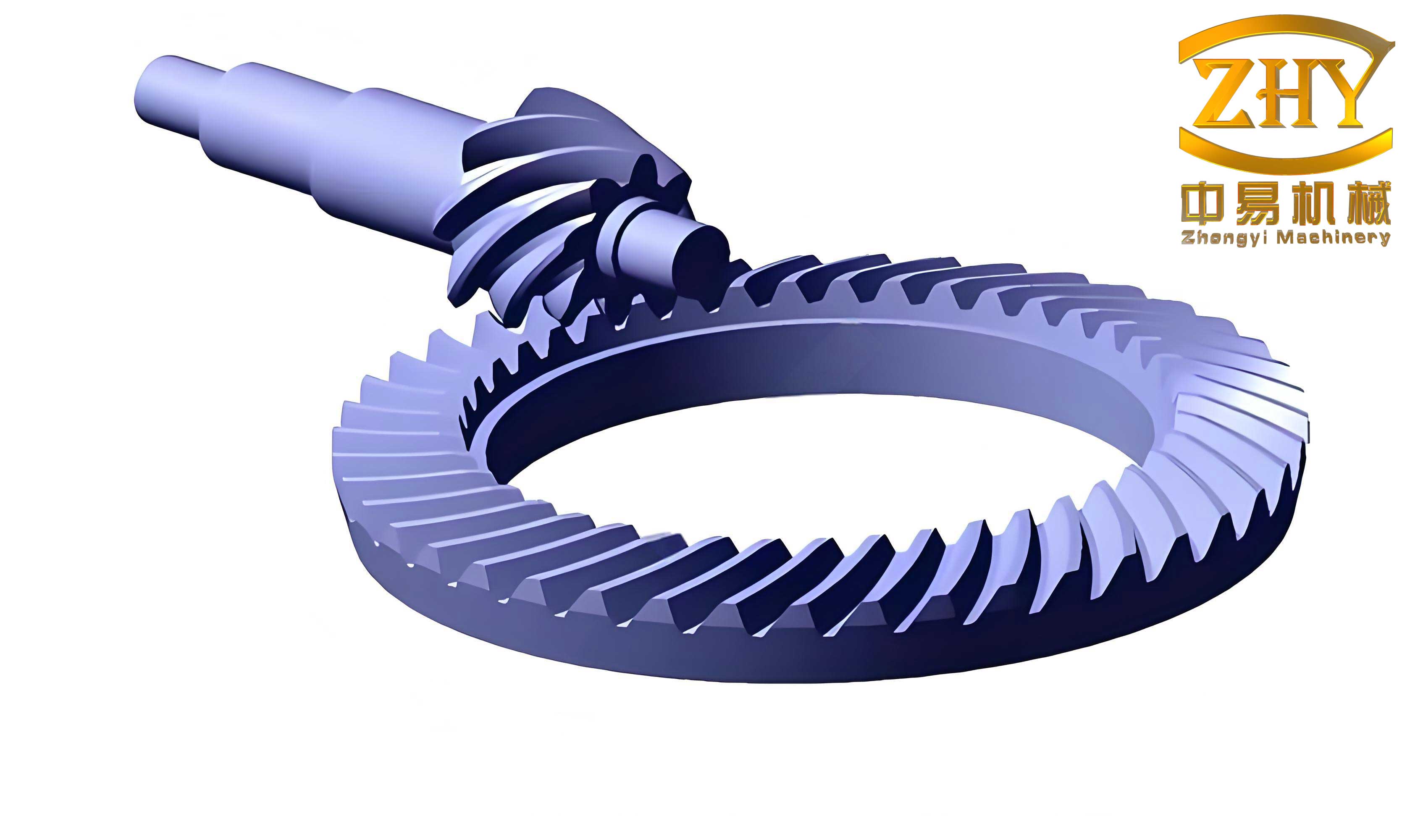
Hyperbolic gears are integral to modern drivetrains, particularly in rear axles, where they transmit power at angles with high torque. The lubrication of hyperbolic gears is challenging due to the combination of rolling and sliding motions, which can lead to wear, scuffing, and fatigue if not properly addressed. Traditional gear oils often fall short in providing the necessary extreme pressure (EP) protection and longevity. Our approach utilized a specific crude oil fraction that naturally exhibits low pour points and suitable viscosity characteristics, reducing the need for extensive dewaxing or pour-point depressants. This not only simplifies production but also aligns with sustainable resource utilization.
The core of our hyperbolic gear oil lies in its base oil, derived from a specially selected low-pour-point crude. This crude, sourced from a local region, yields vacuum distillation fractions that are inherently low in wax content, allowing for direct use without dewaxing. The fractions, specifically the third and fourth side-cuts from vacuum distillation, exhibit kinematic viscosities in the range of 30 to 50 cSt at 100°C and pour points as low as -45°C. These properties make them ideal for hyperbolic gear applications, where fluidity at low temperatures and stability at high temperatures are crucial. The yield of these fractions is approximately 15-20% of the crude, ensuring a substantial supply for large-scale production.
| Fraction | Kinematic Viscosity at 100°C (cSt) | Pour Point (°C) | Density at 20°C (g/cm³) | Flash Point (Open, °C) | Yield from Crude (%) |
|---|---|---|---|---|---|
| Third Side-Cut | 32.5 | -42 | 0.865 | 220 | 8 |
| Fourth Side-Cut | 48.0 | -45 | 0.872 | 235 | 12 |
The formulation of hyperbolic gear oil was based on a research-derived additive package, slightly adjusted for our base oil characteristics. The additives included chlorinated paraffin, zinc dialkyldithiophosphate (ZDDP), sulfurized olefin, and a silicone-based antifoam agent. These components were selected to enhance extreme pressure performance, anti-wear properties, oxidation inhibition, and foam resistance, all critical for hyperbolic gears. The additive concentrations were optimized through screening tests to balance performance and cost. For instance, the chlorinated paraffin provides chlorine-based EP protection, while ZDDP offers anti-wear and antioxidant benefits. The synergy between these additives ensures robust lubrication under the severe conditions experienced by hyperbolic gears.
| Additive | Function | Concentration in Formulation | Typical Role in Hyperbolic Gears |
|---|---|---|---|
| Chlorinated Paraffin | Extreme Pressure Agent | 4.5% | Forms protective films under high load |
| ZDDP | Anti-Wear and Antioxidant | 1.2% | Reduces wear and slows oxidation |
| Sulfurized Olefin | EP and Anti-Scuffing Agent | 3.0% | Enhances load-carrying capacity |
| Silicone Antifoam | Foam Inhibitor | 0.001% | Prevents foam formation in gears |
| Base Oil | Carrier Fluid | Balance | Provides viscosity and cooling |
Oxidation stability is paramount for hyperbolic gear oils, as prolonged exposure to heat and shear can degrade the lubricant, leading to sludge formation and loss of performance. We conducted accelerated oxidation tests at 120°C for durations up to 96 hours, monitoring changes in key properties. The oxidation kinetics can be described by the Arrhenius equation: $$k = A e^{-E_a/(RT)}$$ where \(k\) is the oxidation rate constant, \(A\) is the pre-exponential factor, \(E_a\) is the activation energy, \(R\) is the gas constant, and \(T\) is the absolute temperature. For our oil, the activation energy was estimated from data, indicating a relatively stable formulation. The tests revealed that up to 24 hours, the oil remained in a stable phase with minimal changes in EP and anti-wear properties. Beyond this, additive activation led to peak performance at 48 hours, followed by gradual decay, aligning with the concept of additive depletion in hyperbolic gear environments.
| Oxidation Time (hours) | Kinematic Viscosity at 100°C (cSt) | Acid Number (mg KOH/g) | Four-Ball Wear Scar Diameter (mm) | EP Load (kg) | Precipitation (g) |
|---|---|---|---|---|---|
| 0 (Fresh) | 45.2 | 0.05 | 0.42 | 126 | 0 |
| 24 | 45.5 | 0.08 | 0.43 | 128 | 0.01 |
| 48 | 46.0 | 0.15 | 0.38 | 135 | 0.05 |
| 72 | 47.5 | 0.22 | 0.45 | 120 | 0.12 |
| 96 | 49.0 | 0.30 | 0.50 | 110 | 0.20 |
The anti-wear performance for hyperbolic gears was quantified using a four-ball tester, measuring wear scar diameter under increasing loads. The relationship between load \(L\) and wear scar diameter \(d\) can be expressed as: $$d = k_1 L^{n}$$ where \(k_1\) and \(n\) are material-dependent constants. For our oil, \(n\) was found to be approximately 0.5, indicating good load distribution. Additionally, the EP performance was assessed via the last non-seizure load (LNSL) and weld point, critical for hyperbolic gears undergoing shock loads. The data showed that the oil maintained a weld point above 250 kg, sufficient for most automotive hyperbolic gear applications.
Bench testing of hyperbolic gear oil was conducted on a closed rear axle gear rig, simulating real-world conditions. The test gears were hyperbolic gears from a越野车后桥, with pinion material 20CrMnTi and ring gear material 22CrMoH. The test protocol involved break-in and endurance phases under specified torque and speed profiles. Key parameters monitored included gear surface condition, wear, and oil degradation. The results were compared against a reference oil, British标准 一, to benchmark performance. Our oil demonstrated comparable or superior performance in terms of wear protection and cleanliness, with no significant rust or deposit formation on the hyperbolic gears.
| Test Phase | Pinion Torque (N·m) | Pinion Speed (rpm) | Oil Temperature (°C) | Duration (hours) | Objective |
|---|---|---|---|---|---|
| Break-in | 150 | 1000 | 80 | 2 | Seating of gear surfaces |
| Endurance | 300 | 2000 | 90 | 50 | Assess long-term performance |
| Peak Load | 450 | 1500 | 95 | 10 | Evaluate EP capability |
The bench test outcomes for hyperbolic gears are summarized below, highlighting wear measurements and surface integrity. Wear was assessed via radial and tooth thickness changes, using precision gauging. The data indicated minimal wear, with average radial wear less than 0.02 mm after 50 hours, affirming the oil’s suitability for hyperbolic gears. Furthermore, no pitting or scuffing was observed on gear teeth, which is crucial for the durability of hyperbolic gears in service.
| Gear Set | Radial Wear (mm) | Tooth Thickness Wear (mm) | Surface Condition | Deposits | Corrosion on Copper |
|---|---|---|---|---|---|
| Test Oil Pinion | 0.015 | 0.010 | Bright, no scratches | None | No discoloration |
| Test Oil Ring Gear | 0.018 | 0.012 | Slight polishing | Trace | No discoloration |
| Reference Oil Pinion | 0.020 | 0.015 | Minor拉毛 | Light film | Slight tarnish |
Field trials of hyperbolic gear oil were carried out in multiple regions to evaluate performance under diverse operating conditions. The first trial was in Guangdong Shaoguan, using Isuzu trucks with hyperbolic gear rear axles. Two vehicles were filled with our oil, while two others used the factory-fill oil for comparison. The trucks operated on asphalt and gravel roads in mountainous terrain, carrying loads up to 8 tons. Over a distance of approximately 30,000 km, our oil showed no signs of rust, gear tooth damage, or abnormal wear in the hyperbolic gears. Oil analysis revealed slight darkening and viscosity increase, but no precipitation or sludge, indicating stable lubrication for hyperbolic gears.
| Vehicle | Mileage (km) | Kinematic Viscosity at 100°C (cSt) | Acid Number (mg KOH/g) | Gear Backlash (mm) | Observations on Hyperbolic Gears |
|---|---|---|---|---|---|
| Test Oil #1 | 30,500 | 46.8 | 0.12 | 0.18 | No pitting, smooth surfaces |
| Test Oil #2 | 31,200 | 47.2 | 0.14 | 0.19 | Minor polishing, no rust |
| Factory Oil #1 | 30,800 | 49.5 | 0.25 | 0.22 | Slight wear, some deposits |
Another field trial was conducted in Karamay, Xinjiang, focusing on both summer and winter performance for hyperbolic gears. Isuzu trucks were used in temperatures ranging from +40°C to -30°C. The oil demonstrated excellent low-temperature flowability, enabling cold starts without preheating down to -25°C. Wear measurements on hyperbolic gear components after 25,000 km showed negligible changes, with radial wear averaging 0.01 mm. Oil samples taken at intervals indicated a slight drop in viscosity and acid number initially, followed by stabilization, similar to the oxidation test trends. This consistency is vital for hyperbolic gears operating in variable climates.
| Component | Initial Dimension (mm) | Dimension after 25,000 km (mm) | Wear (mm) | Condition |
|---|---|---|---|---|
| Pinion Gear (Large End) | 150.00 | 149.99 | 0.01 | No scuffing or rust |
| Pinion Gear (Small End) | 100.00 | 99.99 | 0.01 | Polished surface |
| Ring Gear (Large End) | 200.00 | 199.98 | 0.02 | Minimal wear |
| Ring Gear (Small End) | 120.00 | 119.99 | 0.01 | Smooth operation |
In Guangzhou, a trial on Shanghai brand sedans assessed the oil’s performance in humid, subtropical conditions over a year. The vehicles, equipped with hyperbolic gear rear axles, accumulated around 10,000 km with frequent short trips and long idle periods. Post-trial inspection revealed no擦伤, rust, or corrosion on the hyperbolic gears, and wear was minimal, as shown in tooth thickness measurements. Oil analysis indicated stable viscosity and low acid buildup, confirming the formulation’s resistance to moisture and oxidation, key for hyperbolic gears in such environments.
| Vehicle ID | Mileage (km) | Tooth Thickness Wear (mm) | Kinematic Viscosity at 100°C (cSt) | Acid Number (mg KOH/g) | Gear Surface Notes |
|---|---|---|---|---|---|
| Sedan A | 9,800 | 0.005 | 45.5 | 0.10 | Bright, no abnormalities |
| Sedan B | 10,200 | 0.006 | 45.8 | 0.11 | Original machining marks visible |
The success of these trials underscores the importance of tailored lubrication for hyperbolic gears. The oil’s performance can be modeled using the following equation for wear rate \(W\) in hyperbolic gears: $$W = C \cdot P^a \cdot V^b \cdot \exp(-\gamma / T)$$ where \(C\) is a constant, \(P\) is the contact pressure, \(V\) is the sliding velocity, \(a\) and \(b\) are exponents, and \(T\) is the temperature. Our oil exhibited low \(C\) values, indicating effective wear reduction. Additionally, the EP properties can be related to the film strength parameter \(\lambda\), given by: $$\lambda = \frac{h}{\sigma}$$ where \(h\) is the lubricant film thickness and \(\sigma\) is the composite surface roughness. For hyperbolic gears, maintaining \(\lambda > 2\) is ideal to prevent metal-to-metal contact; our oil achieved this under typical operating conditions.
Further analysis of the oxidation mechanism involved monitoring additive depletion. The concentration of active elements like chlorine and phosphorus over time followed a first-order decay model: $$[A]_t = [A]_0 e^{-kt}$$ where \([A]_t\) is the concentration at time \(t\), \([A]_0\) is the initial concentration, and \(k\) is the depletion rate constant. Data from our tests showed \(k\) values around 0.01 h⁻¹ at 120°C, implying slow depletion and long service life for hyperbolic gears. This is critical because hyperbolic gears rely on these additives for boundary lubrication during high-load events.
In terms of production scalability, the process for hyperbolic gear oil involves vacuum distillation, acid-base refining, clay treatment, and additive blending. The simplicity of using low-pour-point fractions reduces steps, lowering energy consumption and cost. The yield and quality consistency were confirmed through multiple batches, each meeting the target specifications for hyperbolic gear applications. Table below summarizes key quality parameters from industrial production runs, demonstrating reproducibility.
| Batch Number | Kinematic Viscosity at 100°C (cSt) | Pour Point (°C) | Flash Point (°C) | EP Load (kg) | Copper Strip Corrosion |
|---|---|---|---|---|---|
| Batch 1 | 45.0 | -44 | 225 | 130 | 1a (Pass) |
| Batch 2 | 45.3 | -43 | 228 | 132 | 1a (Pass) |
| Batch 3 | 44.8 | -45 | 222 | 128 | 1a (Pass) |
| Batch 4 | 45.5 | -42 | 230 | 135 | 1a (Pass) |
Looking ahead, the development of hyperbolic gear oil continues to evolve. Future work will focus on enhancing deposit control, as noted in some field trials where minor沉积物 was observed at gear roots. This can be addressed by optimizing additive ratios or introducing dispersants. Moreover, extending the oil’s temperature range for hyperbolic gears in extreme climates, such as arctic or desert regions, is a priority. We plan to explore synthetic base oils or advanced viscosity modifiers to achieve this.
In conclusion, our hyperbolic gear oil, derived from a unique low-pour-point crude, has proven effective in laboratory, bench, and field evaluations. It meets the stringent demands of hyperbolic gears, offering excellent anti-wear, oxidation stability, and thermal performance. The oil enables extended drain intervals up to 30,000 km, reduces wear, and prevents rust and corrosion, making it a reliable choice for automotive and industrial applications involving hyperbolic gears. The production process is efficient and scalable, supporting widespread adoption. As technology advances, we remain committed to refining this lubricant to further enhance the durability and efficiency of hyperbolic gears worldwide.