
We present a comprehensive dynamic analysis of composite material helical gears, focusing on the influence of material properties and pressure angle on natural frequencies. Our investigation is grounded in a first-order shear deformation theory combined with the Rayleigh–Ritz method, which allows us to construct an efficient and reliable model for predicting the vibration characteristics of orthogonal anisotropic composite helical gears. The helical gear structure, consisting of multiple carbon‑fibre layers, is treated as a laminated plate with an initial curvature (the helix angle) embedded in the gear geometry. The kinematics follow a first‑order shear deformable plate theory extended to helical gear segments. The energy expressions are derived in terms of mid‑plane displacements and rotations, and the discretisation is performed using orthogonal polynomials that satisfy the prescribed boundary conditions. The resulting eigenvalue problem yields natural frequencies and mode shapes. We validate our model against existing numerical data for steel and aluminium spur gears, and then extend the analysis to composite helical gears. Through a parametric study we examine the effect of using structural steel, aluminium alloy, and carbon‑fibre reinforced polymer, as well as the effect of varying the pressure angle from 14° to 22°. The results show that carbon‑fibre composite helical gears exhibit significantly lower natural frequencies (up to 28 % reduction) compared to their metallic counterparts, indicating superior vibration attenuation. Moreover, increasing the pressure angle slightly raises the natural frequencies (up to 5 %), which implies a trade‑off between stiffness and damping.
Our work provides a foundation for designing lightweight, high‑performance composite helical gears with tailored dynamic responses. The following sections detail the theoretical formulation, verification, parametric study, and concluding remarks.
1. Theoretical Formulation
We consider a composite helical gear segment as a laminated orthotropic plate with length l, width d, and total thickness h. A global coordinate system ( x, y, z ) is placed at the mid‑plane, where x and y lie in the plane of the gear face and z is the thickness direction. For each carbon‑fibre layer a local material coordinate system (1, 2, 3) is defined, where direction 1 is aligned with the fibre orientation and makes an angle θ with the global x‑axis. The fibre‑reinforced layers are assumed to be perfectly bonded, with no slip or relative deformation between them.
Based on the first‑order shear deformation theory (FSDT), the displacement field ( u, v, w ) at any point ( x, y, z ) and time t is expressed as:
$$
\begin{aligned}
u(x,y,z,t) &= u_0(x,y,t) + z\,\phi_x(x,y,t) \\
v(x,y,z,t) &= v_0(x,y,t) + z\,\phi_y(x,y,t) \\
w(x,y,z,t) &= w_0(x,y,t)
\end{aligned}
$$
Here, \(u_0\), \(v_0\), \(w_0\) are the mid‑plane displacements, and \(\phi_x\), \(\phi_y\) are the rotations of the normal about the y and x axes, respectively. For a helical gear, the helix angle introduces a twist that we incorporate through the geometry but treat the local element as a flat plate segment; the helix effect is included in the overall stiffness via the fibre orientation angle distribution.
The strain–displacement relations under FSDT are:
$$
\begin{aligned}
\epsilon_{xx} &= \frac{\partial u_0}{\partial x} + z\frac{\partial\phi_x}{\partial x} \\
\epsilon_{yy} &= \frac{\partial v_0}{\partial y} + z\frac{\partial\phi_y}{\partial y} \\
\gamma_{xy} &= \frac{\partial u_0}{\partial y} + \frac{\partial v_0}{\partial x} + z\left(\frac{\partial\phi_x}{\partial y} + \frac{\partial\phi_y}{\partial x}\right) \\
\gamma_{xz} &= \phi_x + \frac{\partial w_0}{\partial x} \\
\gamma_{yz} &= \phi_y + \frac{\partial w_0}{\partial y}
\end{aligned}
$$
For an orthotropic lamina, the stress–strain relationship in the global coordinate system is given by:
$$
\begin{Bmatrix}
\sigma_{xx} \\ \sigma_{yy} \\ \tau_{xy} \\ \tau_{xz} \\ \tau_{yz}
\end{Bmatrix}
=
\begin{bmatrix}
\bar{Q}_{11} & \bar{Q}_{12} & 0 & 0 & 0 \\
\bar{Q}_{12} & \bar{Q}_{22} & 0 & 0 & 0 \\
0 & 0 & \bar{Q}_{66} & 0 & 0 \\
0 & 0 & 0 & \bar{Q}_{44} & 0 \\
0 & 0 & 0 & 0 & \bar{Q}_{55}
\end{bmatrix}
\begin{Bmatrix}
\epsilon_{xx} \\ \epsilon_{yy} \\ \gamma_{xy} \\ \gamma_{xz} \\ \gamma_{yz}
\end{Bmatrix}
$$
The transformed reduced stiffnesses \(\bar{Q}_{ij}\) for a layer with fibre orientation angle \(\theta\) are derived from the orthotropic material constants \(E_1\), \(E_2\), \(G_{12}\), \(G_{13}\), \(G_{23}\), and Poisson’s ratios \(\nu_{12}\), \(\nu_{21}\) using standard coordinate transformation.
The strain energy \(U^*\) and kinetic energy \(T^*\) of the laminate are:
$$
U^* = \frac{1}{2}\int_{-h/2}^{h/2}\int_{0}^{d}\int_{0}^{l} \left( \sigma_{xx}\epsilon_{xx} + \sigma_{yy}\epsilon_{yy} + \tau_{xy}\gamma_{xy} + \tau_{xz}\gamma_{xz} + \tau_{yz}\gamma_{yz} \right) dx\,dy\,dz
$$
$$
T^* = \frac{1}{2}\int_{-h/2}^{h/2}\int_{0}^{d}\int_{0}^{l} \rho \left( \dot{u}^2 + \dot{v}^2 + \dot{w}^2 \right) dx\,dy\,dz
$$
where \(\rho\) is the density of the composite material. After substituting the displacement field, the energy expressions are integrated through the thickness. The mid‑plane displacement vector is:
$$
\boldsymbol{\delta}_f = \begin{Bmatrix} u_0(t) & v_0(t) & w_0(t) & \phi_x(t) & \phi_y(t) \end{Bmatrix}^{\mathsf{T}}
$$
The stiffness matrix \(\mathbf{K}_f\) and mass matrix \(\mathbf{M}_f\) are obtained in the standard form:
$$
\mathbf{K}_f = \iiint \mathbf{B}^{\mathsf{T}} \mathbf{Q} \, \mathbf{B} \, dz\,dy\,dx
$$
$$
\mathbf{M}_f = \iiint \mathbf{N}^{\mathsf{T}} \rho \mathbf{N} \, dz\,dy\,dx
$$
where \(\mathbf{B}\) contains derivatives of the shape functions and \(\mathbf{N}\) contains the shape functions themselves. For the Rayleigh–Ritz method, we expand the transverse displacement \(w(x,y,t)\) as:
$$
w(x,y,t) = \sum_{m=1}^{M}\sum_{n=1}^{N} A_{mn} P_m(\alpha) P_n(\beta) \sin(\omega t)
$$
with \(\alpha = x/l\), \(\beta = y/d\). The orthogonal polynomials \(P_m\) are generated using the recurrence formula:
$$
\begin{aligned}
P_1(\zeta) &= \phi(\zeta) \\
P_2(\zeta) &= (\zeta – B_2) P_1(\zeta) \\
P_n(\zeta) &= (\zeta – B_n) P_{n-1}(\zeta) – C_n P_{n-2}(\zeta), \quad n>2
\end{aligned}
$$
$$
B_n = \frac{\int_0^1 \zeta [P_{n-1}(\zeta)]^2 d\zeta}{\int_0^1 [P_{n-1}(\zeta)]^2 d\zeta}, \qquad
C_n = \frac{\int_0^1 \zeta P_{n-1}(\zeta) P_{n-2}(\zeta) d\zeta}{\int_0^1 [P_{n-2}(\zeta)]^2 d\zeta}
$$
The starting function \(\phi(\zeta)\) depends on the boundary conditions. For a gear segment that is free‑free along the edges parallel to the tooth direction and simply supported or clamped along the others, we set:
$$
\phi(\alpha) = \alpha^p (1-\alpha)^q, \quad \phi(\beta) = \beta^r (1-\beta)^s
$$
where the exponents ( \(p,q,r,s\) ) take values 0 for free, 1 for simply supported, and 2 for clamped. In this study we consider free boundaries on all four edges (\(p=q=r=s=0\)) to approximate a gear segment away from the constraints of the hub.
Applying the Lagrange equations:
$$
\frac{\partial}{\partial t}\left(\frac{\partial L}{\partial \dot{A}_{mn}}\right) – \frac{\partial L}{\partial A_{mn}} = 0
$$
with Lagrangian \(L = T^* – U^*\) leads to the standard eigenvalue problem:
$$
\left( \mathbf{K} – \omega_i^2 \mathbf{M} \right) \mathbf{q} = \mathbf{0}
$$
Here \(\mathbf{K}\) and \(\mathbf{M}\) are the assembled global stiffness and mass matrices, \(\omega_i\) is the \(i\)-th natural circular frequency, and \(\mathbf{q}\) is the corresponding eigenvector of modal amplitudes. The natural frequencies in Hz are obtained as \(f_i = \omega_i / (2\pi)\).
2. Model Verification
To validate our formulation, we compare it against published finite‑element results for spur gears made of structural steel and aluminium alloy. Table 1 lists the geometric and material parameters used in the verification. The gear has 18 teeth, module 10 mm, pressure angle 20°, and face width 54 mm. We compute the first three natural frequencies using our model with truncation orders \(M=N=8\) (160 terms). Table 2 shows the comparison; the maximum relative error is below 3.0 %, which confirms the accuracy of our approach.
| Parameter | Structural steel | Aluminium alloy |
|---|---|---|
| Teeth number | 18 | 18 |
| Module (mm) | 10 | 10 |
| Pressure angle (°) | 20 | 20 |
| Face width (mm) | 54 | 54 |
| Density (kg/m³) | 7850 | 2770 |
| Young’s modulus (GPa) | 200 | 71 |
| Poisson’s ratio | 0.3 | 0.33 |
| Mode | Structural steel | Aluminium alloy | ||||
|---|---|---|---|---|---|---|
| Our model | Ref. [4] | Error (%) | Our model | Ref. [4] | Error (%) | |
| 1 | 2043.6 | 2019.4 | 1.2 | 2049.9 | 2003.8 | 2.3 |
| 2 | 3273.1 | 3219.1 | 1.7 | 3315.1 | 3217.1 | 3.0 |
| 3 | 3602.5 | 3566.6 | 1.0 | 3672.4 | 3573.8 | 2.8 |
3. Parametric Study on Composite Helical Gears
After verification, we apply the model to composite helical gears. The baseline geometry and material properties are summarised in Table 3. The helix angle is fixed at 11°.
| Parameter | Value |
|---|---|
| Number of teeth | 23 |
| Module (mm) | 7 |
| Pressure angle (°) | 20 (varied later) |
| Helix angle (°) | 11 |
| Face width (mm) | 100 |
| Density of carbon fibre (kg/m³) | 1370 |
| E₁ (GPa) | 115 |
| E₂ (GPa) | 9.5 |
| G₁₂ (GPa) | 7.1 |
| Poisson’s ratio ν₁₂ | 0.32 |
| Number of layers | 8 (symmetric stacking [0/90/±45]ₛ) |
3.1 Effect of Material
We compare three materials: structural steel, aluminium alloy, and carbon‑fibre reinforced polymer (CFRP) with the properties of Table 3. Table 4 lists the first four natural frequencies (in Hz) and the normalised values (relative to steel). The carbon‑fibre composite helical gear exhibits the lowest frequencies—approximately 28 % lower than steel for the first mode, and similar reductions for higher modes. This indicates that the composite helical gear is more flexible and therefore attenuates vibration better than metallic gears. The density‑to‑stiffness ratio of CFRP is favourable for reducing resonant frequencies.
| Mode | Structural steel | Aluminium alloy | Carbon‑fibre composite | |||
|---|---|---|---|---|---|---|
| f (Hz) | Normalised | f (Hz) | Normalised | f (Hz) | Normalised | |
| 1 | 1152.4 | 1.000 | 1118.7 | 0.971 | 829.7 | 0.720 |
| 2 | 1847.6 | 1.000 | 1802.1 | 0.975 | 1330.3 | 0.720 |
| 3 | 2035.8 | 1.000 | 1996.4 | 0.981 | 1465.8 | 0.720 |
| 4 | 2591.3 | 1.000 | 2547.9 | 0.983 | 1868.2 | 0.721 |
3.2 Effect of Pressure Angle
Pressure angle influences the tooth profile and, consequently, the overall stiffness of the helical gear. We vary the pressure angle from 14° to 22° in steps of 2° while keeping all other parameters constant. Table 5 reports the first four natural frequencies (Hz) for the carbon‑fibre composite helical gear. Increasing the pressure angle raises the natural frequencies, because a larger pressure angle makes the tooth thicker at the root and increases the bending stiffness. The maximum increase from 14° to 22° is about 5 % for the first mode. This modest change suggests that pressure angle is a secondary factor for dynamic tuning, but can be exploited for fine‑tuning stiffness without dramatically altering vibration characteristics.
| Mode | Pressure angle (°) | ||||
|---|---|---|---|---|---|
| 14 | 16 | 18 | 20 | 22 | |
| 1 | 798.1 | 807.5 | 817.2 | 829.7 | 840.3 |
| 2 | 1281.5 | 1295.3 | 1310.8 | 1330.3 | 1347.6 |
| 3 | 1411.2 | 1427.1 | 1443.8 | 1465.8 | 1485.2 |
| 4 | 1801.7 | 1820.4 | 1841.9 | 1868.2 | 1892.5 |
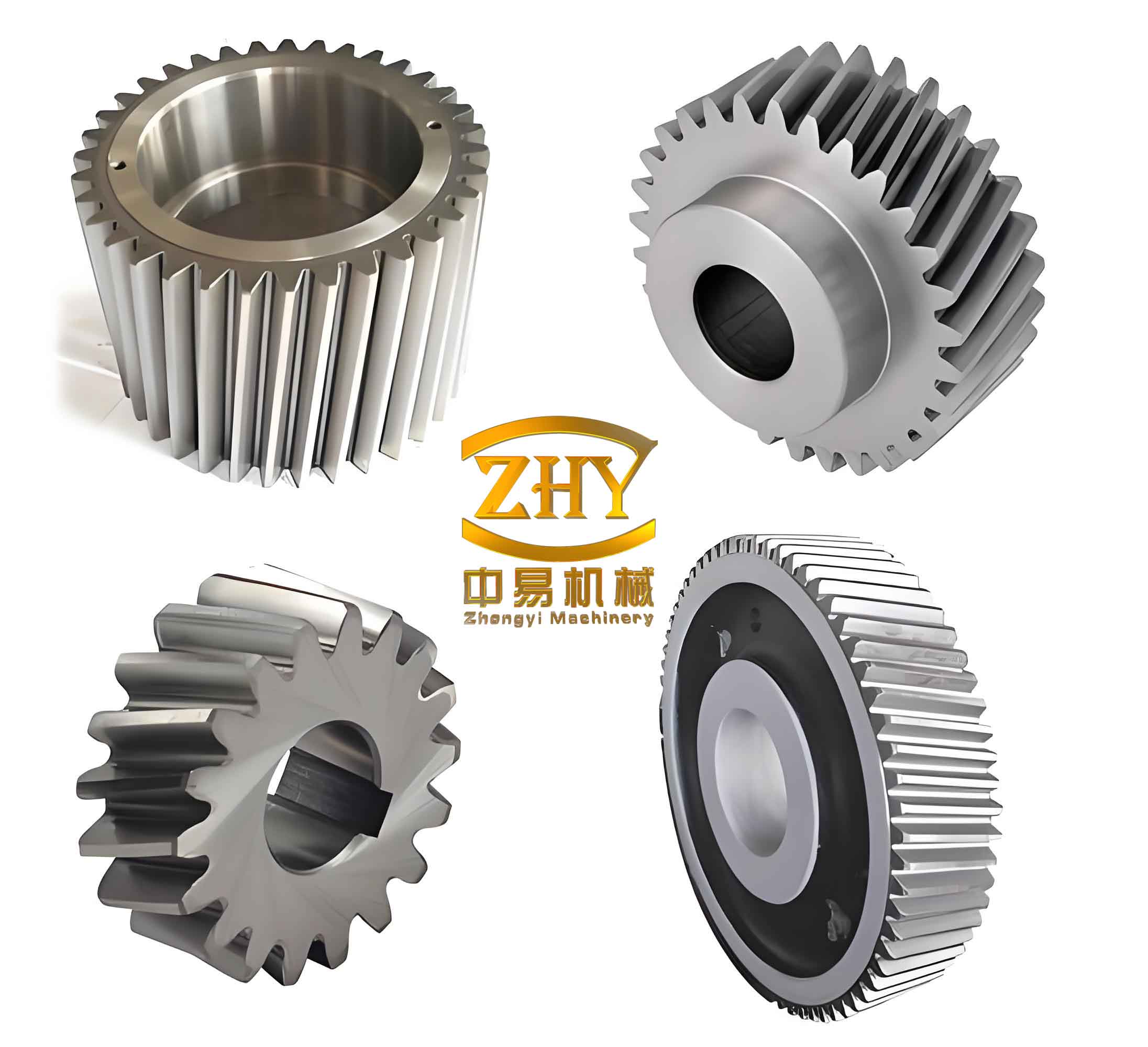
Figure 1 illustrates a representative composite helical gear used in our analysis.
4. Conclusion
We have developed a dynamic model for composite helical gears based on first‑order shear deformation theory and the Rayleigh–Ritz method. The model is validated against published spur gear data, showing maximum errors below 3.0 %. The parametric study reveals that carbon‑fibre composite helical gears have natural frequencies about 28 % lower than their steel counterparts, implying superior vibration absorption. Pressure angle variation (14°–22°) affects frequencies by only up to 5 %, indicating that pressure angle can be used for minor stiffness adjustments without compromising the dynamic advantage of composites. Our findings provide a rational basis for designing lightweight, low‑vibration composite helical gears in automotive, aerospace, and marine applications. Future work will include the effect of fibre orientation, number of layers, and tooth contact dynamics.