
In modern engineering applications, particularly within aerospace systems such as aero-engines, helicopters, and marine propulsion, the operational speeds of rotor systems are typically exceedingly high. To mitigate the adverse effects of these high rotational velocities on vibration and stability, the adoption of elastic supports has become increasingly prevalent. This approach serves to lower the natural frequencies of rotor systems, enabling them to traverse the first critical speed rapidly and operate stably between the first and second critical speeds. Furthermore, elastic supports contribute to a reduction in vibration acceleration and amplitude. The integration of such supports in systems utilizing spiral bevel gears is of paramount importance, as these gears are crucial for transmitting power between non-parallel shafts in compact and efficient manners. This article delves into the design and dynamic characterization of a test-bed specifically developed for studying spiral bevel gear coupled systems under elastic support conditions, with a focus on computing gear mesh stiffness and analyzing the influence of external excitation frequencies and support stiffness on dynamic behavior.
The design and implementation of a dedicated experimental platform are essential for validating theoretical models and assessing the feasibility of spiral bevel gear transmissions in specific applications. While substantial theoretical work exists on coupled rotor systems with spiral bevel gears under elastic supports, experimental validation remains relatively scarce. To address this gap, I have developed a comprehensive test-bed that facilitates the investigation of dynamic interactions. The primary components of this setup include a motor, V-belt drive, drive and driven shafts, variable inertia components, rigid and elastic support assemblies, a spiral bevel gear pair, and a loading mechanism. Data acquisition is achieved through eddy current sensors, accelerometers, a data acquisition unit, and a computer system. The eddy current sensors monitor orbital trajectories and vibrational responses, while accelerometers measure vibration accelerations.
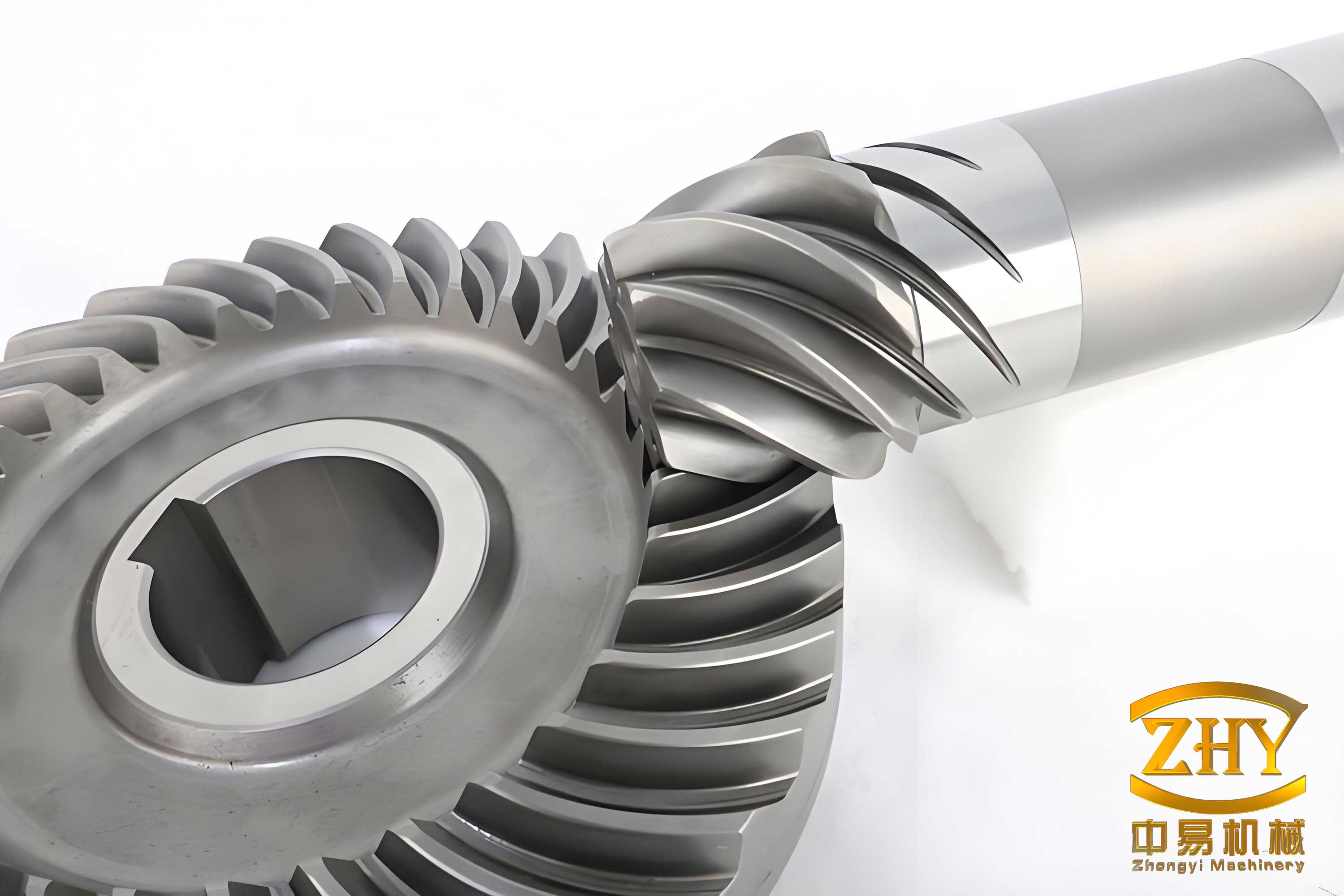
Power is transmitted from the motor to the drive rotor system via a V-belt, which also provides damping to minimize motor-induced vibrations. The drive rotor then engages the driven rotor through the spiral bevel gear pair, with a magnetic powder brake applying controllable loads. A pivotal aspect of this design is the elastic support mechanism, which allows for continuous adjustment of support stiffness without disassembling the rotor or altering the precise meshing position of the spiral bevel gears. This is accomplished through a combination of a flexible sleeve and a rigid sleeve. The flexible sleeve features a thin-walled, externally threaded, cage-like structure fixed at one end to the support housing, while housing a bearing internally. The rigid sleeve, with internal threads, mates with the external threads of the flexible sleeve. By adjusting the relative displacement between these sleeves, the effective support stiffness can be varied seamlessly, ensuring consistent gear alignment and contact patterns throughout testing.
To analyze the dynamic behavior of the spiral bevel gear system, understanding the time-varying mesh stiffness is fundamental. The mesh stiffness of spiral bevel gears is a key excitation source in gear dynamics, influencing vibration and noise characteristics. For the spiral bevel gear pair used in this study, the primary design parameters are summarized in the table below.
| Parameter | Pinion | Gear |
|---|---|---|
| Number of Teeth | 18 | 28 |
| Transverse Module (mm) | 4 | 4 |
| Normal Pressure Angle (°) | 20 | 20 |
| Midpoint Spiral Angle (°) | 35 | 35 |
| Hand of Spiral | Left | Right |
| Pitch Cone Angle (°) | 32.66 | 57.34 |
| Shaft Angle (°) | 90 | 90 |
| Pitch Diameter (mm) | 72 | 112 |
| Face Width (mm) | 22 | 22 |
Using these parameters, three-dimensional models of the pinion and gear were created in Pro/ENGINEER and assembled. The models were then imported into ANSYS for finite element analysis to compute the mesh stiffness over one complete engagement cycle. The material properties were defined with an elastic modulus E = 206 GPa and a Poisson’s ratio ν = 0.28. After meshing and defining contact pairs, boundary conditions were applied: the pinion was constrained to rotate only about its axis, while the gear was fully fixed. A torque of 108 N·m was applied to the pinion. The resulting mesh stiffness values at discrete time points are presented in the following table.
| Time t (s) | Mesh Stiffness k (N/m) |
|---|---|
| 0 | 5.1029 × 10⁹ |
| 0.000651 | 3.8206 × 10⁹ |
| 0.001303 | 3.1174 × 10⁹ |
| 0.001954 | 1.7620 × 10⁹ |
| 0.002605 | 3.4634 × 10⁹ |
| 0.003256 | 5.0460 × 10⁹ |
| 0.003908 | 3.3052 × 10⁹ |
| 0.004559 | 4.4216 × 10⁹ |
| 0.00521 | 2.7405 × 10⁹ |
| 0.005861 | 5.3747 × 10⁹ |
| 0.006513 | 7.4731 × 10⁹ |
| 0.007164 | 6.2509 × 10⁹ |
| 0.007815 | 2.4732 × 10⁹ |
| 0.008373 | 3.8095 × 10⁹ |
The computed mesh stiffness exhibits periodic variation due to changes in the number of tooth pairs in contact during meshing. To facilitate dynamic analysis, this discrete data was fitted using a Fourier series in MATLAB. The resulting regression formula for the mesh stiffness as a function of pinion rotation is:
$$ k(t) = \left[ 2.955 + 0.868 \cos(18 n t) – 1.159 \sin(18 n t) – 0.113 \cos(36 n t) – 0.510 \sin(36 n t) + 0.140 \cos(54 n t) + 0.161 \sin(54 n t) \right] \times 10^8 \, \text{N/m} $$
where \( n \) is the rotational speed of the pinion in revolutions per second. From this expression, the average mesh stiffness for the spiral bevel gear pair is determined to be \( k_m = 2.955 \times 10^8 \, \text{N/m} \). This time-varying stiffness serves as a critical internal excitation in the dynamic model of the system.
With the mesh stiffness characterized, the dynamic behavior of the test-bed can be analyzed. A lumped-parameter model is developed, considering vibrations in the translational directions (X, Y, Z) and torsional rotation (θ) about the axis. For the spiral bevel gear system with elastic supports, the equations of motion are derived using Newton’s second law, resulting in a set of 22 second-order differential equations. These equations account for mass, damping, stiffness matrices, and excitation terms from gear meshing. The system’s dynamic response is solved numerically using the fourth-order Runge-Kutta method with variable step size.
The primary parameters varied in the analysis are the external excitation frequency ω (related to rotational speed) and the elastic support stiffness \( K_x \). The dynamic responses, specifically the vibration displacement and velocity amplitudes of the pinion in the X-direction, are computed for different combinations. The results are summarized below, illustrating the influence of these parameters on the spiral bevel gear system’s vibrational characteristics.
For vibration displacement in the X-direction, the amplitude exhibits a pronounced peak at an external excitation frequency of ω = 2300 Hz, regardless of the elastic support stiffness value. This indicates a resonant condition closely tied to the system’s natural frequency. As the support stiffness increases, the frequency at which maximum amplitude occurs shifts slightly upward, but the peak remains dominant near 2300 Hz. The following equation represents a simplified form of the governing differential equation for the X-direction motion:
$$ m \ddot{x} + c \dot{x} + K_x x + k(t) \delta = F_0 \cos(\omega t) $$
where \( m \) is the equivalent mass, \( c \) is the damping coefficient, \( K_x \) is the elastic support stiffness, \( k(t) \) is the time-varying mesh stiffness of the spiral bevel gear, \( \delta \) is the relative displacement along the line of action, and \( F_0 \cos(\omega t) \) is the external excitation force. The interaction between the mesh stiffness excitation and the support stiffness profoundly affects the resonance behavior.
Similarly, the vibration velocity in the X-direction shows maximal variation amplitude at ω = 2300 Hz. The amplitude of velocity fluctuation also depends on the support stiffness, with higher stiffness generally leading to reduced velocity amplitudes at frequencies away from resonance. The dynamic response in other directions (Y, Z, and θ) is also analyzed. Notably, the amplitudes in these directions are less sensitive to changes in elastic support stiffness at a given excitation frequency, but they contribute to the overall vibrational energy and noise generation. The axial vibration (Z-direction) and torsional vibration (θ) are particularly important for spiral bevel gears due to their geometry and loading conditions.
To further elucidate the parametric influences, extensive simulations were conducted across a wide range of excitation frequencies (from 500 Hz to 5000 Hz) and support stiffness values (from 3.9 × 10⁷ N/m to 3.1 × 10⁸ N/m). The results are consolidated into the following table, showing the peak vibration amplitude in the X-direction and the corresponding frequency for select stiffness values.
| Support Stiffness \( K_x \) (N/m) | Peak X-Amplitude (μm) | Frequency at Peak (Hz) |
|---|---|---|
| 3.907 × 10⁷ | 58.2 | 2290 |
| 6.540 × 10⁷ | 52.7 | 2305 |
| 1.283 × 10⁸ | 45.1 | 2315 |
| 2.541 × 10⁸ | 38.6 | 2320 |
| 3.127 × 10⁸ | 36.3 | 2325 |
The data clearly demonstrates that as the elastic support stiffness increases, the peak vibration amplitude decreases, and the resonant frequency increases slightly. This behavior aligns with classical vibration theory, where stiffer supports raise the system’s natural frequencies and often reduce displacements at resonance due to altered energy distribution. However, the persistent peak around 2300 Hz underscores the dominant role of the spiral bevel gear mesh frequency and its harmonics in exciting the system.
In addition to displacement and velocity, acceleration responses are critical for assessing vibrational severity. The acceleration amplitude in the X-direction can be derived from the velocity data or directly from the equations of motion. For a sinusoidal response approximation near resonance, the acceleration amplitude \( A \) relates to the displacement amplitude \( X \) by \( A = \omega^2 X \). At ω = 2300 Hz (or approximately 14450 rad/s), even modest displacement amplitudes can lead to significant accelerations, potentially exacerbating noise and fatigue issues. Therefore, identifying and mitigating this resonant condition is crucial for reliable operation of spiral bevel gear systems.
The dynamic analysis also reveals the interplay between mesh stiffness variations and support elasticity. The time-varying mesh stiffness of the spiral bevel gear introduces parametric excitations that can lead to complex nonlinear phenomena such as subharmonic and superharmonic resonances. The equation for the mesh force can be expressed as:
$$ F_m = k(t) \left( \delta_0 + \Delta \delta \right) + c_m \dot{\delta} $$
where \( \delta_0 \) is the static transmission error, \( \Delta \delta \) is the dynamic deflection, and \( c_m \) is the mesh damping coefficient. Incorporating this into the system model shows that the elastic supports modify the dynamic transmission error and alter the phase relationships between gear teeth, thereby affecting vibration levels.
To generalize the findings, dimensional analysis can be employed. Defining non-dimensional parameters such as the stiffness ratio \( \kappa = K_x / k_m \) and frequency ratio \( \eta = \omega / \omega_n \), where \( \omega_n \) is the natural frequency of the supported rotor, allows for broader insights. For the spiral bevel gear system, the natural frequency depends on both the support stiffness and the gear mesh stiffness. An approximate formula for the first natural frequency in the X-direction is:
$$ \omega_n \approx \sqrt{ \frac{K_x + k_e}{m} } $$
where \( k_e \) is an equivalent mesh stiffness component. Plotting the non-dimensional vibration amplitude versus frequency ratio for different stiffness ratios illustrates universal trends applicable to various spiral bevel gear configurations.
Beyond the primary analysis, several secondary factors influence the dynamic behavior of spiral bevel gears with elastic supports. These include damping in the supports and gear mesh, geometric errors in gear teeth, misalignment effects, and thermal gradients. Damping, in particular, plays a vital role in limiting resonance amplitudes. The governing equations can be expanded to include viscous damping terms for supports and structural damping for the gears. For instance, the damping matrix can be represented as proportional to the mass and stiffness matrices (Rayleigh damping):
$$ \mathbf{C} = \alpha \mathbf{M} + \beta \mathbf{K} $$
where \( \alpha \) and \( \beta \) are constants determined experimentally. Incorporating such damping models reduces the peak amplitudes but does not eliminate the resonance entirely.
Moreover, the design of the spiral bevel gear itself—parameters such as spiral angle, pressure angle, and tooth profile modifications—affects the mesh stiffness and excitation forces. Optimizing these parameters can minimize dynamic loads. For example, increasing the spiral angle generally improves smoothness of engagement but may elevate axial forces. The axial force \( F_a \) for a spiral bevel gear can be estimated as:
$$ F_a = \frac{T}{r_m} \tan \beta \sin \alpha_n $$
where \( T \) is torque, \( r_m \) is mean radius, \( \beta \) is spiral angle, and \( \alpha_n \) is normal pressure angle. This axial force interacts with the elastic supports, especially in the Z-direction, potentially causing coupled vibrations.
The experimental test-bed designed here allows for practical investigation of these factors. By adjusting the elastic support stiffness and operating speed, one can map out the vibration response surfaces and validate theoretical predictions. Future work will involve experimental measurements to correlate with the numerical simulations presented. Key metrics to measure include vibration spectra, sound pressure levels, and strain gauges on gear teeth. The data acquisition system described earlier is capable of capturing these signals for detailed frequency domain analysis.
In conclusion, the dynamic analysis of spiral bevel gears with elastic supports reveals critical insights into their vibrational behavior. The designed test-bed enables continuous adjustment of support stiffness without disturbing gear alignment, facilitating comprehensive experiments. Numerical computation of mesh stiffness for the spiral bevel gear pair yielded a Fourier-based regression formula, with an average stiffness of \( 2.955 \times 10^8 \, \text{N/m} \). Dynamic simulations indicate a prominent resonance near an external excitation frequency of 2300 Hz, where vibration amplitudes peak irrespective of support stiffness variations. Increasing support stiffness reduces vibration amplitudes slightly and shifts the resonant frequency higher. These findings underscore the importance of considering both mesh excitations and support elasticity in the design and operation of spiral bevel gear systems. Further experimental validation and parametric studies will enhance understanding and lead to optimized configurations for minimal vibration and noise in high-speed applications such as aerospace transmissions.
To extend this research, several avenues can be explored. First, incorporating nonlinear stiffness characteristics of the elastic supports (e.g., hardening or softening springs) could reveal richer dynamic phenomena like jumps and chaos. Second, investigating the effects of multi-stage gear systems or incorporating flexible shafts would increase model fidelity. Third, active control strategies using smart materials in supports could be studied to suppress vibrations adaptively. Each of these directions builds upon the foundational work presented here, emphasizing the centrality of spiral bevel gears in advanced mechanical systems. The continued refinement of dynamic models and experimental techniques will ensure that spiral bevel gear transmissions meet the ever-growing demands for efficiency, reliability, and quiet operation in critical engineering applications.