
The pursuit of higher efficiency in modern high-bypass turbofan engines has led to the development of geared architectures, notably the Geared Turbofan (GTF). A critical component in such engines is a planetary-type reduction gearbox that allows the fan to operate at an optimal lower speed while the low-pressure turbine runs at a higher, more efficient speed. Among various configurations, the star gear train, where the planet carrier is fixed and the ring gear acts as the output, is a prominent choice for its compactness and high power density. This system often employs herringbone gears to cancel out axial thrust loads and enable smoother, higher-load transmission compared to spur or single helical gears. This article presents a comprehensive system-level dynamic modeling and analysis of a star gear train utilizing herringbone gears, focusing on vibration characteristics and modal behavior to predict and diagnose resonance.
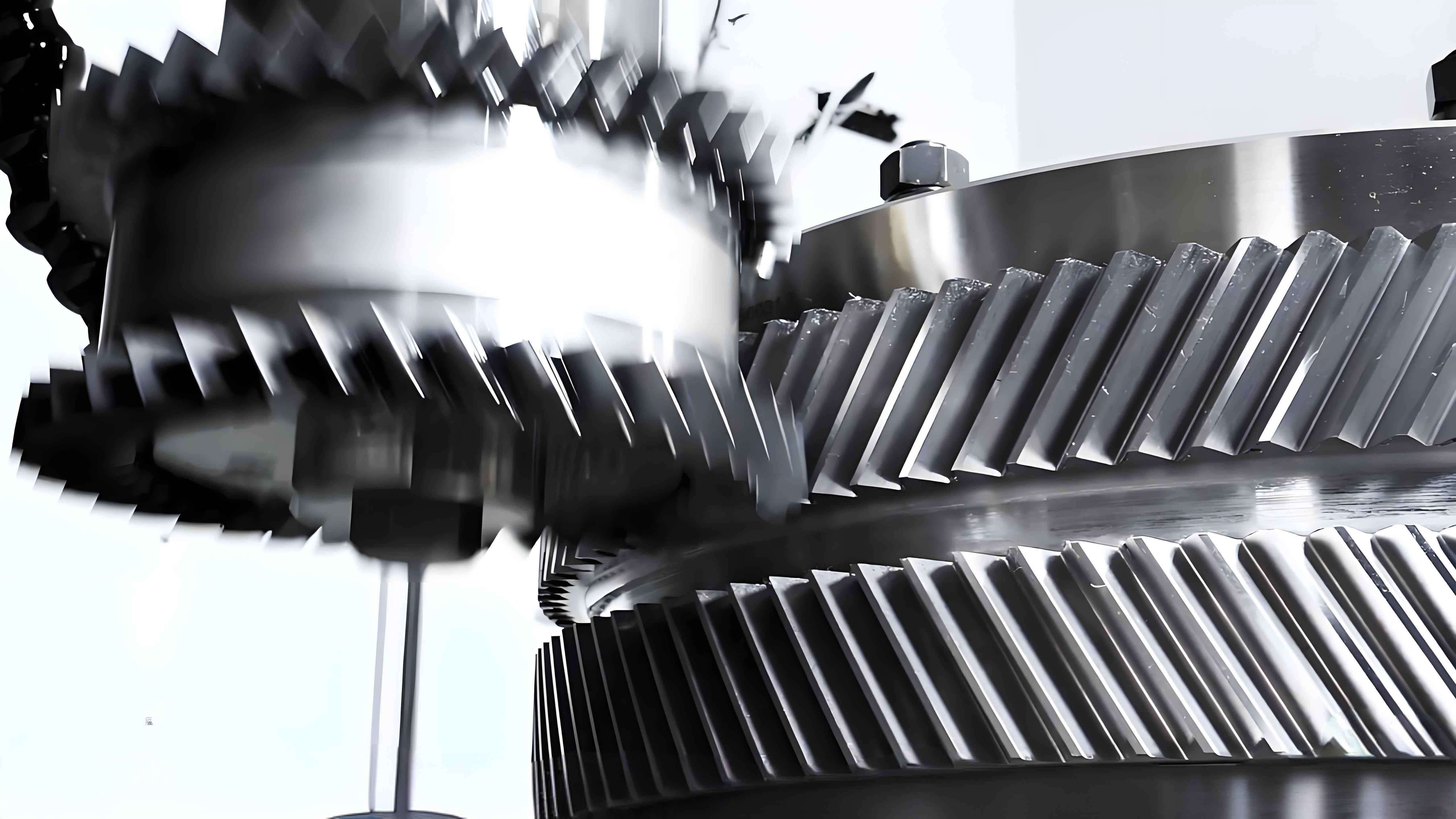
The dynamic analysis of star gear trains is complex due to the interactions between multiple gear meshes, flexible shafts, bearing supports, and the floating nature of certain components. Traditional lumped parameter models, while computationally efficient, often simplify components to point masses and may not accurately capture the distributed mass and flexibility of slender shafts. For a system involving long input/output shafts and complex support structures, the Finite Element Node Method (FENM) offers a superior alternative. This method discretizes shafts into Timoshenko beam elements, distributing mass and stiffness more realistically along the rotor lines, while integrating lumped parameter models for bearings, rigid rotors (gear blanks), and the nonlinear time-varying mesh stiffness of the herringbone gears.
1. System Description and Finite Element Node Modeling
The subject of this study is a five-path split-torque star gear train with herringbone gears. The system comprises an input shaft connected to a floating sun gear, five planet gears mounted on bearings within a fixed planet carrier (or torque frame), and a semi-floating ring gear that serves as the output, connected to the output shaft. The modeling approach constructs a global system-level model with 96 nodes, where each node represents a beam element section with six degrees of freedom (three translational and three rotational).
1.1 Shaft Modeling via Timoshenko Beam Elements
The shafts (input, planet, and output) are modeled using Timoshenko beam theory, accounting for shear deformation and rotary inertia. The elemental mass and stiffness matrices are assembled into global matrices. The sections of the herringbone gears with diameters smaller than the gear runout (for sun and planets) or larger than it (for the ring gear) are modeled as flexible shaft segments. The remaining gear mass (rim and teeth) is treated as a rigid rotor attached at the corresponding node. The parameters for the discretized shafts are summarized below.
| Component | Number of Nodes | Key Diameter Sections (Outer/Inner) [mm] | Material |
|---|---|---|---|
| Input Shaft | 22 | See detailed segmentation in source | 40CrNiMoA |
| Planet Shaft (each of 5) | 9 | Ø130/Ø42, Ø80, Ø155.2, Ø58 | 40CrNiMoA |
| Output Shaft | 28 | See detailed segmentation in source | 40CrNiMoA |
1.2 Bearing and Support Stiffness Modeling
Bearings are modeled as massless spring-damper elements at specified nodes. The support stiffness matrix for a bearing is simplified to uncoupled radial, axial, and tilting stiffnesses. For the planet gear bearings, the support stiffness is a series combination of the bearing stiffness and the structural stiffness of the fixed planet carrier/torque frame.
The bearing stiffness matrix is given by:
$$
\mathbf{K}_B = \begin{bmatrix}
k_r & 0 & 0 & 0 & 0 & 0 \\
0 & k_r & 0 & 0 & 0 & 0 \\
0 & 0 & k_z & 0 & 0 & 0 \\
0 & 0 & 0 & k_{\theta_r\theta_r} & 0 & 0 \\
0 & 0 & 0 & 0 & k_{\theta_r\theta_r} & 0 \\
0 & 0 & 0 & 0 & 0 & 0
\end{bmatrix}
$$
where $k_r$, $k_z$, and $k_{\theta_r\theta_r}$ are the radial, axial, and tilting stiffness coefficients, respectively. A proportional damping model is used. The applied stiffness values are listed below.
| Bearing Location | Radial Stiffness, $k_r$ (N/m) | Axial Stiffness, $k_z$ (N/m) | Tilting Stiffness, $k_{\theta_r\theta_r}$ (N·m/rad) |
|---|---|---|---|
| Input Shaft Br1 & Br2 | $1.5 \times 10^8$ | $8.22 \times 10^6$ | $1.01 \times 10^4$ |
| Planet Gear Br3 & Br4 | $1.61 \times 10^9$ | – | – |
| Output Shaft Br5 | $1.75 \times 10^8$ | $0.873 \times 10^8$ | $1 \times 10^6$ |
| Output Shaft Br6 | $7.2 \times 10^8$ | – | $1 \times 10^6$ |
| Torque Frame Support | $8.5 \times 10^8$ | – | – |
1.3 Rigid Rotor (Gear Mass) Modeling
The mass of the gear blanks (the portion beyond the flexible shaft segment) is modeled as a rigid rotor attached to its corresponding shaft node. This includes both translational inertia and gyroscopic effects. The kinetic energy $T_i$ for a gear rotor $i$ (planet, sun, or ring) is:
$$
T_i = \frac{1}{2} m_i (\dot{x}_i^2 + \dot{y}_i^2 + \dot{z}_i^2) + \frac{1}{2} J_{Di} (\dot{\theta}_{yi}^2 + \dot{\theta}_{xi}^2) + \frac{1}{2} J_{Pi} (\Omega_i + \dot{\theta}_{zi}) (\theta_{xi}\dot{\theta}_{yi} – \theta_{yi}\dot{\theta}_{xi}) + \frac{1}{2} J_{Pi} (\Omega_i + \dot{\theta}_{zi})^2
$$
where $m_i$ is the mass, $J_{Di}$ is the diametral mass moment of inertia, $J_{Pi}$ is the polar mass moment of inertia, and $\Omega_i$ is the nominal rotational speed. Applying Lagrange’s equation yields the motion equation for the rotor:
$$
[\mathbf{M}^d_i] \ddot{\mathbf{q}}_i + \Omega_i [\mathbf{G}^d_i] \dot{\mathbf{q}}_i = \mathbf{F}^d_i
$$
where $\mathbf{M}^d_i$ is the mass matrix, $\mathbf{G}^d_i$ is the gyroscopic matrix, and $\mathbf{q}_i = [x_i, y_i, z_i, \theta_{xi}, \theta_{yi}, \theta_{zi}]^T$.
1.4 Herringbone Gear Mesh Modeling
The core of the dynamic excitation comes from the meshing of the herringbone gears. A herringbone gear is effectively modeled as two mirrored helical gear meshes. For each sun-planet and planet-ring mesh, the relative displacement $\delta_m$ along the line of action is derived from the degrees of freedom of the two mating gears. It accounts for translational displacements, rotational displacements (including torsion), the helix angle $\beta$, and the pressure angle $\alpha_n$.
$$
\begin{aligned}
\delta_m = & [ (x_p – x_g) \sin\alpha_n + (y_p – y_g) \cos\alpha_n + (r_p \theta_{pz} + r_g \theta_{gz}) ] \cos\beta \\
& + [ (r_p \theta_{py} – r_g \theta_{gy}) \cos\alpha_n + (r_p \theta_{px} – r_g \theta_{gx}) \sin\alpha_n + (z_g – z_p) ] \sin\beta – e_{ste}(t)
\end{aligned}
$$
Here, subscript $p$ and $g$ denote pinion and gear, $r$ is the base circle radius, and $e_{ste}(t)$ is the static transmission error excitation, modeled as $e_{ste}(t) = E_{mj} \sin(\Omega_m t)$, where $\Omega_m$ is the gear mesh frequency.
The time-varying mesh stiffness $k(t)$ for the herringbone gears is represented as:
$$
k(t) = K_m + k_0 \sin(\Omega_m t)
$$
where $K_m$ is the average mesh stiffness and $k_0$ is the fluctuating amplitude. The mesh force is then $F_m = k(t) \delta_m + c_m \dot{\delta}_m$, where $c_m$ is the mesh damping. This force is projected onto the global coordinate system to form the mesh stiffness and damping matrices that couple the degrees of freedom of the two mating gears. The gear parameters for the herringbone gears are as follows.
| Parameter | Sun Gear | Planet Gear | Ring Gear |
|---|---|---|---|
| Number of Teeth, $z$ | 44 | 41 | 126 |
| Module, $m_n$ (mm) | 3.5 | ||
| Pressure Angle, $\alpha_n$ (°) | 22.5 | ||
| Helix Angle, $\beta$ (°) | 28.019 | ||
| Face Width / Runout Width (mm) | 60 / 30 | 59 / 31 | 57 / 33 |
| Material | 9310 Steel | ||
The final system-level equation of motion, incorporating all shaft, bearing, rotor, and gear mesh elements, is assembled into a large matrix form:
$$
\mathbf{M} \ddot{\mathbf{q}}(t) + (\mathbf{C} + \Omega \mathbf{G}) \dot{\mathbf{q}}(t) + \mathbf{K}(t) \mathbf{q}(t) = \mathbf{F}(t)
$$
where $\mathbf{M}$, $\mathbf{C}$, $\mathbf{G}$ are the global mass, damping, and gyroscopic matrices, $\mathbf{K}(t)$ is the global stiffness matrix containing the time-varying gear mesh terms, $\mathbf{q}(t)$ is the global displacement vector, and $\mathbf{F}(t)$ is the external load vector.
2. Vibration Characteristic Analysis
2.1 Equation Solving and Vibration Severity
The transient dynamics of the nonlinear, time-varying system described by the equation above are solved using the implicit Newmark-$\beta$ method ($\alpha=0.5$, $\beta=0.25$), which is unconditionally stable for linear systems and suitable for this weakly nonlinear problem. To ensure steady-state response, calculations are run for 2000 mesh cycles at each operating speed, discarding the initial transient data and retaining the last 200 cycles for analysis.
The primary metric for vibration analysis is the vibration severity, defined as the Root Mean Square (RMS) of the vibration velocity at key bearing locations (radial direction). This is calculated for a speed sweep under different torque conditions, mimicking a test run-up sequence.
2.2 Theoretical Vibration Severity Results
The theoretical RMS vibration velocity curves for bearings on the input shaft (Br2), a planet gear (Br3), and the output shaft (Br5) are plotted against the input shaft speed. The analysis reveals several prominent resonance peaks across the speed range. Notably, the vibration amplitude at the input shaft bearing is most sensitive to speed changes, reflecting the dynamic influence of the floating sun gear. The resonance peaks are observed at specific speeds, indicating potential critical speeds where the mesh frequency excitation coincides with a system natural frequency. The results show that the vibration severity is not highly sensitive to step changes in input torque at certain speeds (e.g., 4000, 5400, 7400 rpm), suggesting the dominance of kinematic excitation over load-dependent excitation in these regions.
3. Experimental Validation
To validate the modeling approach, the theoretical predictions were compared with experimental data from a power-recirculating (closed-loop) test rig. The test article was the herringbone gear star gear train. Vibration accelerometers were mounted on the stationary torque frame, which houses the planet gear bearings. The test involved a stepped run-up sequence under various load conditions matching the analysis.
The experimental vibration severity (RMS velocity at the mesh frequency component) was extracted from the torque frame sensor data. Multiple test runs confirmed good repeatability of the results. A comparison between the theoretical planet bearing vibration curve and the experimental data shows excellent agreement in the location of resonance peaks.
| Theoretical Peak Speed (rpm) | Experimental Peak Speed (rpm) | Relative Error (%) |
|---|---|---|
| 1600 | 1580 | +1.27 |
| 2700 | 2990 | -9.70 |
| 3200 | 3310 | -3.32 |
| 4300 | 4370 | -1.60 |
| 5300 | 5245 | +1.05 |
| 6100 | 6215 | -1.85 |
| 6400 | 6570 | -2.59 |
| 7100 | 7015 | +1.21 |
The maximum error was 9.7% at 2700 rpm, while all other peak predictions were within 5% of the experimental values. This strong correlation validates the accuracy and feasibility of the Finite Element Node Method for modeling the dynamics of complex star gear trains with herringbone gears.
4. Modal Analysis and Resonance Diagnosis
4.1 Campbell Diagram and Critical Speeds
To diagnose the root cause of the observed resonances, a modal analysis of the undamped system (ignoring the time-varying mesh stiffness) was performed, including gyroscopic effects. The natural frequencies were calculated by solving the eigenvalue problem derived from the homogeneous system equations. The Campbell diagram plots these natural frequencies against the input shaft speed, with the gear mesh frequency line overlaid. Intersections between the mesh frequency line and the natural frequency curves indicate potential critical speeds where resonance can occur.
The Campbell diagram reveals a dense set of natural frequencies in the 0-6000 Hz range, with many exhibiting frequency veering and splitting due to gyroscopic effects and system coupling. This density makes it challenging to pinpoint critical speeds from the Campbell diagram alone.
4.2 Mode Shapes and Resonance Root Cause
By correlating the theoretical resonance speeds from the forced response analysis with the corresponding excited natural frequencies and their mode shapes, the physical nature of each resonance can be identified. The dominant mode shapes associated with the major resonance peaks primarily involve torsional vibration of the gear train (sun-planet-ring) and translational motion of the sun gear coupled with planet gear tilting/torsion.
This analysis conclusively shows that torsional vibration modes are the primary contributors to resonance in this star gear train with herringbone gears. The floating design of the sun gear makes the system particularly susceptible to excitations that couple into these torsional modes. This insight is crucial for test planning and design modification to avoid or mitigate resonant conditions.
5. Conclusions
This study successfully developed and validated a high-fidelity system-level dynamic model for a star gear train employing herringbone gears using the Finite Element Node Method. The model integrates the flexibility of shafts, the support characteristics of bearings and structure, the inertia of gear rotors including gyroscopic effects, and the essential time-varying nonlinearity of the herringbone gear meshes.
- The forced vibration response, characterized by bearing vibration severity, predicted resonance speeds with high accuracy when compared to experimental data from a full-scale test rig. The maximum prediction error for major peaks was under 10%, with most under 5%, confirming the model’s reliability.
- The combined analysis of vibration response and system modal characteristics provided a clear methodology for resonance localization and diagnosis. The dominant resonant responses were traced to torsional vibration modes of the gear train, highlighting a critical dynamic behavior for such systems.
- The research demonstrates that the proposed FENM-based modeling approach is a powerful and valuable tool. It can be effectively used for pre-test resonance prediction during the design phase and for post-test root cause analysis of vibration issues in star gear trains with herringbone gears, ultimately contributing to the development of more reliable and quieter geared propulsion systems.