
In recent years, with continuous increases in engine horsepower, truck powertrains have become more powerful. To maximize load capacity and efficiency, drivers often adopt driving modes that involve full-load rapid starts. These factors impose greater challenges on the strength of drive axle components. This article focuses on analyzing the failure of fastening bolts for the driven bevel gear in a truck drive axle, specifically addressing torque attenuation issues. The analysis spans structural design, component quality, and assembly processes to identify root causes and implement effective countermeasures, which have been validated in production lines.
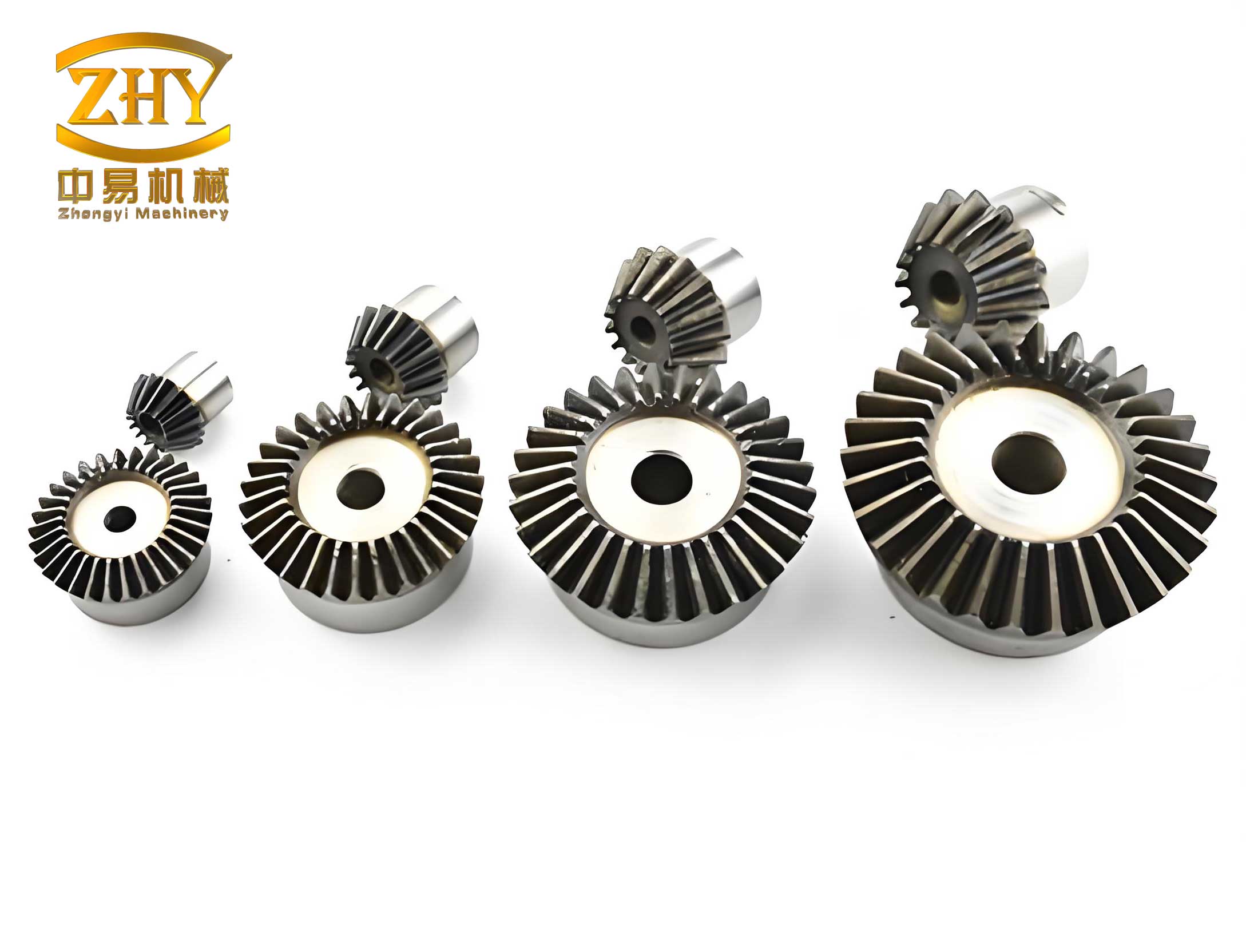
The driven bevel gear is a critical component in the drive axle reduction system, transmitting torque from the pinion to the differential assembly. Its secure fastening is essential for reliable operation. However, instances of bolt loosening and fracture have been reported, leading to operational failures. This study delves into the multifaceted nature of these failures, employing empirical data, theoretical calculations, and experimental validation to propose robust solutions.
The failure manifests as torque attenuation in the fastening bolts that secure the driven bevel gear to the differential housing. Field inspections revealed multiple cases where bolts loosened or broke, compromising the integrity of the drive axle. For example, in two trucks, the torque values of the bolts were measured post-failure, showing significant deviations from the initial assembly torque of 260-280 N·m. The results are summarized in Table 1, highlighting the extent of torque loss.
| Bolt Number | Truck 1 Torque (N·m) | Bolt Number | Truck 2 Torque (N·m) |
|---|---|---|---|
| 1 | 100 | 1 | 125 |
| 2 | 100 | 2 | 200 |
| 3 | 125 | 3 | 125 |
| 4 | 175 | 4 | 175 |
| 5 | 125 | 5 | 175 |
| 6 | 150 | 6 | 75 |
| 7 | 250 | 7 | 75 |
| 8 | 175 | 8 | 125 |
| 9 | 25 | 9 | 75 |
| 10 | 150 | 10 | 250 |
| 11 | 75 | 11 | 0 (脱落) |
| 12 | 225 | 12 | 175 |
| 13 | 275 | 13 | 0 (脱落) |
| 14 | 200 | 14 | 0 (脱落) |
| 15 | 275 | 15 | 75 |
| 16 | 0 (脱落) | 16 | 175 |
Disassembly of the affected components revealed wear marks on the threads of the fastening bolts and uneven surfaces on the counterbore of the differential housing where the bolt flange contacts. These observations suggested potential issues with design interference, component quality, or assembly processes. The driven bevel gear and differential housing are typically joined via an interference fit, with bolts ensuring clamping force. However, the observed failures indicated that the connection was not maintaining its integrity under operational loads.
The analysis of root causes was conducted from three perspectives: structural design, component quality, and assembly process. Each aspect was scrutinized to identify contributing factors to the bolt torque attenuation.
From a structural design standpoint, the connection involves the driven bevel gear with M14×1.5 threaded holes, the differential housing with φ14.5 plain holes, and M14×1.5 fastening bolts. Calculations confirmed sufficient clearance between the bolt threads and the plain hole, ruling out design interference. Thus, the wear marks were attributed to bolt loosening due to torque attenuation, not initial assembly issues. The focus shifted to understanding why the bolts were losing torque.
Component quality issues were identified through inspections. Three key problems emerged: first, the surface quality of the counterbore in the differential housing was substandard, leading to unstable friction coefficients that could dissipate preload during assembly. Second, some housing plain holes lacked chamfers, causing interference between the bolt fillet radius and the hole edge, which created gaps and reduced effective torque. Third, the hardness of the fastening bolts was higher than specified. The design hardness range was 35-38 HRC, but random tests showed values exceeding this, as detailed in Table 2.
| Measurement Position | Bolt 1 Hardness (HRC) | Bolt 2 Hardness (HRC) |
|---|---|---|
| 1 | 39 | 39 |
| 2 | 41 | 41 |
| 3 | 39 | 41 |
| 4 | 38 | 40 |
| 5 | 42 | 39 |
| 6 | 41 | 40 |
| 7 | 41 | 41 |
| 8 | 41 | 40 |
| 9 | 41 | 41 |
| 10 | 42 | 41 |
| 11 | 41 | 41 |
| 12 | 41 | 41 |
Elevated hardness can increase tensile and yield strength but reduce ductility, making bolts more brittle and prone to torque loss under dynamic loads. This highlighted the need for tighter quality control on bolt manufacturing.
The assembly process also played a role. The driven bevel gear is heated to 90°C–130°C for thermal expansion to facilitate interference fit with the differential housing. However, this heating affects the material properties of the bolts, housing, and gear. To assess this, simulated assembly experiments were conducted at different temperatures, measuring the yield torque of bolts after assembly. The results are shown in Table 3.
| Assembly Temperature | Minimum Yield Torque (N·m) |
|---|---|
| Room Temperature (25°C) | 400 |
| Gear Heated to 50°C | 367 |
| Gear Heated to 100°C | 280 |
The data indicates that higher assembly temperatures reduce the yield torque of the fastening bolts. This is due to changes in thermal expansion coefficients, elastic moduli, and yield limits of the materials (22CrMoH for the bevel gear, 45 steel for the housing, and 40Cr for the bolts). High temperatures exacerbate stress concentrations and sensitivity to notches in alloy steels, undermining connection reliability. Thus, the thermal assembly process contributed to torque attenuation.
To address these issues, multiple improvement measures were proposed and validated. The goal was to enhance the reliability of the fastening system for the driven bevel gear.
Improving thread connection performance was prioritized. Options included increasing bolt diameter, extending thread engagement length, raising tightening torque, or applying adhesives. Due to spatial constraints in the existing design, increasing bolt diameter was selected. The original M14 bolts were replaced with M16 bolts, with corresponding adjustments to the threaded holes in the bevel gear and plain holes in the housing. The theoretical tightening torque for the new bolts was calculated using standard formulas.
The equivalent diameter for friction torque is given by:
$$D_W = \frac{2}{3} \cdot \frac{d_w^3 – d_h^3}{d_w^2 – d_h^2}$$
where \(d_w\) is the outer diameter of the contact bearing surface and \(d_h\) is the inner diameter. The torque coefficient \(K\) is calculated as:
$$K = \frac{1}{2d} \left( \frac{P}{\pi} + \mu_s d_2 \sec \alpha’ + \mu_w D_W \right)$$
where \(d\) is the nominal bolt diameter, \(P\) is the pitch, \(\mu_s\) is the thread friction coefficient, \(d_2\) is the pitch diameter, \(\alpha’\) is the thread flank angle, and \(\mu_w\) is the bearing surface friction coefficient. The yield clamp force \(F_{fy}\) is:
$$F_{fy} = \frac{\sigma_y A_s}{1 – 3 \left( \frac{d_A}{2} \right) \left( \frac{P}{\pi} + \mu_s d_2 \sec \alpha \right)^2 }$$
where \(\sigma_y\) is the yield strength of the bolt material, \(A_s\) is the stress area, and \(d_A\) is the equivalent diameter for stress area. Finally, the yield tightening torque \(T_{fy}\) is:
$$T_{fy} = \frac{1}{1000} K F_{fy} d$$
Using these formulas with appropriate parameters for M16 bolts (e.g., \(\mu_s = 0.14\), \(\mu_w = 0.14\), \(\sigma_y = 940 MPa\) for 40Cr steel), the theoretical yield torque was computed as 381.73 N·m. This served as a reference for practical torque settings.
Experimental tests, including friction performance and simulated assembly, yielded an average yield torque of 428 N·m for M16 bolts. Based on this and production line trials, the tightening torque was set to 340–360 N·m (median 350 N·m). Table 4 compares the original and improved bolt configurations.
| Parameter | Original M14 Bolt | Improved M16 Bolt |
|---|---|---|
| Bolt Type | Serrated flange, pre-applied adhesive | Plain flange, pre-applied adhesive |
| Specification | M14×1.5 | M16×1.5 |
| Median Tightening Torque (N·m) | 270 | 350 |
| Median Preload per Bolt (kN) | 75.58 | 108.89 |
The upgrade to M16 bolts increased the median preload by 44.08%, significantly enhancing connection reliability. During production trials, no necking or instability was observed, confirming the effectiveness of this change.
Component quality improvements were implemented by refining manufacturing processes. The surface finish of the counterbore in the differential housing was standardized to ensure consistent friction coefficients. Chamfering of plain holes was enforced to prevent interference with bolt fillets. Additionally, bolt hardness was controlled within the specified range of 35–38 HRC through enhanced quality checks. These measures eliminated variability that could contribute to torque attenuation.
The assembly process was modified from thermal to cold assembly. Instead of heating the driven bevel gear, a press-fit method at room temperature was adopted. The differential housing is pressed into the bevel gear using a press machine with guide pins, ensuring the interference fit without thermal effects. This eliminates temperature-induced material property changes that adversely affect bolt torque. After cold assembly, the bolts are tightened to the specified torque, completing the differential assembly.
Validation of these measures involved pilot runs on production lines. The fastening bolts showed no signs of necking, and torque values remained stable post-assembly. Field testing in trucks further confirmed the durability of the improved design, with no reported failures over extended periods.
In conclusion, the failure analysis of fastening bolts for the driven bevel gear revealed a complex interplay of factors. The surface quality of connection interfaces is crucial for reliable bolt performance. Theoretical calculations combined with empirical testing are essential for determining appropriate tightening torques. Temperature effects during assembly must be minimized to prevent torque attenuation; cold assembly processes are preferable for maintaining connection integrity. The implementation of larger diameter bolts, enhanced component quality, and revised assembly protocols successfully resolved the torque attenuation issue, ensuring robust performance of the drive axle system. This case underscores the importance of holistic design, manufacturing, and process considerations in automotive component reliability, particularly for critical parts like the bevel gear in heavy-duty trucks.
The driven bevel gear, as a central element in power transmission, requires meticulous attention to fastening details to withstand operational stresses. Future designs should incorporate tolerance analyses and material selections that account for thermal and dynamic loads. Continuous monitoring of production quality and assembly techniques will further mitigate risks of bolt failures, contributing to overall vehicle safety and longevity.