
The transmission performance of gear systems is critically influenced by two primary factors: the vibration and noise generated during operation and the distribution of load across the gear tooth surfaces. Non-uniform load distribution can lead to premature wear, pitting, and reduced fatigue life, while excessive vibration and noise affect operational comfort and component reliability. For helical gears, which are widely used for their smooth and quiet operation, optimizing these aspects is paramount. This article presents a comprehensive methodology for the multi-objective optimization of helical gear modification, aiming to simultaneously minimize vibration and noise and achieve a uniform distribution of contact load.
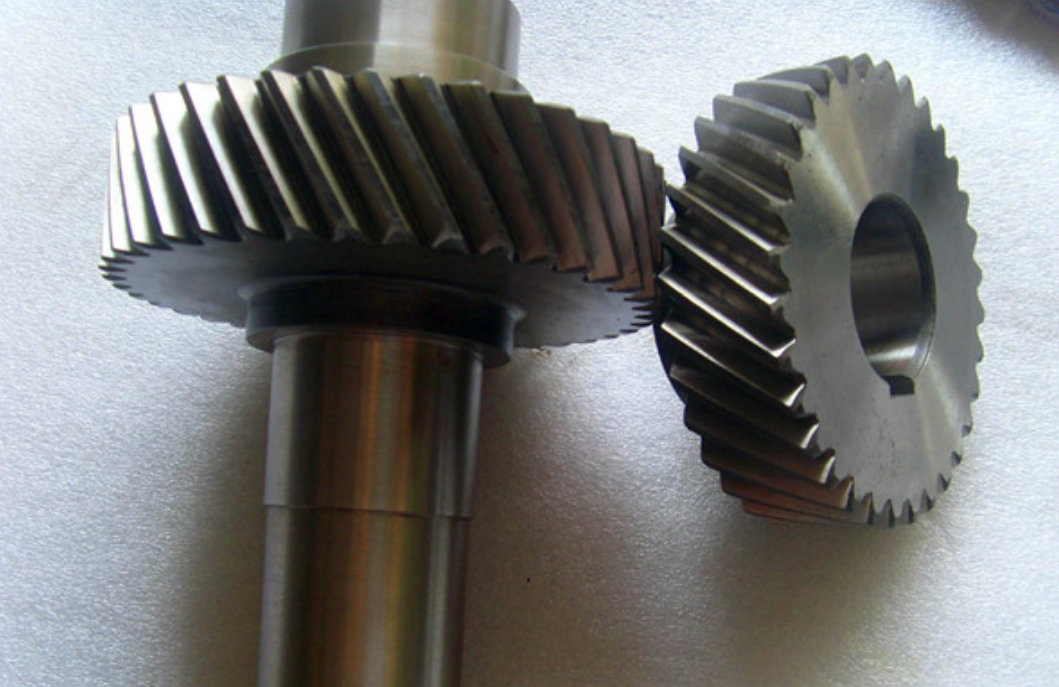
Gear modification, or micro-geometry optimization, is a well-established technique to enhance meshing performance. Common strategies include profile modification (altering the tooth profile along the involute direction), lead modification (altering the tooth surface along the axial direction), and a combination of both, known as topologically modified surfaces. While profile modification is effective in mitigating the impact of mesh-in and mesh-out impacts by compensating for elastic deflections, lead modification is crucial for improving the contact pattern across the face width, especially under misalignment conditions. For helical gears, a combined approach is often necessary to address the complex three-dimensional contact mechanics. The core challenge lies in defining the optimal modification parameters that balance multiple, often competing, performance objectives.
This study establishes a holistic framework linking loaded tooth contact analysis (LTCA), dynamic modeling, and multi-objective optimization for helical gears. The correctness of the proposed loaded contact model is first verified by comparing theoretical and experimental transmission error (TE) amplitudes. Subsequently, a method to calculate and quantitatively judge the uniformity of tooth surface load distribution is introduced. A dynamic model of the helical gear pair, considering vibrations in bending, axial, and torsional directions, is developed and validated. Finally, a multi-objective optimization function is constructed, targeting minimized torsional vibration and uniform load distribution, which is then solved to obtain the optimal modification parameters for the pinion.
1. Modification Methodology for Helical Gears
The modification process focuses on the pinion for manufacturing efficiency. The strategy involves a two-step procedure: first, applying a profile modification by using a modified rack cutter, and second, applying a lead modification along the helical path of the pinion tooth. A parabolic curve is chosen for both modifications due to its manufacturability and effectiveness in reducing sensitivity to alignment errors.
1.1 Profile Modification via Modified Rack Cutter
The profile modification is imparted during the generation process using a rack cutter whose nominal straight-line profile is altered to a parabola. In the rack cutter coordinate system \(o_b x_b y_b\), the parabolic profile is defined as:
$$ \mathbf{r}_b = \begin{bmatrix} x_b \\ y_b \\ 0 \\ 1 \end{bmatrix} = \begin{bmatrix} u \\ a’ u^2 \\ 0 \\ 1 \end{bmatrix} $$
where \(u\) is the profile parameter and \(a’\) is the primary design variable controlling the amount of profile crowning.
Through a series of coordinate transformations from the rack cutter system to the gear generation system, the surface equation of the generated pinion tooth with profile modification is obtained. The transformation involves moving to an intermediate coordinate system aligned with the normal plane of the rack and then to the gear generation coordinate system. The final pinion tooth surface \(\mathbf{r}_1\) in its coordinate system \(o_1 x_1 y_1 z_1\) is a function of the generation parameters \(\phi_1\) (cutter rotation), \(u\), \(l\), and the design variable \(a’\).
1.2 Lead Modification along the Helix
Subsequent to profile generation, a lead modification is applied along the helix line of the pinion. A parabolic curve is defined in a local coordinate system \(o_i y_i z_i\) attached to the helix:
$$ \mathbf{r}_i = \begin{bmatrix} 0 \\ y_i \\ z_i \\ 1 \end{bmatrix} = \begin{bmatrix} 0 \\ -a (z_i – b)^2 \\ z_i \\ 1 \end{bmatrix} $$
where \(a\) and \(b\) are the lead crowning design variable and the shift parameter, respectively. This parabola is then transformed into the pinion coordinate system. The resulting shift \(y\) is added to the original \(y_1\)-coordinate of the pinion surface points, effectively modifying the lead:
$$ y_1′ = y_1 + y $$
This two-step process results in a topologically modified pinion tooth surface. The three key design variables for optimization are thus: \(\mathbf{x} = \{ a’, a, b \}\).
2. Model for Uniform Load Distribution
2.1 Loaded Tooth Contact Analysis (LTCA) Model
To accurately predict the load distribution on the contacting tooth surfaces of helical gears under load, a three-dimensional Loaded Tooth Contact Analysis model is employed. The model discretizes the potential contact areas on multiple tooth pairs into a grid of points. The solution seeks to find the contact pressures at these points that satisfy compatibility and equilibrium conditions. The mathematical formulation is a nonlinear programming problem:
$$
\begin{aligned}
&\text{Min} \sum_{j=1}^{2n+1} X_j \\
&\text{subject to:} \\
&[\mathbf{F}]\{\mathbf{p}\} + [\mathbf{Z}] + \{\mathbf{d}\} + \{\mathbf{X}\} = \{\mathbf{w}\} \\
&\{\mathbf{e}\}^T\{\mathbf{p}\} + X_{2n+1} = P \\
&p_j, d_j, Z, X_j \ge 0 \\
&p_j = 0 \text{ or } d_j = 0
\end{aligned}
$$
Where \([\mathbf{F}]\) is the flexibility matrix, \(\{\mathbf{p}\}\) is the vector of contact loads at discrete points, \([\mathbf{Z}]\) is the vector of approach of the two gears under load, \(\{\mathbf{d}\}\) is the initial separation (gap), \(\{\mathbf{w}\}\) is the composite surface geometry (including modifications and errors), \(\{\mathbf{e}\}\) is a unit vector, \(P\) is the total transmitted load, and \(X_j\) are slack variables. Solving this model for successive positions throughout the mesh cycle yields the load distribution on all contacting tooth flanks.
2.2 Validation of the LTCA Model
The accuracy of the LTCA model is validated by comparing its prediction of a key meshing indicator—Transmission Error (TE)—with experimental measurements. Transmission error is the difference between the actual position of the output gear and its position if the gear pair were perfectly conjugate. The amplitude of the static TE is a critical validation point.
| Source | Transmission Error Amplitude (arcsec) |
|---|---|
| Experimental Measurement | 0.451669 |
| Theoretical Calculation (LTCA) | 0.4447 |
The close agreement between the experimental and theoretical TE amplitudes, with a difference of less than 1.6%, confirms the correctness and reliability of the proposed loaded tooth surface contact analysis model for helical gears.
2.3 Quantitative Measure for Load Distribution Uniformity
A quantitative metric is needed to assess and optimize load distribution uniformity. The tooth surface is conceptually divided into left and right halves along the face width centerline. Uniform distribution is ideally achieved when the total load on the left half equals the total load on the right half. Based on the contact lines identified via LTCA, a metric \(f_1\) is defined as the absolute difference between the summed loads on the left and right sides.
For \(k\) contact lines in a given mesh position:
If \(k\) is even:
$$ f_1 = \left| \sum_{i=1}^{k/2} P_i – \sum_{i=k/2+1}^{k} P_i \right| $$
If \(k\) is odd, the middle contact line is ignored for the balance calculation:
$$ f_1 = \left| \sum_{i=1}^{(k-1)/2} P_i – \sum_{i=(k-1)/2+2}^{k} P_i \right| $$
Minimizing \(f_1\) becomes a direct objective for achieving uniform load distribution in helical gears.
3. Dynamic Model for Vibration and Noise Assessment
3.1 Nonlinear Dynamic Model of a Helical Gear Pair
A lumped-parameter, nonlinear dynamic model is developed for a helical gear pair to analyze its vibratory response. The model considers eight degrees of freedom: translational motions of both the pinion and gear in the x (axial), y (line-of-action), and z (off-line) directions, and the torsional rotations of both gears about their axes. Key nonlinearities include time-varying meshing stiffness, backlash, and tooth friction. The equations of motion derived using Newton’s second law are:
$$
\begin{aligned}
& m_p \ddot{x}_p + c_{px} \dot{x}_p + k_{px} f_{px}(x_p) = \lambda \mu F_{py} \\
& m_p \ddot{y}_p + c_{py} \dot{y}_p + k_{py} f_{py}(y_p) = -F_{py} \\
& m_p \ddot{z}_p + c_{pz} \dot{z}_p + k_{pz} f_{pz}(z_p) = -F_{z} \\
& I_p \ddot{\theta}_p + F_{py} r_p – S_p \lambda \mu F_{py} = -T_p \\
& m_g \ddot{x}_g + c_{gx} \dot{x}_g + k_{gx} f_{gx}(x_g) = -\lambda \mu F_{py} \\
& m_g \ddot{y}_g + c_{gy} \dot{y}_g + k_{gy} f_{gy}(y_g) = F_{py} \\
& m_g \ddot{z}_g + c_{gz} \dot{z}_g + k_{gz} f_{gz}(z_g) = F_{z} \\
& I_g \ddot{\theta}_g – F_{py} r_g + S_g \lambda \mu F_{py} = -T_g
\end{aligned}
$$
Here, \(m\), \(I\), \(c\), \(k\) denote mass, inertia, damping, and stiffness; \(f()\) are nonlinear displacement functions accounting for backlash; \(F_{py}\) and \(F_z\) are the dynamic mesh forces in the line-of-action and axial directions, respectively; \(\mu\) is the friction coefficient; \(\lambda\) indicates friction direction; \(S\) is the friction arm; and \(e_y(t)\) is the static transmission error excitation. The dynamic mesh forces are given by:
$$
\begin{aligned}
F_{py} &= \cos\beta \left[ k(t) f_h(\delta) + c \dot{\delta} \right] \\
F_{z} &= \sin\beta \left[ k(t) f_h(\delta_z) + c \dot{\delta_z} \right]
\end{aligned}
$$
where \(\delta = y_p + r_p \theta_p – y_g – r_g \theta_g – e_y(t)\) is the dynamic transmission error along the line-of-action, and \(\delta_z\) includes the axial displacement coupling. The model is solved using a numerical integration scheme like the fourth-order Runge-Kutta method to obtain the time-domain dynamic response.
3.2 Validation of the Dynamic Model
The dynamic model is validated by comparing the frequency spectrum of the calculated relative vibration acceleration (along the line-of-action, y-direction) with experimentally measured data. The results show strong agreement in the dominant meshing frequencies and their harmonics, confirming the model’s capability to accurately represent the dynamic behavior of the helical gear system.
3.3 Vibration/Noise Performance Metric
Gear vibration and radiated noise are complex but correlate strongly with the vibrational velocity. The root-mean-square (RMS) value of the relative velocity along the torsional direction (closely related to the dynamic transmission error velocity) is chosen as a representative metric for vibration/noise levels. This metric \(f_2\) is defined over a simulation period with \(n\) time steps as:
$$ f_2 = \sqrt{ \frac{1}{n} \sum_{i=1}^{n} \left( \dot{y}_p + \dot{\theta}_p r_p – \dot{y}_g – \dot{\theta}_g r_g – \dot{e}_y \right)_i^2 } $$
Minimizing \(f_2\) becomes the second primary objective for optimizing helical gears.
4. Multi-Objective Optimization Framework
The goal is to find the set of modification parameters \(\mathbf{x} = \{ a’, a, b \}\) that best achieve the dual objectives of uniform load distribution and low vibration. A multi-objective optimization problem is formulated.
4.1 Design Variables and Objective Function
Design Variables: \(\mathbf{x} = \{ x_1, x_2, x_3 \} = \{ a’, a, b \}\), with practical lower and upper bounds.
Objective Functions:
1. \(f_1(\mathbf{x})\): Load difference between left and right tooth surfaces (to be minimized).
2. \(f_2(\mathbf{x})\): RMS of torsional relative velocity (to be minimized).
A scalarization approach using the linear weighted sum method is employed to combine the two objectives into a single aggregate objective function (AOF):
$$ \min f(\mathbf{x}) = w_1 \cdot \left( f_1(\mathbf{x}) \times 10^{-omc} \right) + w_2 \cdot f_2(\mathbf{x}) $$
where \(w_1\) and \(w_2\) are weighting factors reflecting the relative importance of each objective (with \(w_1 + w_2 = 1\)), and \(omc\) is an order-of-magnitude compensation coefficient used to normalize the numerical scales of \(f_1\) and \(f_2\) to prevent one objective from dominating the search purely due to its larger magnitude.
4.2 Optimization Procedure
The optimization workflow is as follows:
1. For a given candidate set \(\mathbf{x}\), the modified pinion tooth geometry is calculated.
2. The LTCA model is run to obtain the load distribution throughout the mesh cycle, from which \(f_1(\mathbf{x})\) is computed.
3. The dynamic model is simulated to obtain the time-history response, from which \(f_2(\mathbf{x})\) is computed.
4. The AOF \(f(\mathbf{x})\) is evaluated.
5. A global optimization algorithm (e.g., Genetic Algorithm) searches the design space to minimize \(f(\mathbf{x})\).
The process iterates until convergence criteria are met, yielding the optimal modification parameters.
5. Case Study and Optimization Results
An example is provided to demonstrate the effectiveness of the proposed method for helical gears. The basic parameters of the helical gear pair are listed below:
| Parameter | Value |
|---|---|
| Number of teeth (Gear/Pinion) | 40 / 20 |
| Normal module (mm) | 2.5 |
| Normal pressure angle (°) | 20 |
| Helix angle (°) | 20 |
| Face width (mm) | 30 |
| Pinion torque (Nm) | 200 |
| Pinion speed (rpm) | 1200 |
The design variable bounds and the objective function weights are set as follows, assigning equal importance to both objectives:
| Design Variable | Initial Value | Lower Bound | Upper Bound |
|---|---|---|---|
| \(a’\) (Profile) | 0.001 | 0.001 | 0.01 |
| \(a\) (Lead) | 1.0e-4 | 1.0e-6 | 1.0e-2 |
| \(b\) (Lead shift) | 0 | -2 | 8 |
$$ \min f(\mathbf{x}) = 0.5 \cdot ( f_1(\mathbf{x}) \times 10^{-7} ) + 0.5 \cdot f_2(\mathbf{x}) $$
Applying the Genetic Algorithm yielded the following optimal modification parameters after 110 iterations:
| Optimal Design Variable | Value |
|---|---|
| \(a’_{opt}\) | 5.71 × 10⁻³ |
| \(a_{opt}\) | 7.29 × 10⁻⁶ |
| \(b_{opt}\) | 1.451 |
5.1 Optimization Results: Vibration Performance
The time-domain relative velocity in the torsional direction was compared before and after optimization. The root-mean-square (RMS) value was used as the quantitative metric \(f_2\).
| Condition | RMS of Relative Velocity, \(f_2\) (m/s) | Improvement |
|---|---|---|
| Before Optimization | 1.28 × 10⁻⁴ | – |
| After Optimization | 2.59 × 10⁻⁵ | Reduced by ~80% (factor of 4.9) |
The results show a dramatic reduction in the vibration velocity metric, indicating a significant potential for noise reduction in the optimized helical gears.
5.2 Optimization Results: Load Distribution
The load distribution on the tooth flank was visualized and the load difference metric \(f_1\) was calculated. Before optimization, the load was heavily biased towards one side of the tooth. After optimization, the contact pattern became centrally located and more uniform across the face width.
| Condition | Load Difference, \(f_1\) (N) | Improvement |
|---|---|---|
| Before Optimization | 15324 | – |
| After Optimization | 47.96 | Reduced by ~99.7% (factor of 320) |
The optimization successfully balanced the loads between the left and right halves of the tooth surface, virtually eliminating the bias and promoting uniform load distribution for the helical gears.
6. Conclusion
This study presents a comprehensive and effective methodology for the multi-objective optimization of helical gear modifications, specifically targeting the dual goals of vibration/noise reduction and uniform load distribution. The integrated framework successfully links precise loaded tooth contact analysis, validated nonlinear dynamic modeling, and efficient global optimization. Key contributions include:
- Validated Models: The correctness of the LTCA model for helical gears was confirmed through transmission error amplitude correlation, and the dynamic model was validated against experimental vibration spectra.
- Quantitative Metrics: Clear quantitative metrics were established: the load difference between tooth halves (\(f_1\)) to measure uniformity and the RMS of torsional relative velocity (\(f_2\)) to measure vibratory excitation.
- Effective Optimization: A weighted multi-objective optimization function was constructed and solved using the Genetic Algorithm. The case study on a helical gear pair demonstrated the method’s exceptional effectiveness. The optimal modification parameters led to an approximately 80% reduction in the vibration velocity metric and a 99.7% reduction in the load imbalance metric.
The proposed approach provides a systematic and practical design tool for enhancing the meshing performance, reliability, and quiet operation of helical gears through targeted micro-geometry optimization.