
In my extensive experience within industrial engineering and maintenance, I have consistently observed that speed reducers are indispensable components across numerous sectors, from coal and mechanical engineering to broader manufacturing and processing plants. The gear shafts within these reducers, particularly the high-speed gear shafts, are critical for transmitting torque and motion. However, their frequent fracture failures pose significant challenges to production continuity, operational efficiency, and safety. Through this article, I aim to provide a comprehensive, first-person analysis of the root causes behind these gear shaft fractures and propose detailed, actionable countermeasures. My discussion will leverage technical formulas, comparative tables, and systematic frameworks to ensure a thorough understanding that exceeds superficial summaries.
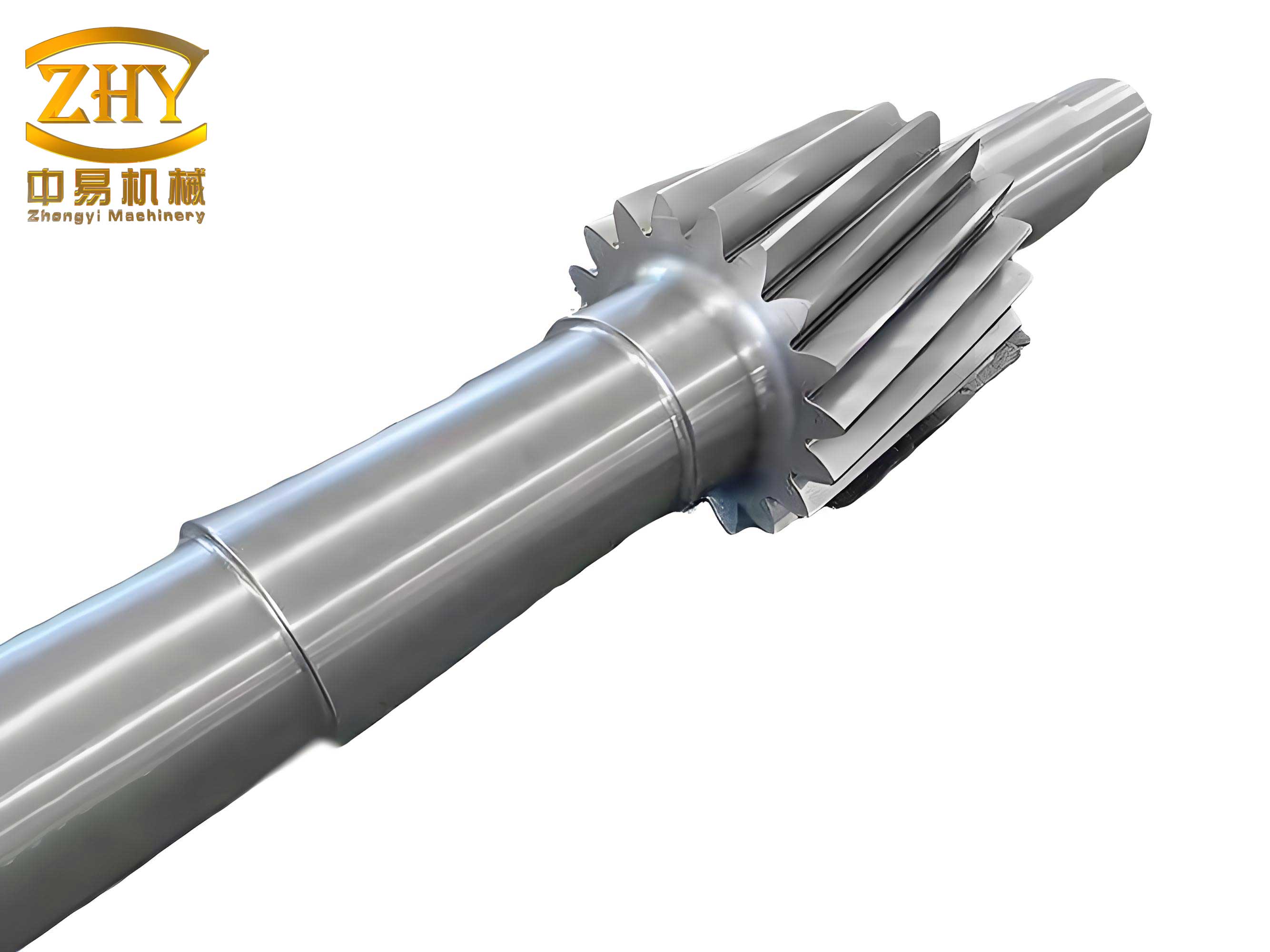
The integrity of gear shafts is paramount for the reliable operation of any speed reducer system. When a high-speed gear shaft fails, it often leads to unplanned downtime, costly repairs, and potential cascading damage to connected machinery. Therefore, understanding the multifaceted nature of gear shaft fracture is not just an academic exercise but a practical necessity. I will structure my analysis by first dissecting the primary failure mechanisms and then outlining a robust prevention protocol.
1. Comprehensive Analysis of Factors Leading to Gear Shaft Fracture
The fracture of high-speed gear shafts is seldom attributable to a single cause. It is typically the result of a confluence of factors spanning material science, manufacturing processes, operational practices, and maintenance philosophy. Below, I delve into each critical area.
1.1 Material Composition and Its Metallurgical Implications
From a material standpoint, gear shafts are subjected to complex, cyclical loading during operation. The torque transmission induces both elastic and plastic deformation regimes. While elastic deformation is recoverable, as described by Hooke’s Law for shear: $$\tau = G \gamma$$ where $\tau$ is shear stress, $G$ is the shear modulus, and $\gamma$ is shear strain, the design often accommodates limited plastic deformation. The real danger lies in fatigue. The fatigue life of a gear shaft is profoundly influenced by its material’s endurance limit and microstructure.
Modern gear shafts are commonly fabricated from alloy steels incorporating elements like Si, Mn, Cr, Mo, and controlled amounts of S. The precise composition dictates key properties such as hardenability, toughness, and fatigue strength. An imbalance, particularly in carbon content, can drastically reduce toughness, promoting brittle fracture with little to no plastic warning. The relationship between stress amplitude and fatigue cycles is often modeled by the Basquin equation: $$\sigma_a = \sigma_f’ (2N_f)^b$$ where $\sigma_a$ is the stress amplitude, $\sigma_f’$ is the fatigue strength coefficient, $N_f$ is the number of cycles to failure, and $b$ is the fatigue strength exponent. Improper material selection directly degrades $\sigma_f’$, shortening the gear shaft’s life.
To illustrate the impact of alloying elements, consider the following table which summarizes their primary effects on gear shaft performance:
| Alloying Element | Primary Function | Excessive or Deficient Impact on Gear Shafts |
|---|---|---|
| Carbon (C) | Increases hardness and strength | Excess: Promotes brittleness, reduces toughness. Deficiency: Leads to insufficient strength, causing yield. |
| Manganese (Mn) | Improves hardenability and strength | Deficiency: Poor hardenability, non-uniform properties. |
| Chromium (Cr) | Enhances hardness, wear, and corrosion resistance | Excess without balancing elements: Can form undesirable carbides, reducing fatigue life. |
| Molybdenum (Mo) | Increases strength at high temperatures, improves hardenability | Deficiency: Reduced creep resistance in high-temp applications. |
| Sulfur (S) | Improves machinability (as MnS inclusions) | Excess: Forms large, harmful inclusions that act as stress concentrators. |
As I have investigated numerous failures, discrepancies in heat treatment—such as improper quenching or tempering—can also lead to residual stresses or undesirable microstructures like untempered martensite, further predisposing the gear shaft to premature fracture.
1.2 The Detrimental Role of Internal Inclusions
Even with an optimal nominal composition, the presence of non-metallic inclusions within the gear shaft matrix can be catastrophic. These inclusions, often oxides, sulfides, or silicates, originate from deoxidation practices or contamination during steelmaking and casting. They act as potent stress concentrators, significantly reducing the effective load-bearing cross-section and initiating cracks under cyclic loading.
The fracture mechanics approach is useful here. The stress intensity factor $K_I$ for a mode I crack (opening mode) near an inclusion can be approximated. If an inclusion is modeled as an elliptical flaw, the stress intensity factor is given by: $$K_I = Y \sigma \sqrt{\pi a}$$ where $Y$ is a geometric factor, $\sigma$ is the applied stress, and $a$ is the crack or inclusion size. This equation highlights that the risk scales with the square root of the inclusion size. A brittle fracture originating at an inclusion typically exhibits a characteristic 45-degree shear lip and a relatively smooth fracture surface, distinct from the beach marks of fatigue failure.
While modern steelmaking processes like vacuum arc remelting (VAR) have reduced inclusion content, the risk persists. Quality control must include non-destructive testing (NDT). The following table categorizes common inclusions and their effects:
| Inclusion Type | Typical Composition | Effect on Gear Shaft Integrity |
|---|---|---|
| Alumina (Al₂O₃) | Clusters of hard, angular particles | Severe stress concentrators, dramatically reduce fatigue life and promote brittle fracture. |
| Manganese Sulfide (MnS) | Elongated, softer inclusions | Can deform during rolling, but may reduce transverse ductility and fatigue strength. |
| Silicate Glasses | Complex silicates | Often deformable at hot-working temperatures but can be detrimental if large. |
| TiN, CaO | Hard, refractory particles | Act as irreversible crack initiation sites, especially in high-strength gear shafts. |
My inspections have confirmed that fractures initiating at large, hard inclusions often show minimal plastic deformation, leading to sudden, unpredictable failure of the gear shaft.
1.3 Assembly and Alignment Imperfections
The precision required during the assembly of a speed reducer cannot be overstated. Misalignment between the motor, the reducer input gear shaft, and the driven equipment introduces parasitic loads that the shaft is not primarily designed to withstand. While gear shafts are engineered for torsional loads, misalignment superimposes bending moments and shear forces.
Consider a simple case of parallel misalignment. The transmitted torque $T$ is related to the tangential force $F_t$ at the gear pitch radius $r$: $$T = F_t \cdot r$$ Under perfect alignment, this force is purely tangential. However, misalignment introduces a radial force component $F_r$, leading to a bending moment $M_b$ on the gear shaft. The combined stress state becomes complex. The maximum shear stress $\tau_{max}$ in a solid circular shaft under combined torsion and bending can be found using: $$\tau_{max} = \sqrt{ \left( \frac{\sigma_x}{2} \right)^2 + \tau_{xy}^2 }$$ where $\sigma_x$ is the bending stress and $\tau_{xy}$ is the torsional shear stress. For a shaft of diameter $d$, $\sigma_x = \frac{32 M_b}{\pi d^3}$ and $\tau_{xy} = \frac{16 T}{\pi d^3}$. Even a small misalignment can cause $M_b$ to rise significantly, pushing the $\tau_{max}$ beyond the material’s yield or fatigue strength.
Furthermore, improper fits, such as excessive interference or clearance at bearing seats, can induce stress concentrations. The stress concentration factor $K_t$ for a shoulder fillet or keyway further amplifies local stresses: $$\sigma_{actual} = K_t \cdot \sigma_{nominal}$$ Poor assembly practices, like using impact tools to force components onto the gear shaft, can cause immediate micro-damage or exacerbate these stress risers.
I have compiled common assembly errors and their mechanical consequences in the table below:
| Assembly Error | Physical Consequence | Resultant Stress on Gear Shaft |
|---|---|---|
| Angular Misalignment | Forces shaft into S-bend during each rotation | Cyclic bending stress, leading to fatigue at fixed cross-sections (e.g., near shoulders). |
| Parallel Offset Misalignment | Introduces constant radial load | Steady bending stress superimposed on torsional stress. |
| Incorrect Coupling Installation | Improper distribution of clamping forces | Localized high contact stresses, fretting, and potential initiation of cracks. |
| Poor Bearing Fit or Preload | Bearing misalignment or excessive internal clearance | Dynamic loads transferred directly to shaft, causing uneven wear and bending. |
| Violent Assembly (e.g., hammering) | Physical deformation of shaft ends or keyways | Plastic deformation, immediate crack initiation, and dramatically increased $K_t$. |
1.4 Inadequate Operational Management and Monitoring
Management practices often represent the final line of defense against gear shaft failure. Even a well-designed and installed gear shaft will accumulate fatigue damage over time. The Palmgren-Miner linear damage rule provides a framework for cumulative fatigue damage: $$D = \sum_{i=1}^{k} \frac{n_i}{N_i}$$ where $D$ is the total cumulative damage, $n_i$ is the number of cycles at a given stress level $\sigma_{a,i}$, and $N_i$ is the number of cycles to failure at that stress level (from the S-N curve). Failure is predicted when $D \geq 1$. Without monitoring, the accumulation of damage in critical gear shafts goes unchecked.
Neglecting routine inspections means missing early warning signs like increased vibration (a precursor to crack growth), audible noise changes, or visible oil leaks from seal wear due to shaft deflection. Vibration analysis can detect imbalance, misalignment, and bearing defects that increase loads on the gear shaft. The root mean square (RMS) velocity or acceleration can be tracked over time: $$V_{rms} = \sqrt{\frac{1}{T} \int_0^T v(t)^2 dt}$$ A rising trend in $V_{rms}$ often indicates deteriorating conditions that will accelerate fatigue damage in the gear shaft.
Furthermore, the lack of a proactive replacement policy based on statistical life data or condition monitoring results in gear shafts being run to catastrophic failure. The economic impact of an unplanned failure far exceeds the cost of a scheduled replacement. The following table contrasts reactive versus proactive management approaches for gear shaft integrity:
| Management Aspect | Reactive (Run-to-Failure) Approach | Proactive (Preventive/Predictive) Approach |
|---|---|---|
| Inspection Frequency | Only after a failure or severe symptom | Regular, scheduled intervals based on criticality and operating hours. |
| Monitoring Techniques | None or basic visual checks | Vibration analysis, oil debris analysis, thermography, ultrasonic testing. |
| Data Utilization | No historical tracking | Trend analysis of vibration spectra, wear particle counts, and temperature logs. |
| Replacement Trigger | Complete fracture or seizure | Pre-defined alarm thresholds on monitored parameters or elapsed service time. |
| Impact on Production | Major unplanned downtime | Minimal, scheduled downtime for replacement. |
In my practice, I have found that facilities with robust predictive maintenance programs experience significantly fewer instances of sudden gear shaft fracture.
2. Strategic Countermeasures to Prevent Gear Shaft Fracture
Based on the above analysis, preventing fracture in high-speed gear shafts requires a multi-pronged strategy. I propose the following detailed countermeasures, which I have implemented and refined over time.
2.1 Systematic Selection and Procurement of Gear Shafts
The first line of defense is acquiring gear shafts of inherent high quality. This goes beyond simply choosing a reputable brand; it involves a technical procurement process.
Step 1: Specification Development. Create a detailed technical specification for the gear shaft that includes:
- Material Grade: Specify a standard (e.g., AISI 4140, 4340, or DIN 34CrNiMo6) with defined heat treatment requirements (hardness profile, case depth if applicable).
- Mechanical Properties: Mandate minimum values for yield strength ($\sigma_y$), ultimate tensile strength ($\sigma_{uts}$), impact toughness (Charpy V-notch), and fatigue endurance limit ($\sigma_e$).
- Cleanliness Requirements: Define maximum inclusion ratings per standards like ASTM E45 or ISO 4967. Commonly, a requirement for “thin series” or better for oxides and sulfides is specified for critical gear shafts.
- Dimensional and Geometric Tolerances: Clearly outline tolerances for diameters, runout, concentricity, and surface finish (Ra value).
Step 2: Supplier Qualification and Evaluation. Develop a supplier scorecard. For existing suppliers, analyze historical failure data. The failure rate $\lambda$ for a supplier’s gear shafts can be tracked: $$\lambda = \frac{\text{Number of failures}}{\text{Total operating hours for all installed units}}$$ Suppliers with a high $\lambda$ should be subjected to stringent audits or replaced.
Step 3: Incoming Inspection and Certification. Require Material Test Reports (MTRs) and certificates of conformity. Perform random destructive testing on samples from batches to verify chemical composition and mechanical properties. Utilize NDT methods like magnetic particle inspection (MPI) or ultrasonic testing (UT) on critical gear shafts to check for subsurface defects.
The table below provides a simplified framework for a gear shaft procurement checklist:
| Checkpoint Category | Specific Requirement | Verification Method |
|---|---|---|
| Material & Metallurgy | Chemical composition within specified limits | Review MTR; perform spectrometer analysis on sample. |
| Hardness: HRC XX-YY (core and surface if case-hardened) | Hardness tester (Rockwell/Brinell). | |
| Microstructure: Tempered martensite, no excessive retained austenite or network carbides | Metallographic examination. | |
| Integrity | Freedom from cracks, seams, and folds | Visual inspection, Dye Penetrant Inspection (DPI), or MPI. |
| Inclusion rating ≤ specified level (e.g., A/B/C ≤ 2.0 thin) | Microscopic examination per relevant standard. | |
| Geometry | All dimensions within drawing tolerance | Calipers, micrometers, CMM. |
| Runout ≤ 0.XX mm TIR | Dial indicator on V-blocks or between centers. |
2.2 Precision-Centric Installation and Alignment Protocols
Correct installation is non-negotiable. I advocate for a methodical, technology-assisted approach.
Pre-Installation Checks: Before assembly, verify compatibility. A critical check is ensuring the motor shaft dimensions (diameter, keyway) perfectly match the bore of the gear shaft’s coupling or input end. Any mismatch requires a proper adapter, not force. Calculate the maximum allowable misalignment based on the coupling type. For a flexible coupling, the allowable angular misalignment $\theta_{max}$ might be given by: $$\theta_{max} = \frac{2 \cdot \delta_{max}}{L}$$ where $\delta_{max}$ is the maximum parallel offset allowed and $L$ is the distance between coupling hubs.
Alignment Procedure: Move beyond straight edges and feeler gauges. Use laser alignment systems as the standard. The process involves:
- Mounting laser emitters and detectors on the motor and reducer shafts.
- Taking readings at 0°, 90°, 180°, and 270° of shaft rotation.
- The system’s software calculates the precise shim thickness and horizontal move required.
The goal is to achieve alignment tolerances within 0.05 mm for offset and 0.05 mm/100 mm for angularity, or as per the coupling manufacturer’s specification, which is far superior to traditional methods.
Assembly Techniques: Use induction heaters or controlled ovens to heat gearbox housings or bearing inner rings for interference fits, avoiding any hammer strikes. Torque all fasteners to specified values using calibrated torque wrenches. The tightening sequence for flange bolts should follow a star pattern to ensure even load distribution on the gear shaft assembly.
Post-Installation Verification: After alignment and assembly, perform a baseline vibration measurement. Record the vibration velocity spectrum. This baseline will be crucial for future condition monitoring of the gear shaft system. The following table outlines a step-by-step installation quality assurance protocol:
| Phase | Key Activity | Success Criteria / Tolerance | Tool/Technique |
|---|---|---|---|
| Preparation | Clean all components, check for shipping damage. | No nicks, burrs, or corrosion on shaft journals. | Visual, cloth. |
| Dimensional Check | Verify motor shaft and reducer input shaft/coupling dimensions. | All dimensions per drawing; key fits without forcing. | Micrometers, gauge blocks. |
| Rough Alignment | Position motor and reducer on baseplate. | Gap between coupling faces uniform within 0.5 mm. | Feeler gauges, straight edge. |
| Fine Alignment | Perform laser alignment with soft foot correction. | Offset < 0.05 mm, Angularity < 0.05 mm/100mm. | Laser alignment system. |
| Final Assembly | Heat mounting of bearings/couplings, torque fasteners. | Torque values as per manual, sequential tightening. | Induction heater, torque wrench. |
| Commissioning Check | Run uncoupled (motor solo), then coupled at low speed. | No abnormal noise, vibration within ISO 10816 limits for the machine class. | Stethoscope, vibration meter. |
2.3 Advanced Lifecycle Management and Predictive Maintenance
To manage the inevitable accumulation of fatigue damage in gear shafts, a shift from time-based to condition-based maintenance is essential.
Developing a Condition Monitoring Plan: Identify critical gear shafts based on their function and consequence of failure. For these, implement a multi-parameter monitoring regime:
- Vibration Analysis: Collect spectra periodically (e.g., monthly). Key parameters to track for gear shaft health include:
- 1X RPM amplitude (indicates imbalance or misalignment).
- Gear Mesh Frequency (GMF) and its sidebands (indicates gear wear or eccentricity that loads the shaft unevenly).
- Sub-harmonic vibrations (can indicate looseness or nonlinear behavior).
The overall vibration level $V_{overall}$ should be trended. An alert level can be set at 2.5 times the baseline, and a shutdown level at 4 times, following established standards.
- Oil Analysis: Monitor lubricant for wear metals (Fe, Cr, Ni from the gear shaft and bearings), particle count, and viscosity. A sudden increase in ferrous density indicates active wear. The wear rate $W_r$ can be approximated: $$W_r = \frac{\Delta [Fe] \cdot V_{oil}}{\Delta t}$$ where $\Delta [Fe]$ is the change in iron concentration (ppm), $V_{oil}$ is the sump volume, and $\Delta t$ is the sampling interval.
- Thermography: Use infrared cameras to check for hot spots on bearing housings near the gear shaft, indicating friction from misalignment or failing bearings.
Data-Driven Replacement Decisions: Instead of fixed calendar-based changes, use the monitored data to estimate remaining useful life (RUL). A simple model for RUL based on vibration trend can be: $$RUL = \frac{V_{alarm} – V_{current}}{dV/dt}$$ where $dV/dt$ is the rate of increase of the vibration parameter. More sophisticated models incorporate multiple parameters using machine learning.
Documentation and Continuous Improvement: Maintain a failure history log for every gear shaft, recording its serial number, installation date, operating conditions, monitored data, and failure mode (if applicable). This database becomes invaluable for refining selection criteria, installation practices, and predicting lifetimes for future gear shafts.
The integration of these practices can be summarized in a holistic gear shaft management matrix:
| Maintenance Strategy | Activities for Gear Shafts | Key Performance Indicators (KPIs) | Technology/Tools |
|---|---|---|---|
| Preventive (Time-Based) | Scheduled lubrication, visual inspections, bolt re-torquing. | Adherence to schedule (%) | Checklists, CMMS. |
| Predictive (Condition-Based) | Periodic vibration analysis, oil sampling, thermography. | Number of alerts correctly identified; RUL prediction accuracy. | Vibration analyzers, oil lab, IR camera. |
| Proactive (Root Cause Fix) | Redesign based on failure analysis (e.g., specify shaft with larger fillet radius), upgrade alignment procedures. | Reduction in failure rate $\lambda$ for a specific failure mode. | FEA software, RCA methodologies. |
3. Concluding Synthesis
In conclusion, the fracture of high-speed gear shafts in speed reducers is a multifaceted engineering challenge that demands a systematic and knowledge-driven approach. From my perspective, the journey begins with a deep understanding of the failure mechanisms: the metallurgical vulnerabilities within the gear shaft material, the lurking threat of internal inclusions, the precision-critical nature of assembly, and the indispensable role of vigilant management. Each factor interplays, and a weakness in one area can precipitate failure despite strengths elsewhere.
The countermeasures I have detailed—rigorous specification and procurement, laser-guided precision installation, and a data-centric predictive maintenance culture—form a cohesive defense-in-depth strategy. By embedding these practices into standard operating procedures, organizations can dramatically reduce the incidence of catastrophic gear shaft failure. This not only safeguards production throughput but also enhances operational safety and optimizes lifecycle costs. The gear shaft, though a single component, is a linchpin in industrial power transmission; its reliability is, therefore, a direct contributor to overall plant performance and profitability. Continuous learning from each instance, whether a near-miss or a failure, and feeding that knowledge back into the specification, installation, and monitoring cycles is the key to achieving and sustaining excellence in gear shaft reliability.