
In modern industrial production, spur gears are among the most critical components, and the demand for high-precision manufacturing necessitates efficient and accurate measurement techniques. Traditional contact-based measurement methods often fall short in terms of speed and adaptability, especially for mass production. As such, non-contact approaches, particularly those leveraging machine vision, have gained prominence due to their advantages in real-time performance, cost-effectiveness, and automation. This article delves into a comprehensive methodology for the online measurement of spur gears using machine vision, focusing on sub-pixel edge detection, parameter extraction, and error analysis. The goal is to present a robust framework that ensures high precision while addressing common challenges in gear metrology.
The core of this research lies in developing an algorithm that combines advanced image processing techniques with mathematical models to measure key parameters of spur gears, such as tooth profile, pitch deviations, and basic dimensions. By employing a first-person perspective, I will guide you through the entire process—from image acquisition to result validation—emphasizing the iterative improvements and analytical rigor involved. Throughout this discussion, the term ‘spur gears’ will be frequently reiterated to underscore the specific application context, ensuring clarity and focus.
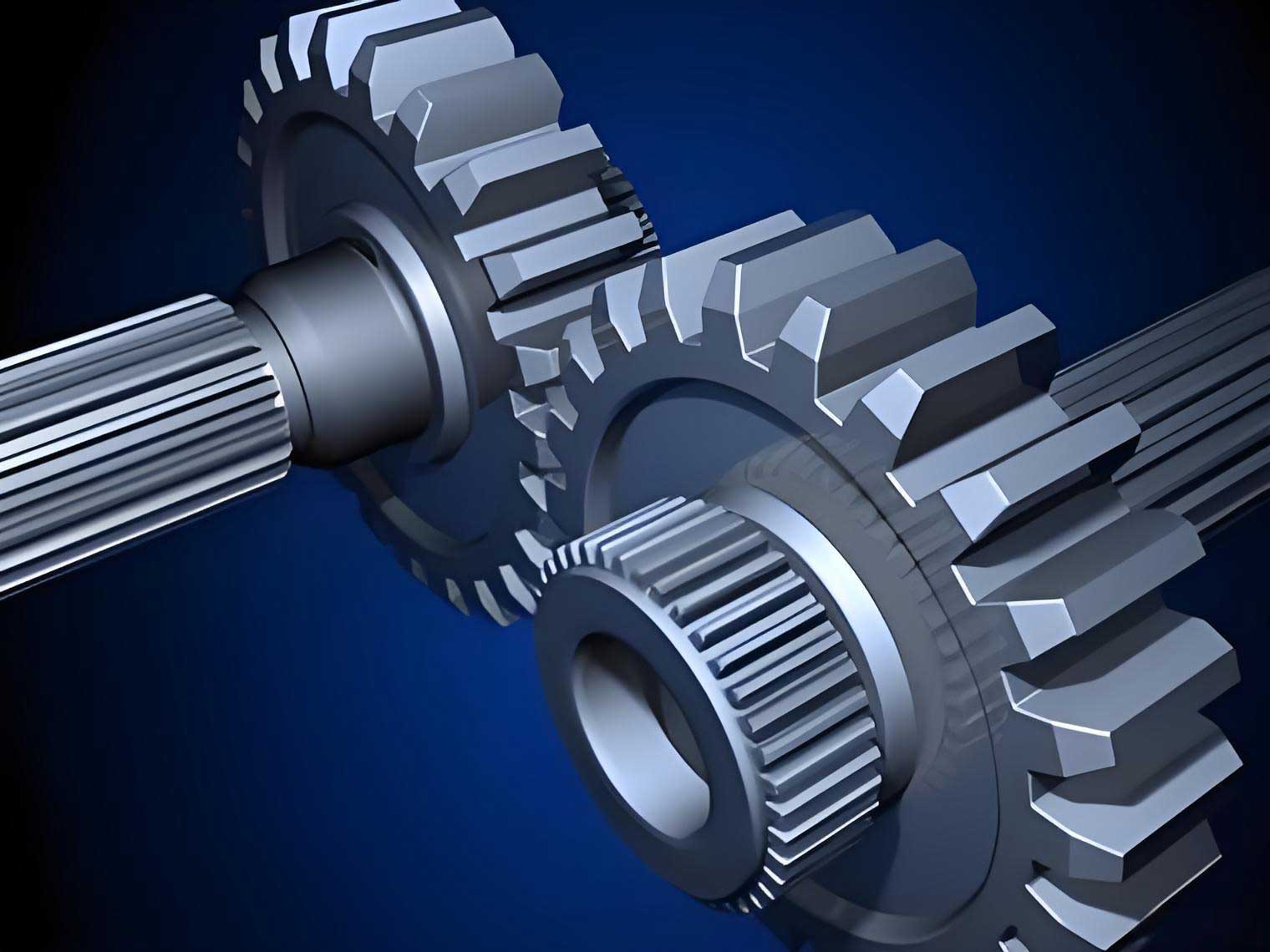
Spur gears, characterized by their straight teeth and parallel axes, are ubiquitous in machinery, making their precision paramount. In my approach, I utilize an industrial camera to capture images of spur gears post-manufacturing, following ultrasonic cleaning to minimize surface contaminants. The imaging is conducted under controlled backlighting to enhance contrast and detail. This setup is crucial for obtaining high-quality inputs for subsequent processing. The initial step involves converting the RGB image to grayscale using a standard function, which reduces computational load while preserving essential information. To address potential illumination inconsistencies, histogram equalization is applied, followed by Gaussian filtering for noise suppression. These preprocessing steps ensure that the image is primed for accurate edge detection, a foundational aspect of gear measurement.
Edge detection in gear metrology often encounters limitations when relying on pixel-level methods, as they lack the precision required for sub-micron measurements. Thus, I adopt a sub-pixel edge detection algorithm based on Zernike moments, which offers superior accuracy by modeling edges as ideal step functions. The Zernike moment for a function \(f(x, y)\) is defined as:
$$B_{nm} = \frac{n+1}{\pi} \iint_{x^2 + y^2 \leq 1} f(x, y) V_{nm}^*(\rho, \theta) \, dx \, dy$$
where \(V_{nm}^*(\rho, \theta)\) is the complex conjugate of the Zernike polynomial, \(\rho\) is the radial distance, \(\theta\) is the angular component, \(n\) is the order, and \(m\) is the repetition. For edge detection, the focus is on lower-order moments, particularly \(B_{00}\), \(B_{11}\), and \(B_{20}\), which describe the step edge parameters: the distance \(l\) from the pixel center to the edge, the step height \(k\), the background intensity \(h\), and the edge orientation \(\phi\). The rotation invariance of Zernike moments allows for the derivation of these parameters through the following relations:
$$\phi = \arctan\left(\frac{\text{Im}[B_{11}]}{\text{Re}[B_{11}]}\right)$$
$$l = \frac{B_{20}}{B_{11}’}$$
$$k = \frac{3B_{11}}{2(1 – l^2)^{3/2}}$$
$$h = \frac{B_{00} – \frac{k\pi}{2} + k \arcsin l + k l \sqrt{1 – l^2}}{\pi}$$
Here, \(B_{11}’\) represents the moment after rotation. By convolving a 7×7 template with the image, I compute these moments and apply thresholds to identify edge pixels. The distance threshold is set to \(l_t = \frac{\sqrt{2}}{2} \times \frac{1}{N}\), where \(N\) is the template size, and the intensity threshold \(k_t\) is determined using Otsu’s method, which maximizes inter-class variance in the image histogram. This automated threshold selection enhances efficiency and reduces human error, a significant improvement over manual methods.
However, the raw sub-pixel edges generated by Zernike moments can be coarse, necessitating refinement. To address this, I apply morphological filtering, specifically thinning operations, to produce sharper and more precise contours. This step is critical for accurately representing the tooth profiles of spur gears, as it minimizes pixel width and eliminates artifacts. The refined edges serve as the basis for all subsequent measurements, ensuring that the geometry of spur gears is captured with high fidelity.
With the edges refined, the next phase involves extracting basic parameters of the spur gears. The center of the gear is located using the centroid method, which involves filling the gear轮廓 with imfill functions, identifying connected regions, and computing the center of mass. This approach is both fast and accurate, providing a reliable reference point. From this center, I determine the tip and root diameters by finding the minimum bounding rectangle and the average minimum distance from the center to the轮廓, respectively. For spur gears without central holes, this process is straightforward; however, adaptations can be made for gears with holes by excluding inner regions. The number of teeth \(z\) is counted by drawing a circle between the tip and root circles, applying a mask to isolate the teeth, and tallying the connected components. These parameters form the foundation for further calculations, such as module \(m\), which is derived from the tip diameter and tooth count.
To quantify manufacturing errors, I focus on pitch deviations, which are indicative of gear quality. Pitch deviation is measured along the pitch circle, leveraging the precision of sub-pixel edges to place the reference accurately. The three key metrics are single pitch deviation \(\Delta f_{pt}\), cumulative pitch deviation over \(k\) teeth \(\Delta f_{pk}\), and total cumulative pitch deviation \(\Delta F_{p}\). The algorithm proceeds as follows: first, intersect the pitch circle with the gear轮廓 to obtain points \(p_1, p_2, \ldots, p_{2z}\); then, compute the angles between successive points relative to the center; finally, calculate deviations from the theoretical values. The formulas are:
$$\Delta f_{pt} = \max \left| \angle p_i O p_{i+2} \cdot r – \pi m \right| \quad \text{for } i = 1, 2, \ldots, 2z-2$$
$$\Delta f_{pk} = \max \left| \angle p_i O p_{i+2k} \cdot r – k \pi m \right| \quad \text{for } i = 1, 2, \ldots, 2z-2k$$
$$\Delta F_{p} = \max \left| \angle p_1 O p_{1+2i} \cdot r – i \pi m \right| \quad \text{for } i = 1, 2, \ldots, z$$
where \(r\) is the pitch radius and \(O\) is the gear center. These calculations enable a comprehensive assessment of gear accuracy, highlighting any irregularities in tooth spacing that could affect performance in applications involving spur gears.
To validate the methodology, I conducted experiments on standard spur gears, comparing the machine vision results with physical measurements obtained using coordinate measuring machines (CMMs). The data, summarized in tables below, demonstrate the algorithm’s efficacy. Table 1 presents the basic parameter measurements for a sample spur gear with 23 teeth, showing minimal relative errors. Table 2 details the pitch deviation results, with values within acceptable tolerances, confirming the method’s precision.
| Parameter | Actual Value (mm) | Measured Value (mm) | Relative Error (%) |
|---|---|---|---|
| Tip Diameter (\(d_a\)) | 49.751 | 49.759 | 0.0161 |
| Root Diameter (\(d_f\)) | 40.941 | 40.923 | 0.0439 |
| Number of Teeth (\(z\)) | 23 | 23 | 0.0000 |
The errors in tip and root diameters are less than 0.05%, underscoring the algorithm’s accuracy. This level of precision is crucial for spur gears used in high-torque applications, where even minor dimensional variances can lead to operational failures. The consistency in tooth count further validates the robustness of the edge detection and segmentation processes.
| Index | Single Pitch Deviation \(\Delta f_{pt}\) | Cumulative Pitch Deviation \(\Delta f_{pk}\) (k=3) | Total Cumulative Deviation \(\Delta F_{p}\) |
|---|---|---|---|
| 1 | 0.00339 | 0.00963 | 0.01449 |
| 2 | 0.03805 | 0.02840 | 0.01273 |
| 3 | 0.00176 | 0.02852 | 0.02505 |
| 4 | 0.02338 | 0.00252 | 0.01449 |
| 5 | 0.00511 | 0.04352 | 0.03028 |
| 6 | 0.01713 | 0.01232 | 0.05154 |
| Max Value | 0.03805 | 0.04352 | 0.05154 |
The pitch deviation measurements reveal that the maximum single pitch deviation is 0.03805 mm, while the total cumulative deviation reaches 0.05154 mm. These values align with industry standards for spur gears, indicating that the gear under test meets typical accuracy requirements. The algorithm’s ability to capture these细微 deviations highlights its sensitivity and reliability, making it suitable for online inspection systems where real-time feedback is essential for quality control in spur gear production.
Beyond basic parameters and pitch deviations, the methodology can be extended to other gear characteristics, such as tooth profile errors, runout, and surface defects. For instance, by analyzing the sub-pixel edge contours, I can compute the involute shape of spur gears and compare it to theoretical models using differential geometry. The curvature \(\kappa\) at any point on the tooth profile can be approximated from the edge points \((x_i, y_i)\) as:
$$\kappa = \frac{|x’y” – y’x”|}{(x’^2 + y’^2)^{3/2}}$$
where derivatives are obtained via finite differences. This allows for the quantification of profile deviations \(\Delta f_f\), which are critical for noise and vibration performance in spur gears. Additionally, by integrating machine learning classifiers, the system can automatically detect anomalies like pitting or wear, further enhancing its utility in predictive maintenance for spur gear systems.
In terms of implementation, the entire algorithm is developed in a MATLAB environment, leveraging its image processing toolbox for operations like filtering, morphology, and connected component analysis. The code is modular, consisting of functions for image preprocessing, Zernike moment computation, edge refinement, parameter extraction, and deviation calculation. This modularity facilitates adaptation to different spur gear geometries and imaging conditions. For example, for larger spur gears, the template size in Zernike moments can be adjusted to balance accuracy and computational cost. Similarly, the thresholding methods can be modified for images with varying contrast levels, ensuring robustness across production batches.
One of the key advantages of this machine vision approach is its non-contact nature, which eliminates the risk of surface damage during measurement—a common concern with tactile probes. Moreover, the speed of image acquisition and processing enables high-throughput inspection, making it ideal for assembly lines where thousands of spur gears are produced daily. The real-time capability stems from the efficient algorithms; for instance, the Zernike moment convolution is optimized using integral images, reducing the complexity from \(O(N^2)\) to \(O(N)\) for certain operations. This efficiency is vital for maintaining production pace without compromising on measurement quality.
Error analysis is an integral part of this research. The primary sources of error include camera calibration inaccuracies, lens distortions, lighting variations, and quantization effects in sub-pixel interpolation. To mitigate these, I employ calibration grids to correct spatial distortions and use uniform LED arrays for consistent illumination. The quantization error in sub-pixel coordinates is bounded by the pixel size; with a camera resolution of 5 megapixels and a field of view covering a 50 mm gear, the pixel resolution is approximately 10 µm, and sub-pixel techniques reduce this to around 1 µm. This is sufficient for most spur gear applications, where tolerances are typically in the range of 10–20 µm. Furthermore, statistical methods like repeated measurements and averaging are used to enhance reliability, as seen in the root diameter calculation where 20 minimum distances are averaged.
The methodology also considers the impact of environmental factors, such as temperature and humidity, on measurement stability. In industrial settings, thermal expansion can affect both the gear and the imaging system. To account for this, I incorporate temperature sensors and apply correction coefficients based on material properties of spur gears, often made of steel or plastic. For example, the linear expansion coefficient \(\alpha\) for steel is \(11 \times 10^{-6} \, \text{K}^{-1}\), so a temperature change \(\Delta T\) induces a dimensional change \(\Delta L = \alpha L \Delta T\). This correction is applied to all linear measurements, ensuring accuracy across operating conditions.
Looking ahead, there are several avenues for enhancement. Integrating deep learning for edge detection could further improve accuracy, especially for worn or damaged spur gears where traditional algorithms may struggle. Additionally, multi-camera setups can provide 3D reconstructions of spur gears, enabling the measurement of helical angles or tooth lead variations. The fusion of machine vision with other sensors, such as lasers or structured light, could yield comprehensive digital twins of spur gears, facilitating virtual testing and optimization.
In conclusion, this research presents a robust and precise methodology for the online measurement of spur gears using machine vision. By combining Zernike moment sub-pixel edge detection with morphological refinement and automated thresholding, the algorithm achieves high accuracy in parameter extraction and error assessment. The results demonstrate that the approach is viable for industrial applications, offering non-contact, real-time, and cost-effective inspection. As manufacturing trends toward smart factories and Industry 4.0, such technologies will become increasingly vital for ensuring the quality and performance of spur gears in diverse mechanical systems. Future work will focus on scalability and integration with cloud-based analytics for predictive quality control, further solidifying the role of machine vision in gear metrology.
Throughout this exploration, the importance of spur gears in mechanical transmission cannot be overstated, and the need for precise measurement techniques continues to drive innovation. The methods detailed here not only address current challenges but also provide a foundation for advancing the field, ultimately contributing to more reliable and efficient machinery worldwide. By embracing machine vision, manufacturers can achieve new levels of quality assurance, reducing waste and enhancing productivity in the production of spur gears.