
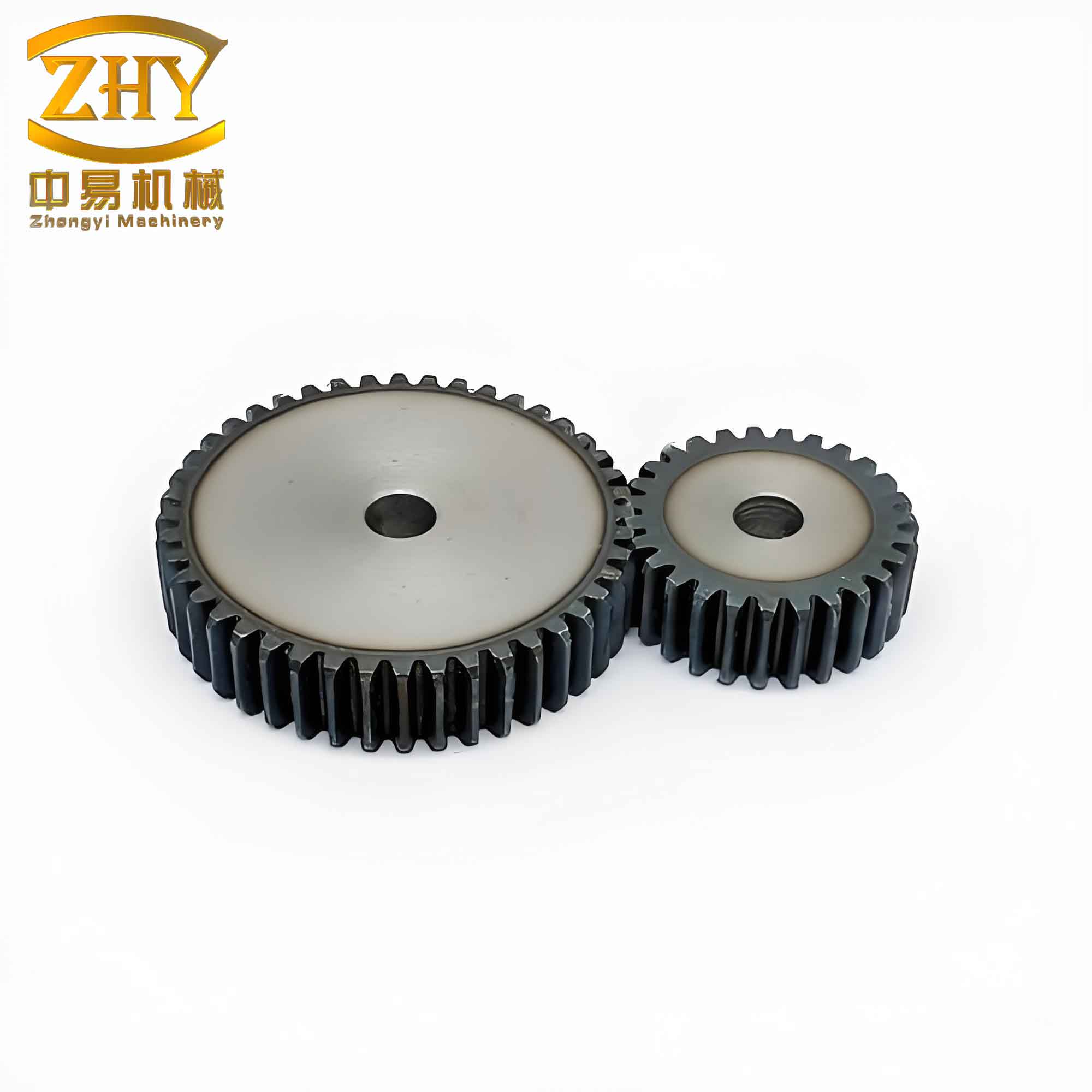
In recent years, the growing tension in resource availability has become a critical issue in global development. The application of thermal and power engineering in thermal power plants offers a viable solution to alleviate energy shortages, making it a vital engineering discipline. In the domain of scientific and technological innovation within thermal and power engineering, the primary focus is on achieving high efficiency and energy conservation in practical operations. Research and development of new products, as well as technological innovations, are generally guided by the principle of reducing energy consumption. This article discusses the research directions, existing problems, and future prospects of thermal and power engineering projects in thermal power plants, with the aim of promoting further optimization of plant operations and enhancing energy utilization efficiency. Throughout the discussion, I will emphasize the critical role of the straight spur gear as a key mechanical component in various power transmission and conversion systems, demonstrating how its design and performance directly influence the overall efficiency and reliability of thermal power systems.
Research Directions of Thermal and Power Engineering
Thermal and power engineering is fundamentally grounded in engineering thermophysics. It focuses on internal combustion engines and other emerging power machinery and systems, incorporating knowledge from engineering mechanics, mechanical engineering, automatic control, computer science, environmental science, and microelectronics. The discipline studies the safe, efficient, and low-pollution conversion of chemical energy from fuels and kinetic energy from liquids into mechanical power, as well as the automatic control technologies for the systems and equipment involved in these conversion processes. A typical example of such mechanical systems is the gearbox used in boiler fans or turbine-generator units, where the straight spur gear is often employed for its simplicity, high efficiency, and ease of manufacturing. Understanding the stress distribution, tooth contact patterns, and lubrication of straight spur gears under varying thermal and mechanical loads is essential for optimizing power transmission in energy conversion systems.
Table 1 below summarizes the main research directions and their corresponding mechanical focus areas related to straight spur gear applications.
| Research Direction | Key Objectives | Straight Spur Gear Involvement |
|---|---|---|
| Efficient combustion and heat transfer | Maximize fuel-to-heat conversion, reduce irreversibilities | Gears in fuel pumps and air compressors for precise flow control |
| Power conversion and transmission | Convert thermal energy into mechanical work with high efficiency | Straight spur gears in turbine-gearbox assemblies to match rotational speeds |
| Mechatronics and automatic control | Real-time monitoring and adaptive regulation of power plants | Encoder gears and feedback mechanisms using straight spur gear trains |
| Renewable and hybrid systems | Integration of thermal power with solar, wind, and storage | Straight spur gears in variable-speed drives for hybrid turbines |
| Materials and tribology | Develop high-temperature resistant alloys and coatings | Wear analysis of straight spur gear teeth under cyclic thermal loading |
One fundamental equation used to model the power transmission through a gear train, particularly for a pair of meshing straight spur gears, is the relationship between torque, rotational speed, and power:
$$
P = T \cdot \omega = T \cdot \frac{2\pi n}{60}
$$
where \(P\) is the power transmitted (W), \(T\) is the torque (N·m), \(\omega\) is the angular velocity (rad/s), and \(n\) is the rotational speed (rpm). In a thermal power plant, the steam turbine or gas turbine rotates at a high speed (typically 3000 or 3600 rpm for 50/60 Hz grids), while the generator must also run at synchronous speed. A gearbox containing straight spur gears may be used to step down or step up the speed, depending on the configuration. The efficiency of this gear train directly affects the overall plant thermal efficiency. The gear efficiency can be expressed as:
$$
\eta_{gear} = \frac{P_{out}}{P_{in}} = \frac{T_{out} \omega_{out}}{T_{in} \omega_{in}}
$$
For an ideal straight spur gear pair with no friction losses, \(\eta_{gear} = 1\), but in reality, sliding friction, rolling friction, and windage losses reduce this value. Modern research focuses on optimizing tooth profiles and lubrication to keep gear efficiencies above 98%.
Problems in Thermal and Power Engineering Innovation
Energy Consumption Challenges
China is currently one of the largest energy consumers globally, accounting for a significant share of the world’s oil, coal, and electricity consumption. A large proportion of coal is used for thermal power generation, which accounts for over 70% of the country’s total electricity output. In the power generation process, substantial amounts of thermal energy, waste heat, and residual pressure are carried away by circulating water and steam, directly discharged into the atmosphere, causing energy waste. Currently, the energy utilization rate of Chinese thermal power plants is only about 35-40%. Therefore, energy saving and consumption reduction in thermal power are critical areas for industrial energy efficiency. For example, fans (forced draft, induced draft, and primary air fans) are major electricity consumers in power stations. The motors driving these fans are often connected through gearboxes that incorporate straight spur gears. The efficiency of these gears directly contributes to the overall fan system efficiency. Reducing the power consumption of fans can be achieved by optimizing the gearbox design, using high-precision straight spur gears with lower friction and better load distribution.
Consider a typical forced draft fan system. The power required by the fan is given by:
$$
P_{fan} = \frac{Q \cdot \Delta p}{\eta_{fan} \cdot \eta_{motor} \cdot \eta_{gear}}
$$
where \(Q\) is the volumetric flow rate (m³/s), \(\Delta p\) is the pressure rise (Pa), \(\eta_{fan}\) is the fan efficiency, \(\eta_{motor}\) is the motor efficiency, and \(\eta_{gear}\) is the efficiency of the gear train (including the straight spur gear mesh). If the gear efficiency drops from 98% to 95%, the overall power consumption increases by about 3%, which translates to substantial annual energy costs for a large utility fan.
Environmental Pollution Challenges
Due to the difficulty of reducing emissions of sulfur dioxide (SO₂), nitrogen oxides (NOₓ), and particulate matter, coal-fired power plants are often labeled as “environmental killers.” With the rapid development of the power industry and the construction of many coal-fired plants, the environmental impact of these emissions has intensified. Thermal power plants are characterized by large and concentrated pollutant discharges, leading to increasingly severe environmental problems. Furthermore, severe pollution disrupts the daily lives of nearby residents and endangers public health. In the context of straight spur gear applications, environmental concerns also relate to noise pollution. Gear noise, especially from high-speed straight spur gears, is a significant issue in many auxiliary systems such as coal mills, fans, and pumps. Noise level can be reduced by modifying tooth profiles (e.g., using helical gears instead of straight spur gears, but that may conflict with the requirement to emphasize straight spur gears). Alternatively, vibration damping coatings and precision manufacturing can lower the noise generated by straight spur gears, contributing to a more environmentally friendly plant.
The sound power level of a straight spur gear pair can be approximated by empirical formulas. One common expression is:
$$
L_w = K + 10 \log_{10}(P) + 20 \log_{10}(v) + 5 \log_{10}(b) \quad \text{(dB)}
$$
where \(P\) is the transmitted power (kW), \(v\) is the pitch line velocity (m/s), \(b\) is the face width (mm), and \(K\) is a constant depending on gear quality and tooth geometry. For straight spur gears, \(K\) typically ranges from 70 to 80. Reducing the pitch line velocity or improving gear accuracy can lower the noise level.
Safety Challenges
As power plant units evolve toward larger capacities, higher speeds, higher efficiencies, and greater automation, the safety and reliability requirements for all components, including gearboxes, have become increasingly stringent. Boiler fans, for example, often suffer from motor burnout, shaft misalignment, impeller overspeed, and bearing failures, which can cause severe equipment damage, personal injury, and enormous economic losses. The gearbox connecting the motor to the fan is a critical link. A poorly designed straight spur gear may experience pitting, tooth breakage, or scuffing under high thermal and mechanical stresses. The gear tooth root stress is a key design parameter that can be calculated using the Lewis formula modified for straight spur gears:
$$
\sigma = \frac{F_t}{b \cdot m \cdot Y}
$$
where \(\sigma\) is the bending stress (MPa), \(F_t\) is the tangential load (N), \(b\) is the face width (mm), \(m\) is the module (mm), and \(Y\) is the Lewis form factor (dimensionless). For safe operation, the calculated stress must be less than the permissible bending strength of the gear material, considering a safety factor. To enhance safety, innovations in straight spur gear manufacturing, such as case hardening, shot peening, and superfinishing, are being investigated.
Advantages of Scientific and Technological Innovations in Thermal and Power Engineering
The application of the Flügel formula (Stodola-Flügel law) is one of the core theoretical tools in steam turbine performance analysis. The formula relates the steam flow through a group of stages to the pressure ratio. For a group of stages, when any stage reaches its critical condition, the maximum backpressure of the group is determined. The more stages in the group, the lower this numerical value, i.e., the smaller the critical pressure ratio. The application conditions of the Flügel formula require that the number of stages in the group should be no less than 3. Under the same operating condition, the mass flow through each stage in the group is the same. Under different conditions, the flow area of each stage in the group should remain constant. The practical use of the Flügel formula includes: deducing the stage pressures under different flow rates, calculating the pressure difference and enthalpy drop of each stage, thereby determining the power, efficiency, and stress distribution on components, and monitoring whether the flow path of the turbine is normal. By comparing the actual stage group pressures with those predicted by the Flügel formula, engineers can detect whether the flow area has changed (e.g., due to fouling or erosion). Interestingly, a similar “flow analogy” can be applied to gearbox lubrication systems. The oil flow rate through a straight spur gear mesh is analogous to steam flow through turbine stages. The relationship between oil flow and pressure drop across the gear mesh can be used to monitor gear wear. When gear teeth wear, the clearance between meshing teeth increases, altering the oil flow resistance. This concept is still in the research phase but holds promise for condition monitoring of straight spur gears in thermal power plants.
Characteristics of Pressure Regulation (Sliding Pressure Operation)
Sliding pressure (or variable pressure) operation improves the reliability of the unit and its adaptability to load changes. It also enhances the economy of the unit under partial loads. However, in the high load region, sliding pressure regulation is less economical. It is suitable for large-capacity units. In the context of straight spur gear applications, sliding pressure operation often involves variable-speed drives for pumps and fans. A variable-speed gearbox (e.g., using a planetary gear train combined with a straight spur gear input) can adjust the speed of the boiler feed pump or cooling water pump without throttling valves, thus saving energy. The efficiency of such a gearbox depends on the design of the straight spur gears used in the planetary set.
Throttling Regulation in Thermal Power Engineering
During the operation of a thermal power plant, proper throttle regulation should be adopted. In throttling control, since there is no dedicated control stage classification, other means must be used to ensure the effectiveness of throttle control. When the first stage of the steam turbine is designed for full-arc admission, if the operating condition changes, the stage temperatures tend to decrease. If the turbine unit operates well, a small-capacity unit or a base-load large unit can be used. When economy is poor, measures should be taken to address throttling losses. By determining the power, efficiency, and stress conditions of the turbine components, the operating state of the turbine can be closely monitored. In this process, using known flow conditions, the flow area change is analyzed by combining the stage pressure formulas of the operating unit. From this perspective, the application of the Flügel formula in thermal power plants ensures the effectiveness of throttle control, thus creating favorable conditions for the efficient operation of thermal and power engineering. To further reduce throttling losses, variable-speed drives using straight spur gear gearboxes are often preferred. For example, a constant-speed motor can be coupled to a variable-speed gearbox that incorporates a straight spur gear differential system, allowing the pump speed to be adjusted continuously, eliminating throttle valves entirely.
Reducing Wetness Losses
In thermal power plant operation, wetness loss is an important source of energy loss. Therefore, reducing wetness loss not only improves the efficiency of the steam turbine but also benefits the application of thermal and power engineering. Wetness loss mainly occurs because in the turbine, wet steam expands, and due to temperature differences, some steam partially condenses, leading to a reduction in steam mass flow. At the same time, the velocity of steam is much higher than that of water droplets. Under the drag effect of droplets, kinetic energy is significantly consumed. Furthermore, supercooling of wet steam increases steam losses. During turbine operation, in addition to overcoming the friction of journal bearings and thrust bearings, the main oil pump and governor must be started quickly, requiring a portion of mechanical losses. At this point, an axial-flow turbine can be used, with high-pressure steam introduced at one end and low-pressure steam exhausted at the other, ensuring a pressure gradient from high to low, reducing energy consumption and greatly improving the application efficiency of thermal and power engineering. The mechanical losses include losses from gearings, such as the straight spur gear train that drives the main oil pump. These gears operate in a high-speed, high-temperature environment, and their efficiency directly contributes to the overall mechanical loss. The meshing efficiency of a straight spur gear under oil-lubricated conditions is typically above 98%, but if the gear teeth are not properly designed, additional churning losses can occur.
Table 2 summarizes typical efficiency values for various components in thermal power plants, including the influence of straight spur gears.
| Component | Typical Efficiency Range (%) | Remarks on Straight Spur Gear Influence |
|---|---|---|
| Steam turbine (high pressure) | 85-90 | Wetness losses reduce efficiency; gearing for auxiliary drives uses straight spur gears |
| Generator | 97-99 | Directly coupled or via gearbox; gearbox loss (if present) accounted separately |
| Boiler fan (with gearbox) | 75-85 (system) | Gearbox efficiency typically 95-98% for straight spur gears |
| Feed pump (with gearbox) | 80-90 (system) | Straight spur gears often used in high-speed pumps for simplicity and cost |
| Main oil pump drive gear | 95-98 | Straight spur gear train; efficiency affected by tooth profile and lubrication |
The following formula illustrates the relationship between wetness loss and turbine efficiency. For a stage operating in the wet steam region, the stage efficiency is reduced by a wetness factor \(f_w\):
$$
\eta_{stage} = \eta_{stage,dry} \times (1 – a \cdot y)
$$
where \(y\) is the average wetness fraction (in percent, e.g., 0.1 for 10% wetness), and \(a\) is an empirical coefficient typically around 0.5 to 1.0. When wetness is high (e.g., 15%), the stage efficiency can drop by up to 7.5%. The mechanical losses from the straight spur gear driving the condensing pump or extraction pump are relatively small but consistent. Over a long operating period, cumulative gear wear can increase the mechanical loss by 0.5-1%, which is still significant for a large plant.
Conclusion
Building a resource-conserving and environment-friendly society (often referred to as a “two-oriented society”) is a new initiative proposed by the central government in the new era, an inherent requirement for implementing the scientific development concept and constructing a harmonious society. In the reform process of thermal power plants, efforts should focus on the energy-saving and emission-reducing retrofitting of thermal equipment and systems. In this article, I have only briefly listed a few energy-saving and emission-reduction measures. There are many other effective measures that deserve in-depth study, such as adopting advanced technologies like liquid slag removal, low-nitrogen combustion, and fly ash reinjection in boilers, as well as using electrostatic precipitators with efficiency above 99%. All of these require us to invest effort in research and problem-solving during actual production. Among these, the design and maintenance of mechanical transmission systems, particularly those employing straight spur gears, are often overlooked. However, as I have demonstrated throughout this article, the straight spur gear plays an indispensable role in fan drives, pump drives, oil pump drives, and other auxiliary systems. Innovations in gear materials, tooth profiles, and lubrication can lead to measurable improvements in overall plant efficiency, safety, and environmental performance. Future research should focus on integrating advanced gear condition monitoring into plant control systems, allowing predictive maintenance and real-time optimization of straight spur gear performance. By continuously improving the efficiency and reliability of such fundamental components, thermal and power engineering can make greater contributions to sustainable energy development.
In summary, the synergy between thermodynamic innovations and mechanical design innovations, especially concerning the ubiquitous straight spur gear, is a promising avenue for achieving the ambitious goals of energy conservation and emission reduction in the power industry.