
In precision gear manufacturing, metalworking fluids significantly impact productivity and tool longevity. Our collaboration with Woitschach GmbH demonstrated how optimized coolant selection revolutionizes carbide and HSS gear tool processing. As specialists in gear technology, we identified key challenges in their gear hob production line: inconsistent pitch accuracy, premature wheel wear, and excessive burring requiring secondary operations.
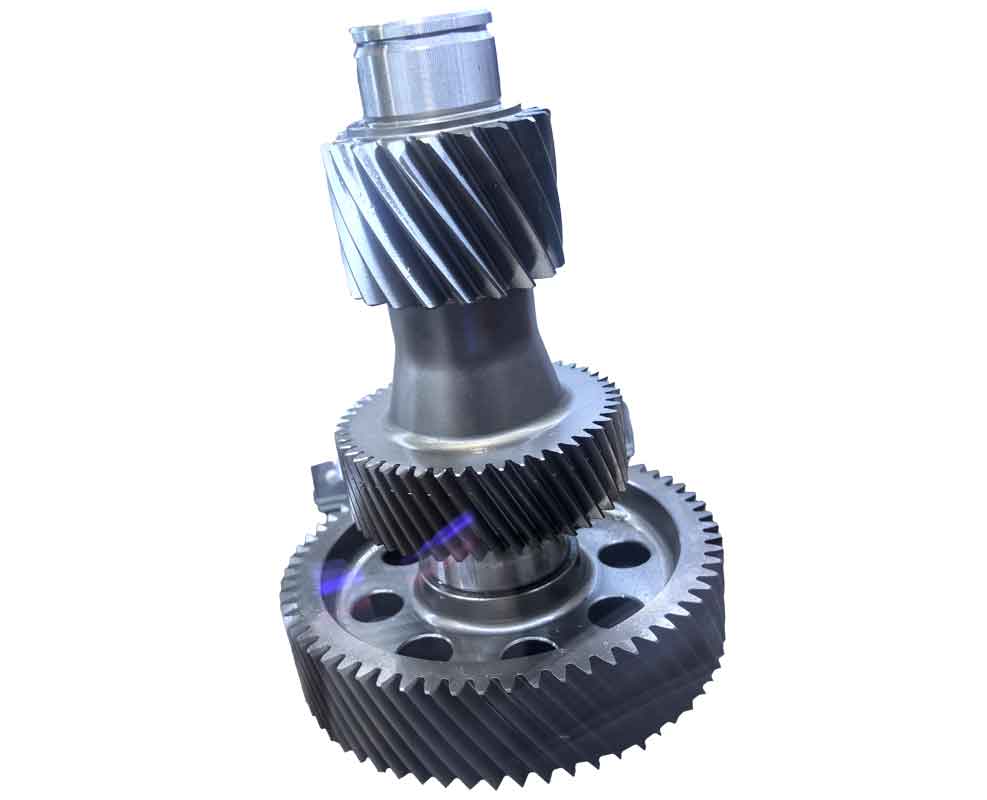
Blasogrind GTC 7 grinding oil transformed their gear technology operations through its unique physicochemical properties. The formulation’s rapid air release characteristic minimizes vapor barrier effects, ensuring direct contact between abrasive grains and workpiece material. This enhances cooling efficiency according to the heat transfer equation:
$$ Q = h \cdot A \cdot \Delta T $$
Where \( Q \) = heat transfer rate, \( h \) = heat transfer coefficient, \( A \) = contact area, and \( \Delta T \) = temperature differential. Higher \( h \) values reduce thermal stress in gear tool edges, preventing micro-cracking that compromises gear tooth geometry.
| Performance Metric | Conventional Fluid | Blasogrind GTC 7 | Improvement |
|---|---|---|---|
| Material Removal Rate (Q’w) | 18 mm³/mms | 24 mm³/mms | +33% |
| Surface Roughness (Ra) | 0.32 μm | 0.18 μm | -44% |
| Dressing Intervals | 15 workpieces | 22 workpieces | +47% |
| Burr Formation | High (40% rework) | Low (8% rework) | -80% |
The non-polar additives in Blasogrind GTC 7 enhance lubrication film strength during critical gear hob grinding operations. This reduces friction coefficient according to the Stribeck curve relationship:
$$ \mu = f\left( \frac{\eta \cdot v}{P} \right) $$
Where \( \mu \) = friction coefficient, \( \eta \) = dynamic viscosity, \( v \) = relative speed, and \( P \) = contact pressure. Optimized viscosity modifiers maintain hydrodynamic lubrication even at extreme pressures encountered in carbide gear tool machining.
Woitschach GmbH’s implementation across three CNC platforms demonstrated 10% overall efficiency gains in their gear technology workflow. The improved wheel life reduced machine downtime by 22%, while superior surface quality decreased polishing requirements by 35%. These cumulative benefits significantly impacted their gear manufacturing economics:
| Cost Factor | Pre-Implementation | Post-Implementation |
|---|---|---|
| Coolant Consumption | 120 L/month | 95 L/month |
| Abrasive Wheel Cost | €3,200/month | €2,350/month |
| Secondary Operations | 22% of cycle time | 9% of cycle time |
| Scrap Rate | 5.2% | 1.8% |
Gear pitch accuracy improvements were particularly notable in helical gear production, where angular deviations directly impact meshing performance. The thermal stability of Blasogrind GTC 7 maintained consistent dimensional control even during extended machining cycles. This precision is quantified by the cumulative pitch error formula:
$$ F_p = \sum_{i=1}^{n} |\phi_{i,\text{actual}} – \phi_{i,\text{theoretical}}| $$
Implementation reduced \( F_p \) values by 27% across Woitschach’s gear hob product range. Such advancements in gear technology enable tighter tolerances for demanding applications in automotive transmissions and aerospace gear systems.
Surface integrity improvements were validated through microhardness testing. The optimized cooling characteristics of Blasogrind GTC 7 minimized the affected layer depth (ALD) according to the relationship:
$$ \text{ALD} = k \cdot \sqrt{t} \cdot e^{-E_a / RT} $$
Where \( k \) = material constant, \( t \) = exposure time, \( E_a \) = activation energy, \( R \) = gas constant, and \( T \) = temperature. Reduced ALD (from 15μm to 8μm) significantly enhanced gear tool fatigue resistance.
Future developments will focus on nano-additive technologies to further enhance extreme pressure performance for next-generation gear manufacturing. Continuous improvement in gear technology remains essential as material hardness requirements increase beyond 70 HRC. Our ongoing collaboration with Woitschach GmbH explores adaptive fluid delivery systems that synchronize coolant parameters with CNC grinding paths, promising additional efficiency breakthroughs in precision gear production.