
I begin this development work from a practical industrial need: the growing automobile market has created a large demand for steering gear grease, especially for the rack and pinion gear steering system used in passenger cars. According to industrial data, in 2014 the cumulative automobile production reached 23.7229 million units, a year-on-year increase of 7.3%, while automobile sales reached 23.4919 million units, a year-on-year increase of 6.9%. Both production and sales remained first in the world. This scale of automobile production and sales means that the demand for rack and pinion gear grease is large. However, this market has been occupied mainly by high-quality imported greases, and domestic technical literature and products for rack and pinion gear grease have been relatively limited. Therefore, I decided to develop a domestic rack and pinion gear grease with practical significance for the automobile steering system.
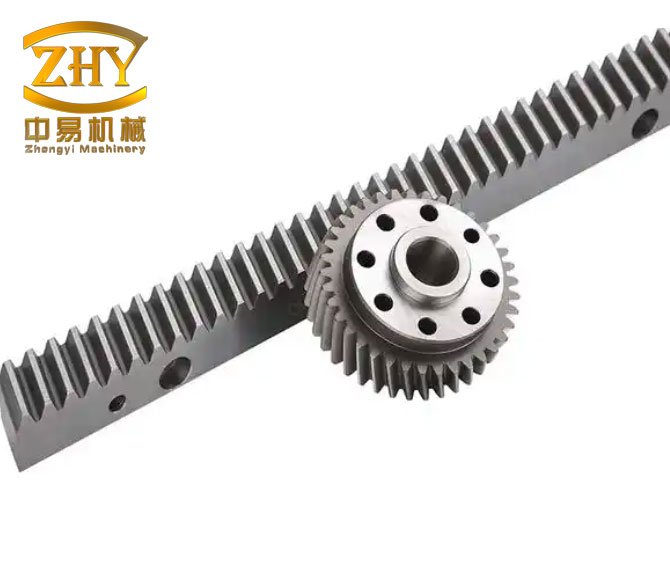
I focused my work on the rack and pinion gear steering system because this type of steering gear is widely used in passenger cars. In a rack and pinion gear system, the rotation of the pinion gear drives the rack to move left and right. This structure is simple and convenient to arrange. Two steering tie rods and corresponding ball joints can be added at both ends of the rack to control the swing of the steering knuckle. When steering assistance is required, whether hydraulic or electric, the rack and pinion gear system can be integrated easily with the assistance mechanism. Because of these advantages, the rack and pinion gear architecture dominates passenger-car steering applications. At the same time, the rack and pinion gear contact operates under low speed, high load, and mixed sliding-rolling conditions, so the lubricating grease must be carefully designed.
Before I finalized the formulation direction, I reviewed the common automobile steering gear types. The main types are the recirculating ball steering gear, the worm and crank pin steering gear, and the rack and pinion gear steering gear. Their operating principles, advantages, and limitations are summarized in Table 1. The table shows why the rack and pinion gear steering system requires a dedicated grease rather than a general-purpose chassis grease.
| Steering gear type | Operating principle | Main advantages | Main limitations | Typical application |
|---|---|---|---|---|
| Recirculating ball steering gear | Recirculating steel balls are placed between the screw and nut so that sliding friction becomes rolling friction. | Light operation, low wear, long service life. | Complex structure, higher cost, steering sensitivity lower than that of a rack and pinion gear system. | Some larger vehicles and older steering designs. |
| Worm and crank pin steering gear | The worm is the driving member and the crank pin is the driven member. | Suitable for high steering force. | Usually heavier and less compact than a rack and pinion gear system. | Heavy trucks and commercial vehicles. |
| Rack and pinion gear steering gear | Pinion gear rotation drives the rack left and right; the rack then moves the tie rods. | Simple structure, convenient layout, easy integration with hydraulic or electric assistance. | Requires good protection against wear, rust, and grease loss at the rack and pinion gear contact. | Passenger cars and light vehicles. |
The rack and pinion gear steering gear is especially important because it combines a compact layout with high steering precision. In this system, the rack and pinion gear mesh experiences both rolling and sliding. The contact pressure can be high, and the relative speed can be low. This creates a boundary lubrication regime, especially during parking maneuvers and low-temperature starts. Therefore, the rack and pinion gear grease must form a stable lubricating film, reduce friction, prevent wear, and remain in place over a wide temperature range.
I then translated the operating conditions of the rack and pinion gear into grease performance requirements. Automobiles usually operate outdoors, where the temperature difference can be large. In winter in northern regions, the temperature can fall to -40 °C, while in summer in southern regions, the temperature under direct sunlight can exceed 70 °C. Therefore, the rack and pinion gear grease must have good high- and low-temperature performance. To prevent base oil loss at high temperature and the resulting loss of lubrication, the oil separation of the rack and pinion gear grease must be low, which means good colloidal stability. To keep the rack and pinion gear steering system in a good lubrication state for a long time, the grease must have excellent oxidation resistance. Because the rack and pinion gear rotates at low speed and experiences severe friction, mainly sliding friction, the grease must have good lubricity and anti-wear performance. In addition, metal protection and seal compatibility must be good.
The performance requirements for the rack and pinion gear grease can be expressed as a set of technical targets. I set these targets by referring to the performance of a well-known imported rack and pinion gear grease. The target values are listed in Table 2. The intended service temperature range of the developed rack and pinion gear grease is -40 °C to 150 °C.
| Property | Target value | Test method |
|---|---|---|
| Worked penetration at 25 °C | 310 to 340 units | GB/T 269 |
| Unworked micro penetration at -40 °C | ≥ 46 units | GB/T 269 |
| Similar viscosity at -40 °C and 10 s-1 | ≤ 1800 Pa·s | SH/T 0048 |
| Copper strip corrosion at 100 °C for 24 h | No green or black change | GB/T 7326 Method B |
| Oxidation pressure drop at 99 °C for 100 h | ≤ 20.0 kPa | SH/T 0325 |
| Drop point | ≥ 190 °C | GB/T 4929 |
| Steel mesh oil separation at 100 °C for 24 h | ≤ 5.8% | SH/T 0324 |
| Evaporation loss at 99 °C for 22 h | ≤ 0.25% | GB/T 7325 |
| Last non-seizure load | ≥ 1000 N | SH/T 0202 |
| Welding load | ≥ 1960 N | SH/T 0202 |
For the base oil design, I considered two main factors: the low-temperature working condition of the rack and pinion gear steering system and the grease-forming ability and cost of the base oil. I selected a high-viscosity-index API Group II base oil and blended it with a poly-α-olefin, abbreviated as PAO, which has excellent low-temperature performance. I controlled the kinematic viscosity of the blended base oil at 40 °C within the range of 61.2 mm²/s to 74.8 mm²/s. The typical physicochemical data of the blended base oil are shown in Table 3.
| Property | Typical value |
|---|---|
| Kinematic viscosity at 40 °C | 65.45 mm²/s |
| Viscosity index | 101 |
| Pour point | -35 °C |
The viscosity index is a useful indicator of how much the viscosity changes with temperature. I used the standard definition:
$$ VI = \frac{L – U}{L – H} \times 100 $$
In this equation, \(U\) is the kinematic viscosity of the oil at 40 °C, \(L\) is the kinematic viscosity at 40 °C of a reference oil with viscosity index 0 that has the same viscosity at 100 °C as the tested oil, and \(H\) is the kinematic viscosity at 40 °C of a reference oil with viscosity index 100 that has the same viscosity at 100 °C as the tested oil. A higher viscosity index means that the rack and pinion gear grease can maintain a more stable oil film as the temperature changes. For blending two base stocks, I also considered the mixing rule:
$$ \log \log(\nu + 0.7) = x_1 \log \log(\nu_1 + 0.7) + x_2 \log \log(\nu_2 + 0.7) $$
Here, \(\nu\) is the blended kinematic viscosity, \(\nu_1\) and \(\nu_2\) are the viscosities of the two base stocks, and \(x_1\) and \(x_2\) are their mass fractions. This relationship helped me adjust the ratio of the high-viscosity-index mineral oil and the PAO so that the final rack and pinion gear grease would have the desired low-temperature fluidity and high-temperature film thickness.
For the thickener, I selected lithium 12-hydroxystearate soap. This thickener has excellent mechanical stability, a long service life, and good water resistance. These features are important because an automobile may encounter humid environments caused by climate or geographical location. The lithium 12-hydroxystearate soap also has strong thickening ability, which allows me to obtain a stable grease structure with a reasonable soap content. I thickened the blended base oil with lithium 12-hydroxystearate soap to produce a base grease. The typical data of the base grease are shown in Table 4.
| Property | Typical value |
|---|---|
| Appearance | White uniform grease |
| Worked penetration at 25 °C | 315 units |
| Unworked micro penetration at -40 °C | 50 units |
| Drop point | 201 °C |
| Steel mesh oil separation at 100 °C for 24 h | 4.0% |
| Similar viscosity at -40 °C and 10 s-1 | 1212 Pa·s |
The base grease showed good high- and low-temperature performance. This confirmed that my selection of the thickener and base oil system was reasonable for a rack and pinion gear grease. The low-temperature micro penetration and similar viscosity indicated that the rack and pinion gear could still be lubricated during cold starts. The high drop point and low oil separation indicated that the grease could remain in the rack and pinion gear contact under high-temperature operation.
I then investigated the additive package. Because the rack and pinion gear operates at low speed and under severe friction, mainly sliding friction, the anti-wear and extreme-pressure performance must be high. I evaluated several combinations of anti-wear and extreme-pressure additives. The results are shown in Table 5. The wear scar test conditions were 392 N, 1200 r/min, and 5 min.
| Anti-wear and extreme-pressure additive combination | Welding load / N | Wear scar / mm |
|---|---|---|
| 0.5% sulfur-containing additive + 1.0% phosphorus-containing additive + 1.0% molybdenum compound | 1960 | 0.363 |
| 1.0% molybdenum compound + 1.0% zinc salt | 1960 | 0.357 |
| 1.0% phosphorus-containing additive + 0.5% molybdenum compound + 1.0% zinc salt | 1960 | 0.332 |
From these results, I found that the 2.5% complex anti-wear and extreme-pressure additive composed of 1.0% phosphorus-containing additive, 0.5% molybdenum compound, and 1.0% zinc salt gave the smallest wear scar and the best anti-wear performance. Therefore, I selected this combination for the rack and pinion gear grease. The phosphorus-containing additive can form a tribofilm under boundary conditions, the molybdenum compound can reduce friction, and the zinc salt can contribute to anti-wear film formation. Together, they improve the durability of the rack and pinion gear contact.
To extend the service life of the rack and pinion gear grease, I also added an antioxidant and a metal deactivator. The antioxidant reduces oxidation, while the metal deactivator lowers the catalytic oxidation activity of metals and thus provides auxiliary antioxidant effects. I evaluated several antioxidant and thiadiazole derivative metal deactivator combinations. The results are shown in Table 6.
| Antioxidant and metal deactivator combination | Oxidation pressure drop at 99 °C for 100 h / kPa |
|---|---|
| 2.0% phenolic antioxidant + 0.1% thiadiazole derivative | 30.0 |
| 2.0% amine antioxidant | 23.6 |
| 2.0% amine antioxidant + 0.1% thiadiazole derivative | 15.0 |
The combination of 2.0% amine antioxidant and 0.1% thiadiazole derivative metal deactivator gave an oxidation pressure drop of 15.0 kPa. This was the best result and met the target requirement. Therefore, I used this combination in the rack and pinion gear grease. The oxidation pressure drop can be expressed as:
$$ \Delta P = P_0 – P_t $$
where \(P_0\) is the initial oxygen pressure and \(P_t\) is the oxygen pressure after the test time \(t\). A smaller \(\Delta P\) indicates better oxidation stability. For a rack and pinion gear grease, good oxidation stability means that the grease can resist hardening, acid formation, and deposit formation during long-term service.
Because automobiles often operate in hot and humid environments, the rack and pinion gear may be affected by moisture and can corrode. Therefore, I also required good rust protection. I used the EMCOR bearing rust test with distilled water to evaluate several rust inhibitors. The results are shown in Table 7.
| Rust inhibitor | EMCOR rust test result with distilled water / grade |
|---|---|
| 1.0% carboxylate rust inhibitor | 0 |
| 1.0% sulfonate rust inhibitor | 0 |
| 1.0% organic amine rust inhibitor | 0 |
| 0.2% organic ester + 0.8% nitrogen heterocyclic compound | 0 |
All the tested rust inhibitors achieved grade 0, which means no rust. Therefore, all of them could satisfy the rust protection requirement for the rack and pinion gear grease. After considering overall performance and compatibility, I selected the combination of 0.2% organic ester and 0.8% nitrogen heterocyclic compound as the 1.0% complex rust inhibitor. This combination provides both adsorption and passivation effects on the metal surface, which helps protect the rack and pinion gear from corrosion.
Based on the above investigations, I obtained the final composition of the rack and pinion gear grease. The composition is summarized in Table 8. The grease consists of the blended base oil, lithium 12-hydroxystearate soap thickener, 2.5% complex anti-wear and extreme-pressure additive, 2.0% amine antioxidant, 0.1% thiadiazole derivative metal deactivator, and 1.0% complex rust inhibitor.
| Component | Mass fraction or amount |
|---|---|
| Blended base oil: high-viscosity-index refined mineral oil + PAO | Balance |
| Blended base oil kinematic viscosity at 40 °C | 61.2 to 74.8 mm²/s |
| Lithium 12-hydroxystearate soap thickener | As required for target consistency |
| Complex anti-wear and extreme-pressure additive | 2.5% |
| Phosphorus-containing additive | 1.0% |
| Molybdenum compound | 0.5% |
| Zinc salt | 1.0% |
| Amine antioxidant | 2.0% |
| Thiadiazole derivative metal deactivator | 0.1% |
| Complex rust inhibitor | 1.0% |
| Organic ester | 0.2% |
| Nitrogen heterocyclic compound | 0.8% |
For the manufacturing process, I used an atmospheric pressure reaction kettle. I added part of the blended base oil and heated it to 75 °C. Then I added 12-hydroxystearic acid and lithium hydroxide aqueous solution to carry out the saponification reaction. After saponification, I heated the mixture to 210 °C for refining. After refining, I added the remaining blended base oil to quench the mixture to 80 °C. At that point, I added the additive package. After homogenization, I obtained the finished rack and pinion gear grease. The process parameters are summarized in Table 9.
| Process step | Temperature or condition | Purpose |
|---|---|---|
| Initial base oil addition | Part of blended base oil | Provide medium for saponification |
| Saponification | 75 °C | React 12-hydroxystearic acid with lithium hydroxide |
| Refining | 210 °C | Develop soap structure and improve stability |
| Quenching | Add remaining base oil, cool to 80 °C | Control soap crystallization and consistency |
| Additive addition | 80 °C | Incorporate anti-wear, antioxidant, metal deactivator, and rust inhibitor |
| Homogenization | Mechanical homogenization | Ensure uniform dispersion and final grease structure |
I then evaluated the physicochemical performance of the developed rack and pinion gear grease and compared it with a well-known imported rack and pinion gear grease. The results are shown in Table 10. The developed rack and pinion gear grease reached all the set technical targets. Its physicochemical performance was comparable to that of the imported rack and pinion gear grease. It can be used in the temperature range of -40 °C to 150 °C.
| Property | Developed rack and pinion gear grease | Imported rack and pinion gear grease |
|---|---|---|
| Worked penetration at 25 °C / units | 320 | 318 |
| Unworked micro penetration at -40 °C / units | 48 | 46 |
| Similar viscosity at -40 °C and 10 s-1 / Pa·s | 1257 | 1796 |
| Copper strip corrosion at 100 °C for 24 h | No green or black change | No green or black change |
| Oxidation pressure drop at 99 °C for 100 h / kPa | 15.0 | 10.0 |
| Drop point / °C | 193 | 202 |
| Steel mesh oil separation at 100 °C for 24 h / % | 5.0 | 5.8 |
| Evaporation loss at 99 °C for 22 h / % | 0.20 | 0.18 |
| Last non-seizure load / N | 1019 | 1019 |
| Welding load / N | 1961 | 1961 |
The penetration of a grease is a measure of its consistency. The worked penetration can be related to the NLGI consistency number. A lower penetration value indicates a stiffer grease, while a higher value indicates a softer grease. For the rack and pinion gear grease, the target range of 310 to 340 units corresponds to a soft, pumpable, and flowable grease that can still stay in the contact. I also considered the low-temperature micro penetration. The micro penetration at -40 °C should be at least 46 units so that the rack and pinion gear can operate without excessive resistance during cold starts. The developed grease gave 48 units, which is slightly better than the imported grease at 46 units.
The similar viscosity at -40 °C and 10 s-1 is another important low-temperature flow property. The developed rack and pinion gear grease gave 1257 Pa·s, which is lower than the imported grease value of 1796 Pa·s. This means that the developed rack and pinion gear grease has better low-temperature fluidity and can reduce starting torque in a cold environment. The similar viscosity can be expressed as:
$$ \eta_s = \frac{\tau}{\dot{\gamma}} $$
where \(\eta_s\) is the apparent or similar viscosity, \(\tau\) is the shear stress, and \(\dot{\gamma}\) is the shear rate. For a non-Newtonian grease, the similar viscosity depends on the shear rate, so the test conditions must be specified. The low-temperature similar viscosity is particularly relevant to the rack and pinion gear because the grease must flow into the contact during the first movement after a cold start.
I also examined the friction and wear performance of the developed rack and pinion gear grease. Because the rack and pinion gear friction conditions are severe and mainly sliding, I used a four-ball machine to simulate the friction condition. I evaluated the friction and wear performance at different temperatures, speeds, and loads. The results are shown in Table 11. The developed rack and pinion gear grease and the imported rack and pinion gear grease were compared under the same conditions.
| Test condition | Parameter | Developed rack and pinion gear grease | Imported rack and pinion gear grease |
|---|---|---|---|
| Low temperature and low speed: -40 °C, 92 r/min, 392 N, 60 min | Friction coefficient | 0.075 | 0.088 |
| Low temperature and low speed: -40 °C, 92 r/min, 392 N, 60 min | Wear scar diameter / mm | 0.329 | 0.335 |
| High temperature and high speed: 75 °C, 1200 r/min, 392 N, 60 min | Friction coefficient | 0.041 | 0.072 |
| High temperature and high speed: 75 °C, 1200 r/min, 392 N, 60 min | Wear scar diameter / mm | 0.369 | 0.374 |
| Load 392 N: 30 °C, 1200 r/min, 10 min | Friction coefficient | 0.048 | 0.060 |
| Load 392 N: 30 °C, 1200 r/min, 10 min | Wear scar diameter / mm | 0.343 | 0.333 |
| Load 588 N: 30 °C, 1200 r/min, 10 min | Friction coefficient | 0.064 | 0.051 |
| Load 588 N: 30 °C, 1200 r/min, 10 min | Wear scar diameter / mm | 0.379 | 0.387 |
| Load 784 N: 30 °C, 1200 r/min, 10 min | Friction coefficient | 0.069 | 0.054 |
| Load 784 N: 30 °C, 1200 r/min, 10 min | Wear scar diameter / mm | 0.437 | 0.435 |
The simulation results showed that the developed rack and pinion gear grease had friction and wear performance comparable to or slightly better than the imported rack and pinion gear grease under different temperatures, speeds, and loads. At low temperature and low speed, the developed grease had a lower friction coefficient and a slightly smaller wear scar. At high temperature and high speed, the developed grease also had a lower friction coefficient and a slightly smaller wear scar. Under 392 N, the developed grease had a lower friction coefficient but a slightly larger wear scar than the imported grease. Under 588 N, the developed grease had a higher friction coefficient but a smaller wear scar. Under 784 N, the friction coefficients were close, and the wear scars were almost the same. Overall, the developed rack and pinion gear grease provided a balanced tribological performance.
The friction coefficient can be defined as:
$$ \mu = \frac{F_f}{N} $$
where \(\mu\) is the friction coefficient, \(F_f\) is the friction force, and \(N\) is the normal load. The wear scar diameter is usually reported as the average of several measured wear scars:
$$ d = \frac{1}{n} \sum_{i=1}^{n} d_i $$
where \(d_i\) is the wear scar diameter measured on the \(i\)-th ball and \(n\) is the number of measurements. A smaller wear scar diameter indicates better anti-wear performance. The four-ball test is a useful screening method for rack and pinion gear grease because it creates a high-contact-pressure condition similar to the boundary lubrication regime that can occur in the rack and pinion gear mesh.
After the laboratory simulation, I performed a bench test to evaluate the service performance of the rack and pinion gear grease. The bench test is an important method for evaluating the actual behavior of a rack and pinion gear grease. The test bench used a rack and pinion gear assembly with the following dimensions: the rack had 30 teeth, the contact number was 22, the rack length at the friction area was 177 mm, the tooth height was 4 mm, the single-tooth contact length was 3 mm, the tooth top width was 18 mm, and the contact width was 18 mm. The pinion had 8 teeth. The angle between the pinion shaft and the rack was 70°. The single-side single-pass friction time of the rack was 6.125 s. The rack running speed was 28.90 mm/s. The total friction length per unit area of 1 mm² for 100,000 cycles was 100 m. The friction speed per unit area of 1 mm² was 30.74 mm/s. The total time per unit area of 1 mm² for 100,000 cycles was 3253 s. These bench test parameters are summarized in Table 12.
| Bench test parameter | Value |
|---|---|
| Rack teeth number | 30 |
| Contact number | 22 |
| Rack length at friction area | 177 mm |
| Tooth height | 4 mm |
| Single-tooth contact length | 3 mm |
| Tooth top width | 18 mm |
| Contact width | 18 mm |
| Pinion teeth number | 8 |
| Angle between pinion shaft and rack | 70° |
| Single-side single-pass friction time | 6.125 s |
| Rack running speed | 28.90 mm/s |
| Total friction length per 1 mm² for 100,000 cycles | 100 m |
| Friction speed per 1 mm² | 30.74 mm/s |
| Total time per 1 mm² for 100,000 cycles | 3253 s |
In a domestic automobile steering gear company, I ran 100,000-cycle bench tests on both the developed rack and pinion gear grease and the imported rack and pinion gear grease. After the test, the rack lubricated with the developed rack and pinion gear grease remained bright. The result was slightly better than that of the imported rack and pinion gear grease. This indicated that the service performance of the developed rack and pinion gear grease was comparable to or slightly better than that of the imported rack and pinion gear grease. The rack and pinion gear contact was well protected, and no significant wear, scuffing, or deposit formation was observed.
I also considered the rheological behavior of the rack and pinion gear grease. A grease is a non-Newtonian fluid, and its flow behavior can often be described by a power-law model:
$$ \tau = \tau_0 + K \dot{\gamma}^n $$
where \(\tau\) is the shear stress, \(\tau_0\) is the yield stress, \(K\) is the consistency index, \(\dot{\gamma}\) is the shear rate, and \(n\) is the flow behavior index. For a rack and pinion gear grease, a suitable yield stress helps the grease stay in the gear contact, while a reasonable flow behavior index allows the grease to flow into the contact under shear. The lithium 12-hydroxystearate soap network provides the yield stress, and the blended base oil and additives control the viscous flow.
The oil separation of the rack and pinion gear grease can be expressed as:
$$ S = \frac{m_o}{m_s} \times 100\% $$
where \(S\) is the oil separation, \(m_o\) is the mass of separated oil, and \(m_s\) is the mass of the grease sample. A low oil separation means that the base oil is well retained by the soap structure. In my developed rack and pinion gear grease, the steel mesh oil separation at 100 °C for 24 h was 5.0%, which was lower than the target of 5.8% and lower than the imported rack and pinion gear grease value of 5.8%. This indicates good colloidal stability and helps prevent base oil loss from the rack and pinion gear contact.
The evaporation loss can be expressed as:
$$ E = \frac{m_i – m_f}{m_i} \times 100\% $$
where \(E\) is the evaporation loss, \(m_i\) is the initial mass, and \(m_f\) is the final mass after the evaporation test. The developed rack and pinion gear grease had an evaporation loss of 0.20% at 99 °C for 22 h, which was close to the imported rack and pinion gear grease value of 0.18% and well below the target of 0.25%. This means that the rack and pinion gear grease can resist base oil loss at elevated temperature.
The drop point of the developed rack and pinion gear grease was 193 °C. The target was at least 190 °C. The imported rack and pinion gear grease had a drop point of 202 °C. Although the developed grease had a slightly lower drop point, it still met the target and provided a sufficient safety margin for a service temperature up to 150 °C. The drop point is related to the melting or structural breakdown of the soap thickener. A higher drop point means better high-temperature structural stability. My formulation used lithium 12-hydroxystearate soap, which is known for a high drop point and good high-temperature behavior.
The copper strip corrosion test showed no green or black change for both the developed and imported rack and pinion gear greases. This indicates that the additive package is compatible with copper alloys that may be present in the steering system, such as bushings or electrical connectors. The rust test also showed grade 0, which means no rust. The rack and pinion gear grease therefore provides good protection for ferrous and non-ferrous metals.
I further evaluated the load-carrying capacity. The last non-seizure load of the developed rack and pinion gear grease was 1019 N, and the welding load was 1961 N. These values were equal to those of the imported rack and pinion gear grease and met the target requirements of at least 1000 N and at least 1960 N, respectively. The load-carrying capacity is important because the rack and pinion gear teeth experience high contact pressure during steering, especially when the vehicle is stationary and the driver turns the steering wheel. The extreme-pressure additives form a protective tribofilm that prevents direct metal-to-metal contact and reduces the risk of scuffing or seizure.
The anti-wear and extreme-pressure mechanism can be summarized as follows. The phosphorus-containing additive reacts with the metal surface to form a phosphate or phosphide film. The molybdenum compound contributes to a low-friction molybdenum disulfide or molybdenum oxide film. The zinc salt forms a sulfur-phosphorus-zinc-containing film. These films are continuously formed and removed during sliding, establishing a dynamic equilibrium that protects the rack and pinion gear surfaces. The amine antioxidant and thiadiazole derivative metal deactivator reduce oxidation and metal-catalyzed degradation, while the organic ester and nitrogen heterocyclic compound rust inhibitor adsorb on the metal surface and prevent corrosion.
I also developed a quality control plan for the rack and pinion gear grease. The key control properties are shown in Table 13. These properties are checked for each production batch to ensure that the rack and pinion gear grease meets the design specification.
| Quality control property | Specification | Purpose |
|---|---|---|
| Worked penetration at 25 °C | 310 to 340 units | Ensure proper consistency and pumpability |
| Unworked micro penetration at -40 °C | ≥ 46 units | Ensure low-temperature starting performance |
| Similar viscosity at -40 °C and 10 s-1 | ≤ 1800 Pa·s | Control low-temperature flow resistance |
| Drop point | ≥ 190 °C | Ensure high-temperature structural stability |
| Steel mesh oil separation at 100 °C for 24 h | ≤ 5.8% | Control colloidal stability |
| Evaporation loss at 99 °C for 22 h | ≤ 0.25% | Control base oil volatility |
| Oxidation pressure drop at 99 °C for 100 h | ≤ 20.0 kPa | Ensure oxidation resistance |
| Copper strip corrosion at 100 °C for 24 h | No green or black change | Ensure compatibility with copper alloys |
| Last non-seizure load | ≥ 1000 N | Ensure load-carrying capacity |
| Welding load | ≥ 1960 N | Ensure extreme-pressure protection |
For batch consistency, I recommend monitoring the penetration, drop point, oil separation, and oxidation pressure drop. These properties reflect the soap structure, base oil retention, and additive effectiveness. I also recommend checking the appearance and homogeneity of the rack and pinion gear grease. A uniform, smooth, and free-of-abrasive-particle product is essential for the rack and pinion gear because hard particles can cause abrasive wear and noise.
The storage stability of the rack and pinion gear grease should also be considered. The grease should be stored in a dry, cool place and protected from moisture and contamination. The container should be closed tightly to prevent dust and water from entering. Under proper storage conditions, the rack and pinion gear grease should maintain its consistency and performance for a reasonable shelf life. I also recommend that the grease be kept away from strong oxidizing agents and open flames. Although the grease has a high drop point, its organic components can still burn under extreme conditions.
Seal compatibility is another important factor for the rack and pinion gear steering system. The rack and pinion gear assembly contains seals, boots, and bushings. If the grease causes excessive swelling, shrinkage, or hardening of the seals, leakage or contamination can occur. I selected the base oil and additive package with this compatibility in mind. The PAO and high-viscosity-index mineral oil blend, together with the lithium 12-hydroxystearate soap, generally provides good compatibility with common elastomers used in steering systems. The additive package was also chosen to avoid aggressive sulfur or chlorine compounds that could attack seals. The complex rust inhibitor and amine antioxidant are used at moderate treat rates to balance performance and compatibility.
The service temperature range of the developed rack and pinion gear grease is -40 °C to 150 °C. This range covers the low-temperature starting condition in cold climates and the high-temperature condition near the engine or under solar loading. The low-temperature performance is supported by the PAO in the base oil, the low pour point of the blended base oil, and the low similar viscosity at -40 °C. The high-temperature performance is supported by the lithium 12-hydroxystearate soap, the high drop point, the low oil separation, and the oxidation resistance of the amine antioxidant and metal deactivator system.
I can estimate the temperature dependence of grease oxidation life using an Arrhenius-type relationship:
$$ k = A e^{-E_a/(RT)} $$
where \(k\) is the oxidation rate constant, \(A\) is the pre-exponential factor, \(E_a\) is the activation energy, \(R\) is the universal gas constant, and \(T\) is the absolute temperature. Increasing the temperature increases the oxidation rate. Therefore, a grease with a higher oxidation pressure drop at high temperature will have a shorter service life. The developed rack and pinion gear grease had an oxidation pressure drop of 15.0 kPa at 99 °C for 100 h, which indicates good oxidation stability and supports a long service life in the rack and pinion gear steering system.
The relationship between oxidation life and temperature can also be approximated by:
$$ L = L_0 e^{E_a/R \left( \frac{1}{T} – \frac{1}{T_0} \right)} $$
where \(L\) is the life at temperature \(T\), \(L_0\) is the life at reference temperature \(T_0\), and \(E_a\) is the activation energy. This equation helps estimate how the rack and pinion gear grease life changes when the operating temperature changes. For a rack and pinion gear in a passenger car, the bulk grease temperature may be lower than the engine oil temperature, but local contact temperatures can be much higher due to friction. Therefore, oxidation resistance and thermal stability are essential.
The contact pressure in the rack and pinion gear can be estimated from the load and the contact area:
$$ P = \frac{F}{A} $$
where \(P\) is the average contact pressure, \(F\) is the normal load, and \(A\) is the contact area. In a rack and pinion gear, the contact area is small, so the contact pressure can be high. The grease film must reduce friction and prevent wear under this pressure. The extreme-pressure additives in my formulation help form a tribofilm that can support high contact pressure. The molybdenum compound and phosphorus-containing additive are particularly effective in reducing friction and wear under boundary lubrication.
The sliding speed in the rack and pinion gear can be estimated from the rack speed and the geometry:
$$ v_s = v_r + v_p $$
where \(v_s\) is the sliding speed, \(v_r\) is the rack velocity, and \(v_p\) is the pinion surface velocity component. In many rack and pinion gear contacts, the sliding speed is low, but the load is high. This combination places the contact in the boundary or mixed lubrication regime. In this regime, the grease film thickness is not sufficient to fully separate the surfaces, and additive-derived tribofilms are critical. My formulation was designed specifically for this regime by combining anti-wear, extreme-pressure, and friction-reducing additives.
The film thickness in a grease-lubricated contact can be approximated by:
$$ h = \frac{2 R v \eta}{P} $$
where \(h\) is the film thickness, \(R\) is the equivalent radius, \(v\) is the entrainment speed, \(\eta\) is the viscosity, and \(P\) is the load. This simplified expression shows that higher viscosity, higher speed, and lower load increase film thickness. In a rack and pinion gear, speed is low and load can be high, so the film thickness is limited. Therefore, the grease must rely on boundary additives and a stable soap structure to protect the surfaces. The similar viscosity at low temperature and the base oil viscosity at high temperature are both important for maintaining a continuous lubricating film.
I also considered the noise and vibration performance of the rack and pinion gear. Grease with poor friction stability can cause stick-slip, which may produce noise or a rough steering feel. The molybdenum compound and phosphorus-containing additive help reduce friction and smooth the sliding behavior. The developed rack and pinion gear grease showed a lower friction coefficient than the imported grease in most low- and high-temperature tests, which suggests better friction stability. The bench test also showed a bright rack surface after 100,000 cycles, indicating that the rack and pinion gear contact was well lubricated and protected.
In terms of environmental and safety considerations, the rack and pinion gear grease should be handled with standard industrial hygiene practices. Contact with skin and eyes should be avoided. Used grease should be collected and disposed of according to local regulations. The formulation does not intentionally contain volatile solvents or highly toxic components. The base oil and additives are typical lubricant components and should be used in a well-ventilated area. Spills should be cleaned with absorbent material, and the floor should be protected to prevent slipping.
I compared the developed rack and pinion gear grease with the imported rack and pinion gear grease in terms of overall performance. The developed grease had a lower similar viscosity at -40 °C, which is beneficial for cold-weather steering. It had a slightly lower drop point but still met the target and provided a sufficient margin. It had a higher oxidation pressure drop than the imported grease but still met the target. It had a lower oil separation, which is beneficial for long-term grease retention. Its last non-seizure load and welding load were equal to those of the imported grease. Its friction and wear performance was comparable or slightly better under most conditions. Its bench test result was slightly better than the imported grease. Therefore, I concluded that the developed rack and pinion gear grease is a suitable domestic alternative for the rack and pinion gear steering system.
The formulation can also be adjusted for different climate zones. For extremely cold regions, I could increase the PAO content or use a lower-viscosity PAO to further reduce the low-temperature similar viscosity. For hot regions, I could increase the antioxidant treat rate or use a higher-viscosity base oil to improve high-temperature film thickness. However, any change must be balanced against the grease consistency, oil separation, and seal compatibility. The current formulation is a balanced design that meets the target performance for a wide temperature range of -40 °C to 150 °C.
For future work, I would consider additional bench tests under different loads and temperatures, longer durability tests, and field trials in various vehicles. I would also evaluate the compatibility of the rack and pinion gear grease with different seal materials and coatings. In addition, I would study the tribofilm composition using surface analysis techniques such as X-ray photoelectron spectroscopy, scanning electron microscopy, and energy-dispersive X-ray spectroscopy. These techniques could provide more insight into the anti-wear and friction-reducing mechanisms of the phosphorus, molybdenum, and zinc additives. I would also investigate the relationship between grease rheology and steering feel, including starting torque, running torque, and noise. Such studies would help optimize the rack and pinion gear grease for both durability and driver comfort.
In conclusion, I developed a rack and pinion gear grease using lithium 12-hydroxystearate soap to thicken a blended base oil of high-viscosity-index refined mineral oil and PAO. The blended base oil had a kinematic viscosity at 40 °C of 61.2 to 74.8 mm²/s. I added 2.5% complex anti-wear and extreme-pressure additive composed of 1.0% phosphorus-containing additive, 0.5% molybdenum compound, and 1.0% zinc salt. I also added 2.0% amine antioxidant, 0.1% thiadiazole derivative metal deactivator, and 1.0% complex rust inhibitor composed of 0.2% organic ester and 0.8% nitrogen heterocyclic compound. The developed rack and pinion gear grease reached the set technical targets. Its physicochemical performance was comparable to that of the imported rack and pinion gear grease. Its typical data included a worked penetration of 320 units at 25 °C, an unworked micro penetration of 48 units at -40 °C, a drop point of 193 °C, a steel mesh oil separation of 5.0% at 100 °C for 24 h, a similar viscosity of 1257 Pa·s at -40 °C and 10 s-1, an evaporation loss of 0.20% at 99 °C for 22 h, an oxidation pressure drop of 15.0 kPa at 99 °C for 100 h, and a last non-seizure load of 1019 N. The simulation test and bench test showed that the developed rack and pinion gear grease had good friction and wear performance and service performance. It was comparable to or slightly better than the imported rack and pinion gear grease. It can be used in the temperature range of -40 °C to 150 °C and can meet the lubrication requirements of the rack and pinion gear steering system.
The key performance summary is given in Table 14. This table consolidates the most important results and shows that the developed rack and pinion gear grease is a practical and high-performance lubricant for rack and pinion gear steering systems.
| Performance area | Developed rack and pinion gear grease result | Assessment |
|---|---|---|
| Consistency | 320 worked penetration units at 25 °C | Within target and comparable to imported grease |
| Low-temperature flow | 48 micro penetration units at -40 °C; 1257 Pa·s similar viscosity | Better low-temperature fluidity than imported grease |
| High-temperature stability | 193 °C drop point; 5.0% oil separation; 0.20% evaporation loss | Meets target and provides good structural stability |
| Oxidation resistance | 15.0 kPa pressure drop at 99 °C for 100 h | Meets target; slightly higher than imported but acceptable |
| Corrosion protection | No green or black change in copper strip test; grade 0 in EMCOR rust test | Good protection for metals |
| Load-carrying capacity | 1019 N last non-seizure load; 1961 N welding load | Equal to imported grease and above target |
| Friction and wear | Comparable or slightly better than imported grease under most test conditions | Good anti-wear and friction-reducing performance |
| Bench test | Bright rack surface after 100,000 cycles; slightly better than imported grease | Good service performance in rack and pinion gear steering system |
| Service temperature | -40 °C to 150 °C | Suitable for wide climate and operating conditions |
I believe this rack and pinion gear grease can reduce dependence on imported products and provide a reliable domestic option for automobile steering systems. The development approach can also be applied to other rack and pinion gear lubrication applications where low speed, high load, wide temperature range, and long service life are required. By combining a high-viscosity-index base oil, a PAO, a lithium 12-hydroxystearate soap thickener, and a carefully selected additive package, I obtained a rack and pinion gear grease that meets the demanding requirements of modern rack and pinion gear steering systems.