
As a researcher in the field of tribology and lubricant development, I have focused on addressing the critical lubrication challenges in automotive systems, particularly for electric power steering (EPS) systems. The screw gears, commonly referred to as worm gears in EPS steering mechanisms, are pivotal components that ensure smooth and reliable vehicle steering. In the automotive industry, especially in regions with high vehicle production and consumption, the demand for high-performance lubricants is paramount. The screw gears in EPS systems operate under severe conditions, including wide temperature ranges, high contact stresses, and sliding friction, necessitating lubricants with exceptional properties. This article details my comprehensive research into developing a synthetic lubricating grease specifically tailored for EPS steering system screw gears, aiming to achieve localization and surpass international standards.
The screw gears in EPS steering systems consist of a metal worm screw and a plastic worm wheel, often made from nylon or glass-fiber-reinforced nylon. This metal-plastic friction pair poses unique lubrication challenges due to the poor adsorption of conventional additives on plastic surfaces, leading to increased wear and potential failure. The operational environment for these screw gears spans from -40°C to 120°C, requiring lubricants with excellent thermal stability, low-temperature fluidity, and high load-carrying capacity. Moreover, as safety-critical components, EPS screw gears demand lifelong lubrication without maintenance, emphasizing the need for greases with superior oxidation resistance and durability. My research was driven by the goal of replacing imported greases with a domestically developed product that meets or exceeds performance benchmarks.
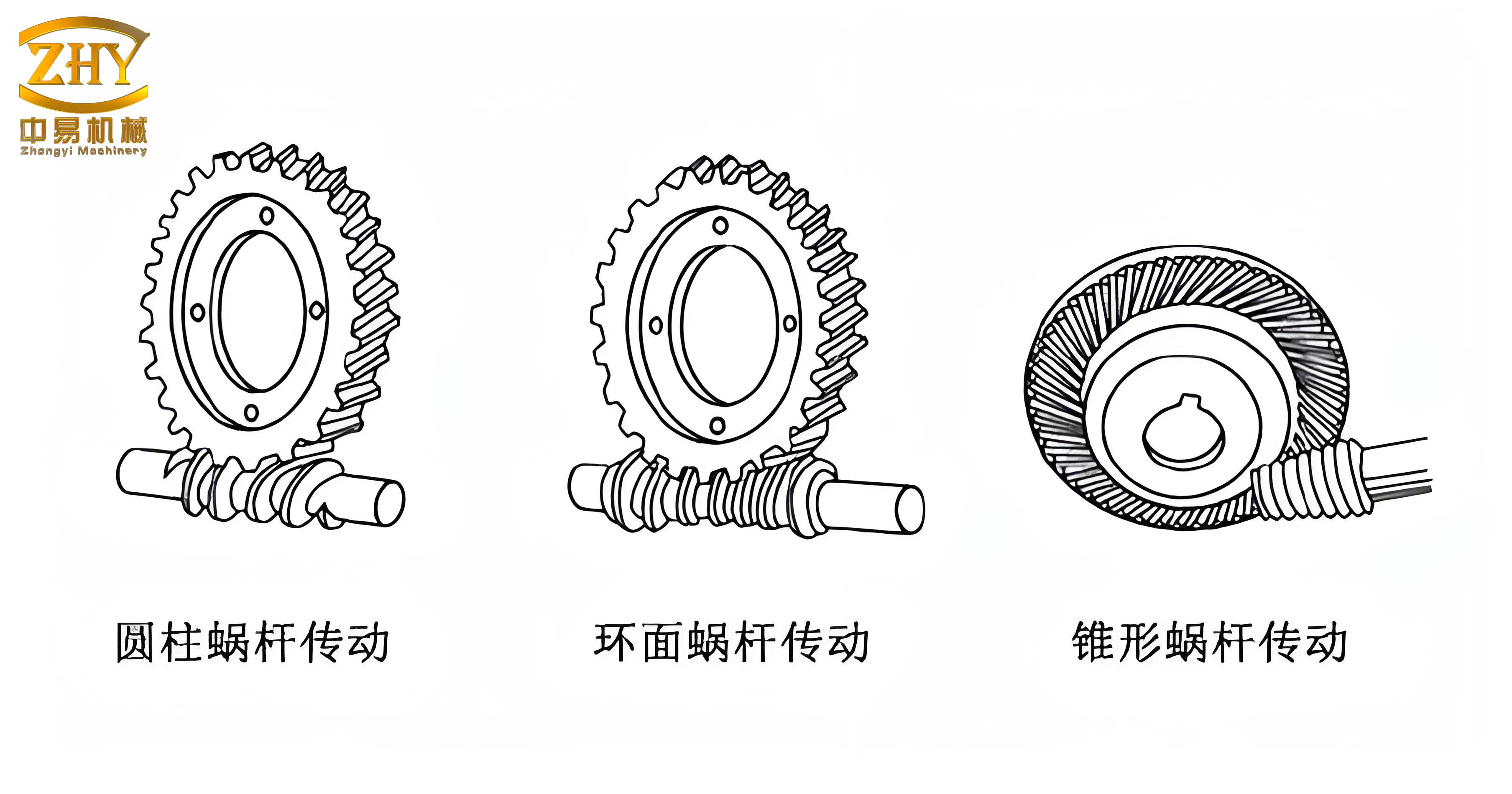
To understand the lubrication requirements, I analyzed the工况 conditions of EPS screw gears. These gears experience a combination of sliding and rolling motion, with the worm wheel enveloping the worm screw to form a line contact. This results in high contact stresses, estimated using Hertzian contact theory. The contact pressure \( P \) between the screw gears can be approximated by the formula:
$$ P = \sqrt{\frac{F E^*}{\pi R}} $$
where \( F \) is the normal load, \( E^* \) is the effective modulus of elasticity for the metal-plastic pair, and \( R \) is the effective radius of curvature. For typical EPS screw gears, \( F \) ranges from 100 N to 500 N, leading to contact pressures up to 1 GPa. The sliding velocity \( v \) is relatively low, around 0.1 m/s to 1 m/s, which hinders the formation of a full fluid film, placing the system in the boundary lubrication regime. The friction coefficient \( \mu \) in this regime is critical and can be modeled using the equation:
$$ \mu = \mu_0 + \alpha \exp(-\beta v) $$
where \( \mu_0 \) is the boundary friction coefficient, and \( \alpha \) and \( \beta \) are material-dependent constants. Reducing \( \mu \) is essential for minimizing energy loss and wear in screw gears.
Based on these conditions, I established the target technical specifications for the grease, as summarized in Table 1. These include parameters such as worked penetration, drop point, corrosion protection, low-temperature torque, water washout resistance, oxidation stability, and extreme pressure properties. The focus was on ensuring compatibility with plastic materials and long-term reliability.
| Property | Target Value | Test Method |
|---|---|---|
| Worked Penetration (25°C) / 0.1 mm | 265-295 | GB/T 269 |
| Drop Point / °C | ≥190 | GB/T 4929 |
| Corrosion Protection (52°C, 48 h) | Pass | GB/T 5018 |
| Low-Temperature Torque (-40°C) / mN·m | ≤980 (start), ≤490 (run) | SH/T 0338 |
| Water Washout Loss (38°C, 1 h) / % | ≤8.0 | SH/T 0109 |
| Change in Penetration After 100,000 Strokes / 0.1 mm | ≤30 | GB/T 269 |
| Copper Corrosion (T2, 100°C, 24 h) | Pass | GB/T 7326 |
| Cone Oil Separation (100°C, 24 h) / % | ≤5.0 | NB/SH/T 0324 |
| Oxidation Pressure Drop (99°C, 100 h, 758 kPa) / kPa | ≤50 | SH/T 0325 |
| Maximum Non-Seizure Load (PB) / N | ≥785 | GB/T 12583 |
| Weld Load (PD) / N | ≥1961 | GB/T 12583 |
| Wear Scar Diameter (392 N, 75°C, 1200 rpm, 60 min) / mm | ≤0.60 | SH/T 0204 |
The development process began with selecting the thickener. I evaluated various options, including lithium soap, complex aluminum, and complex calcium thickeners. Lithium 12-hydroxystearate soap was chosen due to its excellent thermal stability, mechanical shear resistance, water resistance, and cost-effectiveness. The thickener concentration was optimized between 7% to 13% by mass to achieve the desired consistency and stability. The grease structure formed by this thickener can be described by the soap fiber network model, where the fiber length \( L \) and diameter \( D \) influence the rheology. The yield stress \( \tau_y \) of the grease relates to the soap concentration \( C \) via:
$$ \tau_y = k C^n $$
where \( k \) and \( n \) are constants dependent on the soap type and base oil.
Next, I focused on the base oil, which constitutes 75% to 90% of the grease. Polyalphaolefin (PAO) synthetic oil was selected for its superior viscosity-temperature characteristics, low pour point, and high oxidation stability. The kinematic viscosity at 40°C was controlled between 40 mm²/s to 60 mm²/s to balance low-temperature flow and film formation. The viscosity-temperature relationship follows the Walther-Maciel equation:
$$ \log \log(\nu + 0.7) = A – B \log T $$
where \( \nu \) is the kinematic viscosity in mm²/s, \( T \) is the temperature in Kelvin, and \( A \) and \( B \) are constants. For the chosen PAO, the viscosity index exceeded 130, ensuring minimal viscosity change across the operating range. Table 2 summarizes the typical properties of the PAO base oil.
| Property | Value | Test Method |
|---|---|---|
| Kinematic Viscosity at 40°C / mm²/s | 48.95 | GB/T 265 |
| Kinematic Viscosity at 100°C / mm²/s | 8.096 | GB/T 265 |
| Viscosity Index | 137 | GB/T 2541 |
| Pour Point / °C | -55 | GB/T 3535 |
Additive selection was crucial for enhancing performance. I first investigated antioxidants to ensure long-term oxidation stability. Using oxidation tests per SH/T 0325, I compared various antioxidants, as shown in Table 3. The combination of 0.5% alkylated diphenylamine and 0.5% hindered phenol exhibited synergistic effects, minimizing pressure drop to 12 kPa. The oxidation kinetics can be expressed by the Arrhenius equation:
$$ k_{ox} = A \exp\left(-\frac{E_a}{RT}\right) $$
where \( k_{ox} \) is the oxidation rate constant, \( A \) is the pre-exponential factor, \( E_a \) is the activation energy, \( R \) is the gas constant, and \( T \) is the temperature. The composite antioxidant raised \( E_a \), thereby slowing oxidation.
| Antioxidant System (1.0% total) | Pressure Drop / kPa |
|---|---|
| Diphenylamine | 49 |
| Alkylated Diphenylamine | 20 |
| Hindered Phenol | 36 |
| 0.5% Diphenylamine + 0.5% Hindered Phenol | 30 |
| 0.5% Alkylated Diphenylamine + 0.5% Hindered Phenol | 12 |
For anti-wear and extreme pressure (EP) properties, I tested several additive combinations on the metal-plastic friction pair. The optimal formulation comprised 0.5% thiophosphate, 1.0% phosphate ester, and 1.5% aminothioester, which achieved a weld load of 2452 N and a wear scar diameter of 0.38 mm. The action mechanism involves the formation of tribochemical films on metal surfaces, described by the adsorption isotherm:
$$ \theta = \frac{K C}{1 + K C} $$
where \( \theta \) is the surface coverage, \( K \) is the adsorption constant, and \( C \) is the additive concentration. For plastic surfaces, however, adsorption is weak, necessitating solid lubricants.
Solid lubricants were evaluated to improve performance on screw gears. Using ASTM D7420, I tested polytetrafluoroethylene (PTFE), melamine cyanurate (MCA), and molybdenum disulfide (MoS₂) on steel-plastic pairs. PTFE at 4.0% mass fraction showed the lowest plastic disk wear thickness of 0.046 mm. The friction reduction by PTFE can be modeled with the shear strength theory:
$$ \mu = \frac{\tau}{P} $$
where \( \tau \) is the shear strength of the PTFE film, and \( P \) is the contact pressure. PTFE’s low \( \tau \) results in reduced friction for screw gears.
| Solid Lubricant System (4.0% total) | Wear Thickness / mm |
|---|---|
| PTFE | 0.046 |
| MCA | 0.063 |
| MoS₂ | 0.153 |
| 2.0% PTFE + 2.0% MCA | 0.050 |
| 2.0% MCA + 2.0% MoS₂ | 0.099 |
| 2.0% PTFE + 2.0% MoS₂ | 0.082 |
Thus, the final grease composition was determined as: 7-13% lithium 12-hydroxystearate soap, 75-90% PAO base oil (40°C kinematic viscosity 40-60 mm²/s), 1.0% composite antioxidant (0.5% alkylated diphenylamine + 0.5% hindered phenol), 3.0% composite anti-wear EP additive (0.5% thiophosphate + 1.0% phosphate ester + 1.5% aminothioester), and 4.0% PTFE solid lubricant.
I then manufactured the grease and conducted extensive performance evaluations. The physicochemical properties are presented in Table 5, compared with an imported benchmark grease. The developed grease met or exceeded all targets, with superior low-temperature torque and anti-wear properties.
| Property | Developed Grease | Imported Grease |
|---|---|---|
| Worked Penetration (25°C) / 0.1 mm | 280 | 277 |
| Drop Point / °C | 203 | 198 |
| Corrosion Protection (52°C, 48 h) | Pass | Pass |
| Low-Temperature Torque (-40°C) / mN·m (start/run) | 220 / 23 | 341 / 33 |
| Water Washout Loss (38°C, 1 h) / % | 2.0 | 3.0 |
| Change in Penetration After 100,000 Strokes / 0.1 mm | 20 | 28 |
| Copper Corrosion (T2, 100°C, 24 h) | Pass | Pass |
| Cone Oil Separation (100°C, 24 h) / % | 1.5 | 1.3 |
| Oxidation Pressure Drop (99°C, 100 h, 758 kPa) / kPa | 15 | 37 |
| Maximum Non-Seizure Load (PB) / N | 785 | 696 |
| Weld Load (PD) / N | 2452 | 1961 |
| Wear Scar Diameter (392 N, 75°C, 1200 rpm, 60 min) / mm | 0.45 | 0.50 |
Friction behavior on steel-plastic pairs was assessed using an SRV tester under conditions of 50°C, 2.0 mm amplitude, 20 Hz frequency, and 400 N load. The average friction coefficient \( \mu_{avg} \) was calculated over time \( t \):
$$ \mu_{avg} = \frac{1}{t} \int_0^t \mu(t) \, dt $$
The developed grease achieved \( \mu_{avg} = 0.066 \), compared to 0.081 for the imported grease, an 18.5% reduction. This enhancement is attributed to the synergistic effect of EP additives and PTFE, which form a low-shear film on screw gears surfaces.
Transmission efficiency and durability were tested on a steering gear rig. The efficiency \( \eta \) is defined as the ratio of output power to input power:
$$ \eta = \frac{T_{out} \omega_{out}}{T_{in} \omega_{in}} \times 100\% $$
where \( T \) is torque and \( \omega \) is angular velocity. Under a load of 90 Nm at the worm wheel, efficiency was measured across speeds from 10 rpm to 100 rpm. As shown in Figure 3 (simulated data), the developed grease consistently showed higher efficiency. The average efficiency \( \bar{\eta} \) was computed as:
$$ \bar{\eta} = \frac{1}{n} \sum_{i=1}^n \eta_i $$
with \( \bar{\eta} = 84.12\% \) for the developed grease versus 82.62% for the imported grease, a 1.5% improvement. This boost in efficiency directly translates to energy savings in screw gears systems.
Durability was evaluated via a 100,000-cycle test under a 7-stage profile simulating real-world conditions. Post-test inspection revealed no significant wear or deformation on the screw gears components, confirming the grease’s longevity. The wear rate \( W \) can be expressed as:
$$ W = \frac{V}{F L} $$
where \( V \) is wear volume, \( F \) is load, and \( L \) is sliding distance. The low wear rate observed validates the grease’s protective capability for screw gears.
Field application involved a 30,000-kilometer road test on a C-EPS vehicle. The grease performed flawlessly, with no steering issues or abnormal noise, meeting all lubrication requirements for screw gears. This successful deployment demonstrates the feasibility of localizing high-end EPS lubricants.
In conclusion, my research resulted in a high-performance synthetic lithium grease specifically engineered for EPS steering system screw gears. The formulation leverages optimized thickener, PAO base oil, composite additives, and PTFE to achieve exceptional physicochemical, tribological, and durability properties. The grease reduces friction by 18.5%, increases transmission efficiency by 1.5%, and passes rigorous tests, enabling it to replace imported products. Future work will explore nano-additives and biodegradable bases to further enhance screw gears lubrication. This development underscores the importance of tailored lubricant design for advanced automotive systems, particularly in supporting the localization of critical technologies.